The Ultimate Guide to Finding an App That Tracks Micronutrients
Why You Need an App That Tracks Micronutrients Beyond Calories
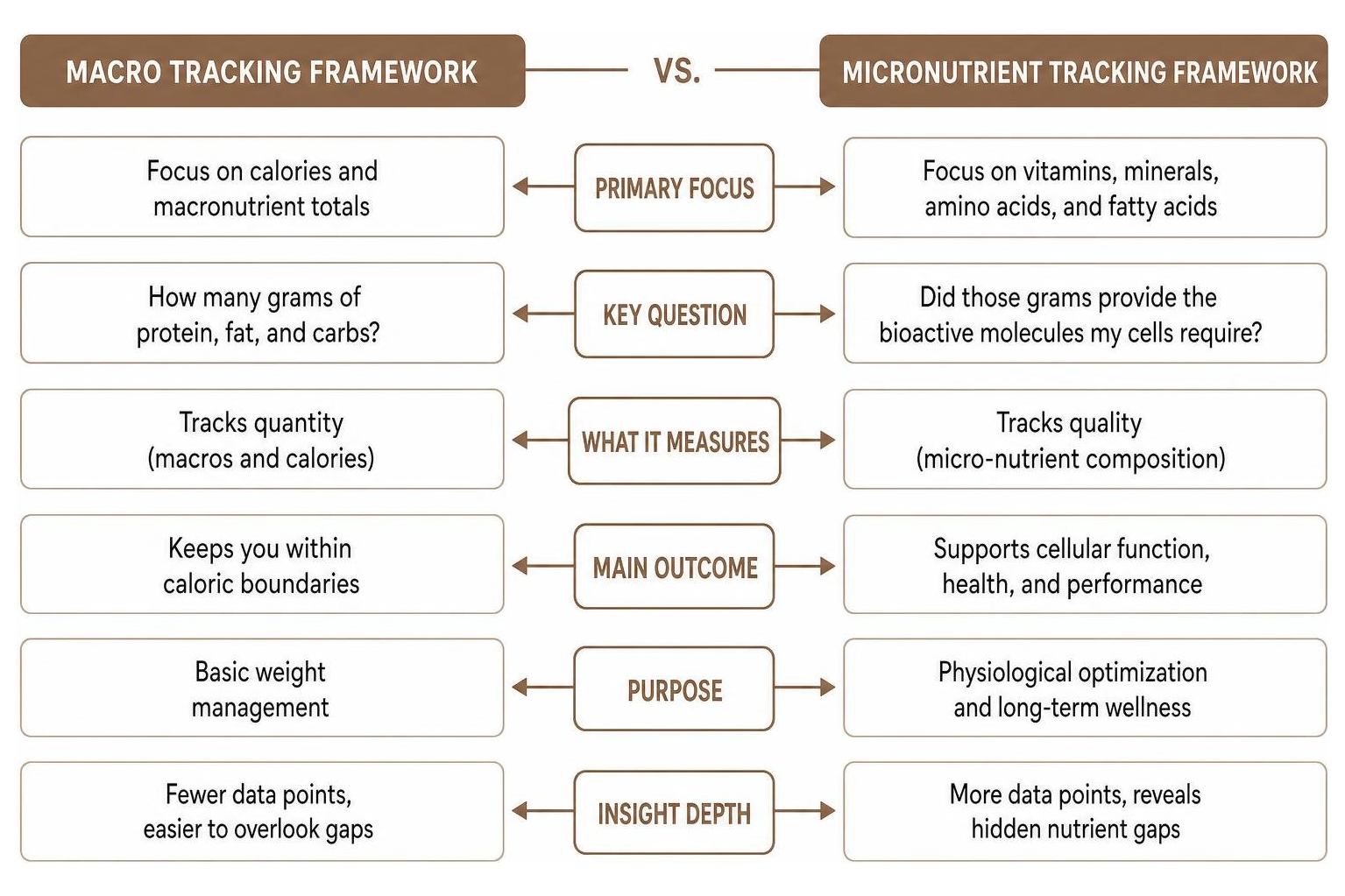
Focusing strictly on calories or macronutrients (carbohydrates, fats, and proteins) is like looking at a car's dashboard and only checking the gas level while ignoring the oil, engine temperature, and tire pressure. You might have plenty of fuel, but the system can still break down.
When you use an app that tracks micronutrients, you transition from basic weight management to genuine physiological optimization. Micronutrients—comprising essential vitamins, trace minerals, and key electrolytes—act as the biochemical spark plugs for your cellular machinery. Without them, energy production slows down, immune defenses weaken, and metabolic processes falter.
Tracking your daily Recommended Dietary Allowance (RDA) coverage helps you spot recurring gaps before they manifest as chronic fatigue, brain fog, or poor workout recovery. Modern apps often bundle these complex inputs into overall health domain scores, giving you a clear window into how your current diet supports target areas like heart health, brain function, skin integrity, and immune resilience. To learn more about how holistic health tracking improves your daily vitality, check out our Blog.
Key Differences Between Macro Tracking and Micronutrient Tracking
Macro tracking asks, "How many grams of protein, fat, and carbs did I consume?" Micronutrient tracking asks, "Did those grams provide the bioactive molecules my cells require?"
While macro tracking keeps you within caloric boundaries, advanced micronutrient tracking dives deep into the micro-composition of your meals:
- Amino Acid Profiling: Beyond total protein grams, tracking individual amino acids like leucine, lysine, and tryptophan ensures muscle protein synthesis and neurotransmitter production are fully supported.
- Fatty Acid Profiles: Distinguishing between saturated fats and essential polyunsaturated fatty acids (like EPA, DHA, and ALA omega-3s) helps keep systemic inflammation in check.
- Nutrient Density: Micronutrient tracking measures the density of vitamins and minerals per calorie, encouraging choices that offer maximum nourishment.
Uncovering Hidden Deficiencies and Daily Health Gaps
It is entirely possible to suffer from "hidden hunger"—a state where your caloric intake is adequate or excessive, but your micronutrient intake is severely deficient.
Many people suffer from low energy, brittle nails, or frequent headaches without realizing these symptoms stem from micronutrient deficits:
- Iron Deficiency: Leading to diminished oxygen transport in the blood, causing persistent fatigue and exercise intolerance.
- Vitamin D Deficit: Impacting bone density, mood regulation, and immune function.
- B12 Monitoring: Essential for neurological health and red blood cell formation, particularly crucial for those following plant-based diets.
Some modern tracking software includes symptom-to-nutrient mapping, helping you connect real-time physical indicators—like an afternoon energy crash or muscle cramps—to potential shortages in magnesium, potassium, or B vitamins.
Essential Features of Advanced Micronutrient Tracking Software
Not all nutrition apps are created equal. Finding an effective app that tracks micronutrients requires looking beneath the surface to evaluate the technology powering its database, logging methods, and analytical tools.
Verified Food Databases and Database Reliability
The absolute foundation of accurate micronutrient tracking is database integrity. Many mainstream fitness apps rely heavily on user-submitted entries. While crowd-sourced databases make it easy to quickly find branded snacks, they are notoriously inaccurate for micronutrient tracking. User entries almost always leave vitamin and mineral fields blank, rendering your daily tracking charts meaningless.
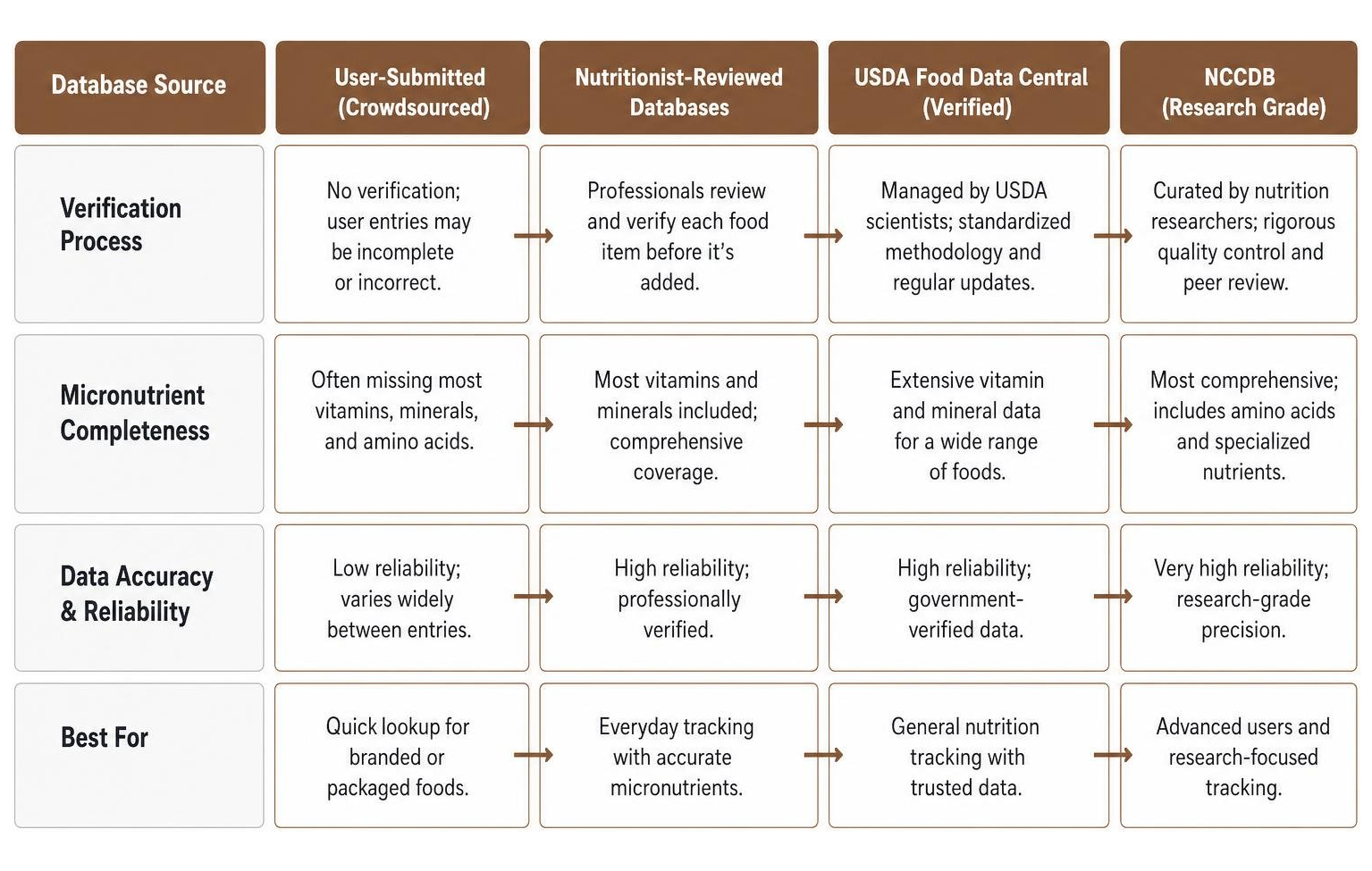
When selecting software, look for platforms that pull from professionally verified, gold-standard databases, such as:
- USDA Food Data Central: The standard reference for comprehensive nutrient profiling in the United States.
- NCCDB (Nutrition Data System for Research): A highly detailed database tracking dozens of micronutrients, amino acids, and specialized bioactive compounds.
- Nutritionist-Reviewed Databases: Platforms where incoming food items undergo professional verification before being added to the public search index.
Apps utilizing these verified entries ensure that when you log a spinach salad, all 20+ inherent vitamins and trace minerals are accurately reflected in your daily totals.
Multi-Modal AI Logging Tools
Manual searching can sometimes feel tedious, making logging friction a primary reason people abandon food journals. Modern apps overcome this barrier using multi-modal AI input methods that dramatically streamline meal logging.

- Photo Depth Estimation: Using advanced computer vision, the camera evaluates food dimensions and spatial depth to estimate portion volume accurately before calculating micronutrient yields.
- Natural Language Processing (NLP) Voice Logging: Hands-free voice commands allow you to describe complex, homemade meals naturally (e.g., "I had two scrambled eggs with spinach and a slice of sourdough toast"), automatically parsing the ingredients and matching them against official food entries.
- Barcode Scanning: Quick scanning of packaged items cross-references barcode numbers with nutrition databases to pull up verified ingredient lists.
Bioactive Compounds, Additives, and Water Quality Intelligence
The frontier of nutrient tracking extends far beyond basic vitamins. Advanced tools now monitor ultra-processed food indicators and environmental factors:
- Chemical Additive Alerts & E-Numbers: Screening ingredients for artificial dyes, preservatives, and emulsifiers, often referencing international standards like EU restricted lists.
- NOVA Processing Scores: Grading foods based on their level of industrial processing, helping you choose whole foods over ultra-processed alternatives.
- Water Quality Tracking: Advanced platforms even cross-reference your local municipal water source or preferred bottled water brand to track mineral content (such as magnesium, calcium, and sodium) alongside potential water contaminants like fluorides or heavy metals like lead.
How to Select the Right Software for Your Health Goals
The right tool depends heavily on what you are trying to accomplish. A biohacker seeking to maximize longevity will require vastly different tracking features than a competitive athlete or someone managing a clinical deficiency.
Selecting an App That Tracks Micronutrients for Specific Health Goals
| Health Goal | Critical Tracking Features to Look For | Recommended Focus |
|---|---|---|
| Deficiency Management | Automated gap alerts, symptom-to-nutrient mapping, high-precision USDA/NCCDB databases | Spotting iron, B12, vitamin D, and zinc deficits quickly |
| Plant-Based Diets | Complete amino acid profiling, bioavailability adjustments, bioavailable iron and zinc monitoring | Ensuring protein completeness and preventing micronutrient gaps |
| Athletic Performance | Electrolyte tracking (sodium, potassium, magnesium), dynamic calorie/macro syncing | Maintaining hydration status and aiding muscle recovery |
| Longevity & Biohacking | Bioactive compound tracking, NOVA food quality scores, health domain scoring | Minimizing ultra-processed foods and maximizing antioxidant density |
Finding an App That Tracks Micronutrients with Offline Privacy and Security
While tracking your detailed nutrition data offers powerful health insights, it also generates a sensitive digital footprint. Your daily dietary patterns, physical symptoms, and health gaps are deeply personal details that you may not want stored on remote cloud servers, analyzed for advertising profiles, or linked to a central account.
When selecting software, consider how your data is handled:
- Local Storage: Look for tools that save your journal entries directly on your device rather than sending them to external cloud databases.
- Zero-Account Design: Software that functions completely offline without requiring email registration, passwords, or personal identity tracking ensures total data privacy.
- Full Export Controls: Ensure you retain complete ownership of your records with options to export your raw text, custom metrics, and photos whenever you choose.
At Nama, we built our private iOS wellness journal around these exact principles. Operating completely offline with no account setup required, Nama allows you to log custom health metrics, meals, exercises, and personal notes locally on your iPhone, giving you complete peace of mind while tracking your lifestyle. If you ever have questions about secure local logging, visit our Support center.
Frequently Asked Questions About Micronutrient Tracking Apps
How quickly can consistent micronutrient tracking help correct a deficiency?
While tracking gives you immediate daily insights from the very first meal you log, physically correcting an underlying nutrient deficiency takes time. Dietary adjustments can begin improving daily energy levels and functional coverage within 1 to 2 weeks.

However, restoring depleted tissue stores or raising serum blood levels (such as iron ferritin or serum Vitamin D3) typically requires 8 to 12 weeks of consistent target adherence. Regular tracking paired with periodic clinical bloodwork offers the safest, most measurable approach.
What is the difference between basic nutrient tracking and advanced tracking?
Basic nutrient trackers typically monitor around 10 to 15 standard data points—primarily calories, core macros, fiber, sodium, and a few major vitamins like Vitamin C and Calcium. Advanced micronutrient trackers analyze anywhere from 50 to over 125 distinct nutritional factors, including complete amino acid breakdowns, individual omega fatty acid ratios, trace minerals (like selenium, manganese, and copper), bioactive phytonutrients, and detailed electrolyte ratios.
Are AI photo meal scanners accurate enough for estimating micronutrients?
AI photo scanners have advanced rapidly thanks to depth-sensing camera systems and computer vision algorithms trained on massive meal datasets. They excel at identifying food categories and estimating overall portion volumes. However, for complex recipes with hidden ingredients (like cooking oils, added butter, or specific spice blends), AI estimates can vary. The best practice is to use photo scanning for convenience, then review and manually tweak specific ingredient amounts when pinpointing precise micronutrient targets.
Conclusion

Relying solely on calorie counts leaves a major blind spot in your health journey. By shifting your focus toward micronutrient optimization, you ensure every meal actively nourishes your body, boosts your daily energy, and protects your long-term vitality. Whether you choose an advanced AI-powered analyzer or prefer manual logging against verified databases, the key is finding a tool that balances deep nutritional insights with long-term tracking ease.
If you value complete personal privacy alongside your health tracking, consider using a secure, local system. Start tracking your holistic wellness privately with Nama to keep your exercise, meals, custom metrics, and daily journal entries safely under your personal control.