Top Mood Tracker Apps to Master Your Daily Mindset
Find the Right Mood Tracker App for Daily Awareness
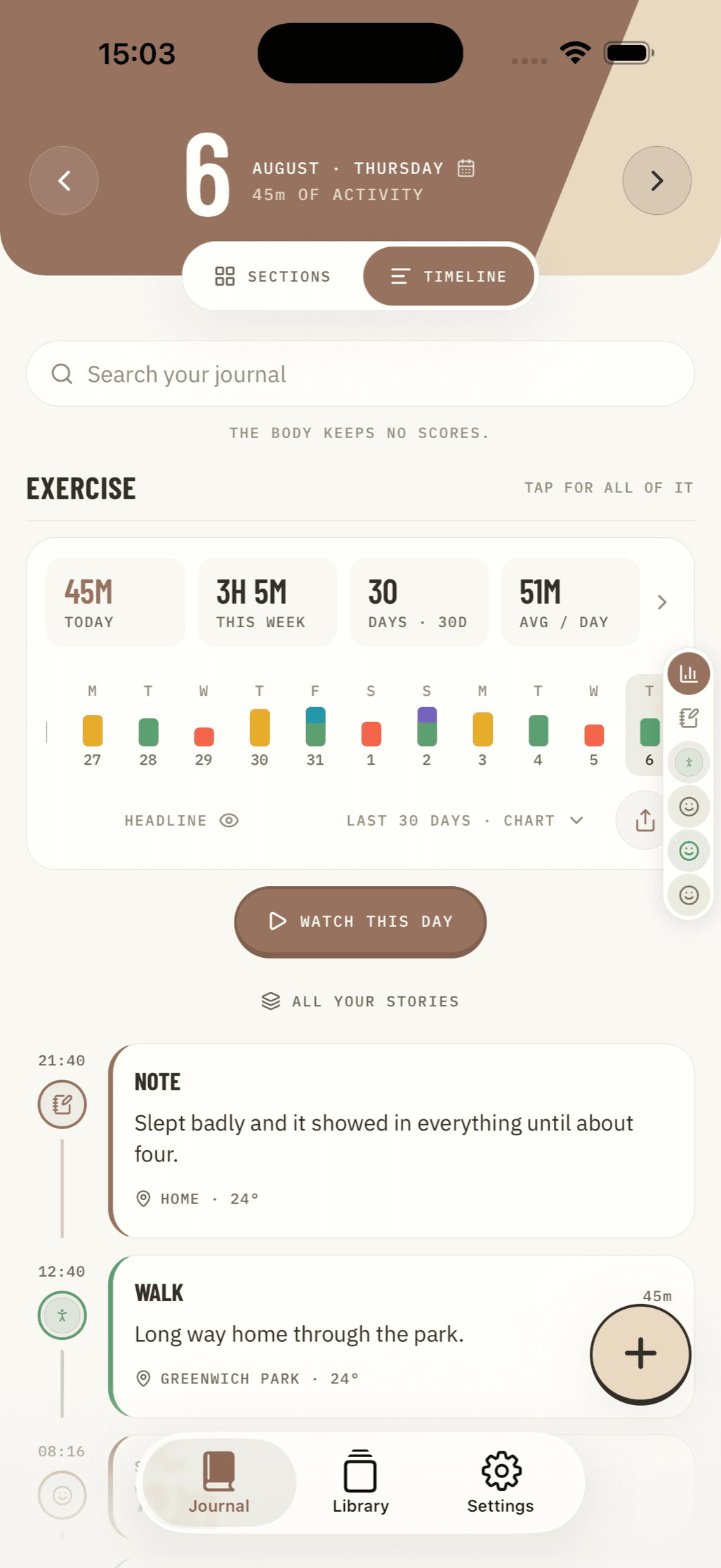
A mood tracker app helps you record how you feel, spot patterns over time, and connect mood changes with everyday factors such as sleep, meals, exercise, stress, and routines.
For a quick starting point, choose an app that matches these needs:
| Your priority | Look for |
|---|---|
| Simple daily check-ins | Fast emoji, color, or number-based entries |
| A private journal | Offline access, local storage, encryption, and no required social features |
| Deeper pattern finding | Notes, custom tags, sleep and activity logs, and clear charts |
| Therapy support | Printable or exportable reports you control |
| Bipolar or complex mood shifts | Flexible scales that can track high, low, irritable, and mixed moods |
Mood tracking is not about labeling a day as "good" or "bad." It is a way to notice what is happening before small changes become harder to explain. Therapists often use these records to fill in the memory gaps between appointments, while users can see how habits and events may relate to emotional highs and lows.
The best tool is usually the one you can use consistently without feeling watched, judged, or overwhelmed. For privacy-focused trackers, that often means an offline-first journal with meaningful controls over where personal entries live and who can see them.
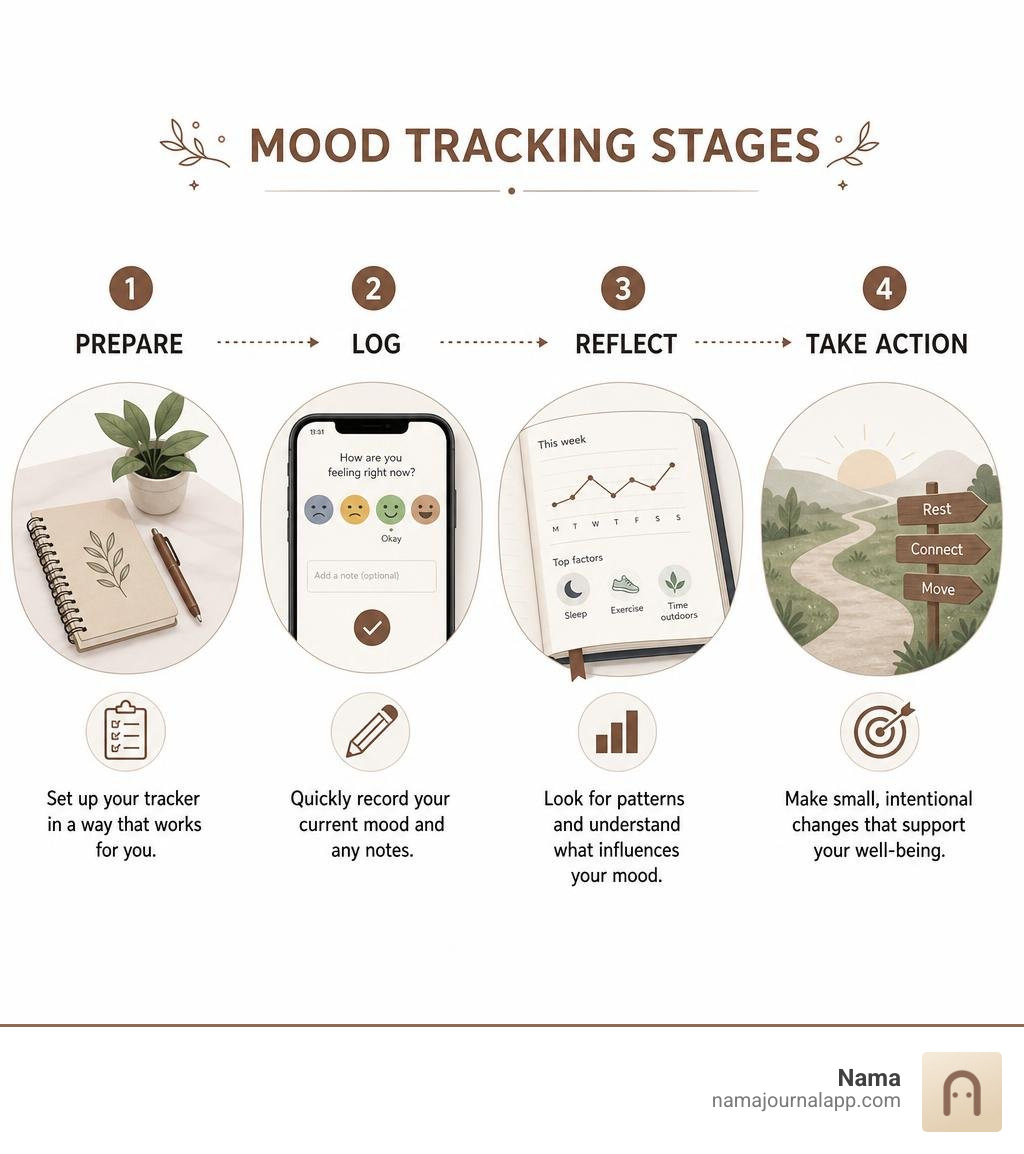
Key Features to Look for in a Mood Tracker App
When evaluating a mood tracker app, it is easy to get distracted by sleek interfaces or colorful notifications. However, true clinical and daily utility comes down to how effectively a tool captures the subtle nuances of human emotion.
Traditional mental health tracking often suffered from recall bias - our tendency to remember dramatic emotional events while completely forgetting normal, neutral stretches of time. Modern software addresses this through experience sampling, prompting short check-ins throughout the day so you record how you actually feel in the moment rather than relying on foggy end-of-day memories.
To build a reliable digital log, look for these fundamental structural features:
- Customizable Rating Scales: A standard 1-to-5 rating scale works well for basic daily tracking, but emotional life is rarely linear. Advanced trackers allow multi-dimensional logging so you can track anxiety, energy, elevated moods, and irritability independently on the same day.
- Contextual Tagging: Tracking a raw mood score without context offers limited value. Look for tools that let you tag specific variables such as exercise, diet, social interactions, work hours, weather, and sleep duration.
- Flexible Input Modalities: On difficult days, writing a long journal entry can feel exhausting. A robust tracker should accept multiple input formats - ranging from rapid tap-and-go emojis and numerical sliders to voice notes and detailed text entries.
- Rich Visualizations: Over 90% of popular tracking software provides visual reflection tools such as monthly calendar heatmaps, line charts, and bar graphs. These visual aids turn raw daily entries into recognizable emotional trends.
| Feature Category | Basic Mood Tracking | Specialized Clinical Tracking | Privacy-First Offline Tracking |
|---|---|---|---|
| Primary Goal | Daily emotional check-in | Managing clinical conditions (Depression, Bipolar, Anxiety) | Secure, personal self-reflection |
| Input Style | 1-5 scale, Emojis | Multi-scale (Highs, Lows, Mixed states, Symptoms) | Custom scale, freeform notes, tags |
| Contextual Data | Basic activity tags | Sleep, medication dosage, PHQ-9 scores | Meals, custom metrics, local photos |
| Data Storage | Cloud database | Vendor cloud server | Local device memory / Offline storage |
| Sharing Capabilities | Social media or PNG export | Comprehensive PDF reports for clinicians | Local CSV/JSON text export |
Addressing Specific Conditions: Bipolar, Depression, and Anxiety
Generic mood rating scales often fail users managing specific mental health conditions. For instance, an individual managing bipolar disorder might mark a score of "5 out of 5" as a positive outcome, when clinically, extreme excitement combined with decreased sleep could signal the onset of a dangerous manic episode rather than genuine emotional well-being. For general educational background on symptoms and care options, the National Institute of Mental Health provides an overview of bipolar disorder.
Research analyzing user experiences reveals that roughly 10% of individuals using mood applications explicitly disclose living with diagnosed conditions like major depressive disorder, bipolar disorder, or chronic anxiety. For these specific clinical needs, specialized tracking capabilities are essential:
- Bipolar Disorder: Requires tracking conflicting mood dimensions simultaneously - such as logging both elevated energy and severe irritability on the same day - alongside precise sleep duration monitoring to identify early warning signs of mania or depression.
- Depression: Benefits from integrated screening tools like the PHQ-9 (Patient Health Questionnaire), allowing users to monitor core depressive symptoms, physical fatigue, and motivational dips over multi-week periods.
- Anxiety: Requires thought-reframing tools, trigger identification tags, and "what-if" tracking logs that allow users to re-evaluate anxious assumptions after events pass to see if their feared outcomes actually occurred.
Evaluating Data Privacy, Security, and Local Storage
Your emotional record contains some of the most sensitive personal data imaginable. Unfortunately, many cloud-connected lifestyle applications treat emotional logs as monetizable consumer data, uploading sensitive entries to remote third-party servers.
When choosing a mood tracker app, scrutinizing security architecture is vital. Cloud-based storage carries risks of data leaks, server breaches, and aggressive corporate data-sharing policies. In contrast, offline-first applications store your journal entries directly on your local physical device, giving you exclusive control over your personal information.
For maximum protection, verify whether an app operates without requesting internet access permissions. Applications operating offline with 256-bit AES local encryption and biometric locks demonstrate how zero-internet architectures safeguard personal entries. Reviewing an app's Privacy Policy is an essential step before committing your daily thoughts to any digital system.

How Mood Tracking Supports Therapy and Clinical Care

A digital mood tracker is not a replacement for professional clinical care, but it serves as an exceptional bridge between therapy sessions. When meeting with a therapist or psychiatrist once every week or two, clients frequently struggle to give an accurate summary of their preceding weeks. We naturally over-emphasize how we feel on the day of the appointment or focus exclusively on isolated crisis moments.
By bringing objective daily data into consultations, you eliminate guess-work and help your provider make better treatment decisions.
Integrating a Mood Tracker App into Your Therapy Sessions
Approximately 78% of mobile mood tracking tools feature data export options that allow users to generate printable reports, spreadsheets, or summaries. Sharing these reports with your clinical care team changes the dynamic of therapy consultations:
- Identifying Hidden Triggers: By comparing custom activity tags against mood dips, you and your therapist can identify subtle environmental or interpersonal triggers that cause emotional distress.
- Evaluating Medication Efficacy: When starting or adjusting a psychiatric medication, daily logging provides an objective baseline to track changes in mood stability, side effects, and sleep patterns over 30, 60, or 90 days.
- Evaluating Coping Strategies: Tracking allows you to see whether newly introduced cognitive behavioral therapy (CBT) exercises or lifestyle modifications are delivering measurable improvements over time.
To learn more about maximizing the benefits of self-reflection during treatment, read our guide on effective journaling strategies on our Blog.
Bridging the Stages of Self-Tracking: From Collection to Action
In academic literature, self-tracking is categorized into four distinct stages: Preparation, Collection, Reflection, and Action.
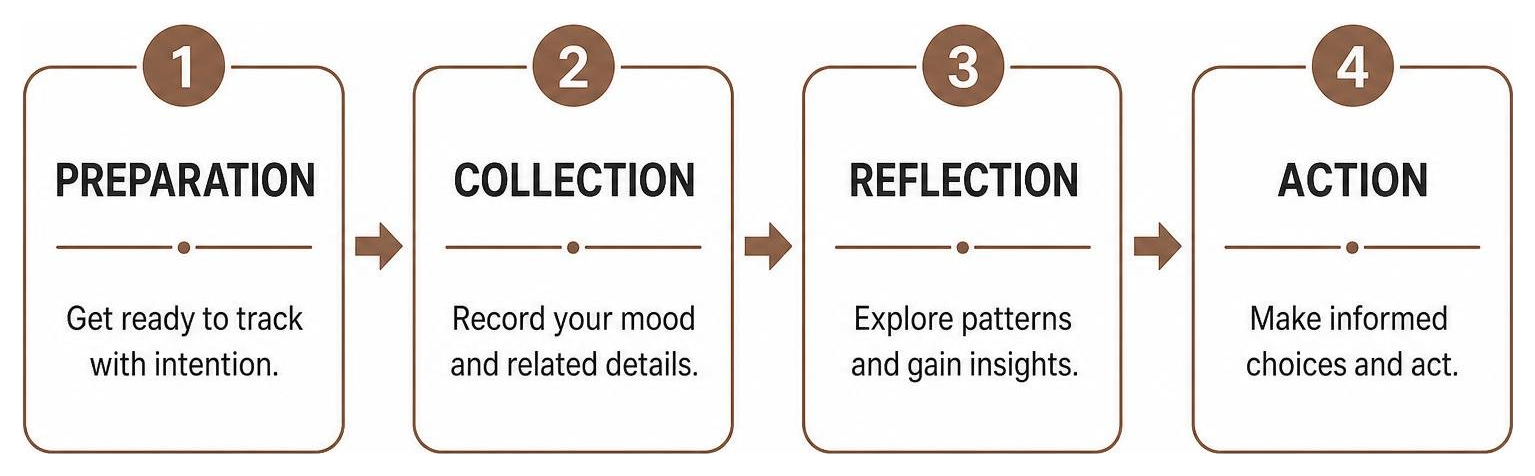
Academic research reviewing commercial mental health applications revealed a significant gap in how current software handles these stages:
- Collection (Data Entry): Highly supported. Over 95% of apps excel at allowing users to input daily scores, notes, and tags quickly.
- Reflection (Visualization): Highly supported. Over 90% of tools feature rich visual charts, calendars, and line graphs to display historical trends.
- Preparation (Education): Poorly supported. Only 25% of evaluated tracking apps provide adequate onboarding guidance on how to track mood accurately or how self-tracking helps manage long-term well-being.
- Action (Intervention): Severely lacking. Only 22% of analyzed apps offer concrete, post-reflection action strategies, such as evidence-based recommendations or immediate coping exercises when a prolonged mood drop is detected.
To gain maximum value from your self-tracking routine, select a workflow that supports every stage—ensuring you move beyond merely collecting scores to taking meaningful action when your records show high stress or emotional exhaustion.
Selecting the Best App Categories for Your Mental Health Goals
With hundreds of options available in mobile software stores, finding the ideal mood tracker app requires matching app features with your personal wellness goals. Rather than searching for a single "perfect" solution, it is helpful to categorize tools by their primary design philosophy.
How to Choose the Right Mood Tracker App for Bipolar and Anxiety
When selecting software to support complex clinical conditions like bipolar disorder or generalized anxiety, evaluate potential apps against these criteria:
- [ ] Multi-Vector Rating Scales: Does the tool allow you to log elevated mood, depression, and anxiety independently, rather than forcing everything onto a single 1-to-5 scale?
- [ ] Granular Sleep & Symptom Logging: Can you record sleep duration down to the hour alongside physical symptoms like fatigue or racing thoughts?
- [ ] Custom Tag Creation: Does the application allow unlimited custom tags for specific stressors, foods, exercise routines, and medication dosages?
- [ ] Unbiased Color Palettes: Does the app interface use neutral color schemes (such as soft blues or slates) rather than red/green indicators that inadvertently make you feel judged for feeling sad or anxious?
- [ ] Local Data Control: Can you export full text logs and data charts securely without being forced to create an online account?
Comparing Free, Built-In, and Paid Tracking Solutions
The landscape of tracking software spans three broad categories: built-in mobile operating system tools, third-party freemium applications, and privacy-focused paid or open-source software.
- Built-In Operating System Tools: Integrated tools built directly into smartphone operating systems (such as state-of-mind logging in Apple Health) provide an ultra-convenient, zero-cost entry point. They are secure and reliable, though they often lack custom tagging flexibility or detailed report generation for therapists.
- Third-Party Freemium Apps: Many popular software store apps allow free daily tracking but place custom tags, PDF exports, and deep analytics behind monthly subscription paywalls. Furthermore, free tiers frequently display intrusive advertisements that can derail a quiet moment of reflection.
- Privacy-First Offline Applications: Solutions built on local storage architectures store all text, photo attachments, and health metrics directly on your device memory. By removing server infrastructure costs, these tools avoid subscription pricing models while offering complete protection against online data exposure. If you ever require help configuring your local exports, explore our dedicated Support documentation.
Overcoming Common Tracking Challenges and Sustaining Daily Habits
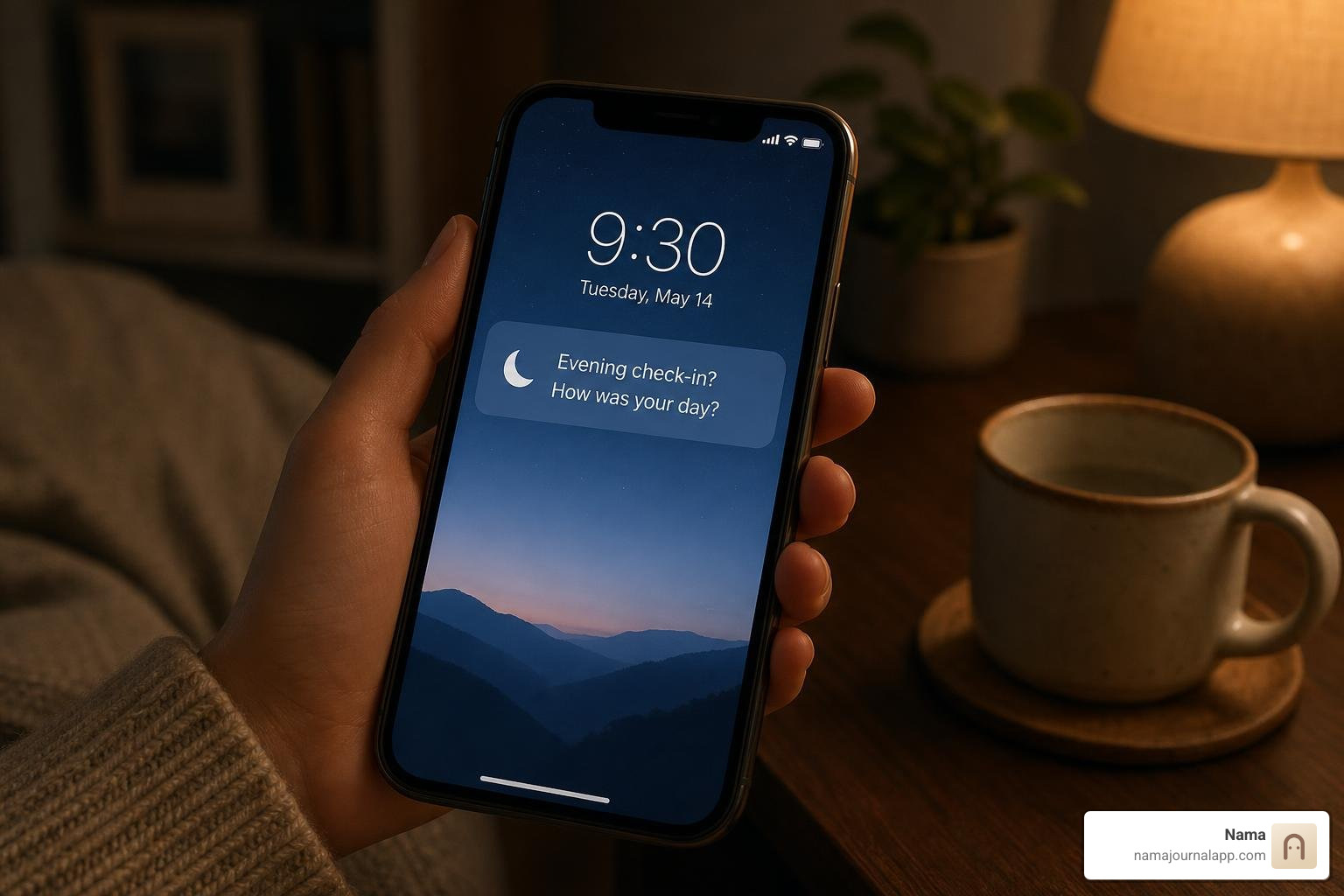
The greatest obstacle to successful mood tracking is consistency. Many users experience initial enthusiasm, logging detailed thoughts multiple times a day, only to run into tracking fatigue after two or three weeks. When logging starts feeling like a tedious chore, entries stall, leaving gaps in your emotional record.
To build a sustainable daily tracking habit without burnout, adopt these practical strategies:
- Lower the Barrier to Entry: On days when you feel overwhelmed or exhausted, permit yourself to log a single emoji or numerical score. Capturing a basic data point takes five seconds and keeps your historical timeline intact.
- Anchor Tracking to Existing Routines: Tie your daily entry to an established daily habit—such as having your morning coffee, brushing your teeth, or winding down before sleep.
- Utilize Experience Sampling Prompts: Set gentle, randomized daily notifications rather than relying entirely on memory. Checking in at the moment captures authentic emotional states while avoiding late-night recall bias.
- Focus on Monthly Trends, Not Daily Scores: Avoid over-analyzing isolated low scores. Mental health fluctuates naturally; the goal of tracking is discovering long-term macro-trends over weeks and months.
- Review Terms and Usage Guidelines: Ensure you understand how an app handles your data retention by reviewing its Terms of Service before building a multi-year archive of daily entries.
Frequently Asked Questions About Mood Tracking
What are the main therapeutic benefits of daily mood tracking?
Daily mood tracking helps individuals spot emotional patterns, identify environmental triggers, and build stronger emotional self-awareness. Clinically, it fills memory gaps between therapy sessions, providing therapists and psychiatrists with accurate real-time data to evaluate treatment progress, medication adjustments, and coping strategies.
Is sensitive mental health data safe on mobile tracking applications?
Data safety varies dramatically depending on the app's underlying technology architecture. Cloud-based applications store emotional logs on external servers, which can be vulnerable to data breaches or third-party tracking. Offline-first applications store entries locally on your personal device using local hardware encryption, keeping your personal journal entries entirely private.
Can a digital mood log replace professional mental healthcare?
No, a mood tracker app is a self-reflection tool designed to complement, not replace, professional clinical care. While digital logs provide valuable self-awareness and trend analytics, managing clinical conditions like depression, bipolar disorder, PTSD, or severe anxiety requires guidance from a licensed therapist, social worker, or psychiatrist.
Conclusion
Building mental well-being requires clear daily awareness. A thoughtful mood tracker app acts as a mirror for your inner life, helping you uncover hidden triggers, celebrate steady progress, and have more meaningful conversations with your healthcare provider.
At Nama, we believe your personal mental health journey should remain completely private. We designed Nama as an offline-first iOS wellness journal that stores all your daily exercises, meals, custom health metrics, and personal notes directly on your iPhone. With zero accounts, no cloud tracking, and complete text and photo export capabilities, you retain total ownership of your personal story.
Start tracking your wellness privately with Nama today, and take the first step toward building a clearer, healthier mindset on your own terms.