Master Your Habits: The Top Daily Weekly Monthly Habit Tracker Apps
Choosing the Right Daily Weekly Monthly Habit Tracker App for Your Goals
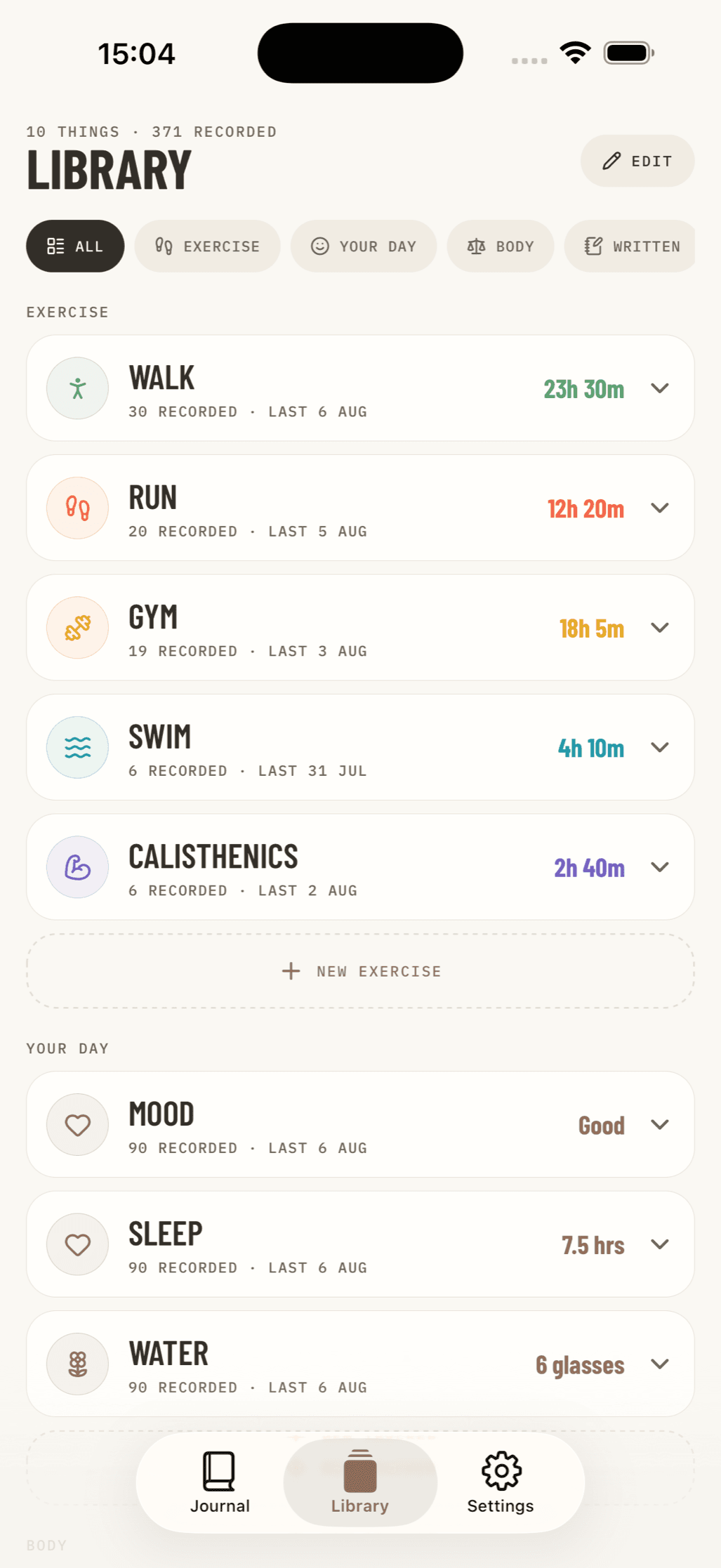
Building positive habits requires an approach that adapts to your actual routine rather than forcing every goal into a strict 24-hour cycle. When evaluating a daily weekly monthly habit tracker app, timeframe flexibility is the single most important factor. Researching habit-building apps shows that over 15 million users seek out tools to organize their lives, but many drop off if forced into rigid daily streaks for tasks that naturally happen twice a week or once a month.
A habit frequency model should match the natural cadence of your life:
| Tracker Type | Primary Use Case | Key Features Needed | Common Pitfalls to Avoid |
|---|---|---|---|
| Daily Habits | Morning routines, hydration, daily reading, medication | Fast 2-tap logging, morning/evening time blocks, daily push reminders | Friction from slow load times or intrusive ads |
| Weekly Habits | Gym sessions (3x/week), meal prepping, calling parents | Flexible numeric targets (e.g., "3 of 7 days"), weekly resets | Demotivation caused by broken daily streak counters |
| Monthly Habits | Financial reviews, deep cleaning, monthly reflection | Monthly grid calendars, custom health metrics, long-term trend graphs | Forgetting non-daily goals due to lack of timely prompts |
Daily vs. Flexible Goals in a Daily Weekly Monthly Habit Tracker App
Daily routines thrive on momentum, but flexible goals thrive on resilience. Strict daily streaks work exceptionally well for small, atomic behaviors like brushing your teeth, journaling, or taking daily supplements. However, applying strict daily streak logic to a goal like running five miles often leads to burnout or unnecessary guilt when rest days are required.
This is where flexible goal tracking becomes essential. Modern habit management tools allow you to define target frequencies—such as completing an action three times per week or twice per month—without failing a streak on off days. Reducing habit friction by setting realistic schedules prevents the "all-or-nothing" mindset that causes many people to abandon tracking altogether. If you want to customize your routine beyond basic checkboxes, using tools to Features - Track Anything gives you complete control over how metrics and habits are measured across different timeframes.

Key Features to Look For in a Daily Weekly Monthly Habit Tracker App
To manage tasks smoothly across daily, weekly, and monthly timeframes, look for these key functional elements:
- Custom Icons and Visual Organization: Color-coded categories and custom icons let you parse your daily checklist at a glance without feeling overstimulated.
- Scheduled and Location-Based Reminders: Context-aware prompts ensure you are reminded to stretch when arriving at work or drink water throughout the afternoon.
- Time-of-Day Blocks: Organizing habits into Morning, Afternoon, and Evening time slots keeps your immediate view clean and actionable.
- Sub-Tasks and Detailed Logging: Complex habits (like a 45-minute workout) benefit from nested sub-tasks or attached text notes to record how the session felt.
Essential Integrations and Focus Tools for Routine Management
A great daily weekly monthly habit tracker app does not operate in isolation; it integrates into your daily workflow and active lifestyle. Automated tracking tools eliminate the effort of manual data entry, while focus aids help you carry out habits without distraction.
Automated Health Syncing and Contextual Prompts
Manual logging can sometimes create friction. Top habit tracking apps overcome this by integrating directly with native health platforms like Apple Health and Google Fit.
By pulling automated activity metrics—such as step counts, sleep hours, mindful minutes, and workout durations—these platforms allow your habits to check themselves off automatically once you reach your defined goal. For example, hitting a weekly target of 150 minutes of moderate cardio can be tracked seamlessly in the background.
Additionally, contextual prompts use geofencing technology to trigger location-based notifications. Instead of getting a workout reminder while sitting in traffic, a geofenced app sends a gentle prompt the moment you physically arrive at the gym.
Built-In Focus Aids and Reflection Support
Executing a habit often requires dedicated focus time. Leading habit platforms integrate productivity utilities directly into the habit logging screen:
- Ambient Noise and White Noise: Built-in soundscapes assist with focus during reading, studying, or meditation habits.
- Pomodoro and Focus Timers: Integrated countdown timers keep you anchored to single tasks like a 20-minute daily decluttering routine.
- Task Journaling and Contextual Notes: Attaching journal entries directly to a completed habit allows you to capture emotional triggers, energy levels, or reasons why a goal was missed.
To explore how combining custom logs with personal reflections improves long-term consistency, check out our comprehensive overview of Features. If you prefer a unified solution, leveraging native Features - Journal and Notes within your routine tracker ensures your personal thoughts stay completely private and securely stored on your device.
Behavioral Psychology: Maximizing Motivation and Breaking Bad Habits
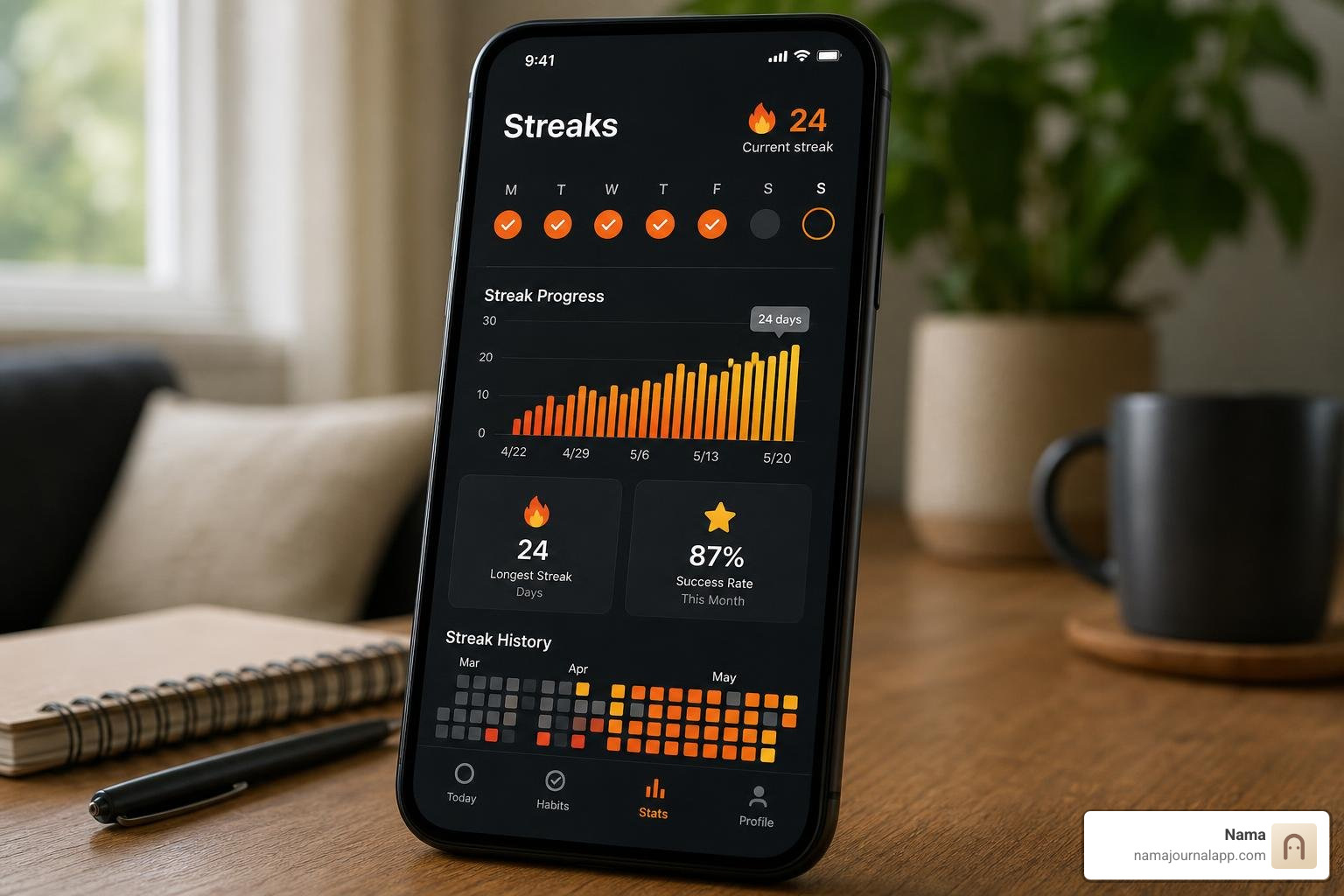
Habit formation relies on a well-established psychological loop: a cue, a routine, and a reward. According to behavioral research, building sustainable habits takes anywhere from 21 to over 60 days of regular repetition depending on complexity. A well-designed daily weekly monthly habit tracker app utilizes visual feedback loops to keep you engaged throughout this multi-month transition.
Gamification, Streaks, and Visual Analytics
To keep users motivated, habit tracking platforms leverage several behavioral mechanisms:
- Visual Streaks and Red Chains: Visual flame icons or connected chain links trigger a desire to preserve progress. Interestingly, tracking negative streaks ("red chains") for bad habits helps users visually record bad runs and break negative momentum.
- Completion Statistics: Long-term monthly heatmaps, weekly compliance graphs, and pie charts transform abstract effort into tangible visual proof.
- RPG Mechanics and Avatar Leveling: Gamified trackers convert daily habits into experience points (XP) and gold. Completing real-life tasks lets your avatar defeat monsters in-app, while slacking off impacts your character's health.
- Community Challenges: Group accountability challenges tap into social support, helping users stay consistent through shared public progress.
For deeper insights into the science behind goal setting and behavior change, explore our dedicated articles on the Blog.
Minimizing Friction and App Performance Fatigue
While gamification can be inspiring, poor application design can derail your momentum. Based on real user experiences, two major issues cause people to give up on habit tracking apps: slow load times and intrusive ad interruptions.
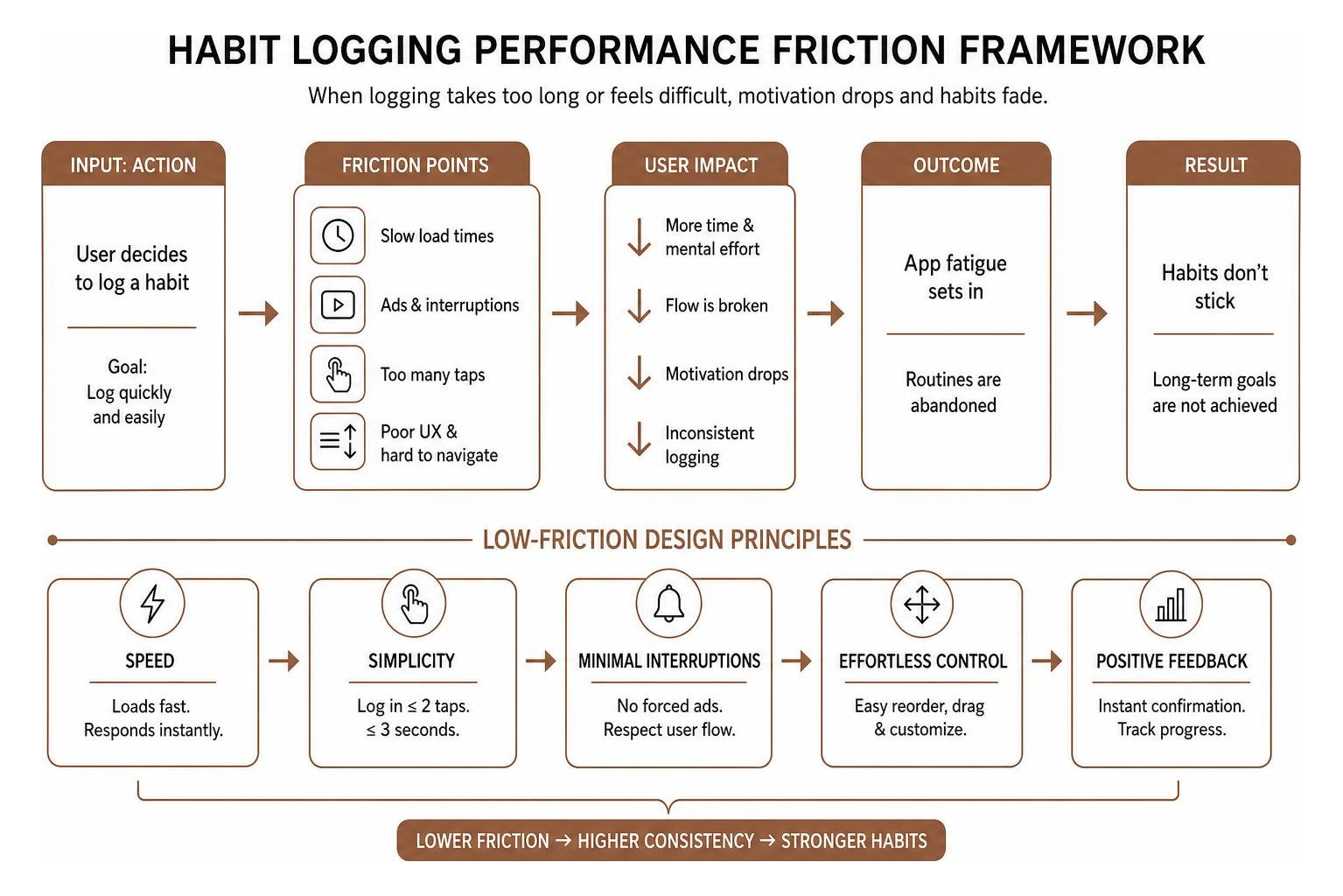
Logging a habit should be frictionless-ideally requiring no more than two taps and taking less than three seconds. When an app takes ten seconds to load, forces you to watch a 15-second video ad, or lacks simple drag-and-drop habit reordering, the mental effort of logging outweighs the reward. Over time, app fatigue sets in, leading to abandoned routines.
Navigating Pricing Models: Free, Subscription, vs. One-Time Purchase
The business model of a habit tracking app directly impacts its long-term reliability, feature set, and user experience. Understanding these pricing structures helps you select a tool aligned with your budget and privacy preferences.
Free Tiers with Habit Limits
Many popular trackers offer a free tier capped at 3 to 7 active habits. This setup works well for beginners who want to build a simple morning routine without upfront costs. However, free tiers frequently restrict access to detailed monthly statistics, data exports, or custom reminder schedules.
Subscription Models ($4.17 - $6.99 / month)
Subscription plans unlock unlimited habits, advanced health kit integrations, cloud synchronization, and multi-device access. While subscriptions support ongoing server maintenance and continuous app updates, costs can accumulate over time. Users should ensure the feature updates justify a recurring bill.
One-Time Purchases ($5.99)
A one-time purchase provides lifetime access to all core capabilities at a single price point. This model is ideal for users who want premium features without ongoing software costs. Apps using this approach often rely on local device storage, which enhances operational privacy.
The Value of Data Exports
Regardless of the pricing tier you choose, look for apps that support full data exports in CSV, JSON, or Markdown formats. Owning your historical data ensures your years of hard-won habit trends remain accessible, even if you decide to change platforms later.
Comparing Types of Habit Tracker Apps
Below is a detailed review of common habit tracking app approaches to help you manage daily routines, flexible weekly goals, and long-term monthly objectives.
1. Guided Routine & Time-Block Trackers
These feature-rich daily companions are designed to help users build structured routines through clear visualization and guided multi-month progression plans.
- Key Features: Offers time-of-day blocks (Morning, Afternoon, Evening), location-based prompts, community challenges, and built-in focus timers.
- Strengths: Excellent onboarding flows, polished visual interface, and custom multi-month habit plans.
- Weaknesses: Premium tiers frequently rely on recurring subscription models rather than one-time options.
- Pricing: Usually offer a limited trial, with premium plans starting around $6.99/month.
- Best For: Users seeking structured guided routines, habit stacking templates, and location-aware reminders.
2. Simple Chain & Health-Synced Trackers
Minimalist trackers built around the core concept of maintaining consistent daily and weekly habit chains through simple visual counters.
- Key Features: Direct integration with native health apps, automatic habit completion via health metrics, highly customizable color schemes, and custom icon selections.
- Strengths: Fast, frictionless logging; zero ads; clean privacy-first architecture with simple pricing models.
- Weaknesses: Often platform-specific; can be less flexible for complex multi-tier goal hierarchies.
- Pricing: Typically available as a low-cost one-time purchase ($5.99).
- Best For: Users who want automated health tracking combined with simple visual designs.
3. Hybrid Task and Habit Planners
Versatile task planners that blend recurring daily routines with discrete to-do list management for complete daily planning.
- Key Features: Daily, weekly, and monthly tracking schedules; detailed task sub-lists; customized habit triggers; offline functionality; detailed statistical charts.
- Strengths: Blends habit tracking with traditional task lists; lightweight with fast load times; often includes lifetime license options.
- Weaknesses: Interfaces can feel utilitarian compared to highly design-focused options.
- Pricing: Free tiers for basic habits; around $5.99 one-time payment for lifetime premium access.
- Best For: Users looking for an offline-friendly hybrid task and habit tracker.
4. Cross-Platform Productivity Trackers
Sleek, multi-device productivity applications structured around context-driven daily routines and continuous cloud synchronization across devices.
- Key Features: Time-block categorization, multi-device syncing across mobile and desktop, built-in task notes, data export functionality, visual habit calendar grids.
- Strengths: Minimalist design with cross-platform access for people who switch between desktop and mobile environments.
- Weaknesses: Free plans are often limited to just 3 habits; full analytics usually require a premium subscription.
- Pricing: Free basic tier; premium subscriptions start around $4.17/month.
- Best For: Professionals looking to track routines seamlessly across desktop and mobile devices.
5. Gamified RPG Habit Trackers
Gamified tools turn routine building into an engaging experience by transforming everyday habits into a role-playing game (RPG).
- Key Features: Character customization, experience points (XP) and gold rewards, party quests, boss battles, community guilds, task lists, and bad habit tracking.
- Strengths: Gamification creates strong social accountability and engagement for users who struggle with traditional planners.
- Weaknesses: The RPG mechanics can add unwanted visual complexity and friction for users seeking a clean, calm interface.
- Pricing: Free core features; optional monthly subscriptions start around $4.99/month for bonus features.
- Best For: Gamers, students, and anyone who prefers playful gamification over standard spreadsheets or checklists.
Frequently Asked Questions About Habit Tracking
How do flexible habit targets prevent user burnout?
Flexible habit targets prevent the "all-or-nothing" psychological trap. When an app strictly demands a daily check-in, missing a single day breaks your streak count and often leads to demotivation.
Flexible targets—like completing a workout 3 times a week or reading 10 pages on 5 days of your choice—allow for rest days and unexpected schedule disruptions while keeping long-term consistency intact.
Why are fast load times crucial for daily habit logging?
Habit formation relies on low mental friction. Logging a habit must feel instantaneous. If an app takes several seconds to open, stutters during navigation, or displays video ads, the process creates cognitive load. Fast, responsive apps ensure logging takes less than two seconds, keeping your focus on the real-world routine itself.
What is habit stacking and how do apps support it?
Habit stacking is a behavioral technique where you pair a new habit with an established daily routine (for example: "After I pour my morning coffee, I will meditate for two minutes").
Apps support habit stacking by letting you group routines into specific time blocks (Morning, Afternoon, Evening) or set contextual cues based on time, location, or completed parent tasks.
Building a Sustainable, Privacy-First Routine
Finding the right daily weekly monthly habit tracker app comes down to understanding your personal style and privacy preferences. While gamified platforms and community challenges offer high-energy motivation, others prefer a quieter approach centered on personal mindfulness, smooth usability, and absolute data control.
At Nama, we believe habit formation works best when it is integrated into a personal, calm environment free from third-party ads, tracking, or mandatory user accounts.
We designed Nama as a private iOS wellness-journal app that operates completely offline. It allows you to track custom health metrics, meals, exercises, routines, and contextual text entries directly on your iPhone.
Because all data remains stored locally on your device with complete text and photo export options, you can build meaningful daily, weekly, and monthly habits with absolute peace of mind.
Whether you choose a gamified tracker or a calm, privacy-focused offline journal, the key to success is choosing a tool that fits naturally into your life—helping you build lasting habits, one step at a time.