An Essential Guide to Tracking Your Daily Food Diary
Why a Food Diary Makes Healthy Patterns Easier to See

A food diary is a simple record of what you eat and drink, when you have it, and sometimes how you feel before or after. It can reveal patterns that are easy to miss: skipped meals, low water intake, mindless snacking, or foods that seem to affect energy, mood, or digestion.
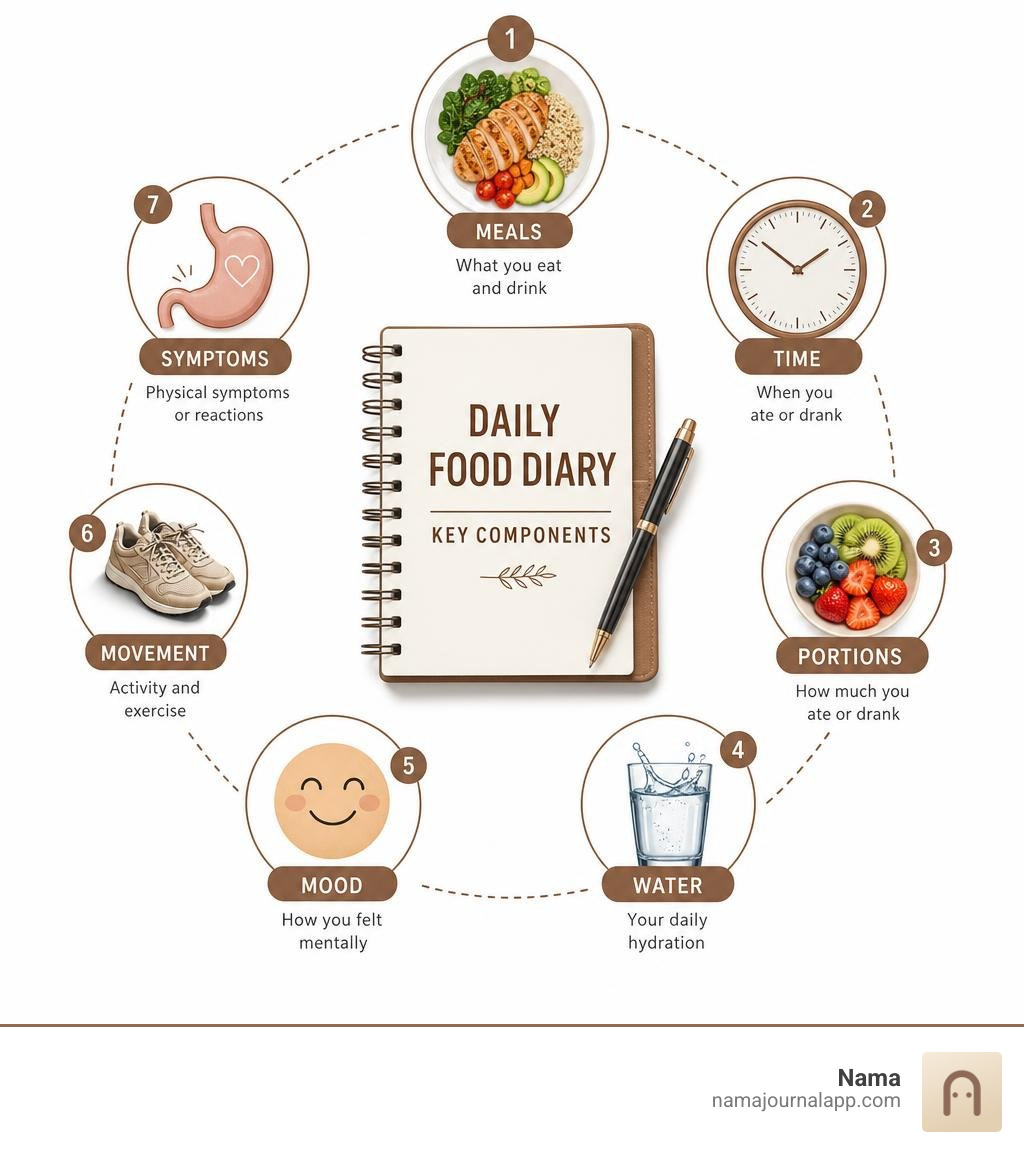
For a quick start, log:
- Food and drinks - Include portions, ingredients, and extras such as sauces or sweeteners.
- Time and place - Note when and where you ate.
- How you felt - Track hunger, mood, energy, or symptoms when useful.
- Movement and water - Add exercise and hydration for a fuller daily picture.
A paper journal can be especially useful for people who want an offline, private way to build awareness without ads, social feeds, or cloud-based health records. The goal is not perfection. It is an honest record that helps you spot what is working and what may need attention.
Even a few complete days of entries can create a helpful baseline to discuss with a healthcare professional. Over time, a food diary can support goals ranging from weight management and macro tracking to identifying possible food sensitivities.
What is a Food Diary and Why Should You Keep One?
At its core, a food diary (or food journal) is a daily log dedicated to tracking everything you consume throughout twenty-four hours. Beyond a basic list of meals, it serves as a mirrors of our daily habits, lifestyle triggers, and nutritional intake. With over 10,000 distinct logging books and tools circulating online, millions of people turn to journaling every year to gain control over their nutrition, support weight loss, manage medical conditions, or simply build sustainable awareness around their health.
When we write down what we eat, we interrupt automatic eating behavior. How often do we eat a handful of chips from the pantry or sip a high-calorie coffee drink without giving it a second thought? A Food Diary brings those micro-decisions into clear view. Studies consistently show that individuals who maintain a routine food log double their chances of successful long-term weight management compared to those who do not log their meals. By establishing a factual record, you eliminate guesswork and create a dependable medical baseline that you and your doctor can rely on.
Health Benefits of Daily Tracking
The physical and psychological advantages of daily meal logging extend far beyond simple calorie counting. By writing down meals in real time, you establish immediate accountability with yourself. Here are key health benefits observed from routine food tracking:
- Improved Diabetes Care and Blood Sugar Regulation: Tracking meal composition alongside the exact timing of food intake helps people manage glucose spikes, understand carbohydrate sensitivity, and coordinate insulin doses far more effectively.
- Actionable Clinical Consultations: Showing up to a healthcare provider with vague recollections of your diet rarely yields tailored medical advice. Bringing a complete 3- to 4-day dietary log gives physicians, dietitians, and gastroenterologists precise data to diagnose issues or build personalized meal plans.
- Behavioral Awareness and Trigger Spotting: Emotional triggers—like stress, boredom, or fatigue—frequently drive overeating. When your log pairs meal entries with emotional states and eating environments, hidden patterns suddenly become obvious.
- Enhanced Nutritional Density: When you see your daily meals listed on paper or in a log, you immediately notice gaps in your diet, such as a lack of colorful vegetables, insufficient fiber, or low intake of essential micronutrients.
Choosing Between General and Specialized Trackers
Not all logging needs are created equal, which is why choosing the right type of food log matters. A general wellness log typically features space for breakfast, lunch, dinner, snacks, and basic water intake. These are ideal for overall lifestyle awareness or general weight loss.
However, if you struggle with digestive distress, unexplained bloating, or chronic conditions like Irritable Bowel Syndrome (IBS), a general log might miss crucial details. Specialized symptom trackers incorporate extra fields for digestive reactions, stool consistency, pain severity, elimination diet stages, and potential allergy indicators.
If your target is athletic performance or body re-composition, a general journal may fall short on macro tracking. In those cases, looking into a Macronutrients Tracker App or dedicated macro log layout allows you to monitor grams of protein, carbohydrates, and dietary fats with precision. Matching your tracker format to your core health goal prevents frustration and keeps your entries actionable.
Essential Features to Look for in a Food Log
When selecting or designing the ultimate food diary layout, function must always trump decoration. Whether you prefer spiral-bound paper, printable PDF templates, or digital notebooks, your daily page structure should invite quick, effortless entry. A cluttered or overly complex layout creates friction, making it far more likely that you will abandon the habit after a few days.
Key structural choices include opting between dated and undated formats. Dated planners help enforce strict daily routine, but undated layouts offer flexibility—allowing you to log for three days, take a weekend break, and pick back up without wasting paper or feeling guilty over blank pages. Additionally, evaluate the binding, page thickness (to prevent ink bleed), and overall log duration. Most structured transformation logs span 90 days (about 12 weeks), which matches the average time required to establish a lasting habit or complete an elimination diet protocol.
Key Metrics to Log in Your Food Diary
To make your entries truly valuable, you need to capture more than just generic food names. Writing down "chicken and rice" tells only a fraction of the story. To gain maximum insight, aim to capture these core metrics:
- Exact Portion Sizes: Note quantities using standardized measurements (e.g., "1 cup of brown rice", "4 oz grilled chicken breast") or practical visual estimations.
- Meal Timing and Frequency: Note the time you start eating. Eating dinner at 6:00 PM affects your body very differently than eating that same meal at 11:30 PM right before sleep.
- Preparation Methods & Hidden Ingredients: Did you roast your vegetables in olive oil, or were they steamed? Did that salad come with a sugar-heavy dressing? Include condiments, oils, beverages, and sauces.
- Eating Context and Social Setting: Record where you ate (at your desk, on the couch in front of the TV, at a dining table) and who you were with. Eating while distracted leads to passive overconsumption.
- Emotional State and Hunger Levels: Rate your hunger on a scale of 1 to 10 before eating, and note your mood (stressed, relaxed, anxious, exhausted).
If you want to ensure your body is receiving adequate vitamins and minerals alongside macros, pairing your meal record with an App That Tracks Micronutrients can help highlight deficiencies in iron, calcium, potassium, or vitamin D.
Additional Symptoms and Activity Trackers
Food does not exist in a vacuum; it directly impacts and is impacted by your overall lifestyle. The most effective journals integrate adjacent health trackers right alongside meal tables:
- Symptom and Reaction Logs: Essential for digestive tracking. Log bloating, gas, stomach cramps, headaches, joint pain, or skin breakouts, noting the hour they appear relative to your last meal.
- Daily Energy and Brain Fog: Track your baseline vitality at morning, afternoon, and evening intervals. You will quickly notice how heavy, high-refined-carb lunches cause 3:00 PM energy crashes.
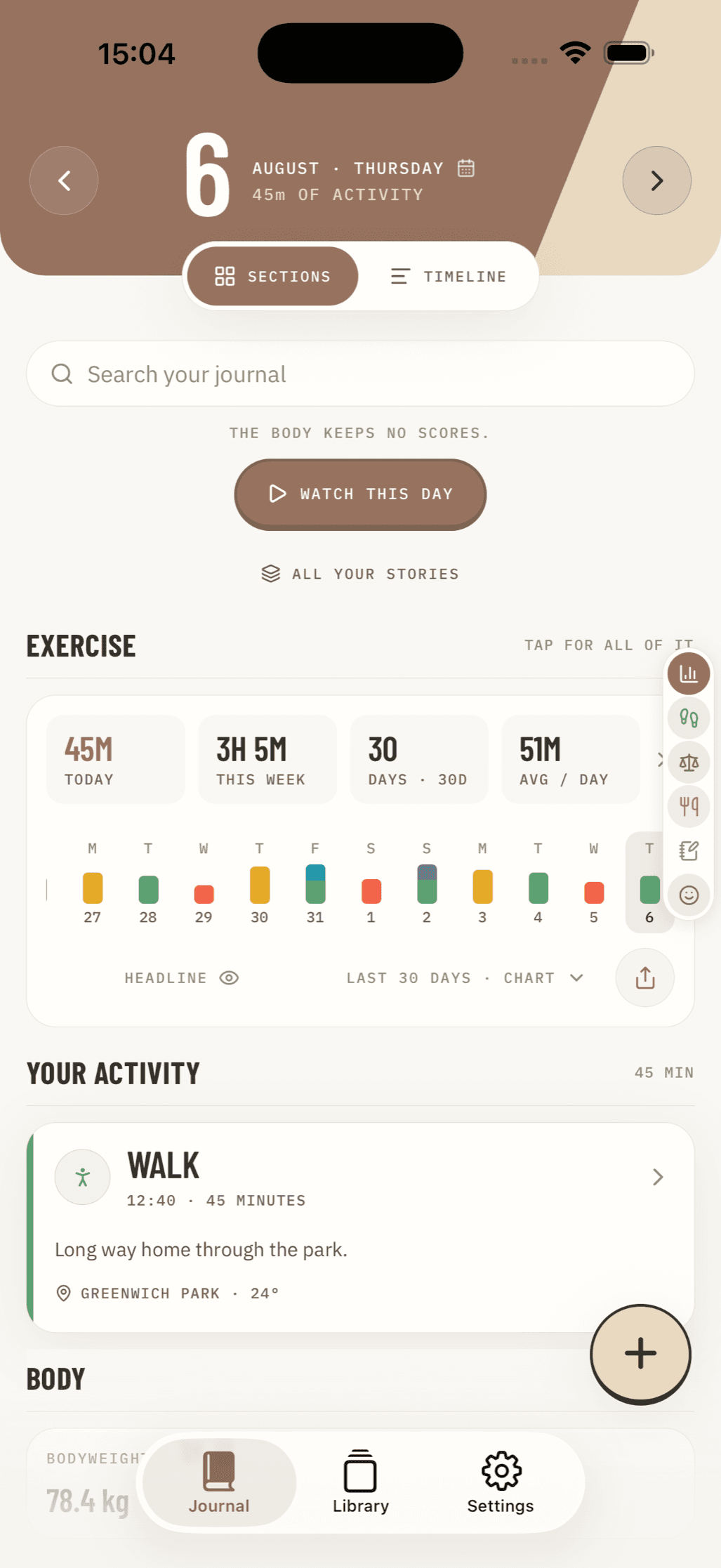
- Exercise and Daily Movement: Record workout type, duration, and intensity. Exercise influences appetite, insulin sensitivity, and calorie targets.
- Sleep Duration and Quality: Poor sleep disrupts hunger hormones (ghrelin and leptin), leading to increased cravings for dense carbohydrates the following day.
- Hydration Trackers: Simple checkbox counters for daily water intake ensure headaches or cravings aren't simply mild dehydration in disguise.
Paper Journals vs. Digital Tracking Solutions
When choosing how to maintain your daily journal, the two primary formats are traditional physical paper logs and digital tracking software. Both approaches offer unique advantages, depending on your personal workflow, technical preferences, and privacy concerns.
| Feature / Criteria | Physical Paper Food Journals | Digital Wellness Tracking Apps |
|---|---|---|
| Data Privacy & Security | 100% private; physical ownership; no risk of cloud leaks or data harvesting | Varies widely; many require accounts, sell usage analytics, or store data on remote servers |
| Speed & Customization | Freeform writing; no restrictive UI buttons; instant drawing/notes | Fast search databases; auto-calculation of calories and macros |
| Screen Time Impact | Zero screen exposure; soothing offline ritual | Adds to daily screen time; vulnerable to push notifications and digital distractions |
| Portability & Size | Requires carrying a physical book and pen | Always accessible on your mobile device |
| Connectivity Requirement | Completely offline; works anywhere | Many apps require active internet connections to look up foods |
| Cost Structure | One-time paper purchase or free printed template | Subscription models or feature paywalls common |
Paper lovers cherish the tactile experience of physically writing down their thoughts. Handwriting builds mental connections, reduces digital screen fatigue, and allows completely unconstrained, freeform notes. However, calculating daily calories or macros manually on paper requires math and reference sheets.
On the digital side, mobile tracking solutions streamline math through built-in food databases. However, many health apps come burdened with annoying advertisements, mandatory account creations, cloud server syncing, and privacy risks regarding sensitive personal health logs. For users who want the modern convenience of digital logging without sacrificing their personal data, offline-first applications present a perfect middle ground.
Best Practices for Maintaining a Daily Food Diary
Regardless of the tool you select, consistency determines your success. Adopting these battle-tested best practices will keep your tracking accurate and stress-free:
- Record Entries in Real-Time: Never rely on late-night memory to recall what you ate for breakfast or afternoon tea. Log items immediately after eating, or take a quick photo of your plate to reference later in the day.
- Use Practical Visual Portioning Tools: When scales and measuring cups aren't available—such as at restaurants—use visual references. A fist equals roughly one cup, a thumb represents a tablespoon, and a deck of cards equals 3 ounces of cooked meat.
- Practice Absolute Honesty: A food log is an objective health tool, not a moral report card. Skimping on portion sizes or leaving out late-night snacks only robs you of meaningful feedback.
- Maintain Lifestyle Consistency: Log both your balanced weekdays and your relaxed weekends. weekend eating patterns often explain why weekday efforts aren't yielding expected results.
If your primary objective is managing weight loss or maintaining a calculated energy intake, using a dedicated Calorie Tracker App helps streamline exact numerical tracking while building visual portion awareness.
How Food Tracking Supports Specific Health Goals
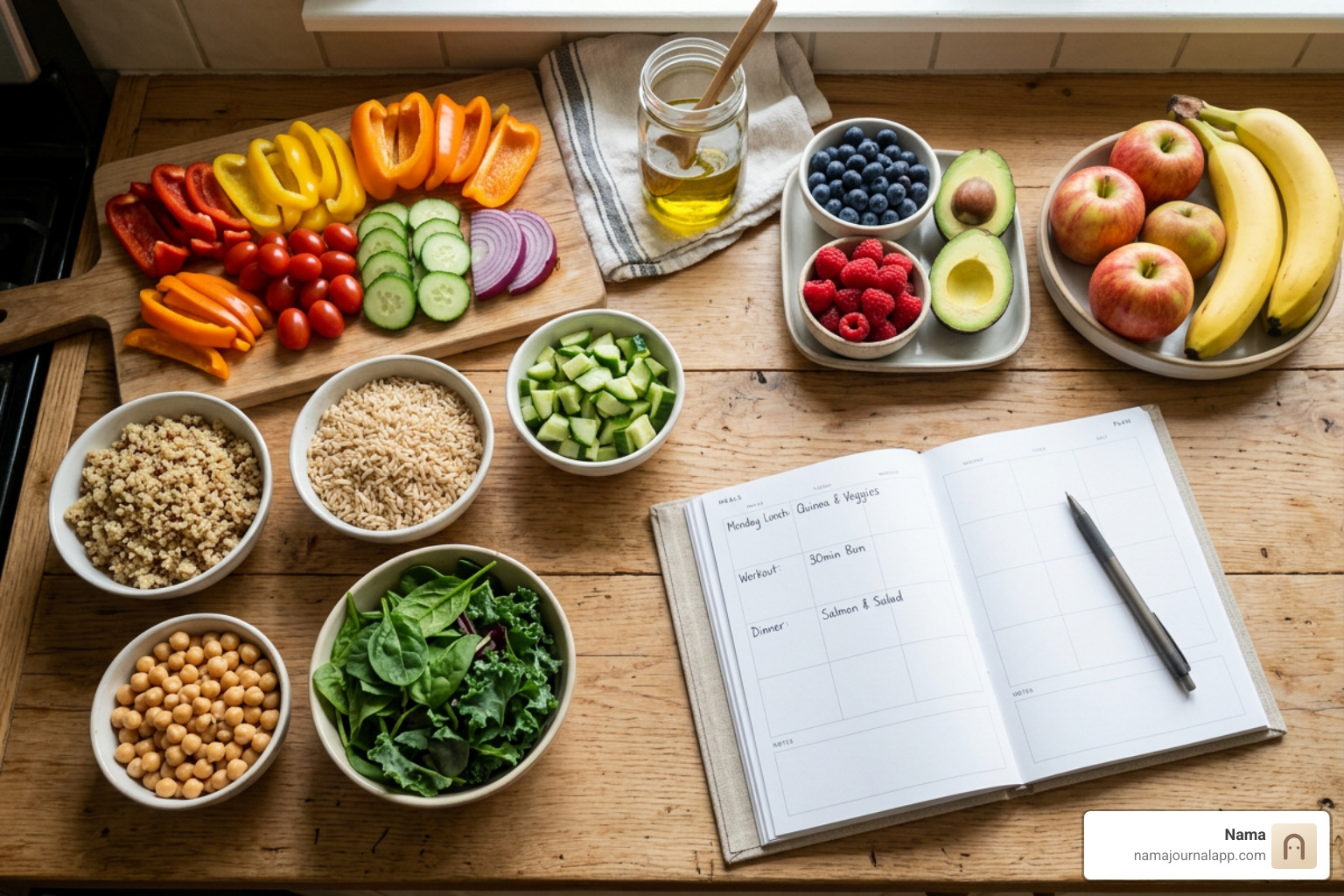
A daily log serves as a flexible framework tailored to whatever personal transformation you are pursuing. Rather than following generic diet trends, food logging provides empirical data customized to your body's specific responses.
Managing Intolerances and Digestive Health
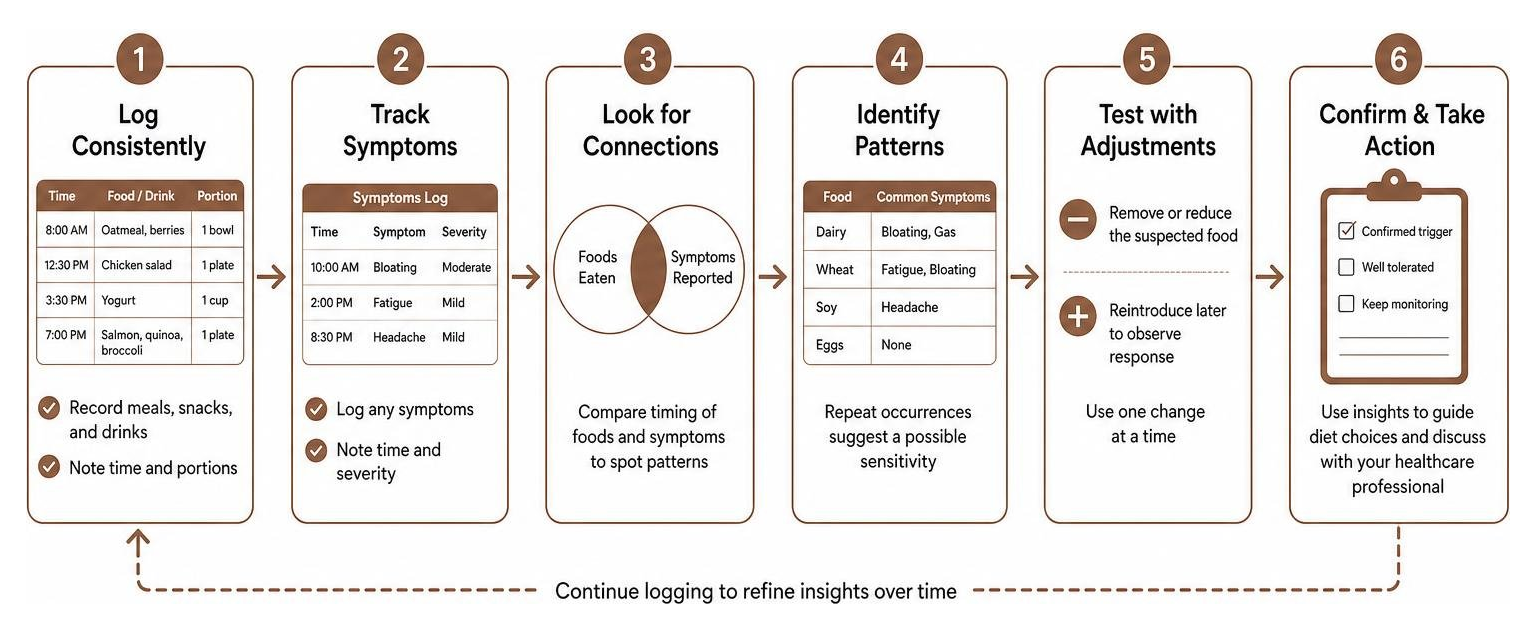
Food sensitivities and intolerances—such as non-celiac gluten sensitivity, lactose intolerance, or FODMAP reactions—can be notoriously difficult to isolate. Unlike acute food allergies that cause rapid reactions, digestive intolerances often exhibit delayed responses, taking anywhere from 2 to 48 hours to manifest as discomfort.
By keeping a detailed food diary alongside a symptom log, you can execute controlled elimination diets safely:
When reviewing your timeline, you can clearly correlate delayed bloating or fatigue back to specific ingredients consumed two days prior.
Tracking Macros and Calorie Goals
For body composition goals—whether losing fat or building lean muscle mass—calories establish the direction of weight change, while macronutrients (protein, fats, and carbohydrates) dictate the quality of that change.
Using your diary to balance macros ensures you maintain muscle tissue while in an energy deficit. Adequate protein keeps you satiated, health-supportive fats regulate hormone production, and complex carbohydrates fuel intense workouts and recovery. For tailored software solutions on non-iOS platforms, exploring options like the Best Health Tracker App for Android ensures you can track daily fitness and nutrition targets across any device setup.
When evaluating your progress, utilizing the Best App for Measuring Calories removes guesswork, helping you refine daily intake based on actual physical outcome trends over several weeks.
Frequently Asked Questions About Food Journaling
How long should I keep a food log before seeing a doctor?
For general medical consultations, dietitians and physicians recommend maintaining a continuous, highly detailed food log for at least 3 to 4 complete days (ideally including two weekdays and one weekend day). This timeframe gives your doctor an accurate baseline sample of your typical eating patterns, hydration habits, and meal spacing without overwhelming you with weeks of homework prior to your appointment.
If you are investigating chronic GI issues, IBS, or systemic intolerances, clinical guidance often suggests keeping a daily food and symptom log for 2 to 4 weeks. This extended window allows your gastroenterologist to observe cyclical patterns, rule out environmental variables, and track delayed digestive reactions accurately.
What visual tools can I use to estimate portion sizes accurately?
When you do not have digital kitchen scales or measuring spoons on hand, everyday objects and hand gestures provide surprisingly accurate estimates:
- 3 ounces of cooked meat, poultry, or fish: Equivalent to the size and thickness of a standard deck of playing cards or the palm of your hand.
- 1 cup of cooked pasta, rice, or cereal: Roughly the size of a tight fist or a standard baseball.
- 1 tablespoon of oil, salad dressing, or butter: Equivalent to the size of your entire thumb (from tip to base joint).
- 1 teaspoon of butter or sugar: Matches the tip of your index finger down to the first joint.
- 1 ounce of cheese: Equivalent to two standard game dice.
- 1/2 cup of fresh fruit or ice cream: Roughly the size of half a tennis ball or a cupped hand.
Should I track water intake and supplements in my entries?
Yes, absolutely! Hydration plays a direct role in metabolic efficiency, digestion, physical energy, and appetite regulation. Dehydration is frequently misread by the brain as mild hunger signals, leading to unnecessary snacking. Recording your daily water fluid intake alongside meals ensures you maintain proper hydration levels.
Similarly, logging daily vitamins, dietary supplements, protein powders, and prescription medications is critical. Certain supplements—like iron or calcium—can cause mild stomach upset or constipation depending on whether they are taken with food, while other medications directly affect nutrient absorption, blood sugar, and metabolic rate.
Conclusion
At its heart, keeping a food diary is an act of self-care and self-discovery. Whether you are using a paper journal, a printable log, or a digital application, the consistent practice of recording what you consume helps you step away from mindless eating and make intentional choices that support long-term health.
Perfection is never the objective. An imperfect, honest record of your daily lifestyle is infinitely more useful than an exaggerated log that hides real habits. By paying attention to portion sizes, meal times, physical symptoms, and underlying emotional triggers, you arm yourself and your medical team with the clear insights needed to reach your health goals.
If you are looking for an intuitive digital space to track your daily nutrition, workouts, and wellness notes without sacrificing your personal privacy, explore Nama. Built as a private iOS wellness log, Nama operates completely offline with no accounts, no subscriptions, no ads, and zero cloud data harvesting. Your health data stays stored locally on your iPhone where it belongs. Discover how simple and secure wellness logging can be by checking out Nama's Features today and start building healthy habits with confidence.