In Depth Guide to Self-Care Journal Ideas for Beginners
A Self Care Journal Is a Simple Space to Check In With Yourself

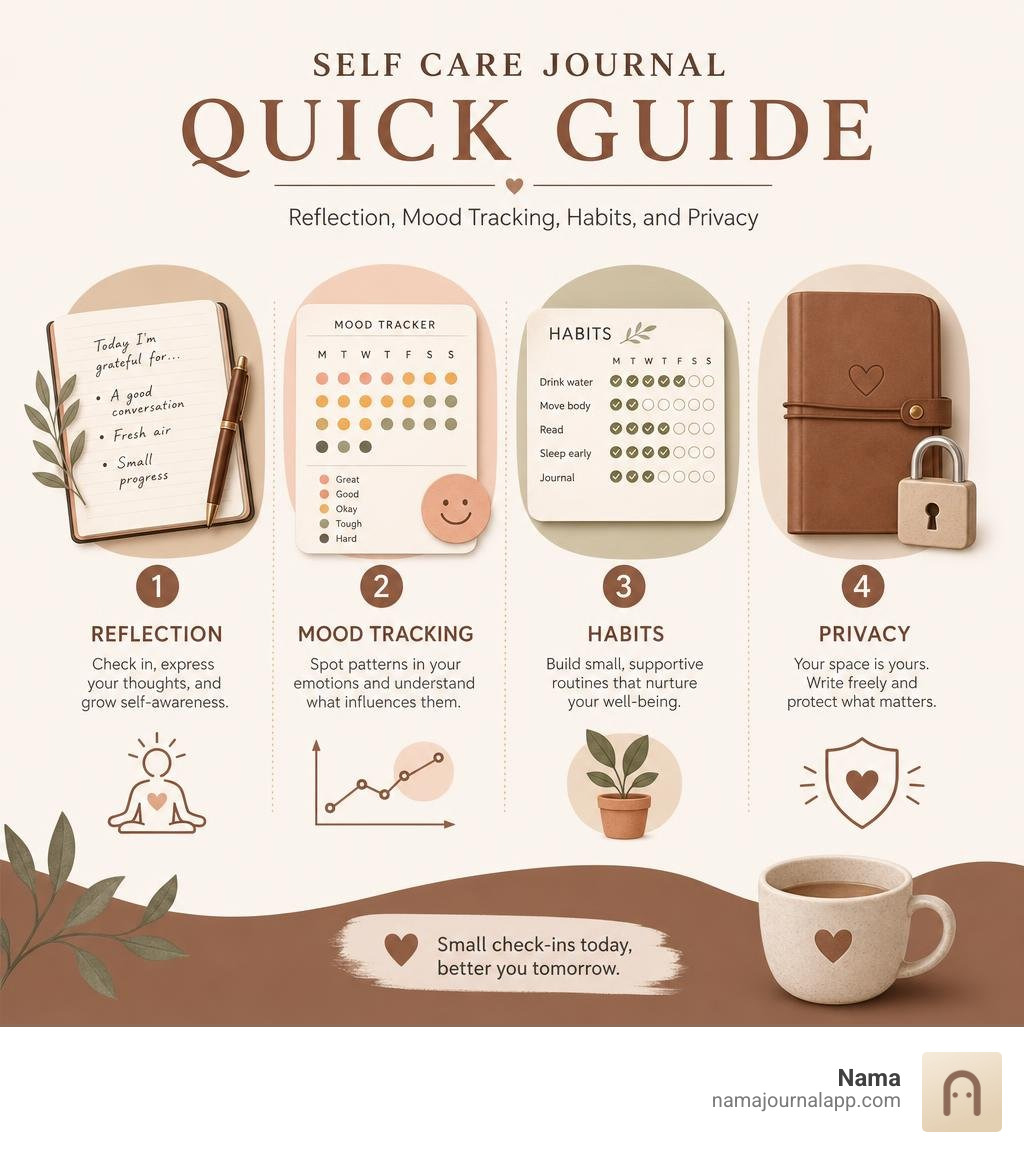
A self care journal is a private place to record how you feel, what your mind and body need, and the small habits that support your well-being. Unlike a regular diary, it often uses prompts, mood check-ins, gratitude notes, and habit tracking. Unlike a planner, it focuses less on managing appointments and more on understanding you.
For people who want an offline, low-pressure practice, a paper journal can offer a welcome break from notifications, ads, social feeds, and cloud-based personal data.
| Self-care journal | Regular journal | Planner |
|---|---|---|
| Supports reflection, mood awareness, and healthy routines | Open space for thoughts, memories, or creative writing | Organizes tasks, dates, and schedules |
| May include prompts, trackers, and affirmations | Usually blank or lined pages | Usually includes calendars and to-do lists |
| Centers mental, emotional, and physical well-being | Centers personal expression | Centers time management |
There is no single right way to keep one. Some people need a five-minute daily check-in. Others prefer weekly reflections, gratitude lists, free writing, or a simple record of meals, movement, sleep, and mood. The best format is the one that feels useful enough to return to - not another task to complete perfectly.
What Is a Self Care Journal and Why You Need One
At its core, a self care journal acts as an intentional sanctuary for inner reflection. In our world filled with endless notifications and responsibilities, taking a few moments each day to turn inward is one of the most practical steps you can take for your health. Journaling for self-care allows you to slow down, reduce immediate stress, and practice non-judgmental emotional processing.
When life feels chaotic, our thoughts often scatter. Writing them down on paper or inside a dedicated personal app externalizes those internal monologues. It helps you cultivate deeper self-compassion by transforming abstract anxieties into tangible words you can address, accept, or let go of.
How Self-Care Journaling Differs From Daily Planners
It is easy to confuse a wellness notebook with a standard life organizer, but their core objectives differ completely:
- Schedule Planning vs. Emotional Exploration: Traditional planners focus on time management, tracking deadlines, and listing to-do items. A self-care notebook focuses on mindset, feelings, and energy levels.
- Task Execution vs. Mindset Focus: Planners ask, "What do I need to accomplish today?" A self-care practice asks, "How am I feeling right now, and what does my body need?"
While traditional organizers keep your day structured, dedicated self-care tracking preserves space for rest, gratitude, and self-awareness.
Key Psychological and Health Benefits
The advantages of maintaining a regular reflection habit extend far beyond simple record-keeping. Science-backed methodologies, including Cognitive Behavioral Therapy (CBT) techniques, demonstrate that regular reflection fosters long-term mood regulation and balances the nervous system.
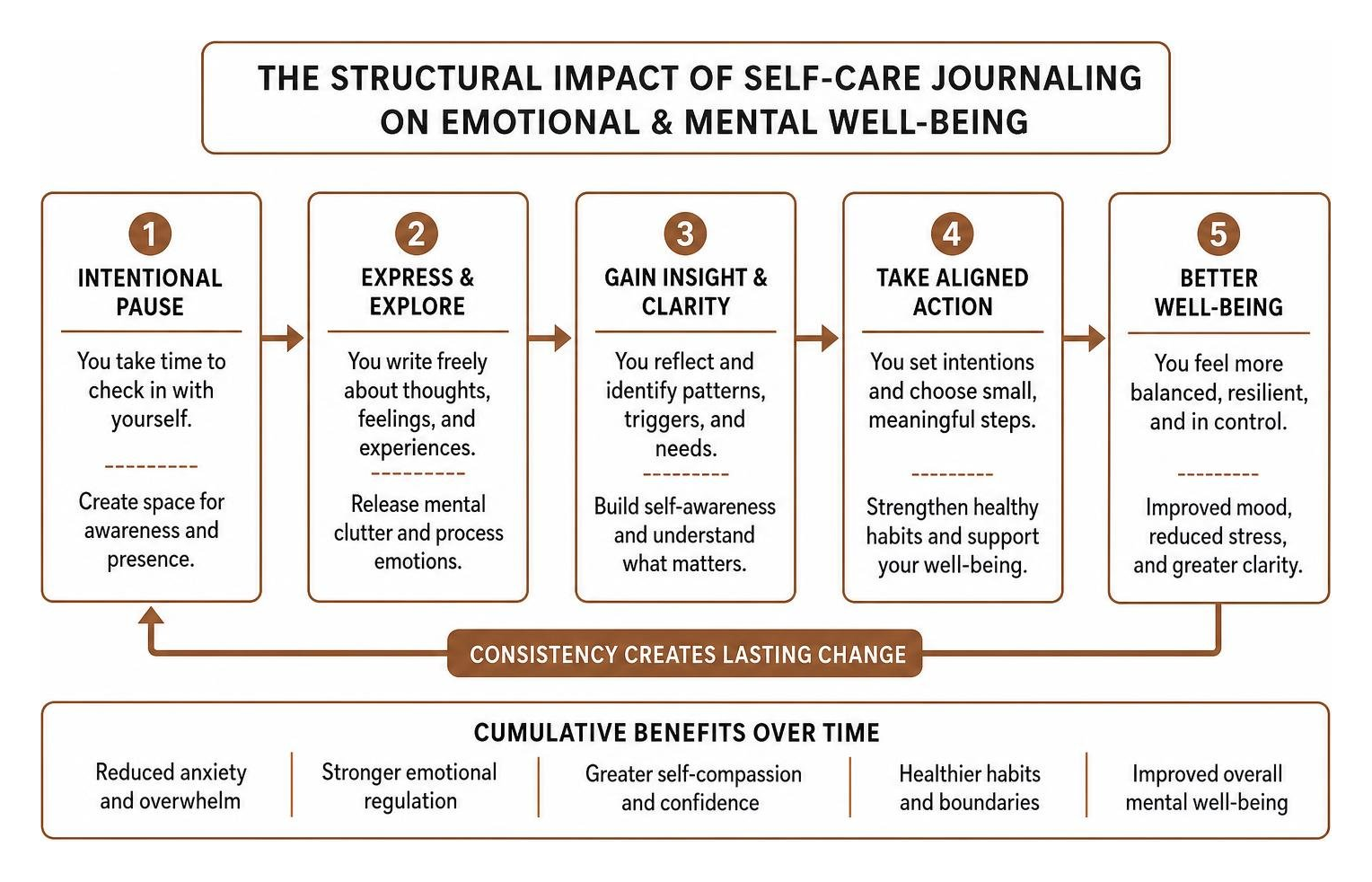
- Anxiety Relief: Expressing worries through written exercises releases mental tension, lowering physiological stress responses.
- Pattern Recognition: Tracking daily habits alongside your mood makes it easier to spot triggers, sleep patterns, or nutritional habits that affect your energy.
- Emotional Resilience: Practicing regular self-reflection strengthens your mental clarity, helping you process difficult emotions with greater stability.
Whether you prefer physical notebooks like a guided wellness notebook or digital tracking, establishing a consistent routine brings measurable peace of mind.
Popular Types of Self-Care Journals for Beginners
When exploring options, the shear variety can feel overwhelming. With over 1,000 self-care notebook listings on platforms like Amazon and hundreds of variations across Target, finding the ideal style depends on your available time and emotional needs.
- Guided Journals: Feature specific daily prompts, structured questions, and exercises. They are ideal for beginners who feel intimidated by blank pages.
- 5-Minute Check-Ins: Popularized by quick formats like 5-minute daily reflection notebooks, these layouts emphasize short morning and evening entries.
- Gratitude Logs: Focus primarily on positive reinforcement, mindfulness, and recording moments of appreciation.
- CBT Workbooks: Incorporate evidence-based psychological tools to reframe cognitive distortions and manage anxiety symptoms.
Choosing the Right Guided Self Care Journal Format
If you prefer physical paper, certain functional design choices make a significant difference in long-term habit formation:
- Undated Layouts: Undated pages eliminate the guilt of missing a day or two. You can pick up right where you left off without wasting pages.
- Binding and Dimensions: Spiral binding or lay-flat designs in portable sizes (such as standard A5 notebook dimensions) make writing comfortable at a desk or in bed.
- Paper Sourcing: Quality materials, like Forest Stewardship Council (FSC) certified paper, ensure durability and sustainable sourcing.
- Specialized Features: Unique options incorporate tracking for hormonal phase changes (cycle syncing), monthly vision boards, or structured physical habit charts.
Options range from minimalist layouts to goal-oriented formats. For those who want to test formats before committing to a purchase, downloading a free setup like this 2026-2027 Self-Care Journal Free Printable offers a flexible start.
Digital vs Paper Formats
Choosing between traditional physical notebooks and modern digital tools comes down to lifestyle preferences, executive function needs, and privacy concerns. Highly structured physical planners can sometimes lead to cognitive overload or executive fatigue if the layouts are overly dense. On the other hand, writing by hand off-screen offers a tactile, screen-free retreat.
Digital solutions eliminate physical clutter, offer complete portability, and allow for instant searches across past entries. However, using cloud-based notes or online apps can raise concerns about data harvesting and personal privacy.
| Feature | Paper Self-Care Journals | Digital Self-Care Apps |
|---|---|---|
| Tactile Experience | High; screen-free sensory break | Low; touchscreen or keyboard interaction |
| Portability | Requires physical space in a bag | Always accessible on your mobile phone |
| Flexibility & Edits | Fixed layout; requires pens/whiteout | Easy to edit, reorganize, and update |
| Data Privacy | Physical security only (susceptible to loss) | Varies; offline app options provide total privacy |
| Cognitive Fatigue | Low digital distraction; risk of dense layout fatigue | Zero ink overhead; easy quick-entry features |
For users who prefer digital tracking without sacrificing confidentiality, our app Nama provides a seamless experience. Built with a Private by Design architecture, Nama stores all your custom metrics, workouts, notes, and mood entries locally on your iPhone with zero cloud tracking or mandatory account creation.
Powerful Prompts and Exercises for Beginners
Starting a daily practice does not require writing long essays. Simple, structured prompts help kickstart reflection without feeling like homework.
Beginner Prompts for Your Daily Self Care Journal
Using short, targeted questions helps guide your attention toward positive self-awareness:
- Morning Check-In:
- "What is one intention I want to set for today?"
- "How does my body feel right now upon waking?"
- Evening Reflection:
- "What brought me a sense of peace or joy today?"
- "What tension am I ready to let go of before sleeping?"
- Gratitude & Self-Love Exercises:
- "What are three small things I am grateful for in this moment?"
- "What is one compassionate thing I can say to myself right now?"
If you are looking for structured guided options with short entry windows, notebooks with pre-printed daily prompts keep writing accessible. You can also explore flexible digital logging for your thoughts through our Journal and Notes feature set.
Overcoming Blank Page Anxiety
Staring at a blank page can feel intimidating. To overcome perfectionism, try micro-journaling: set a timer for two minutes and write without worrying about neatness, spelling, or grammar.
Executing a raw "brain dump" allows you to pour all unedited thoughts onto the page, freeing up mental processing power. The goal is consistent self-expression, not creating a literary masterpiece.

Frequently Asked Questions about Self-Care Journaling
How does a self-care journal differ from a traditional planner?
A traditional planner focuses on calendar management, appointments, task lists, and daily schedule execution. In contrast, a self care journal focuses on inner reflection, mood regulation, physical wellness tracking, and emotional self-awareness.
How much time do I need to spend journaling each day?
You do not need hours to experience the mental health benefits of self-care reflection. Spending as little as 3 to 5 minutes daily on quick check-ins or gratitude notes is enough to cultivate consistency and bring mental clarity.
What if I miss a few days of journaling?
Missing days is completely normal. Choosing undated journal formats removes the pressure of skipping entries. Treat your practice as a supportive resource rather than a rigid rule. Whenever you return, simply continue where you left off without guilt.
Conclusion
Building a consistent self care journal habit offers a quiet space for personal growth, daily habits, and emotional mindfulness. Whether you choose physical spiral notebooks, simple printable templates, or private digital logging, prioritizing your mental and physical health creates long-term balance.
If you love the convenience of mobile tracking but want complete control over your private personal reflections, consider trying our app, Nama. With local storage, offline functionality, custom metrics logging, and a dedicated Mood Tracker App layout, we empower you to track your wellness journey on your own terms. Explore all of our privacy-focused tools on the Nama Features page to start your low-pressure reflection routine today.