Can Breaking Your Weight Loss into 10-Pound Increments Guarantee Success?
A 10-Pound Weight Loss Tracker Makes Progress Easier to See

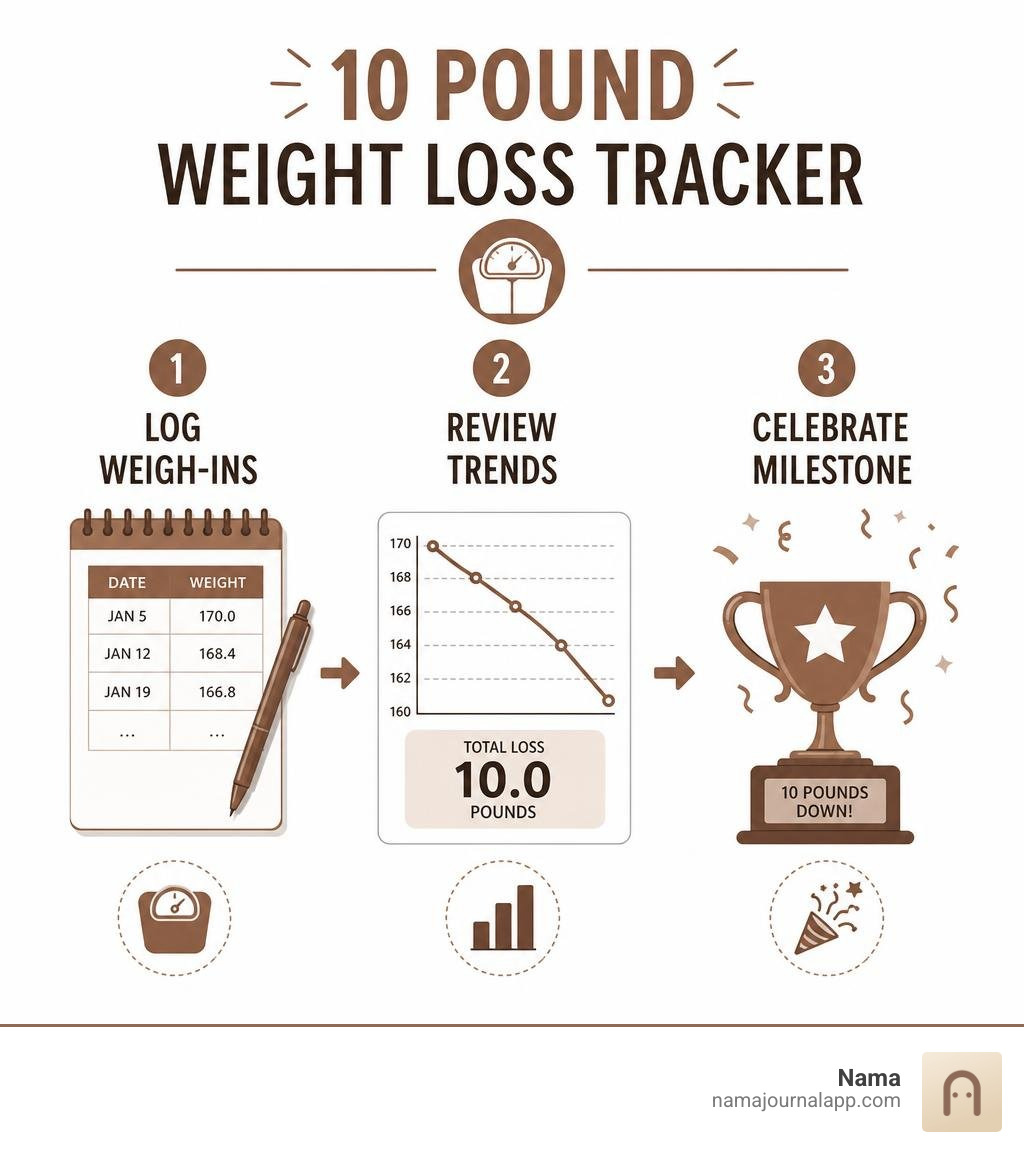
A 10 pound weight loss tracker turns one big goal into a clear, manageable milestone. Record your starting weight, weigh in on a consistent schedule, note the change, and mark each pound lost. Add short notes about meals, movement, sleep, mood, or other factors that may affect the scale.
This approach cannot guarantee success. Weight loss depends on many things, including your calorie intake, activity, health, and daily habits. But a 10-pound checkpoint can make progress feel less distant and help you spot what is working before you move to the next milestone.
For a simple, private tracker, include:
- Date and weight for every weigh-in.
- Change from the prior entry and total pounds lost.
- A visual 1-to-10 progress marker to color, check off, or update.
- Brief notes on habits and non-scale wins, such as stronger workouts or looser clothes.
Small scale changes from water, food, and hormones are normal. Focus on the overall trend, not a single day. A realistic pace for most adults is about 1 to 2 pounds per week, so a 10-pound milestone often takes roughly 5 to 10 weeks.
The Science of 10-Pound Increments: Calorie Deficits, Timelines, and Health Milestones
Losing body fat requires a sustained energy deficit. In human physiology, one pound of stored adipose tissue holds roughly 3,500 kilocalories of chemical energy. Burning through 10 pounds of actual fat mass means creating a cumulative deficit of approximately 35,000 calories over your maintenance needs.
Understanding your safe fat loss timeline helps keep expectations grounded. Organizations like the CDC, the Mayo Clinic, and the National Health Service define a sustainable fat-loss rate as 1 to 2 pounds per week (or roughly 0.5 to 1 kg per week). Following NHS safe weight loss benchmarks ensures that you are shedding adipose tissue rather than depleting vital organs or skeletal muscle mass.
To plan your timeframe, match your daily deficit to your target pace:
| Daily Calorie Deficit | Weekly Fat Loss Rate | Weeks to Lose 10 Pounds of Fat | Sustainability Rating |
|---|---|---|---|
| 250 kcal | 0.5 lbs (0.23 kg) | ~20 weeks | Very High (Gentle lifestyle shift) |
| 500 kcal | 1.0 lb (0.45 kg) | ~10 weeks | High (Standard clinical recommendation) |
| 750 kcal | 1.5 lbs (0.68 kg) | ~7 weeks | Moderate (Requires tight dietary control) |
| 1,000 kcal | 2.0 lbs (0.91 kg) | ~5 weeks | Low to Moderate (Challenging hunger cues) |
As you move through this timeline, your metabolism naturally slows down. This biological response, known as metabolic adaptation, decreases your resting metabolic rate and reduces subconscious movement to conserve energy. Keeping a structured journal allows you to monitor how your body responds to these metabolic shifts in real time.
The 5% Body Weight Impact on Blood Pressure and Joints
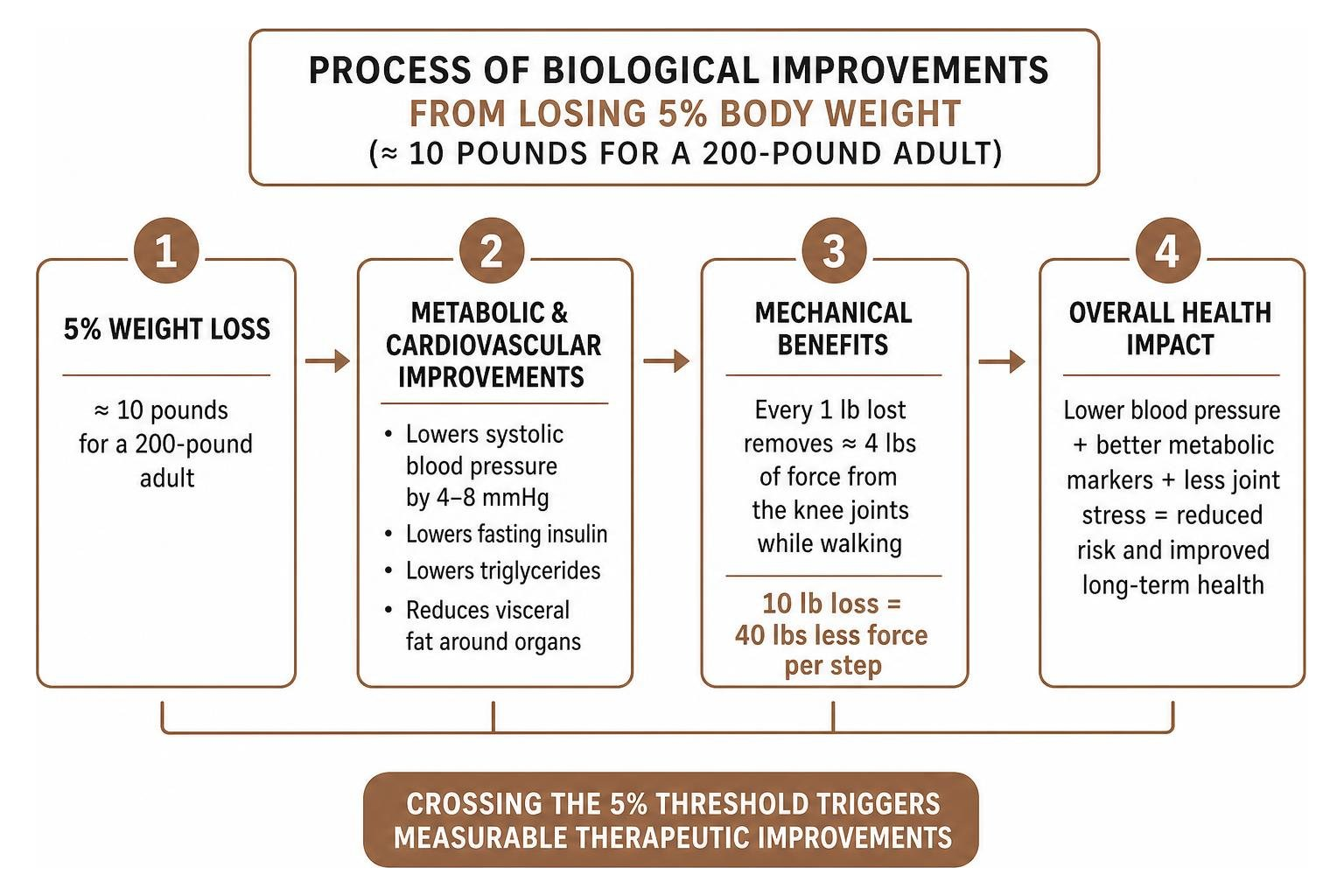
A 10-pound drop is not just an arbitrary aesthetic mark; it represents a major clinical milestone. For an individual weighing 200 pounds, 10 pounds represents exactly 5% of total body mass. Clinical trials demonstrate that crossing the 5% threshold triggers measurable therapeutic improvements across the cardiovascular and metabolic systems.
By calculating your weight loss percentage, you can measure progress against clinical health markers rather than just raw scale numbers. A 10-pound loss reduces systolic blood pressure by an average of 4 to 8 mmHg in adults with elevated baseline readings. It also reduces fasting insulin, lowers circulating triglycerides, and decreases visceral adipose tissue wrapped around internal organs.
Furthermore, biomechanical studies show that every single pound of body weight lost removes approximately 4 pounds of mechanical force from the knee joints during walking. Shedding 10 pounds relieves 40 pounds of cumulative joint pressure with every step you take.
Why Quick-Fix 2-Week Drops Differ from True Fat Loss
Fad diets and extreme cleanses often promise a 10-pound loss in 10 to 14 days. While the scale needle may indeed move that fast, that initial drop is almost entirely composed of water and stored glycogen, not body fat.
When you drastically slash carbohydrates and overall energy intake, your body uses its glycogen reserves stored in muscle tissue and liver cells. Every gram of glycogen is bound to roughly three to four grams of water. As these stores empty, several pounds of fluid flush through the kidneys:
- True Fat Loss: Burning 10 pounds of actual adipose tissue requires a 35,000-calorie deficit. Achieving that in 14 days demands a daily deficit of 2,500 calories—a physiological impossibility for almost every adult that leads to severe muscle catabolism.
- Water & Glycogen Shifts: A 10-pound drop in two weeks typically consists of 6 to 7 pounds of water and glycogen, alongside minimal fat and lean tissue loss.
- The Rebound Effect: As soon as normal hydration and caloric baselines return, glycogen stores replenish, bringing back 5 to 7 pounds of scale weight overnight.
Pacing your goals across 5 to 10 weeks preserves your resting metabolic rate, protects lean skeletal mass, and prevents rebound bingeing.
Why a 10 Pound Weight Loss Tracker Works Better Than Distant End Goals
When facing an ultimate goal of losing 40, 60, or 100 pounds, the brain often experiences cognitive overload. Long-distance goals can feel intangible, diminishing motivation when effort doesn't produce immediate results.
Segmenting a major fitness journey into 10-pound increments creates a rapid dopamine feedback loop. Completing smaller milestones gives the brain distinct finish lines to celebrate, reinforcing self-efficacy and adherence. Using a daily weekly monthly habit tracker app allows you to celebrate consistent routines—like hitting daily protein goals or step counts—alongside milestone scale weigh-ins.
Essential Metrics for Your 10 Pound Weight Loss Tracker Template
Whether you log in a digital wellness journal or use a paper template, tracking more than just raw weight provides context during temporary plateaus.
- Weigh-In Date: Log consistent intervals (daily or weekly) under standardized conditions (e.g., first thing in the morning after using the bathroom and before eating).
- Scale Weight: Record your raw weight in pounds or kilograms.
- Delta Difference: Calculate the difference between your current weigh-in and your previous entry, alongside cumulative progress toward your 10-pound target.
- Non-Scale Victories (NSVs): Note physical changes such as belt notches, deeper sleep, sustained energy, or improvements in lifting strength.
- Qualitative Notes: Add brief notes about sodium intake, stress levels, hydration, sleep quality, or menstrual cycle phases to explain temporary fluid retention.
Printable vs Digital: Finding the Best 10 Pound Weight Loss Tracker
Choosing between an analog printable journal and a private digital tracking tool depends on your lifestyle preferences:
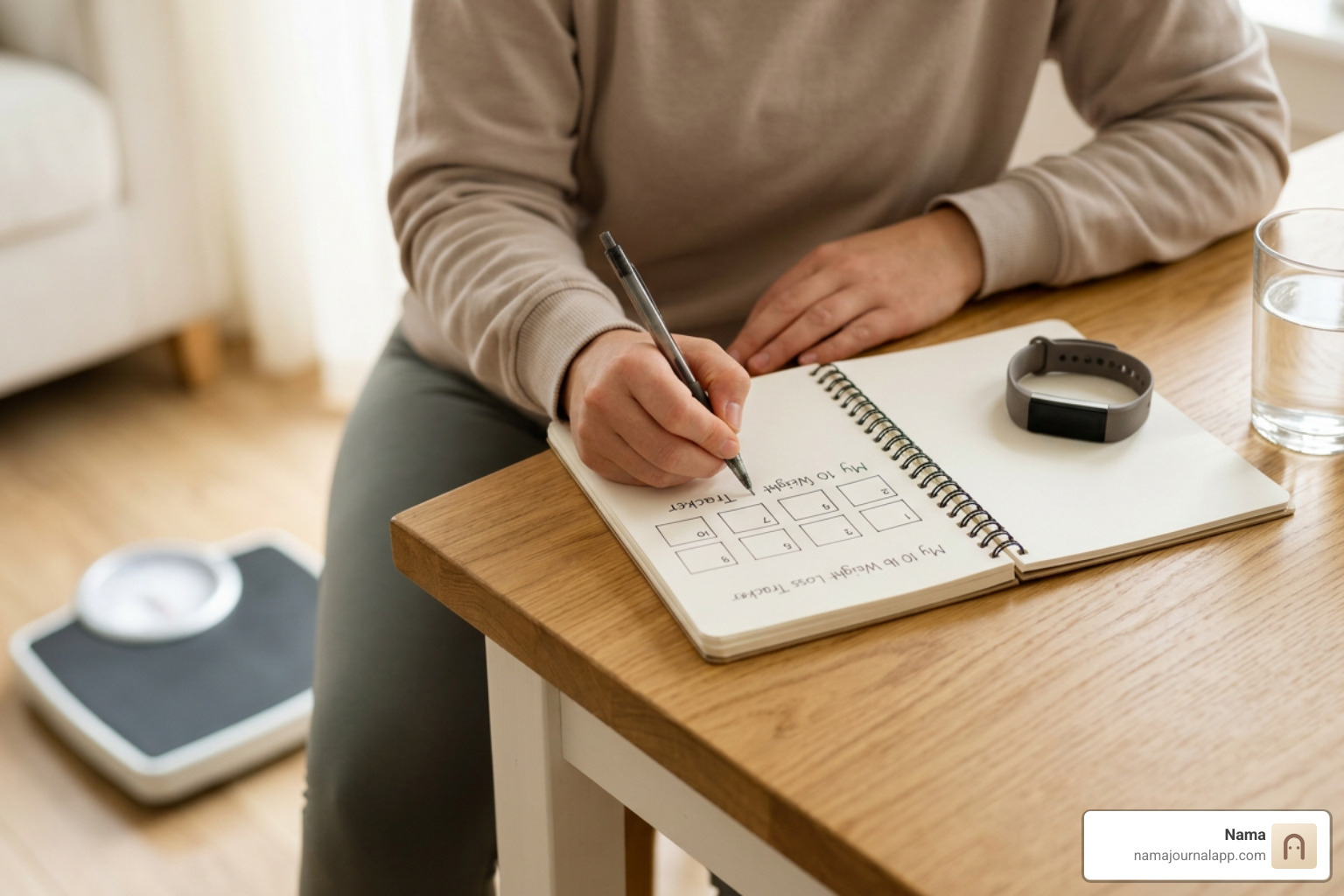
- Printable Trackers: Physical paper templates offer a tactile experience. Coloring in a block for every single pound lost provides visual satisfaction. Hanging a sheet on the refrigerator or bathroom mirror keeps the goal visible throughout the day.
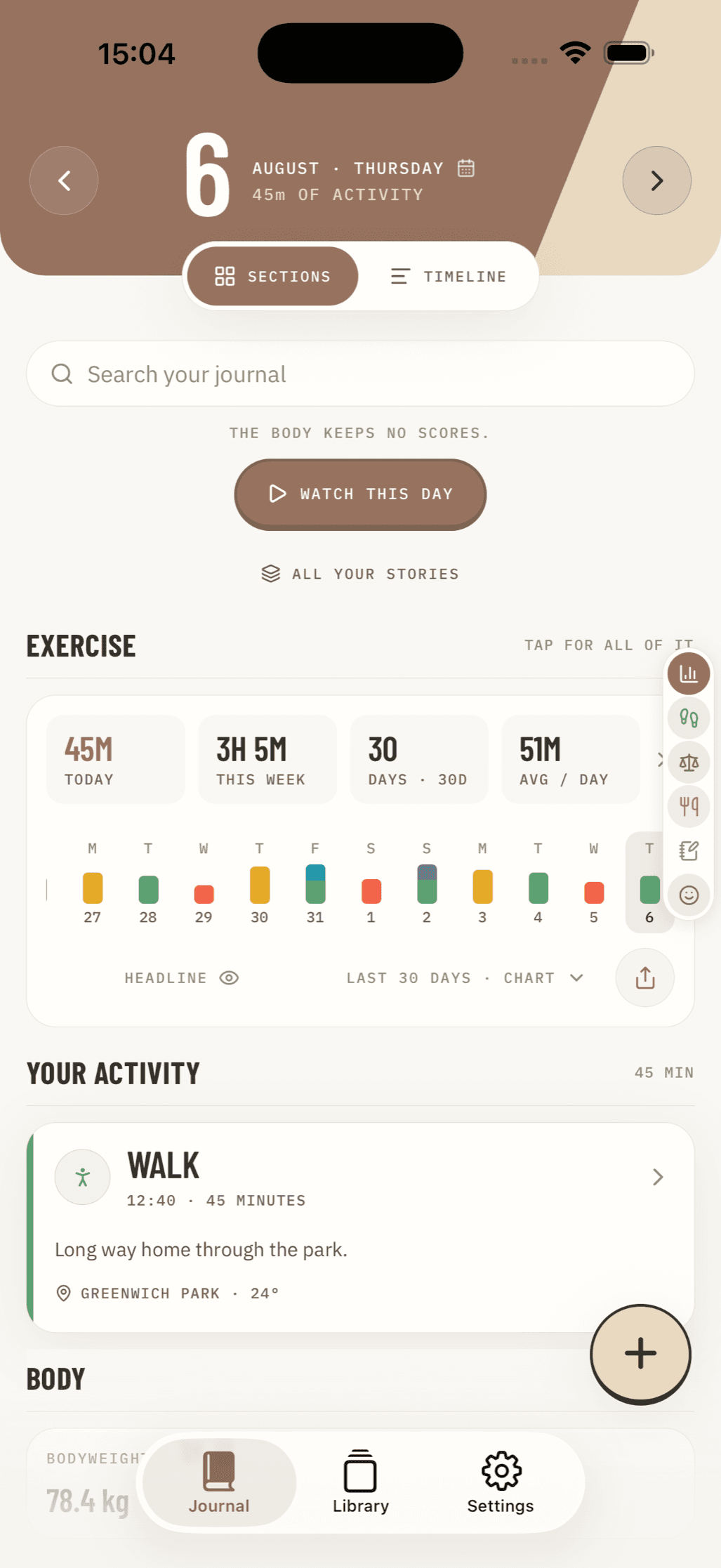
- Digital Health Trackers: A modern app offers automatic trend calculations, rolling averages, and encrypted storage. Digital journals let you log private meal photos and body measurements wherever you are. To build a personalized setup, explore flexible custom health tracking features that allow you to track workouts, symptoms, and weight without relying on cloud-based accounts.
5 Core Strategies to Overcome Plateaus When Losing the Last Few Pounds
Losing the final 2 to 3 pounds of a 10-pound block is often noticeably slower than shedding the first few. As your body mass shrinks, your total energy expenditure drops, and survival mechanisms trigger increases in hunger hormones like ghrelin alongside decreases in satiety signals like leptin.
To break through stubborn plateaus, apply these five evidence-based adjustments:
- Audit for Calorie Creep: Unmeasured cooking oils, salad dressings, sauces, and handfuls of snacks can easily add 200 to 400 unaccounted calories each day, erasing a modest deficit.
- Prioritize Protein Intake: Raise protein to 1.6–2.2 grams per kilogram of body weight. Protein increases satiety and carries a high thermic effect of food (TEF), burning 20–30% of its usable energy during digestion.
- Monitor Non-Exercise Activity Thermogenesis (NEAT): When dieting, you may subconsciously sit more, fidget less, and walk slower. Maintain a dedicated daily step goal (e.g., 8,000 to 10,000 steps) to prevent your baseline energy output from sliding downward.
- Take a Planned 1-Week Diet Break: Eating at your updated maintenance calorie level for 7 to 14 days helps normalize circulating thyroid and leptin levels, reduces psychological diet fatigue, and resets your metabolism before you resume a deficit.
- Prioritize Sleep and Cortisol Management: Chronic sleep deprivation elevates systemic cortisol, leading to intracellular fluid retention that masks fat loss on the scale for weeks at a time. Aim for 7 to 9 hours of restorative sleep each night.
Recalculating Energy Needs as Body Mass Drops
Your Total Daily Energy Expenditure (TDEE) is not static. When you lose weight, your smaller body requires fewer calories to move, breathe, and pump blood.
To maintain a consistent rate of fat loss, recalculate your energy balance after every 5 to 10 pounds lost using the Mifflin-St Jeor equation. Using a digital kitchen scale to weigh food portions in grams—rather than relying on subjective eye-balling or volume cups—ensures your tracking matches your recalculated calorie targets.
Preserving Lean Muscle Mass with Protein and Resistance Workouts
When running a caloric deficit, your body pulls energy from both adipose reserves and lean muscle tissue. Preserving skeletal muscle is essential because muscle mass maintains resting metabolic rate and creates a toned, functional physique:
- High-Protein Distribution: Spread your 1.6 to 2.2 g/kg of daily protein across three to four meals to stimulate muscle protein synthesis throughout the day.
- Progressive Resistance Training: Perform 2 to 4 strength-training sessions per week. Lifting weights or doing challenging bodyweight exercises signals your body to retain muscle tissue while burning fat for fuel.
Key Features to Look for in a Modern Weight Loss Tracking App
If you prefer logging your health milestones digitally, choose an app that supports long-term habits without compromising personal privacy. Look for these essential features:
- Offline Functionality & No-Account Design: Health and weight data are deeply personal. The most secure trackers operate entirely offline on your device without requiring account creations, social logins, or external cloud storage.
- Custom Metric Tracking: You should be able to log scale weight alongside non-scale health indicators, such as waist measurements, daily water intake, symptoms, and workout performance.
- Visual Trendlines and Rolling Averages: Day-to-day water weight fluctuations can cause unnecessary anxiety. An effective tracker charts rolling weekly averages to highlight your true fat-loss trajectory over time.
- Full Data Ownership and Export: Choose an app that lets you export your notes, weigh-in records, and meal photos into universal formats (like CSV, JSON, or PDF) whenever you want.
Frequently Asked Questions About 10-Pound Weight Loss
How long does it realistically take to lose 10 pounds safely?
At a medically recommended fat-loss rate of 1 to 2 pounds per week, losing 10 pounds of actual body fat takes between 5 and 10 weeks. This timeframe allows you to burn adipose tissue without sacrificing muscle mass or slowing your resting metabolic rate.
What is the exact calorie deficit required to burn 10 pounds of fat?
Burning 10 pounds of body fat requires an approximate cumulative energy deficit of 35,000 calories. Maintaining a daily deficit of 500 calories below your maintenance expenditure burns 10 pounds in roughly 10 weeks, while a 750-calorie daily deficit takes about 7 weeks.
How does a 10-pound weight reduction affect BMI and waist circumference?
For an average-height adult (around 5'7" or 170 cm), a 10-pound weight reduction lowers Body Mass Index (BMI) by approximately 1.5 to 1.6 points. In individuals with central adiposity, shedding 10 pounds typically reduces waist circumference by 1 to 2 inches, improving cardiovascular risk markers.
Conclusion
Breaking a major fitness journey into 10-pound increments transforms an overwhelming challenge into actionable, sustainable milestones. By combining a realistic 35,000-calorie deficit, consistent protein intake, and resistance workouts, you can achieve steady fat loss while protecting your lean muscle mass and metabolic health.
Consistent self-monitoring is the cornerstone of long-term weight management. To keep your health journey simple and secure, track anything in Nama—our private, offline iOS wellness journal that stores all your milestones, weigh-ins, and daily habits safely on your iPhone. Choose your tracking method, establish your daily routine, and focus on one 10-pound victory at a time.