Top Picks for an Accurate Calorie Counter in 2026
Choose an Accurate Calorie Counter That Fits Your Life

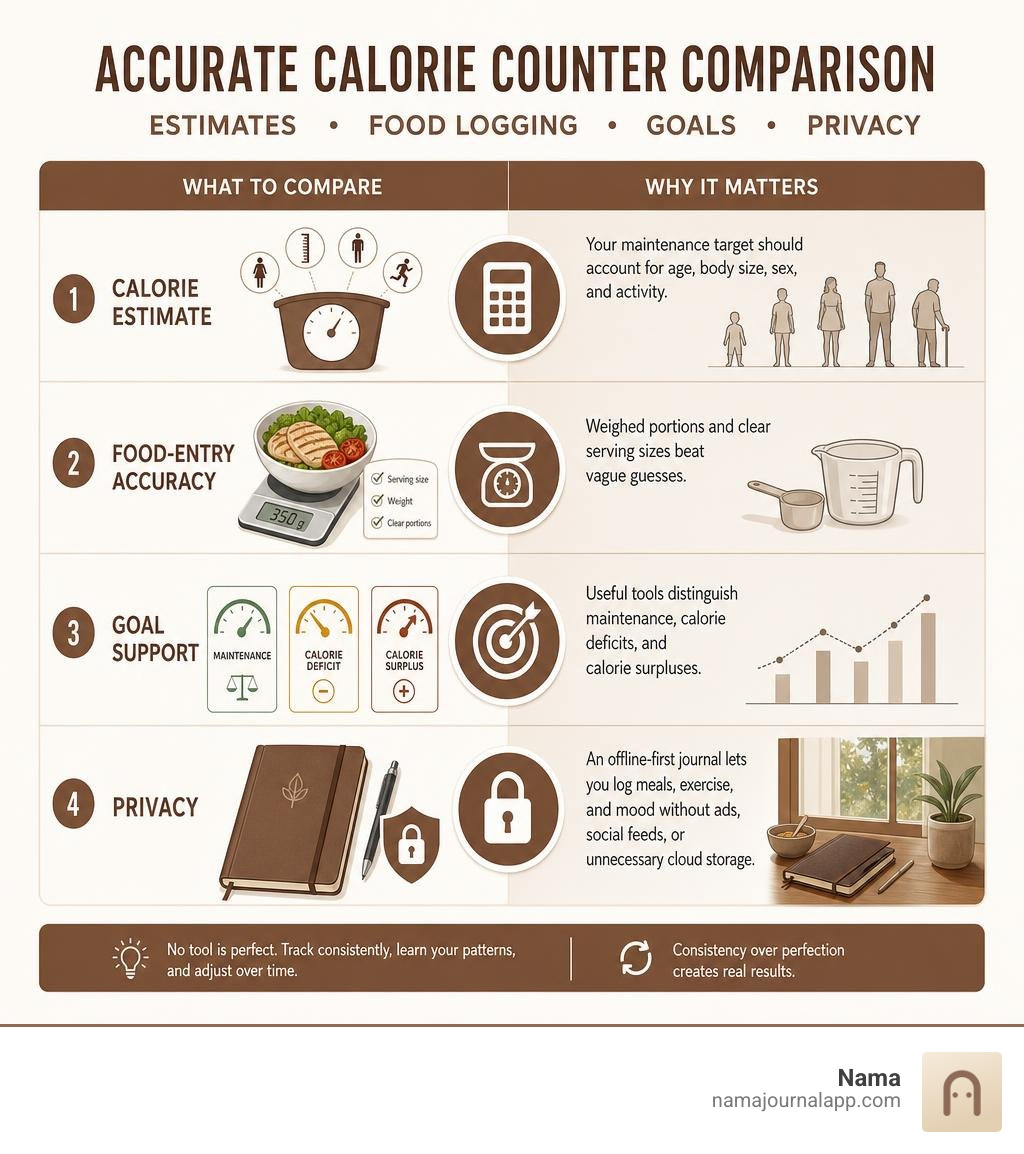
An accurate calorie counter combines a sound daily calorie estimate with consistent food logging, realistic activity settings, and a tracking method you will actually use.
| What to compare | Why it matters |
|---|---|
| Calorie estimate | Your maintenance target should account for age, body size, sex, and activity. |
| Food-entry accuracy | Weighed portions and clear serving sizes beat vague guesses. |
| Goal support | Useful tools distinguish maintenance, calorie deficits, and calorie surpluses. |
| Privacy | An offline-first journal can let you log meals, exercise, and mood without ads, social feeds, or unnecessary cloud storage. |
Calories are units of energy. Over time, weight tends to stay stable when the energy you eat and drink is close to the energy your body uses. But no app, calculator, or food database can produce a perfect number. Labels can vary, restaurant portions are estimates, and your daily burn changes with movement, sleep, stress, and body weight.
That is why the best counter is not simply the one with the biggest food database. It is the one that gives you a sensible starting point, makes portion tracking easy, respects your data, and helps you spot patterns without turning every meal into a math test.
This guide compares the top approaches to calorie counting in 2026, including private manual journals, calculators, and database-based trackers.
Accurate calorie counter basics:
- best app for measuring calories
- calorie tracker app
The Science Behind an Accurate Calorie Counter and Daily Energy Intake
Understanding how an accurate calorie counter computes your daily targets requires looking into energy balance mechanics. A calorie is fundamentally a unit of energy derived from food and beverage intake. To manage weight effectively—whether the objective is fat loss, muscle growth, or maintaining your current physique—you must balance energy intake against total daily energy expenditure (TDEE).
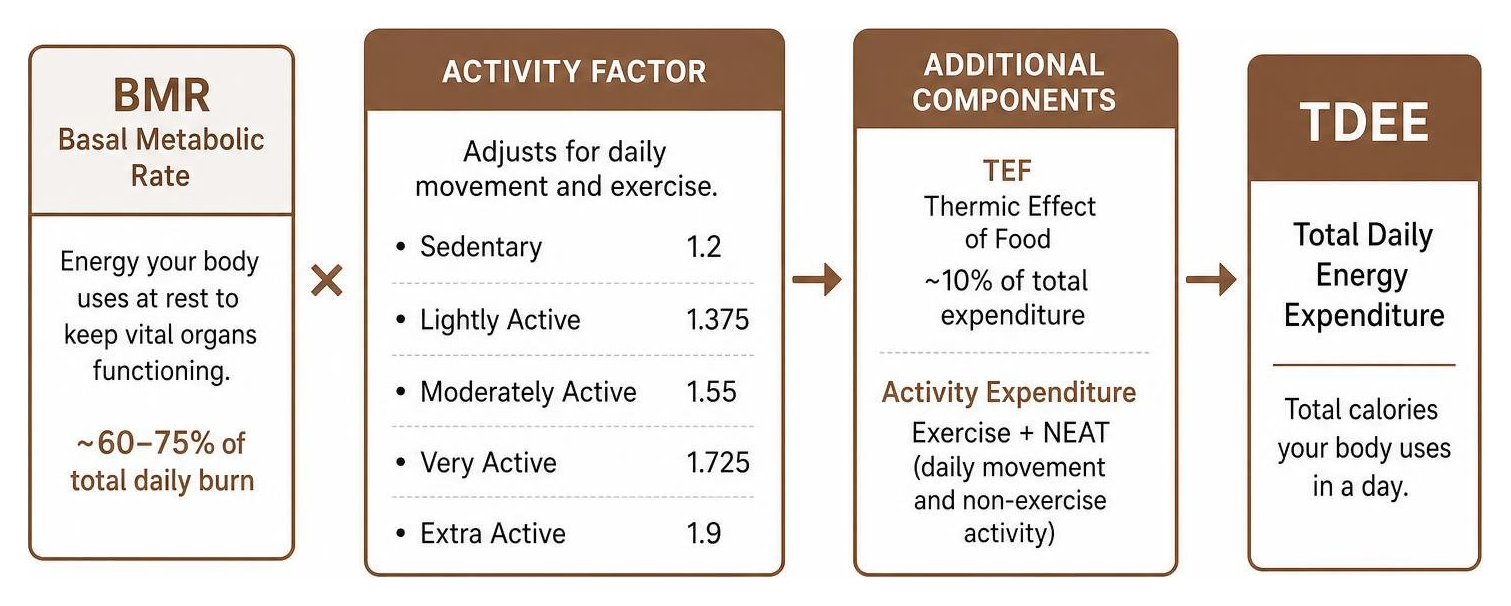
TDEE consists of three core components:
- Basal Metabolic Rate (BMR): The calories your body expends at rest to keep vital organs functioning, which accounts for roughly 60% to 75% of daily energy burn.
- Thermic Effect of Food (TEF): The energy expended to digest, absorb, and metabolize nutrient compounds (roughly 10% of total expenditure).
- Physical Activity Expenditure: Energy consumed through structured exercise alongside non-exercise activity thermogenesis (NEAT), such as standing, fidgeting, and walking.
To establish an reliable starting point, an accurate calorie counter applies validated biological formulas adjusted for physical variables: biological sex, age, height, and body weight. Adult males typically require between 2,000 and 3,000 calories daily for weight maintenance, whereas adult females generally require between 1,600 and 2,400 calories daily. However, these baseline averages vary dramatically depending on individual physiological traits. For instance, a sedentary 70-year-old woman requires significantly fewer calories than a physically active 25-year-old male.
To calculate your total daily requirements, standard algorithms multiply your BMR by an activity multiplier based on physical activity tiers.
Calculating Basal Metabolic Rate with an Accurate Calorie Counter
The cornerstone of any reliable calorie engine is its underlying biological equation. Not all formulas calculate resting expenditure in the same way, which is why choosing the right mathematical baseline is critical for accuracy.
The Mifflin-St Jeor Equation is widely accepted as the standard equation for estimating BMR in healthy adults. Developed to refine older estimations like the Revised Harris-Benedict Equation, Mifflin-St Jeor closely mirrors metabolic cart measurements across diverse body profiles:
- For Men:
BMR = (10 × weight in kg) + (6.25 × height in cm) - (5 × age in years) + 5 - For Women:
BMR = (10 × weight in kg) + (6.25 × height in cm) - (5 × age in years) - 161
While Mifflin-St Jeor performs exceptionally well for the majority of the population, individuals with high muscle mass or lower body fat percentages may find it underestimates their actual metabolic requirements. In such cases, the Katch-McArdle Formula provides a more precise alternative because it relies directly on lean muscle mass rather than total scale weight:
- Katch-McArdle Equation:
BMR = 370 + (21.6 × Lean Body Mass in kg)
By evaluating your unique body composition alongside reliable physical metrics, an accurate calorie counter prevents common estimation errors that lead to overeating or underfueling.
How Physical Activity Factors into Maintenance, Loss, and Gain Calories
Once BMR is calculated, your total daily requirements depend directly on lifestyle movement levels. Most estimation models convert daily habits into specific activity tiers:
- Inactive / Sedentary (BMR × 1.2): Minimal movement beyond light domestic tasks like cooking or walking short distances.
- Somewhat Active / Lightly Active (BMR × 1.375): Light exercise or walking equivalent to 4,000 to 7,000 steps daily.
- Active / Moderately Active (BMR × 1.55): Engaging in 30 minutes of moderate physical activity most days of the week, or 20 minutes of vigorous exercise three days per week.
- Very Active (BMR × 1.725 to 1.95): Intensive exercise or physical labor 6 to 7 days per week.
A standard guideline for safe weight loss is reducing intake by 500 calories per day below your baseline maintenance figure. Because one pound of body fat equals approximately 3,500 calories, a daily 500-calorie deficit translates theoretically to losing one pound of fat per week. Conversely, achieving lean muscle gain requires establishing a controlled caloric surplus of 250 to 500 calories above maintenance alongside progressive resistance training.
Essential Features to Look for in a Calorie Tracking Method
Selecting the right tracking system involves more than simply searching for an extensive food database. Long-term compliance depends on user privacy, interface simplicity, and effective tools for analyzing macro trends over time. Check out our core Features to explore how intuitive journaling supports sustainable health habits.
When comparing calorie tracking options, consider how well each method handles energy balance drivers:
- Macronutrient Balance: Tracking proteins, carbohydrates, and fats alongside total calories to preserve muscle tissue and sustain energy.
- Thermic Effect of Food (TEF): Recognizing that complex whole foods require more energy to digest than heavily processed items.
- Calorie Density: Prioritizing nutrient-dense, high-volume foods (such as vegetables and lean proteins) that promote satiety on lower total calorie budgets.
- Portion Control: Utilizing kitchen scales, clear serving metrics, and standardized measurements rather than rough guesswork.
- Data Security: Ensuring your personal health metrics remain private and stored safely under your direct control.
| Tracking Method | Accuracy Level | Data Privacy & Control | Setup Complexity | Best Suited For |
|---|---|---|---|---|
| Private Journal Apps (e.g., Nama) | High (user-controlled measurements) | 100% Private (local storage, no account) | Low | Individuals seeking privacy, custom logging, and habit building |
| Web-Based Calculators | Medium (broad baseline estimates) | Variable (may track session data) | Very Low | Quick spot-checks and initial baseline target calculations |
| Cloud Database Trackers | Variable (crowdsourced entries can carry errors) | Low (cloud account required, personal data sync) | Moderate | Users who prioritize pre-populated barcode lookup over privacy |
Selecting the Best App for Measuring Calories Safely
Many mobile applications collect sensitive personal data, require online user accounts, or lock basic logging features behind subscription paywalls. If you want full control over your personal metrics, choosing an app prioritizing security and offline functionality is essential.
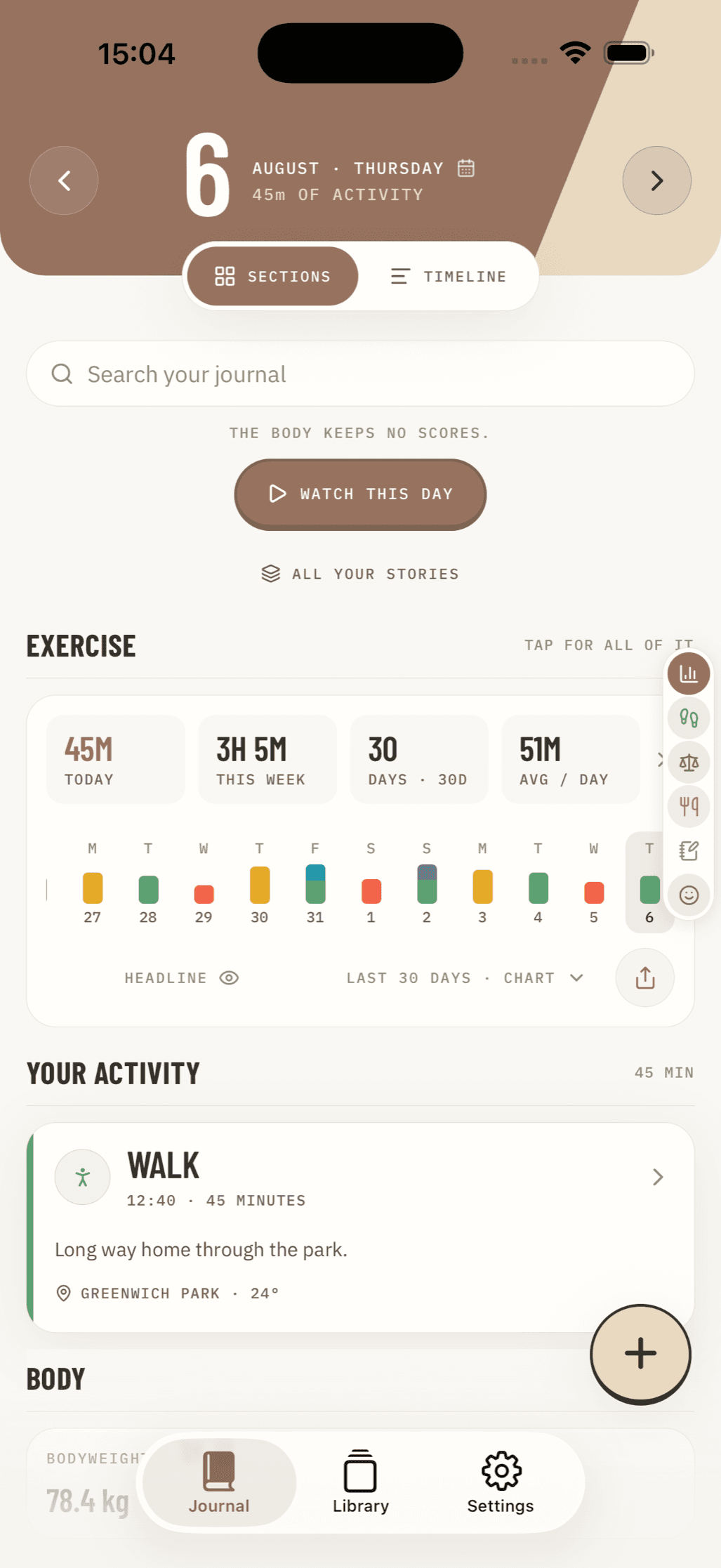
Using a private Food Diary allows you to log daily meals, exercise habits, and physical metrics directly on your device. We designed the Nama wellness journal around a zero-compromise approach to user privacy. Operating strictly in the health-and-wellness software space, Nama provides an offline-first experience on iOS that stores all your logs, meal notes, custom metrics, and photos directly on your iPhone.
Because there are no mandatory user accounts, cloud tracking servers, or intrusive analytics, your health journey remains entirely private. Furthermore, full export options ensure you retain 100% ownership of your text logs and images at all times. If you want to dive deeper into evaluating modern tracking tools, review our guide on the Best App for Measuring Calories.
Macro Tracking and Portion Control with an Accurate Calorie Counter
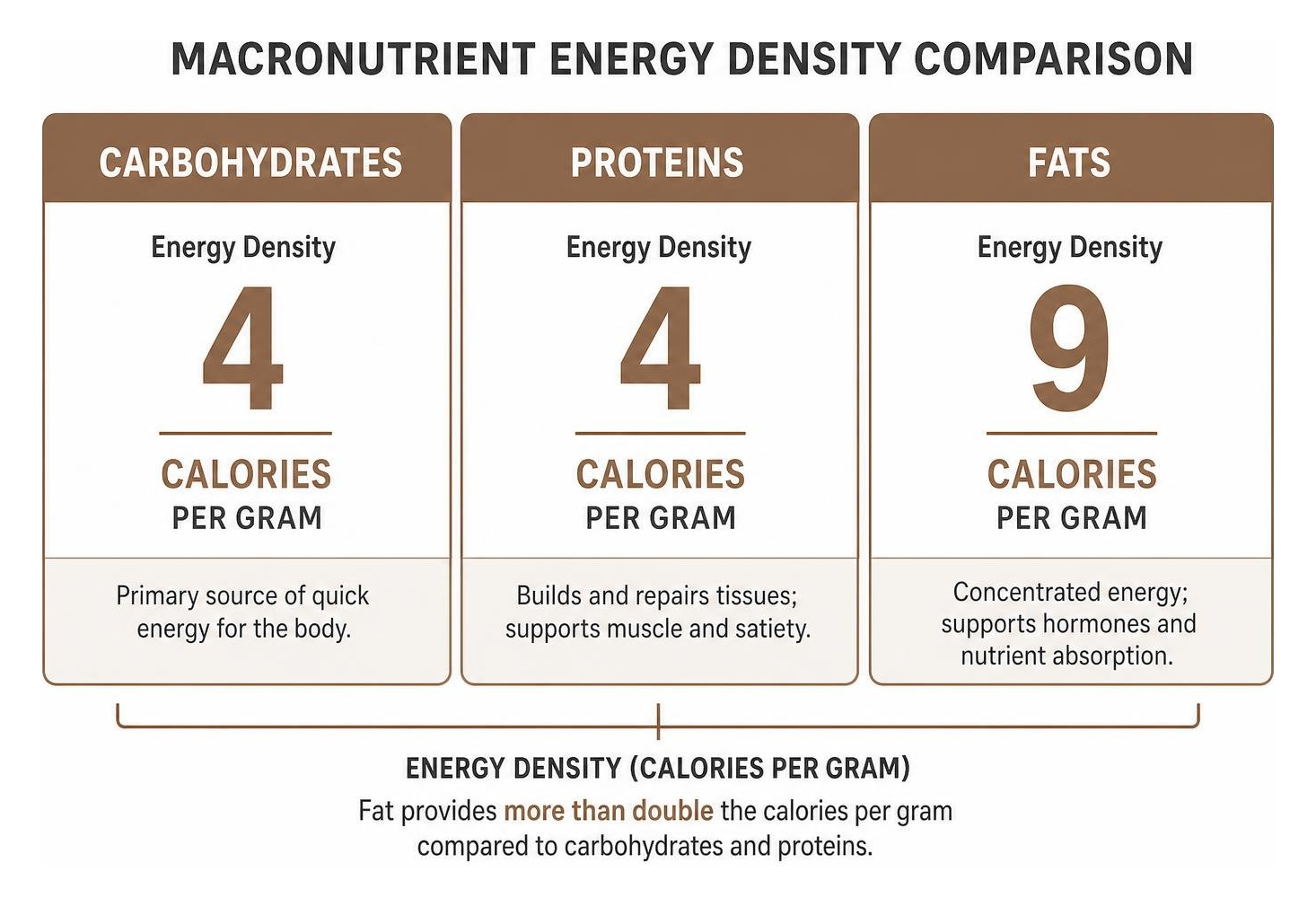
Energy tracking becomes far more effective when you pay attention to macronutrient distribution:
Protein plays an indispensable role during a calorie deficit. Sufficient protein intake safeguards lean muscle tissue and increases satiety. Carbohydrates provide readily available glycogen for intensive workouts, while healthy fats support endocrine health and hormone production.
Portion control is another critical factor. Liquid calories alone—found in sodas, sweetened coffees, juices, and alcohol—account for an estimated 21% of the average person's daily caloric intake. Because liquid calories rarely trigger fullness cues, logging drinks accurately is vital.
Using tools that let you Track Anything allows you to monitor meal portions, fluid intake, workout notes, and biofeedback markers like sleep and energy in a unified journal.
Advanced Strategies for Weight Loss, Gain, and Plateau Management
A common frustration in weight management is hitting a progress plateau. Even when following an accurate calorie counter, weight loss can stall after several weeks of continuous restriction due to metabolic adaptation and reduced body weight.
Breaking Plateaus with Zigzag Calorie Cycling
When your body adapts to a static caloric deficit, resting expenditure drops slightly to conserve energy. Zigzag calorie cycling (also known as calorie rotation) prevents this slowdown by fluctuating daily intake while keeping weekly overall averages constant.
For example, instead of consuming 1,500 calories every single day (totaling 10,500 calories per week), a user might structure their week like this:
- Monday – Thursday (Low Days): 1,350 calories/day
- Friday – Saturday (High Days): 1,850 calories/day
- Sunday (Moderate Day): 1,500 calories
This variation provides periodic metabolic boosts on higher-calorie days, supports training intensity, and offers psychological flexibility for weekend social activities without derailing weekly deficit targets.
Preventing Metabolic Slowdown and Muscle Loss
Cutting calories too aggressively poses severe physiological risks. Losing more than 2 pounds per week often leads to muscle wasting, nutrient deficiencies, fatigue, and hormonal disruptions.
Harvard Health Publishing recommends establishing strict daily intake minimums unless under direct medical supervision:
- Women: Minimum of 1,200 calories per day
- Men: Minimum of 1,500 calories per day
Dropping below these thresholds reduces thyroid hormone production and lowers resting metabolic rate, making long-term weight maintenance significantly harder.
Physical exercise helps protect against metabolic deceleration. Here is an overview of approximate calories burned during 60 minutes of exercise for a 155 lb individual:
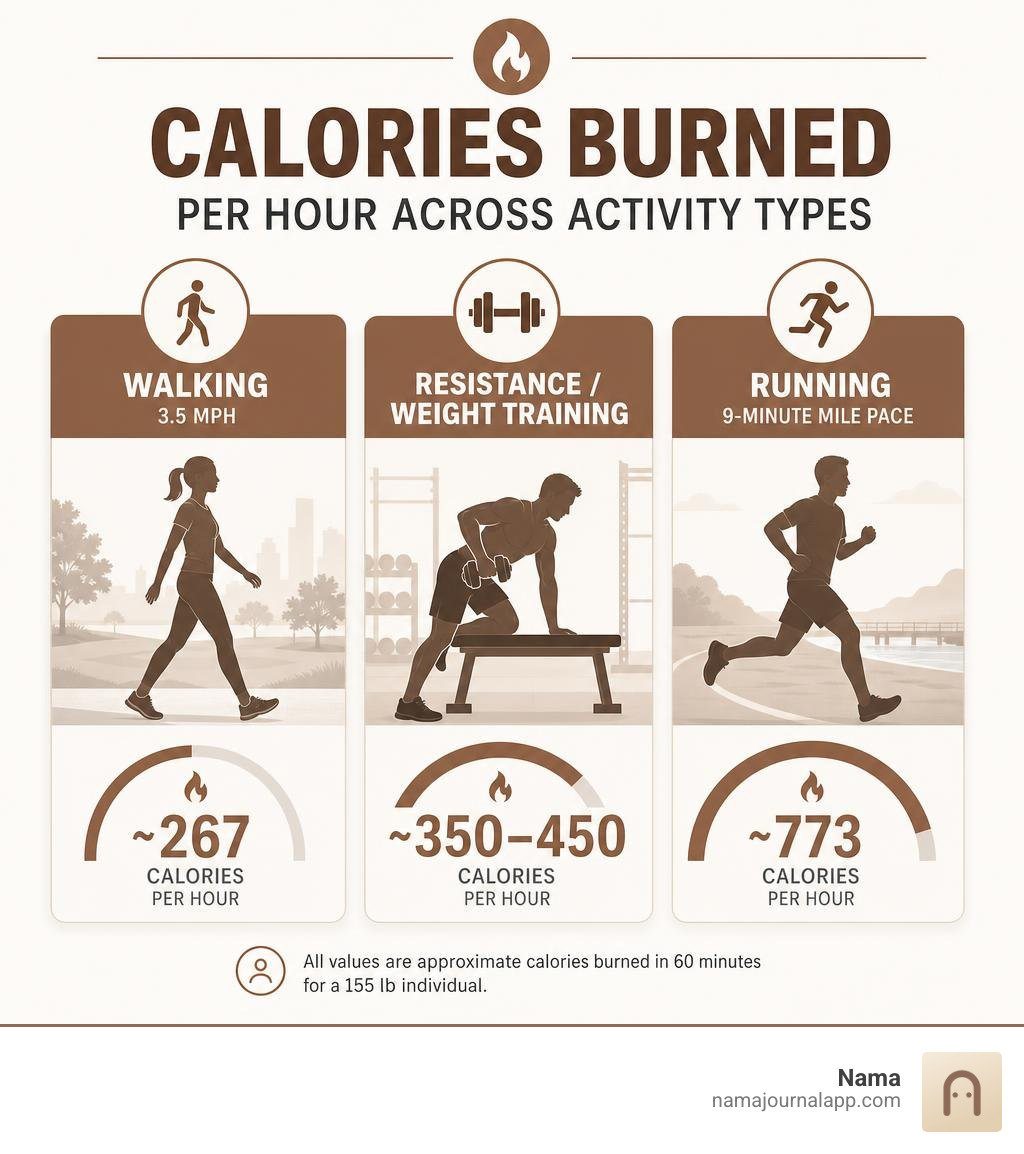
- Walking (3.5 mph): ~267 calories burned per hour
- Resistance / Weight Training: ~350–450 calories burned per hour
- Running (9-minute mile pace): ~773 calories burned per hour
Combining regular strength exercise with moderate daily calorie deficits helps ensure that weight lost comes primarily from body fat rather than lean muscle tissue.
Combining Calorie Counters with Body Planners for Long-Term Maintenance
To achieve lasting results, short-term calorie targets must eventually transition into sustainable maintenance habits. Government tools like the National Institute of Diabetes and Digestive and Kidney Diseases (NIDDK) Body Weight Planner highlight that dynamic metabolism shifts as scale weight changes. As you lose weight, your body requires fewer baseline calories to maintain its new, lighter mass.
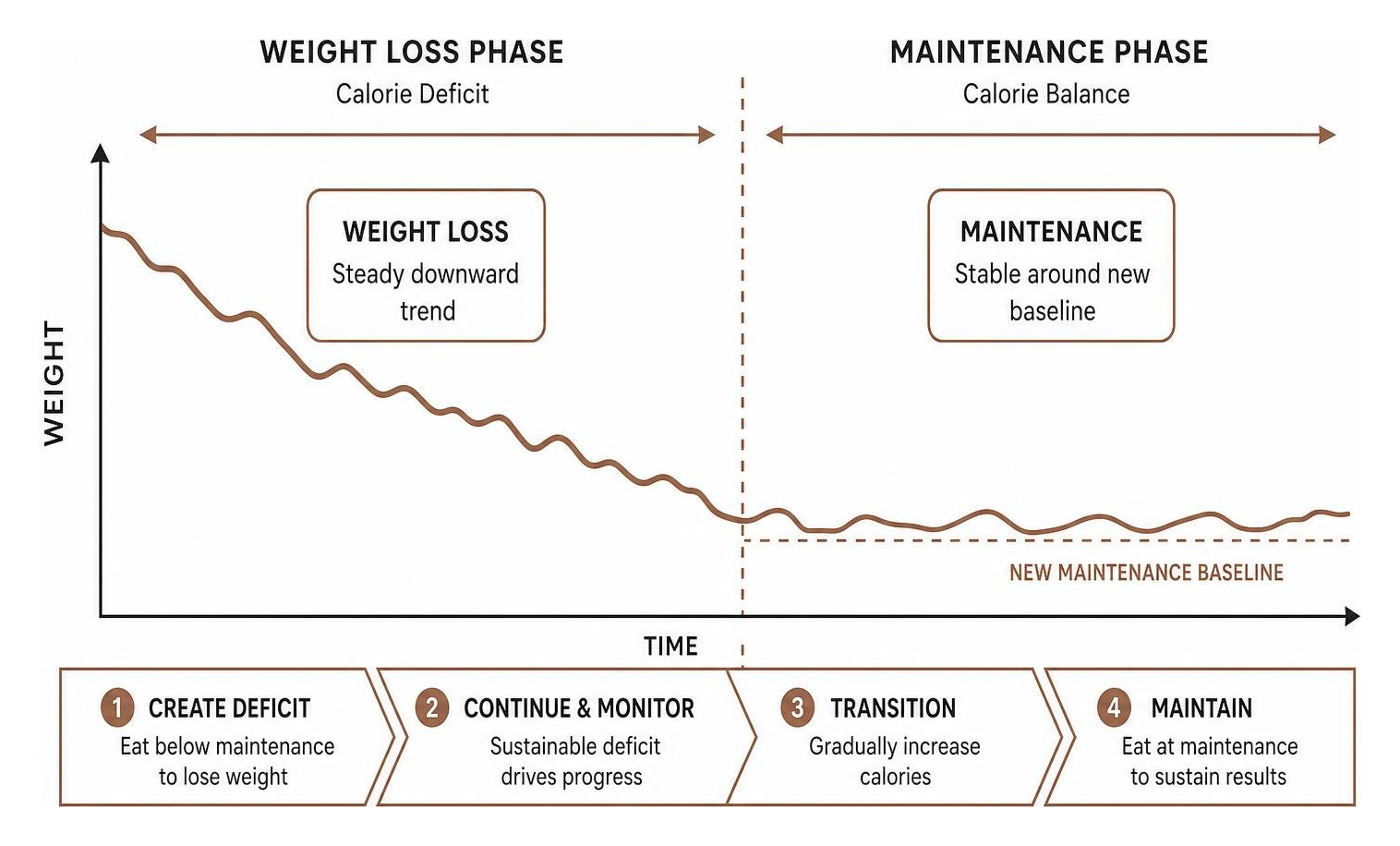
To maintain weight loss permanently:
- Recalculate Basal Requirements: Update your BMR and activity multiplier after every 5 to 10 pounds of body weight change.
- Transition Gradually: Avoid immediately returning to pre-diet eating habits. Instead, raise daily calories by 100 to 150 calories per week until reaching your new maintenance baseline.
- Log Intermittently: Once your target weight is stable, use a private Calorie Tracker App for periodic check-ins to monitor portion sizes without needing to track indefinitely.
- Focus on Consistency: Recognize that daily weight fluctuates due to water retention, salt intake, and digestive stress. Focus on weekly average weight trends rather than day-to-day fluctuations.
Frequently Asked Questions About Calorie Tracking
What is the most accurate BMR equation for calorie counting?
The Mifflin-St Jeor Equation is widely recognized as the most accurate standard formula for general adult populations. However, for lean individuals or athletes who know their precise body fat percentage, the Katch-McArdle Formula provides higher precision because it factors lean body mass directly into its rest calculations.
How many calories should I cut daily to lose weight safely?
Reducing daily intake by 500 calories below your maintenance baseline is the standard recommendation for losing approximately 1 pound per week. A 1,000-calorie daily deficit yields roughly 2 pounds of weight loss per week. Health authorities strongly advise against targeting weight loss faster than 2 pounds per week to prevent muscle degradation and metabolic slowdown.
Why does weight loss slow down over time even if calorie intake stays constant?
Weight loss naturally tapers due to adaptive thermogenesis and reduced body mass. As your body weight decreases, moving and maintaining your physique requires fewer total calories. Additionally, the body adapts to caloric restriction by subtly lowering non-exercise activity thermogenesis (NEAT). To resume progress, you must recalculate your baseline energy requirements for your current weight.
Conclusion
Finding an accurate calorie counter is ultimately about selecting a method that fits your personal lifestyle, respects your privacy, and provides reliable targets for your health goals. Whether you are cutting body fat, building muscle mass, or sustaining your physical progress, true long-term success comes from understanding energy balance and pairing it with daily consistency.
By focusing on whole foods, keeping protein intake high, and choosing an offline, privacy-first journal, you can build clear awareness of your eating habits without surrendering control over your private personal data. Explore the Nama Journal to build secure, user-focused logging habits on your iPhone today.