Find the Best Food Tracking App for Micronutrients and Macros
Why You Need the Best Food Tracking App for Micronutrients

The best food tracking app micronutrients depends on whether you need deep nutrient data, simple meal logging, athlete-focused insights, or a private daily journal.
| If your priority is... | Start by comparing apps that offer... |
|---|---|
| The most detailed vitamin and mineral data | Extensive nutrient profiles and verified food databases |
| Fast, low-effort meal logging | Barcode scanning, photo logging, and reliable search |
| Plant-based nutrition | Clear tracking for B12, iron, calcium, zinc, iodine, and protein |
| Training and recovery | Hydration, sodium, potassium, magnesium, and wearable connections |
| Privacy and a calmer tracking experience | Offline options, minimal ads, no social feed, and clear data controls |
Calories and macros tell you how much energy, protein, fat, and carbohydrate you eat. They do not always show whether your diet supplies enough iron, vitamin D, folate, magnesium, or other nutrients that support energy, immunity, mood, and recovery.
That gap matters. A person can hit a calorie target every day and still have a diet that falls short in key vitamins and minerals.
In this roundup, we compare leading food trackers for macro and micronutrient depth, database quality, logging tools, safety features, personalization, and privacy. The goal is not to turn every meal into a lab report. It is to find an app you can use consistently and trust.
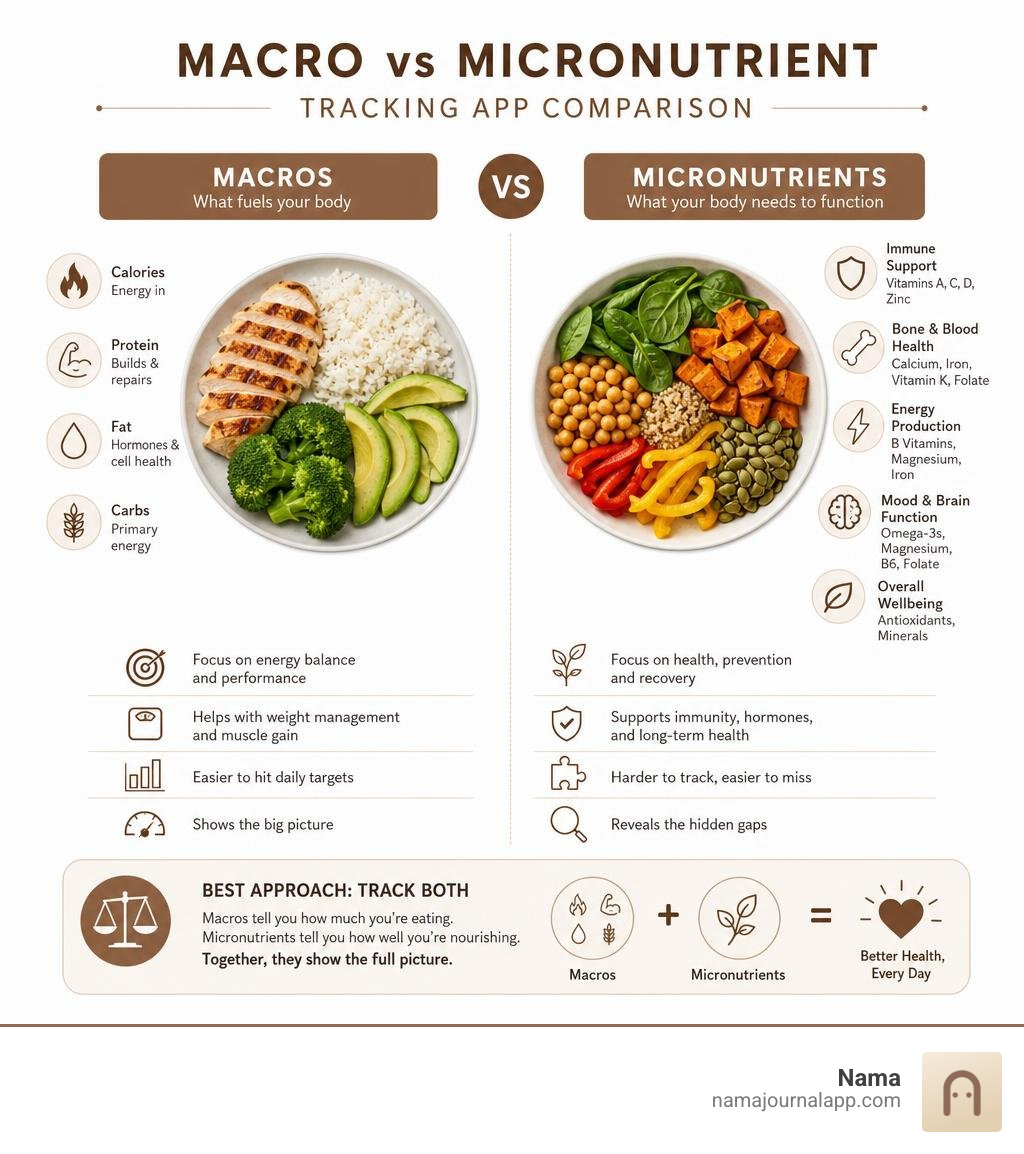
Most traditional calorie-counting strategies operate on a simple assumption: if your daily energy balance and protein targets line up, your body has what it needs. However, modern clinical data paints a different picture. Research highlights that up to 92% of Americans live with at least one essential nutrient deficiency. You might feel perpetually fatigued, deal with stubborn muscle cramps, or notice slow recovery times after workouts despite hitting your macro goals perfectly.
This disconnect happens because macros (protein, carbohydrates, and fats) serve as fuel and building blocks, while micronutrients (vitamins, minerals, and trace elements) act as the spark plugs. Without sufficient iron, oxygen transport in the blood decreases, leading to chronic tiredness. Without magnesium and potassium, cellular hydration and nerve signaling degrade. Without vitamin D and B-complex vitamins, metabolic reactions stall.
When searching for the best food tracking app micronutrients, looking past surface-level energy metrics is essential. Generic nutrition tracking applications often monitor only 15 basic metrics (like calories, total fat, sodium, and protein). Advanced nutrient-focused apps, by contrast, track anywhere from 84 to over 125 detailed micronutrients, including specific amino acid ratios, fatty acid profiles, and trace minerals.
By keeping a thorough Food Diary, you move from reactive guessing to proactive planning. Instead of wondering why your energy dips every afternoon, a comprehensive daily log reveals specific dietary gaps—such as missing your recommended intake of folate or copper—allowing you to make targeted adjustments before chronic deficiency symptoms manifest.
Key Features to Look For in a Micronutrient Tracker
Selecting the right nutrition app requires evaluating how a tool balances scientific accuracy with everyday usability. A app with 150 nutrients is useless if adding a bowl of oatmeal takes ten minutes of manual adjustments.
When evaluating nutrient trackers, keep these core features top of mind:
- Database Verification: Look for apps that cross-reference entries against gold-standard clinical research databases like the USDA FoodData Central.
- Customizable Reference Targets: Your daily vitamin requirements shift based on age, biological sex, activity level, pregnancy, and underlying health goals. The software should allow custom dietary Reference Daily Intake (RDI) adjustments.
- Deficiency Detection and Gap Alerts: Modern trackers don't just show numbers; they highlight recurring patterns, showing when weekly intakes fall below recommended thresholds.
- Multi-Modal AI Logging: Features like voice-to-text, barcode scanning, and instant photo-recognition drastically reduce friction.
- Comprehensive Compound Profiles: Beyond basic vitamins, top-tier platforms track bioactives, antioxidants, and individual amino acids.
Essential Database Accuracy and Verification
The foundation of any micronutrient tracker is its food database. Many popular mobile apps rely almost entirely on crowd-sourced databases created by millions of general users. While this leads to massive food libraries, it introduces significant data gaps. A user-submitted entry for "Whole Wheat Bread" might accurately log 120 calories and 4 grams of protein, but leave fields for magnesium, iron, zinc, B-vitamins, and selenium completely blank (or set to zero).
If you log meals using unverified entries, your end-of-day summary will show severe, artificial nutrient deficiencies that do not actually exist.
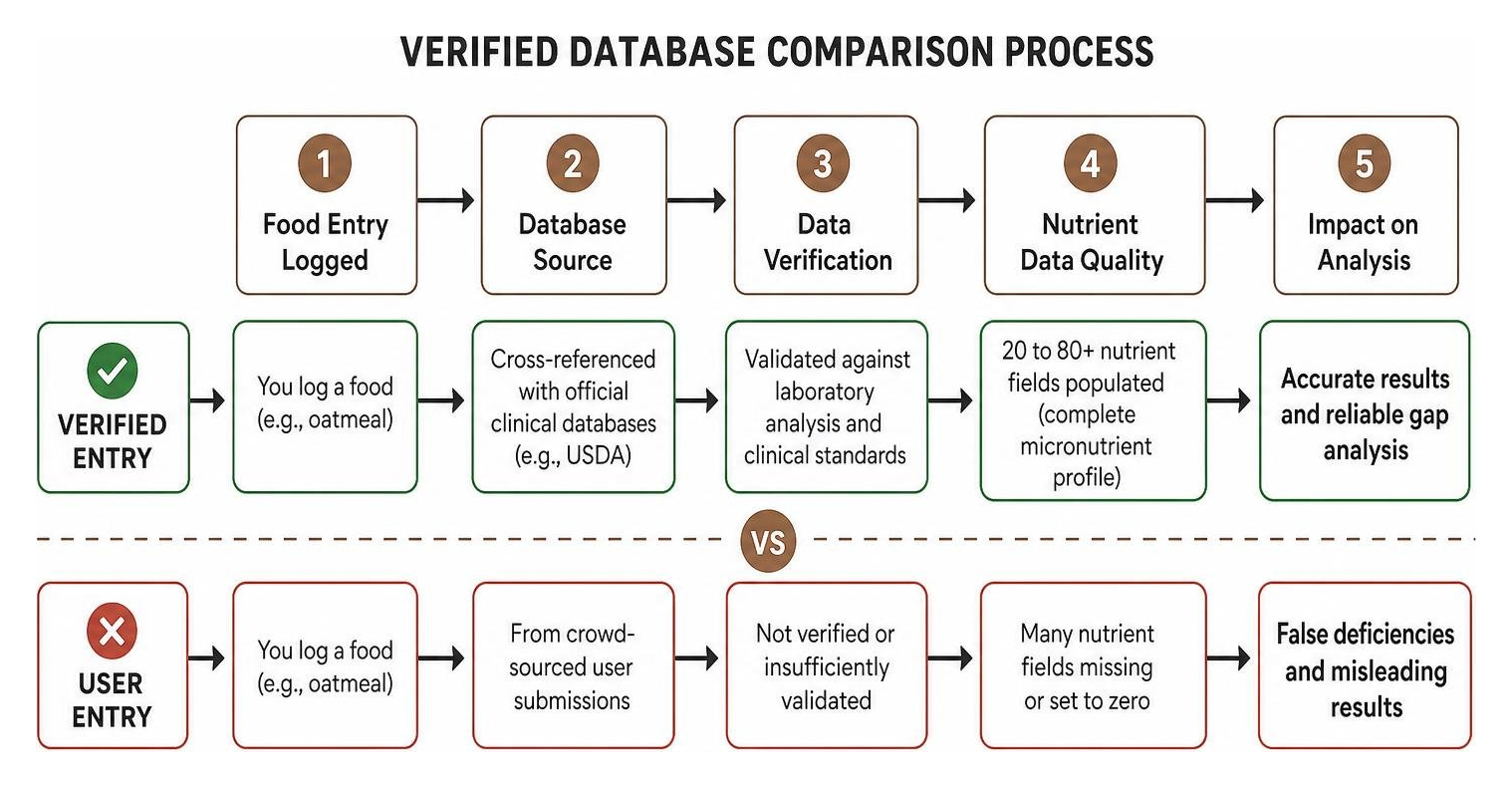
To avoid this, look for applications that prioritize verified, clinical database standards. Scientific platforms anchor their entries in official laboratory analysis databases, ensuring that every food item includes 20 to 80+ populated nutrient fields. When evaluating tools, check whether the software offers access to specialized options like a dedicated micronutrient tracking interface or curated clinical datasets. Verified data prevents false alarms and guarantees that your gap analysis reflects what you actually ate.
Features of the Best Food Tracking App for Micronutrients in Plant-Based Diets
Plant-based and vegan nutrition offers significant cardiovascular and longevity benefits, but it requires careful attention to specific micronutrients. Plant nutrients often have different bioavailability rates compared to animal sources, meaning the body absorbs them differently.
Key considerations for plant-based tracking include:
- Vitamin B12: Essential for nerve function and red blood cell formation, B12 is not naturally produced by plants. Plant-based eaters must rely on fortified foods or targeted supplementation.
- Non-Heme Iron and Absorption Factors: Plant foods contain non-heme iron, which is absorbed less efficiently than animal-derived heme iron. However, pairing non-heme iron (found in lentils, spinach, and seeds) with Vitamin C significantly enhances absorption. Advanced tracking tools help monitor this pairing.
- Zinc and Phytates: High concentrations of phytates in unrefined grains and legumes can bind to zinc, lowering its bioavailability.
- Calcium and Iodine: Tracking fortified plant milks, sea vegetables, and iodized salt ensures daily targets are reached without relying on dairy or seafood.
A great tracker designed for plant-based diets won't simply flag an iron deficit. It will help you see when combining iron-rich dark leafy greens with citrus or bell peppers boosts absorption, giving you complete confidence in your nutrition plan.
How Advanced AI and Biometrics Enhance Nutrient Tracking
Nutrition technology in 2026 has advanced far beyond basic manual searches. Modern meal tracking leverages artificial intelligence, biometric syncing, and health-data integrations to provide a personalized, comprehensive picture of your daily wellness.

By combining AI image recognition with wearable biometrics, apps can analyze meal composition in seconds and dynamically adjust your daily nutrient targets based on real-time physiological stress. For example, if your smart watch logs a heavy 90-minute endurance session, your daily target for magnesium, sodium, and potassium automatically scales upward to account for sweat loss.
Furthermore, AI algorithms enable symptom-to-nutrient mapping. If you regularly log symptoms like brain fog, hair thinning, or muscle twitches, advanced systems cross-reference these complaints with your historical meal logs to identify potential nutrient gaps.
Tools like Track Anything allow you to record subjective health markers alongside daily meal inputs, revealing correlations between what you eat and how you feel over time.
Environmental Safety Features in the Best Food Tracking App for Micronutrients
A growing trend in modern nutritional science is looking beyond standard vitamins to assess food quality and environmental exposure. Comprehensive wellness platforms now examine food safety, additive profiles, and processing levels.
When comparing cutting-edge wellness platforms, health-conscious users are paying closer attention to safety metrics:
- NOVA Ultra-Processing Classification: Categorizes foods from unprocessed whole ingredients to hyper-palatable ultra-processed items.
- E-Number Additive Risk Scoring: Identifies artificial food dyes, preservatives, and emulsifiers that may trigger digestive sensitivity.
- Banned Chemical Detection: Flags food additives approved in the US that are restricted or banned in the European Union (over 33 distinct chemicals).
- Water Contaminant Mapping: Tracks municipal water profiles by ZIP code, helping users account for mineral content (like magnesium and calcium) as well as heavy metals or fluoride exposure.
Free vs Premium Nutrient Tracking Capabilities
Most food tracking apps offer both free and paid subscription tiers. Understanding what is included in free versions versus premium upgrades helps you choose the best value for your health journey.
| Feature / Capability | Free Tier Availability | Premium Subscription Tier |
|---|---|---|
| Basic Calorie & Macro Tracking | Included across almost all apps | Standard feature |
| Essential Vitamins & Minerals | Limited (usually 5 to 10 basic metrics) | Full access (84 to 125+ detailed nutrients) |
| Barcode & Photo AI Logging | Limited daily scans or search only | Unlimited AI photo, voice, & barcode scanning |
| Custom Nutrient Targets | Fixed standard RDA targets | Fully customizable targets per dietary goal |
| Historical Trends & Analytics | 7-day to 14-day history view | Unlimited historical trend charts & PDF exports |
| Wearable Integration | Rare or manual entry only | Automatic biometrics sync (Apple Health, Garmin, etc.) |
| Safety & Additive Scanning | Basic NOVA score | In-depth chemical, additive, and water analysis |
Free tiers work well for broad calorie monitoring or basic daily tracking. However, if you are actively resolving a clinical nutrient gap, managing an athletic recovery protocol, or optimizing a plant-based diet, premium analytics provide the deep data and trend reporting needed to reach your goals.
Frequently Asked Questions About Micronutrient Tracking
What is the difference between tracking macronutrients and micronutrients?
Macronutrients (protein, carbohydrates, and fats) provide the total energy (calories) your body burns to sustain basic metabolic functions, build tissue, and power exercise. Micronutrients (vitamins, minerals, trace elements, and antioxidants) do not provide energy directly, but they enable the enzymatic reactions required to process macronutrients, maintain cellular health, produce hormones, and protect immune function. Tracking both gives you a complete, clear picture of your total nutrition.
How do food tracking apps detect potential vitamin deficiencies?
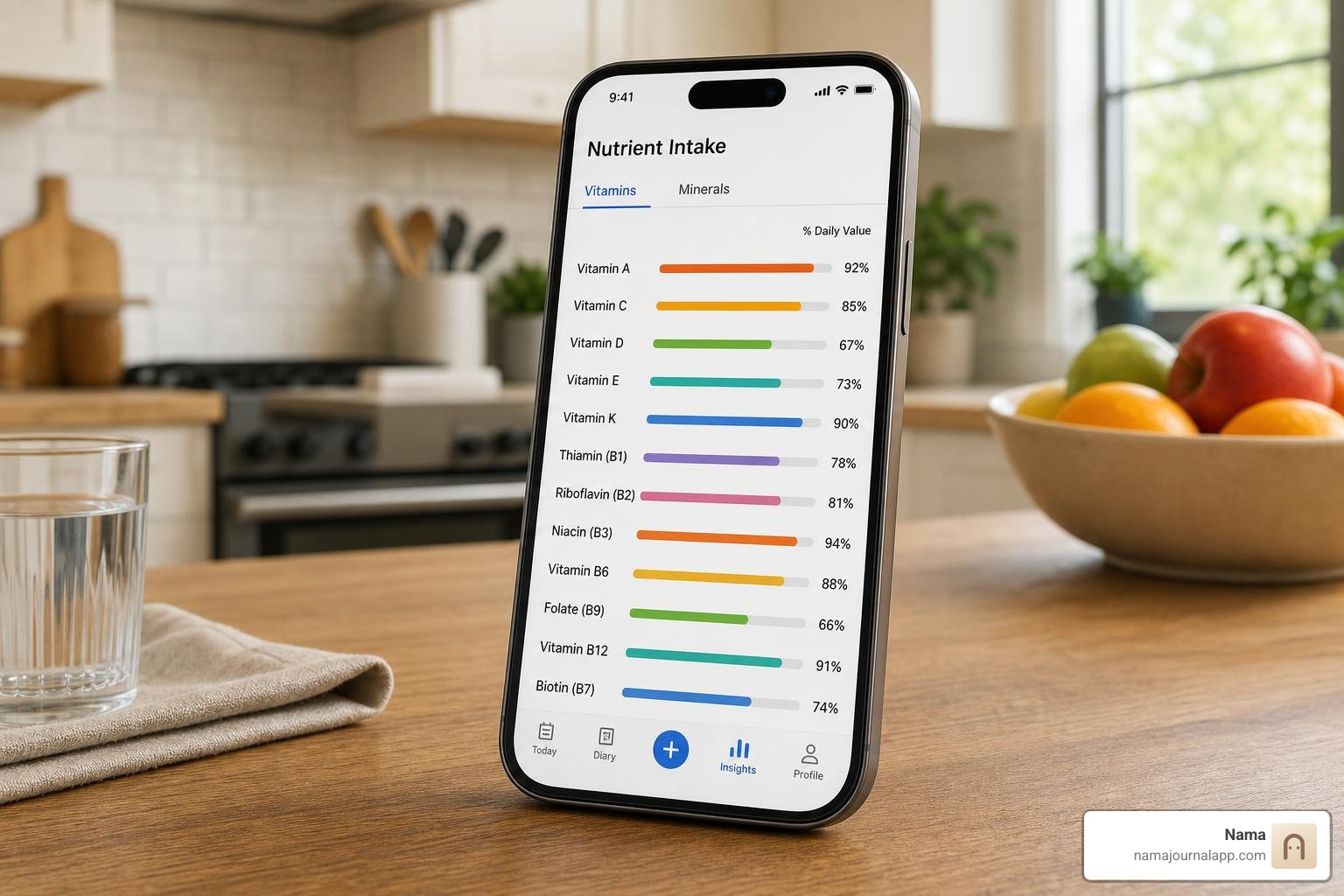
Food tracking apps detect potential deficiencies by comparing your logged dietary intake against established dietary reference standards (such as the RDA or DRI) tailored to your age, sex, and activity level. Over a multi-day or multi-week rolling average, the app calculates your average intake for each nutrient. If your intake consistently drops below your target—for example, averaging only 40% of your daily iron target—the app flags a potential shortfall and highlights foods rich in that nutrient to help close the gap.
Can food tracking apps help athletes monitor electrolytes and hydration?
Yes. Dedicated performance tracking apps monitor essential fluid balance electrolytes, specifically sodium, potassium, calcium, and magnesium. Athletes can log fluid intake alongside meal entries to ensure proper hydration status. When paired with biometrics from smartwatches or fitness trackers, advanced nutrition apps adjust your daily electrolyte targets based on workout intensity, duration, ambient temperature, and sweat loss estimates, helping reduce post-exercise cramping and speed up recovery.
Conclusion
Tracking your nutrition goes far beyond balancing calories and macronutrients. Prioritizing micronutrient density gives your body the vitamins, minerals, and bioactives necessary for lasting energy, quick recovery, sharp focus, and long-term health. Whether you choose an advanced AI-driven scanner, a deep clinical database, or a streamlined personal logging workflow, the best tool is the one that fits naturally into your routine without adding friction.
If you prefer to keep your health journey personal and private, standard online apps that require account registration, social feeds, and cloud sync might not be the ideal fit. That is where a privacy-first option shines.
Our app, Nama Wellness Journal, is designed as a completely offline, private iOS logging platform. There are no user accounts, no tracking ads, and no external servers holding your personal wellness notes. You can track custom health metrics, daily meal logs, workouts, and personal notes directly on your iPhone with complete peace of mind.
Explore our full range of privacy-first Features today to take complete, private control of your daily health habits and meal logging.