Log It Till You Make It: A Guide to the Perfect Weekly Exercise Log
Why You Need a Dedicated Weekly Exercise Log

Relying on memory to track physical training rarely works over the long haul. When you walk up to a barbell or step onto a running track, guessing what you lifted or how far you ran seven days ago introduces friction and stalls momentum. A dedicated logging system eliminates guesswork by establishing an objective baseline of training volume, session adherence, and overall fatigue.
Tracking adherence across a full seven-day cycle helps you manage physical fatigue before it leads to burnout or injury. Life happens—missed sessions, stressful workdays, and poor sleep will occasionally interrupt your plan. When you record both completed workouts and explicit rest days, you can objectively see whether you are undertraining, overreaching, or maintaining a healthy stimulus-to-recovery ratio.
Many athletes start by printing Free Printable Weekly Workout Log Sheets to place on a gym clipboard or inside a home binder. Whether on paper or screen, recording your efforts transforms abstract fitness aspirations into tangible, structured data.
How Logging Drives Progressive Overload and Strength Gains
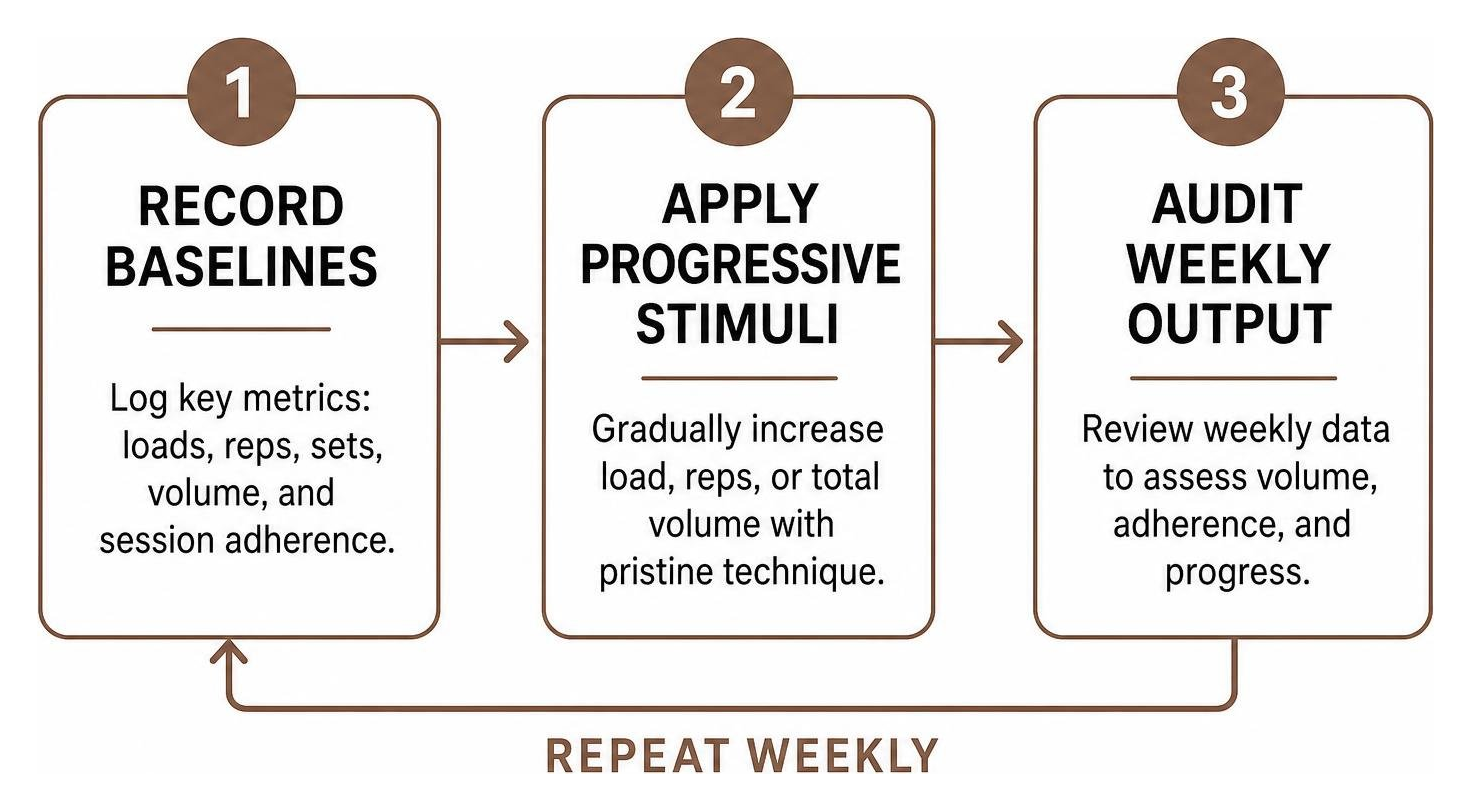
The foundation of muscular development and cardiovascular endurance is progressive overload: systematically increasing the demands placed upon the body over time. To stimulate physical adaptation, you must gradually increase total training volume, lift heavier loads, or perform more reps with pristine technique.
Without concrete records, executing microloading—adding small weight increments like 2.5 or 5 pounds—becomes haphazard. A comprehensive log allows you to track key indicators such as:
- Estimated One-Rep Max (1RM): Use performance baselines to calculate exact training percentages (e.g., performing 3 sets of 6–8 reps at 80% 1RM).
- Total Training Volume: Calculate sets multiplied by reps multiplied by load to verify that weekly workload is steadily climbing.
- Plateau Detection: Spot stagnating movements early so you can adjust exercise variations, tempo, or rest intervals before frustration sets in.
Evaluating Daily vs. Weekly vs. Monthly Tracking Cycles
Choosing the right timeframe for your tracking system shapes how well you understand your fitness trajectory:
- Daily Logs: Offer deep granularity for single workouts but make it difficult to visualize overall fatigue and volume distribution at a glance.
- Weekly Logs: Strike the sweet spot. They provide immediate glanceability across a 7-day training block, align naturally with standard calendar schedules (whether starting on Monday or Sunday), and highlight the balance between hard training days and restorative rest.
- Monthly or Multi-Week Logs: Excellent for macro-level planning and identifying multi-phase periodization trends, but lack the day-to-day space needed for qualitative form cues and immediate load adjustments.
Structuring your primary logging habit around a 7-day cycle provides the clearest, most actionable balance between daily tactical execution and high-level training analysis.
Core Components of an Effective Workout Tracking System
A functional exercise log must capture essential training variables without becoming so cumbersome that it feels like filing taxes between sets. Striking the balance between simplicity and detail ensures long-term consistency.
Essential Data Fields for Your Weekly Exercise Log
To get the most out of your training records, ensure your system includes these core data fields:
- Date and Session Focus: The targeted muscle group, split day (e.g., Upper Body Power, Leg Hypertrophy), or cardiovascular modality.
- Exercise Selection and Order: Specific movements recorded in the exact sequence they were performed.
- Volume Metrics (Sets × Reps × Weight): The exact number of completed sets, target repetitions, and resistance load used.
- Rate of Perceived Exertion (RPE) or Intensity: A 1–10 scale reflecting proximity to muscular failure or cardiovascular effort.
- Qualitative Form Notes and Context: Brief observations such as "left knee felt tight during warm-ups," "used a wider grip on bench," or "felt ready for +5 lbs next week."
Customizing Logging for Strength, Cardio, and Hybrid Routines
Different training styles demand distinct data points. Tailoring your log layout to your primary discipline prevents messy, disorganized entries.
For strength routines, lifters often rely on structured systems like open-source Perplexity strength training logs or an intuitive digital exercise log to record rep schemes and automated volume calculations.
For cardiovascular training, logging heart rate zones or using simple talk-test cues helps verify that easy recovery sessions stay truly easy, while high-intensity intervals reach their intended cardiovascular targets.
Choosing the Right Medium for Tracking Your Progress
Finding the right logging medium depends on your personal workflow, environment, and privacy preferences.
| Logging Medium | Key Advantages | Potential Drawbacks | Best For |
|---|---|---|---|
| Paper Printables & Binders | Tactile feedback, zero screen distractions, instant glanceability. | Easily damaged, physical storage bulk, manual volume calculations. | Lifters who want a distraction-free gym floor experience. |
| Spreadsheets (Excel / Sheets) | Automated formulas, custom data charts, endless scalability. | Clunky on mobile devices, requires manual initial setup. | Data-driven trainees who prefer analyzing trends on a desktop. |
| Private Digital Apps | Portable, offline access, fast entry, integrated multimedia notes. | Requires personal device discipline to avoid notifications. | Lifters wanting seamless, secure, on-the-go tracking. |
Choosing the Right Weekly Exercise Log Format
- Printable PDF Templates: Perfect for organizing inside a home gym binder or clipping to a board. Downloadable sheets offer fixed, clean layouts that require zero technical configuration.
- Spreadsheet Models: Ideal if you love tracking total tonnage (Sets × Reps × Weight) or graphing strength curves over multi-week blocks using automated spreadsheet formulas.
- Mobile Logging Solutions: Offer frictionless logging between sets, storing years of historical workout data directly in your pocket without physical clutter.
Physical Printables vs. Privacy-First Digital Journaling
While physical paper binders offer a nostalgic, tactile connection to your training, they come with trade-offs in portability, durability, and privacy. Leaving a physical fitness binder on a gym bench or kitchen counter exposes your personal body weight, health goals, and daily notes to anyone walking by. Conversely, standard cloud-based fitness apps frequently monetize personal telemetry, require continuous account logins, and lock your data behind subscription paywalls.
A modern, private approach bridges the gap between paper simplicity and digital efficiency. By leveraging private, local-first features, you keep your detailed fitness logs, workout reflections, and body measurements entirely on your device—offline, private, and always accessible without accounts or third-party tracking.
Beyond the Sets and Reps: Logging Holistic Health Metrics
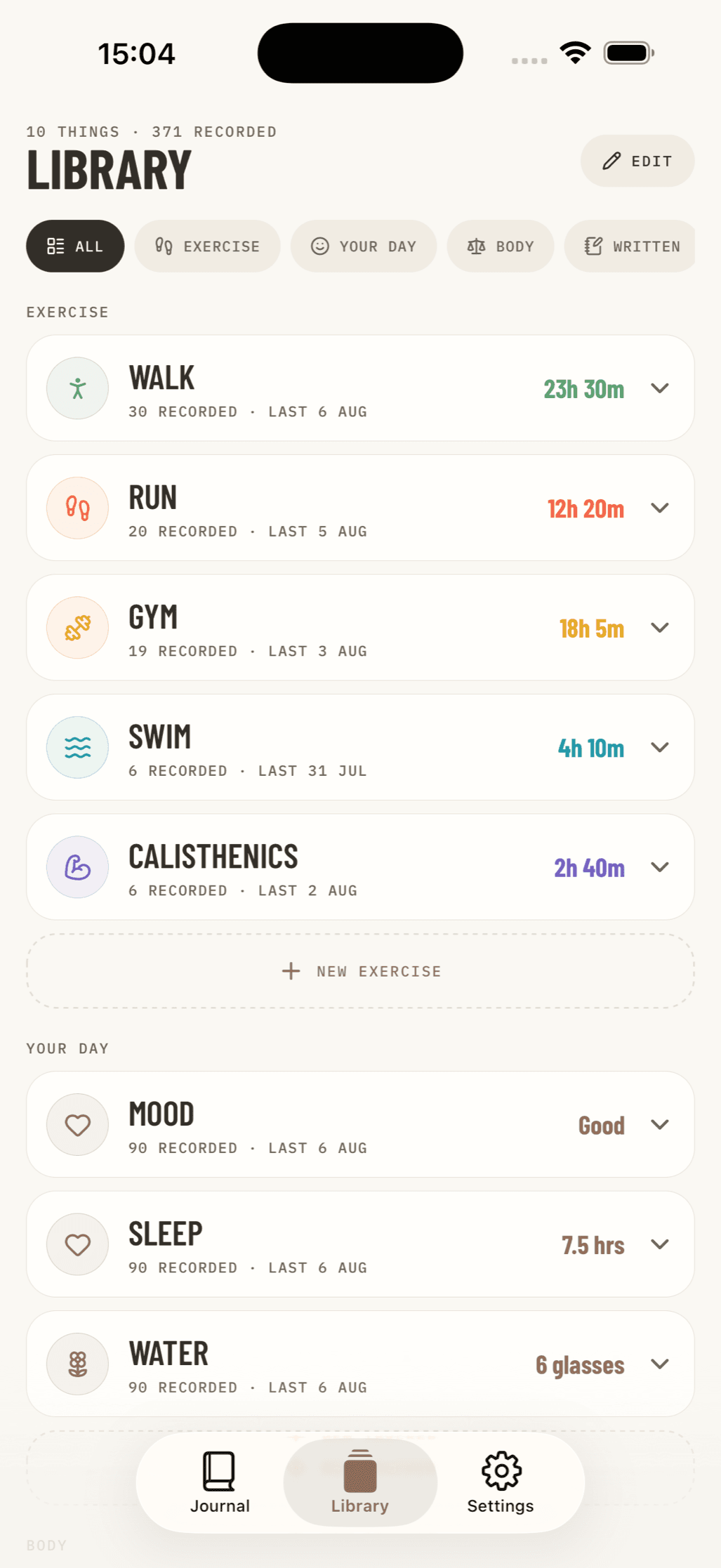
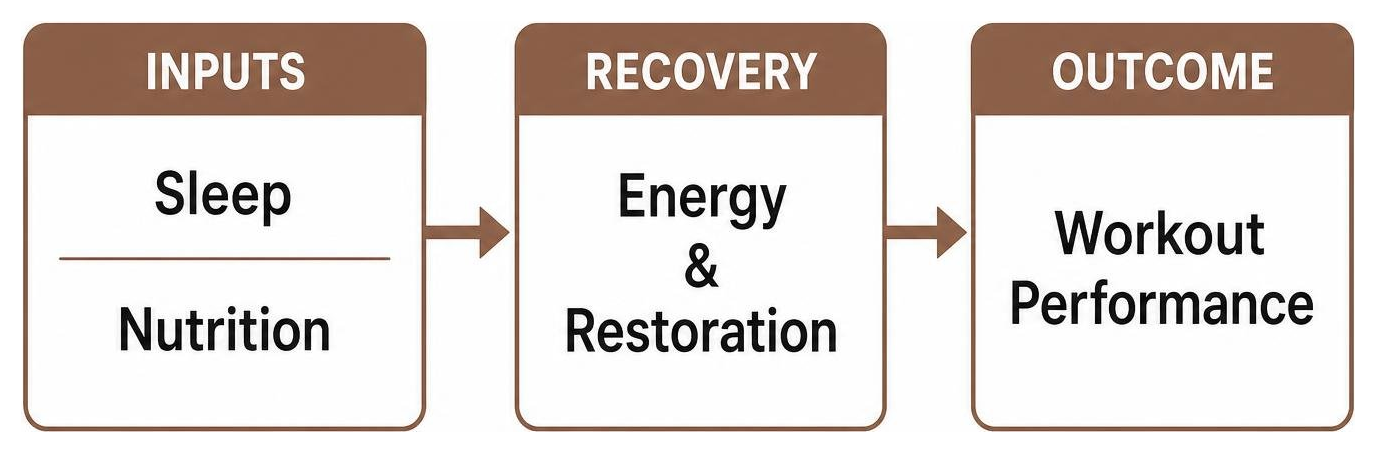
Physical performance inside the gym is a direct reflection of lifestyle habits outside of it. A workout log that exists in a vacuum often fails to explain why certain training days feel effortless while others feel sluggish.
Tracking Sleep, Nutrition, and Energy Levels
Integrating complementary health variables into your weekly log contextualizes your progress. When you track anything related to recovery alongside your main lifts, performance dips become easy to diagnose:
- Sleep Duration and Quality: Consistently logging 6 hours versus 8 hours of sleep highlights direct correlations with central nervous system recovery and bar speed.
- Nutritional Targets: Monitoring daily protein intake and caloric balance ensures your muscular system has the raw materials required to repair tissue.
- Subjective Energy and Mood: Rating your pre-workout energy (e.g., using a 1–5 scale or mood indicators) helps separate temporary psychological fatigue from true physical overreaching.
How to Analyze Log Data to Adjust Upcoming Weeks
A weekly exercise log is only as valuable as the adjustments it informs. Set aside five minutes at the end of every seven-day cycle to conduct a quick training audit:
- Review Missed Reps and Failed Sets: Did you miss target reps due to aggressive weight jumps, poor sleep, or inadequate nutrition?
- Check Volume Balance: Did one muscle group receive disproportionate volume at the expense of another? Did you include adequate rest days?
- Plan Deloads Proactively: If your log reveals consecutive weeks of declining energy, joint soreness, or stalled weights, schedule a planned deload week with reduced volume.
- Set Next Week's Targets: Use your recorded notes to pre-fill starting weights for the upcoming week, ensuring a continuous progressive stimulus.
Frequently Asked Questions About Workout Logging
What is the most important metric to track in a workout log?
The most critical metric is progressive volume load—specifically, recording the exact combination of exercise name, resistance weight, and completed repetitions. Without an accurate log of past loads and reps, applying progressive overload becomes unreliable, stalling strength gains and muscle growth.
How do I gauge cardio intensity without a smartwatch?
You can use the standardized talk-sing test alongside a 1–10 Rate of Perceived Exertion (RPE) scale:
- Light Intensity (RPE 1–3): You can easily sing or hold a continuous conversation without pausing for breath.
- Moderate Intensity / Zone 2 (RPE 4–6): You can converse in full sentences, but singing is impossible.
- Vigorous Intensity (RPE 7–9): You can only speak single words or short phrases between heavy breaths.
How often should I increase the weight or reps in my routine?
Beginners (less than 1 year of consistent lifting) can often add weight on a weekly basis through linear progression. Intermediate and advanced trainees (1–2+ years of lifting) benefit more from a double-progression model: choose a rep range (e.g., 3 sets of 8–12 reps), keep the weight constant until you can hit the top of that rep range across all sets, and only then increase the load by the smallest possible increment.
Conclusion
Building a stronger, healthier body is not the result of occasional heroic gym sessions; it is the natural byproduct of structured habit loops, progressive adjustments, and continuous accountability over time. Maintaining a weekly exercise log provides the objective roadmap you need to celebrate real training milestones, overcome plateaus, and understand your physical recovery.
Whether you prefer printing blank templates, managing custom spreadsheets, or recording your fitness journey with our private, offline exercise log inside Nama, the rule remains simple: log your work, trust the process, and let your past progress guide your future gains.