Fitness Journal Apps That Help You Track Every Rep with Ease
Paper vs. Built-In Notes vs. Dedicated Fitness Logging
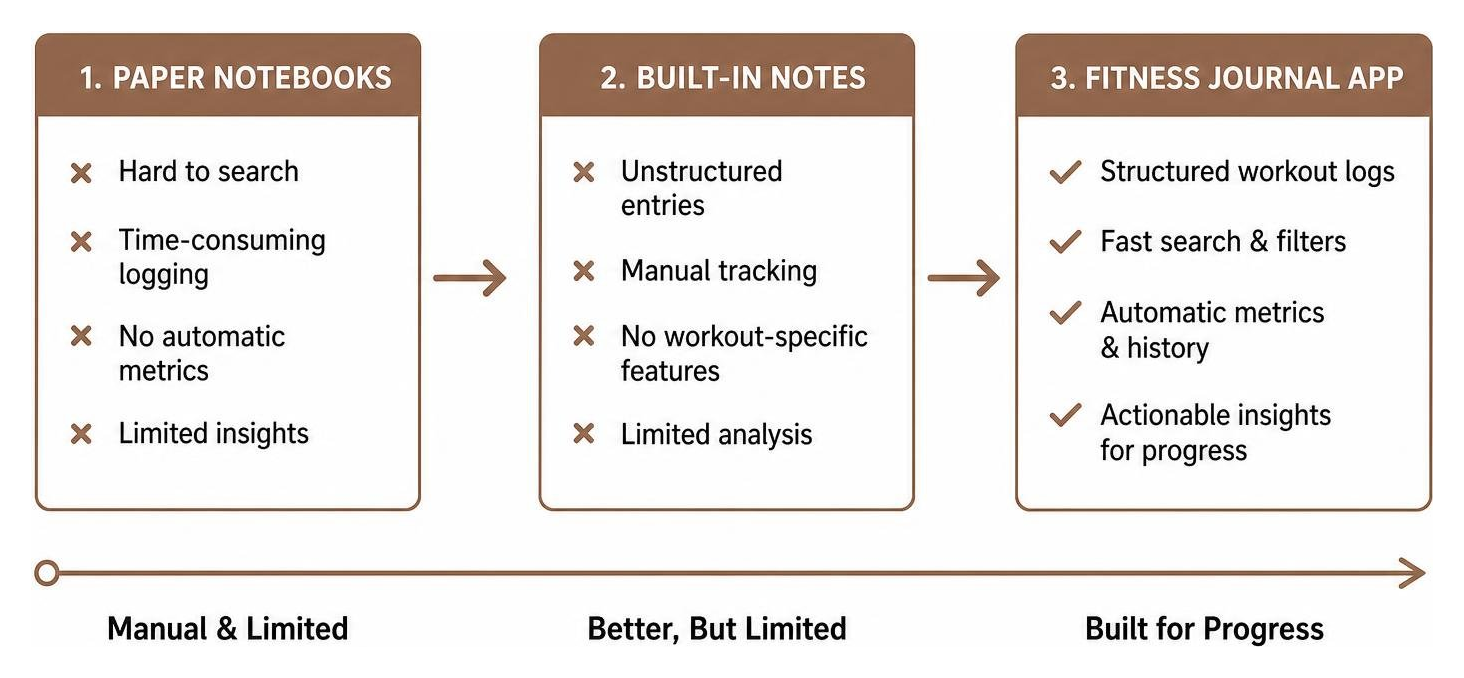
When stepping onto the gym floor or working out at home, keeping an accurate record of your training is essential for long-term athletic improvement. The method you choose determines how easy it is to analyze your training volume, spot plateaus, and adjust your routine over time. While traditional paper notebooks and basic note-taking tools have their loyal followers, they operate quite differently compared to a dedicated fitness journal app tailored specifically for workout tracking.
Many lifters begin their strength journey with a physical notebook. A paper log is straightforward, low-cost, and never runs out of phone battery. However, manually flipping through weeks of handwritten pages during a busy gym session just to find your previous weight and rep count for back squats can slow down your pace and cause friction. Modern digital workout solutions solve this by offering automated performance metrics, structured entry fields, and instant search capabilities through an integrated Exercise Log.
Why a Fitness Journal App Beats Paper Logs for Progressive Overload
The fundamental key to muscle growth and strength gain is progressive overload—the practice of systematically increasing the weight, repetitions, or training frequency over time. A dedicated fitness journal app makes applying progressive overload seamless in ways that paper notebooks simply cannot match:
- Instant Historical Performance: Before beginning your next set of bench presses or overhead presses, a digital log immediately displays the exact weight, reps, and target rest intervals from your previous session.
- Automated Volume Calculations: Calculating total workload (Sets x Reps x Weight) manually during a grueling leg day takes focus away from training. Digital tools calculate your volume, total reps, and visual trends automatically.
- Estimated One Rep Max (1RM): Advanced fitness logs estimate your 1RM on compound movements after every heavy set, helping you gauge strength progression without putting yourself at unnecessary risk.
- Visual Progress Graphs: Rather than sifting through endless paper pages, dedicated apps generate clean charts mapping your strength trajectory over weeks, months, or years.
Drawbacks of Basic Default Journal and Note-Taking Apps
As mobile operating systems evolve, standard built-in note applications and default journal tools are often used for quick personal notes. However, community feedback among lifters consistently shows that general-purpose note apps fall short for detailed exercise logging.
Generic note tools lack the core architecture required for structured strength training. There are no built-in tables for sets and reps, no automatic rest timers, and no historical exercise lookups, forcing you to format plain text manually for every single workout.
Furthermore, default note tools lack dedicated export options tailored for performance analysis. If you log months of strength sessions inside a generic text file, that data remains unorganized and difficult to analyze. Combining workout history with personal daily reflections requires a purpose-built system like a flexible Journal and Notes feature that supports both unstructured thoughts and actionable exercise data.
Essential Features of a Dedicated Fitness Journal App
Selecting the ideal workout logging app requires evaluating features that streamline your gym sessions rather than distracting you with complex interfaces.
By leveraging a flexible feature set like Track Anything, lifters can expand their entries beyond weightlifting to encompass custom health metrics, daily energy ratings, recovery scores, and lifestyle habits.
Essential Tracking Metrics and Workout Planning Tools
A comprehensive workout tracker handles varying training splits, intensity techniques, and custom exercises without cluttering your mobile screen:
- Set Classifications: You should be able to tag each individual set as a Warmup, Normal working set, Drop Set, or Set to Failure. This ensures warmups do not skew your working volume or average intensity metrics.
- Superset and Circuit Support: Pairing exercises back-to-back requires an app that groups movements logically so rest timers transition smoothly between paired sets.
- RPE (Rate of Perceived Exertion) Tracking: Recording how challenging a set felt on a scale of 1 to 10 helps you manage central nervous system fatigue and adjust load dynamically.
- Custom Exercise Creation: Gyms feature unique equipment, cable attachments, or custom machines. The app should allow you to add unlimited custom exercises without hitting paywalls.
- Integrated Rest Timers: Built-in countdown timers ensure consistent rest intervals between sets, which is crucial for hypertrophy and strength adaptation.
Wearable Synchronization and Health Integration
Modern fitness logging applications integrate directly with built-in health frameworks like Apple Health and Google Fit to streamline data syncing.
Wearable companion tools (such as smartwatch applications) allow you to check off completed sets, monitor heart rate, track rest periods, and view exercise targets directly on your wrist. Additionally, support for dynamic lock screen widgets and real-time live activity updates keeps your workout timer and upcoming set targets clearly visible without needing to unlock your device repeatedly during intense training sessions.
Evaluating Fitness Tracking App Models: Privacy, Paywalls, and Community
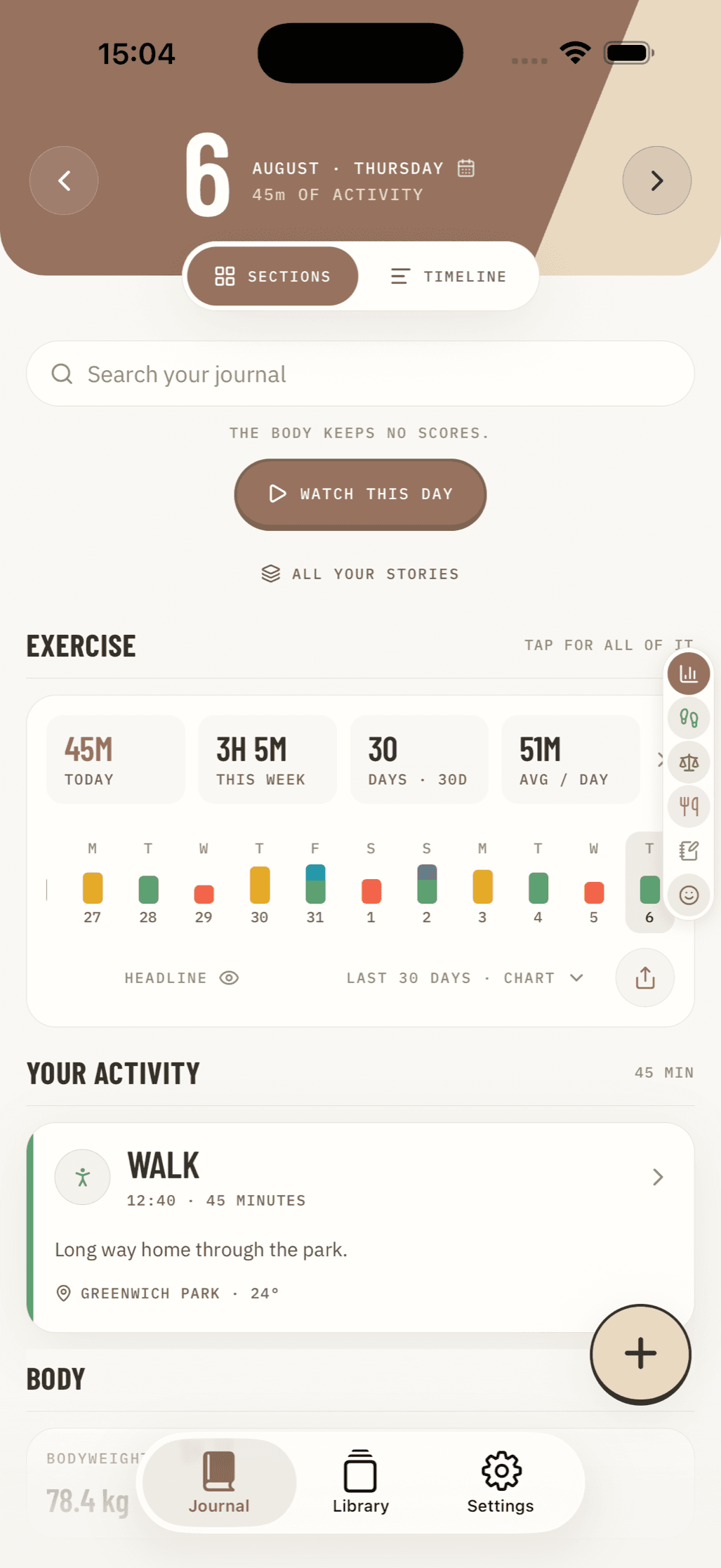
The landscape of fitness journal apps is divided into two main categories: social, cloud-connected platforms and private, offline-first applications. Knowing which architecture aligns with your training philosophy prevents friction down the road.
| Feature Area | Social & Cloud Fitness Trackers | Private, Offline Fitness Journals |
|---|---|---|
| Data Storage | Cloud servers (Requires user account) | Local device storage (No account required) |
| Social Features | Community feeds, shared routines, profiles | None (100% distraction-free focus) |
| Internet Dependency | Requires active connection for full access | Works completely offline anywhere |
| Monetization | Monthly/Annual recurring subscriptions | One-time fees or privacy-first models |
| Data Control | Server exports subject to platform terms | Instant full CSV & media export anytime |
Overcoming Common Limitations and Restrictive Paywalls
Many popular freemium workout apps attract users with a free download, only to restrict essential functionality behind recurring monthly or annual subscriptions. Common friction points reported by lifters include:
- Strict Routine Limits: Free tiers often restrict users to saving only 3 or 4 workout routines total.
- Custom Exercise Caps: Restricting users to fewer than 10 custom exercises unless they subscribe to a paid tier.
- Historical Graph Lockouts: Hiding long-term progress graphs or estimated 1RM trends behind paywalls, locking away access to your own personal achievements.
- Subscription Fatigue: Paying continuous monthly fees simply to record sets and reps in a digital log feels excessive for lifters seeking a reliable utility.
Choosing a Privacy-First Fitness Journal App for Complete Data Control
For lifters who prefer to focus entirely on personal progress rather than managing public social profiles, privacy-first applications offer a clear solution. Cloud-centric services store your exercise logs, body measurements, and personal notes on external servers, exposing sensitive health data to potential server outages or privacy policy changes.
Choosing an application built around Private by Design principles ensures that your workout data remains strictly on your own device. Local offline storage requires zero account registration, functions reliably in basement weight rooms with poor cellular coverage, and gives you total data ownership through instant CSV and photo exports whenever you need them.
Frequently Asked Questions About Fitness Journaling
Can a default phone note app replace a fitness log?
While a default note app can store simple text notes, it quickly becomes cumbersome for serious fitness tracking. Default notes lack automated total volume calculations, built-in rest timers, historical set lookup, and visual progress graphs. Tracking progressive overload in a note app requires tedious manual formatting during your workout.
What is the best way to track progressive overload digitally?
The best way to track progressive overload digitally is to log every exercise set with its exact weight and repetition count. A dedicated fitness tracker compares your active set directly against your previous session performance in real-time, helping you decide whether to add weight, perform an extra rep, or adjust set rest intervals.
How do fitness apps handle data export and health syncing?
Most dedicated apps sync completed workout sessions to centralized platforms like Apple Health or Google Fit. However, raw workout log export capabilities vary. Quality fitness apps allow complete CSV data exports, enabling you to download your entire set history, reps, weights, and dates into custom spreadsheet formats for personal analysis.
Conclusion
Finding the right fitness logging approach comes down to your personal workflow. While basic notes and simple journal apps capture quick daily reflections, serious strength progression requires structured metrics, historical exercise lookups, and clear progress trends. A purpose-built fitness journal app reduces the small points of friction that can derail consistency, such as searching for last week's numbers, manually calculating training volume, or rebuilding the same workout template every session.
For many lifters, the best system is the one that is fast enough to use between sets and flexible enough to support training, recovery, nutrition notes, and personal health observations in one place. Privacy also matters when your journal contains body measurements, progress photos, workout history, and daily wellness notes. Keeping that information under your control makes long-term tracking easier to trust.
If you are looking for a flexible, distraction-free way to log workouts alongside your broader health goals, consider trying Nama. Built entirely around privacy-first principles, Nama offers local offline storage on your iPhone with zero account sign-ups, no ads, and full text and photo export capabilities. Take full control of your workout log with the Nama fitness journal app and elevate your daily training routine today.