Break the Cycle of Emotional Eating with a Daily Food and Feelings Diary
What Is a Food and Feelings Diary and Why Does It Work?
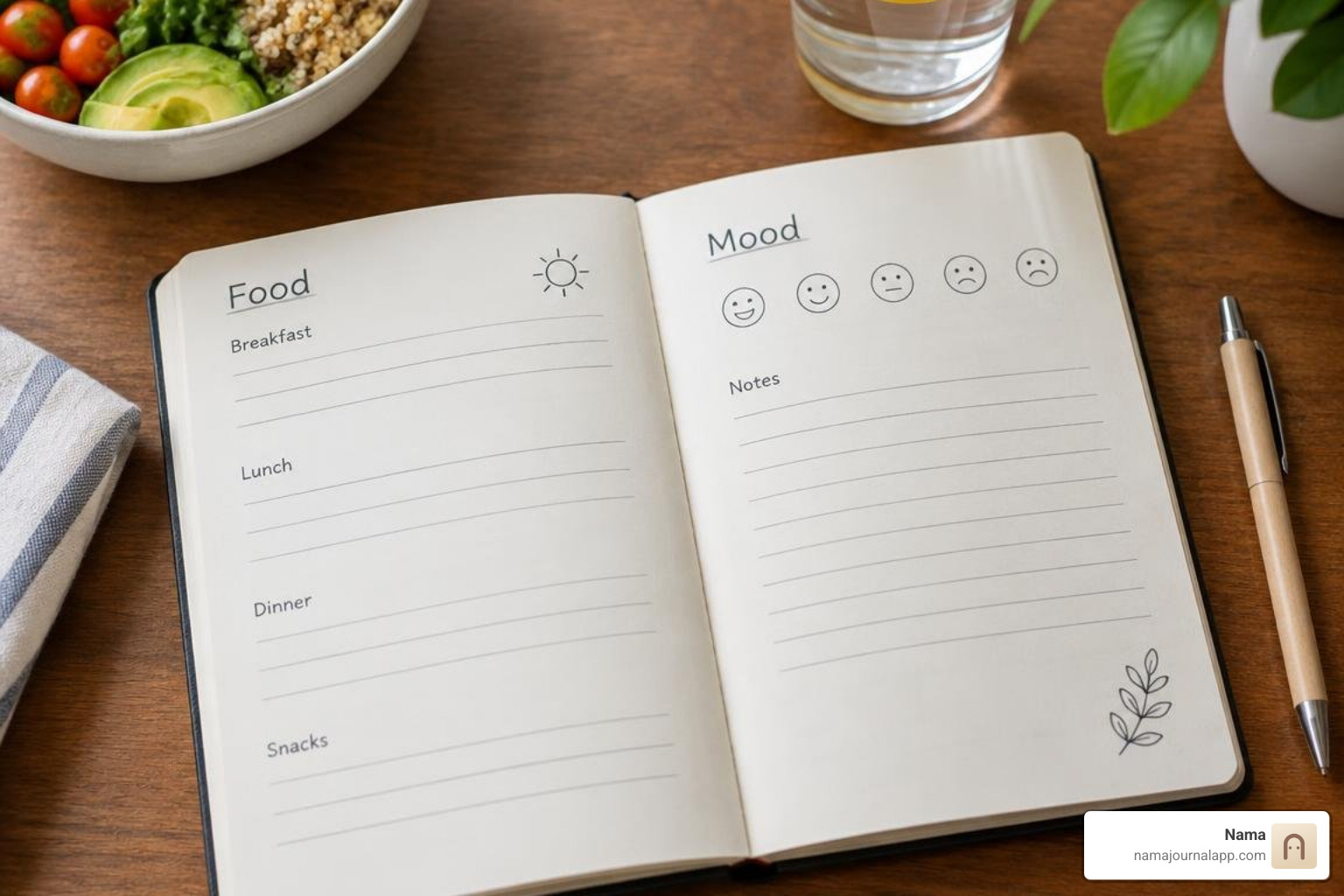
A food and feelings diary is a reflective, non-judgmental tool designed to help you reconnect with your body's natural hunger and satiety signals. Instead of treating food purely as mathematical units of energy, this approach views eating through the lens of somatic awareness—the practice of tuning into internal physical sensations and emotional states.
Most conventional approaches to eating focus exclusively on external rules: how many grams to weigh, how many calories to burn, or which food groups to eliminate. However, these rigid constraints often sever communication between your mind and your body. When you experience challenging emotions like loneliness, anxiety, work fatigue, or plain boredom, reaching for food often becomes an automatic coping mechanism to self-soothe or distract.
A feelings-focused food log works because it interrupts this automatic loop. By intentionally pausing to write down what you are eating alongside what you are feeling, you create a buffer between an emotional impulse and your physical response. Over time, you build non-restrictive, sustainable habits grounded in curiosity rather than guilt, uncovering the root drivers of non-hungry eating.
The Science of the Gut-Brain Connection
The relationship between your plate and your mood is a physiological reality governed by the gut-brain axis. Your gastrointestinal tract contains its own complex nervous system—often called the enteric nervous system or your "second brain"—which communicates bidirectionally with your central nervous system via the vagus nerve, hormones, and microbial metabolites.
Remarkably, it is estimated that about 90% to 95% of your serotonin—a critical neurotransmitter responsible for stabilizing mood, sleep, and emotional processing—is produced directly in your gut. When your gut microbiome is balanced and nourished with fiber, nutrient-dense whole foods, and diverse plants, it produces biochemical signals that foster mental clarity and calm.
Conversely, emotional distress alters gut motility, permeability, and digestion. In fact, 82% of people report that feeling stressed has an immediate negative impact on their gut function. When chronic stress floods your system with cortisol, it alters blood sugar regulation, prompting intense biological cravings for quick-energy, high-fat, and refined-sugar comfort foods. When you experience these cravings, an interactive food mood journal guide can provide a structured way to observe how physiological blood sugar spikes and crashes often masquerade as anxiety, brain fog, or sudden irritability.
Food and Feelings Diary vs. Traditional Calorie Counting
Traditional food tracking tools are built around rigid numerical boundaries: counting calories, tracking macronutrient splits, and weighing ingredients. While tracking has historically been linked to short-term weight loss in clinical studies, the psychological costs of chronic restriction can be substantial. For many individuals, strict calorie tracking and obsessive micro-logging can lead to disordered eating behaviors, heightened food anxiety, and a moralistic view of meals as either "good" or "bad."
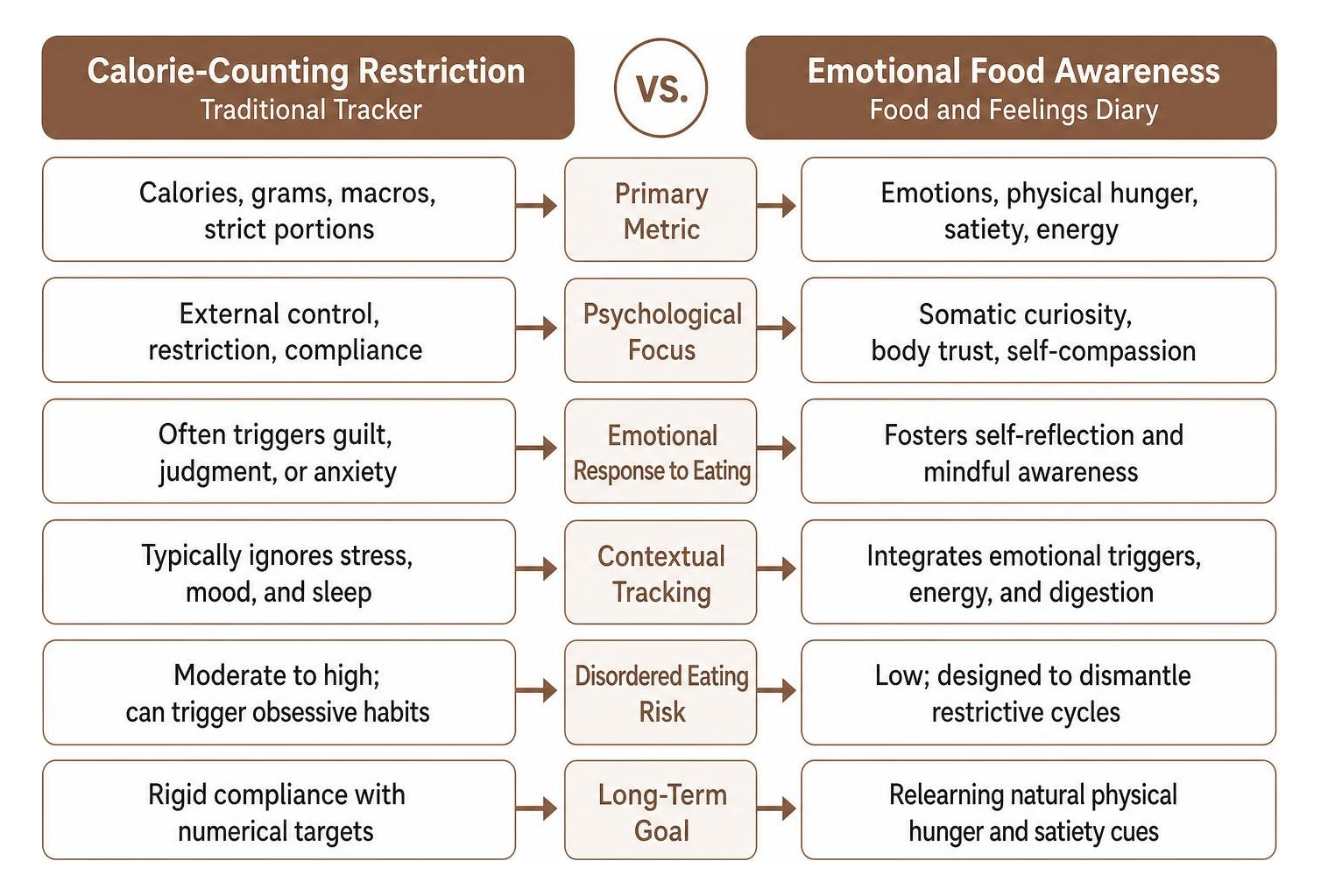
A feelings-focused diary shifts the focus from rigid external control to internal intuitive wisdom. Exploring creative food journal ideas can help you transition from sterile spreadsheets to a rich record of your personal well-being.
| Core Dimension | Traditional Calorie / Macro Journal | Daily Food and Feelings Diary |
|---|---|---|
| Primary Metric | Calories, grams, macros, strict portions | Emotions, physical hunger, satiety, energy |
| Psychological Focus | External control, restriction, compliance | Somatic curiosity, body trust, self-compassion |
| Emotional Response to Eating | Often triggers guilt, judgment, or anxiety | Fosters self-reflection and mindful awareness |
| Contextual Tracking | Typically ignores stress, mood, and sleep | Integrates emotional triggers, energy, and digestion |
| Disordered Eating Risk | Moderate to high; can trigger obsessive habits | Low; designed to dismantle restrictive cycles |
| Long-Term Goal | Rigid compliance with numerical targets | Relearning natural physical hunger and satiety cues |
How to Start a Daily Food and Feelings Diary Step by Step
Starting your journaling practice does not require complicated nutrition software or hours of daily analysis. The most effective approach relies on brief, real-time entries captured right before and shortly after you eat.
To build a sustainable habit, follow these practical steps:
- Establish a Judgment-Free Baseline: Approach your log as an objective scientist observing fascinating data. If you eat a candy bar when stressed, record it without moralizing adjectives like "bad," "ruined," or "guilty."
- Log in Real Time Whenever Possible: Memory fades quickly. Recording your emotional state right before taking your first bite captures your immediate stress or boredom much better than recalling it hours later.
- Capture Pre-Meal Sensations: Note the time, what you are preparing to eat, your current hunger level, and the primary emotion you are feeling (e.g., calm, rushed, lonely, frustrated).
- Record Post-Meal Reflections: Roughly 20 to 60 minutes after eating, jot down your fullness level, your physical energy (on a 1–5 scale), and any digestive notes such as bloating, comfort, or sustained vitality.
- Conduct a Gentle Weekly Check-In: Set aside 10 minutes every Sunday to look for recurring patterns across your days. Notice whether afternoon slumps align with specific meals or if evening snacking spikes after stressful work meetings.
Core Elements to Track in Your Food and Feelings Diary
To keep your logs manageable while gathering actionable insights, focus on recording a core set of elements. Reviewing an intuitive eating food journal guide can help you simplify your entries so you avoid logging fatigue.
- Date and Timestamp: Knowing when you eat reveals circadian rhythms, long meal gaps, or late-night habits.
- Food and Beverage Consumed: A simple, descriptive note (e.g., "Warm oatmeal with berries and walnuts," "Handful of pretzels") without worrying about gram weights or exact calorie counts.
- Pre-Meal Hunger Rating: A score from 1 (starving/depleted) to 10 (uncomfortably full) to clarify whether your cue is physical or emotional.
- Emotional State Before Eating: Single-word tags or brief notes describing your mind (e.g., anxious about a deadline, exhausted, calm, lonely, bored).
- Post-Meal Mood and Physical Energy: How you feel physically and emotionally 30 to 60 minutes later (e.g., steady energy, foggy, sluggish, refreshed, satisfied).
- Digestive and Somatic Notes: Any bodily sensations such as stomach cramps, bloating, lightness, or tension in your shoulders.
Tuning In to Hunger and Fullness Cues
Reconnecting with biological cues requires learning the hunger-fullness spectrum. When you are caught in an emotional eating pattern, hunger often feels like an urgent, emotional emergency that must be satisfied immediately with specific comfort foods. Physical hunger, by contrast, develops gradually, can be satisfied by a wide variety of nourishing meals, and does not carry an underlying sense of panic.
Using a versatile mood tracker app alongside a numeric hunger scale helps you ground your eating in physical reality:
- 1–2 (Starving, Faint, Irritable): You have waited too long; primal survival drives take over, making overeating almost inevitable.
- 3–4 (Noticeably Hungry, Stomach Rumbling): The optimal window to begin eating. You can make mindful choices calmly.
- 5 (Neutral): Neither hungry nor full; food intake here is almost entirely driven by habit, emotion, or environmental cues.
- 6–7 (Comfortably Satisfied, Nourished): The ideal stage to stop eating. You feel energized, light, and comfortably full.
- 8–10 (Stuffed, Uncomfortably Bloated, Sluggish): Overfullness accompanied by physical discomfort, fatigue, or indigestion.
Breaking the Cycle: Identifying Triggers and Healthy Alternatives
Once you have recorded your meals and emotions for a few days, patterns will naturally emerge. You might notice that 3:00 PM sugar cravings consistently follow intense team meetings, or that evening trips to the pantry happen when you sit down alone in a quiet house. Recognizing these triggers without self-criticism allows you to separate your genuine emotional needs from physical appetite.
Spotting Emotional Eating Triggers
Emotional eating triggers generally fall into distinct physiological and psychological categories:
- Workplace Anxiety and Chronic Stress: High-pressure deadlines elevate cortisol, pushing you toward rapid-acting carbohydrates to temporarily raise brain serotonin.
- Under-Stimulation and Boredom: When your brain seeks a dopamine boost during repetitive or dull tasks, the kitchen becomes an easy source of novelty and reward.
- Loneliness and Emotional Isolation: Food can serve as an accessible source of comfort and warmth when you are craving social connection.
- Unconscious Habit Loops: Eating simply because the clock strikes noon or because a screen is turned on, regardless of internal physical hunger.
- Rebound Hunger from Deprivation: Skipping meals or heavily restricting entire food groups during the day, which causes severe physical cravings and compensatory binging at night.
Non-Food Coping Strategies and Mindful Distractions
When you identify that your urge to eat is driven by an emotional trigger rather than physical hunger, you can offer yourself alternative ways to soothe that need. Maintaining a pre-planned menu of comforting, non-food activities makes it easy to step away from the pantry when impulses arise:
- Step Outside for Fresh Air: A brisk 10-minute walk in natural light changes your sensory environment and gently lowers physiological stress.
- Engage in Somatic Breathing: Practice box breathing (inhale 4 seconds, hold 4, exhale 4, hold 4) to shift your nervous system from sympathetic fight-or-flight into parasympathetic rest.
- Engage Your Hands and Mind: Shift your focus to a low-friction hobby, such as solving a crossword puzzle, sketching, or tending to indoor plants.
- Connect With Someone: Send a quick text or voice message to a friend when feelings of isolation or loneliness strike.
- Process Your Thoughts in Writing: Spend five minutes with a dedicated self-care affirmations journal to acknowledge and process your underlying worries.
Choosing Your Journaling Method and Overcoming Tracking Friction
The best journaling practice is the one you can sustain without friction or distress. Many traditional wellness tools suffer from high drop-off rates because manual logging is tedious, interfaces shame users with red warning banners, or public feeds trigger comparison (Cordeiro et al., 2015). Understanding common tracking pitfalls helps you build a gentle, enduring routine.
Privacy, Digital Apps, and Paper Formats
When choosing how to keep your log, consider your daily routine, privacy preferences, and convenience:
- Physical Paper Notebooks: Paper journals provide a tactile, screen-free way to reflect and draw connections. However, they can be difficult to carry discreetly in social or professional settings, and they lack search or tagging capabilities.
- Digital Documents or Printable Templates: Editable PDFs and documents work well for desktop logging, though filling them out on the go can sometimes feel clunky.
- Privacy-First Mobile Journaling: Dedicated wellness apps allow you to log meals, moods, and energy levels in seconds wherever you are. Using an integrated journal and notes feature inside a privacy-first, offline app ensures your vulnerable health notes, somatic reflections, and photos remain entirely on your personal device, free from cloud trackers or invasive social scrutiny.
Navigating Disordered Eating Risks and When to Seek Help
While a food and feelings diary is designed to be gentle and non-restrictive, tracking food intake can still feel challenging for individuals with an active or past history of disordered eating. If logging your meals triggers obsessive food thoughts, intense guilt, or an urge to purge or restrict, it is best to step back and seek professional guidance.
A diary is a helpful tool for self-discovery, but it cannot replace comprehensive clinical support. Consider consulting a registered dietitian specializing in intuitive eating or a licensed mental health professional if you experience:
- Frequent episodes of eating marked by a complete feeling of loss of control.
- Severe feelings of guilt, shame, or panic after eating normal meals.
- Persistent compensatory behaviors such as self-induced vomiting, extreme restriction, or compulsive over-exercising.
- Deep-seated emotional trauma that makes connecting with physical body cues feel overwhelming.
Frequently Asked Questions About Emotional Eating Diaries
How long should I keep a food and mood log to notice patterns?
Most people discover clear, recurring connections between their emotional state and their food choices within 7 to 14 consecutive days of logging. Tracking for a full week captures both busy weekday stressors and relaxed weekend shifts, providing plenty of actionable data without turning journaling into an endless chore.
Can keeping this journal help with digestive symptoms like IBS?
Yes. Because the enteric nervous system and digestive tract respond directly to psychological tension, keeping a daily record helps you identify whether digestive flare-ups, bloating, or stomach cramps stem from specific dietary ingredients, chronic stress, or a combination of both.
What should I do if tracking foods makes me feel anxious or guilty?
If logging food details creates stress, immediately stop recording what you eat and shift focus entirely to your emotional states and physical hunger cues. Journaling should support your peace of mind; if any tool begins to feel restrictive or overwhelming, pause your tracking and treat yourself with patience and care.
Conclusion
Breaking free from emotional eating is not about exerting more willpower, eliminating treats, or following strict calorie targets. It is about building honest, compassionate awareness of how your emotions, thoughts, and bodily sensations shape your daily choices.
By keeping a daily log of your meals alongside your feelings, you learn to see your habits with curiosity rather than self-judgment. Over time, you rebuild trust with your body, reconnect with your innate hunger signals, and cultivate comforting alternatives to emotional stress.
If you are looking for an intuitive, secure space to track your daily meals and reflections, our private digital food diary provides a clean, offline environment designed to help you listen to your body and build healthy habits at your own pace.
References
Cordeiro F, Epstein DA, Thomaz E, Bales E, Jagannathan AK, Abowd GD, Fogarty J. "Barriers and Negative Nudges: Exploring Challenges in Food Journaling.." Proceedings of the SIGCHI conference on human factors in computing systems. CHI Conference, 2015. PMCID PMC4755274.