A Practical Step-by-Step Guide to Maintaining a Food Diary for a Week
Start a Food Diary for a Week and Find Your Real Patterns
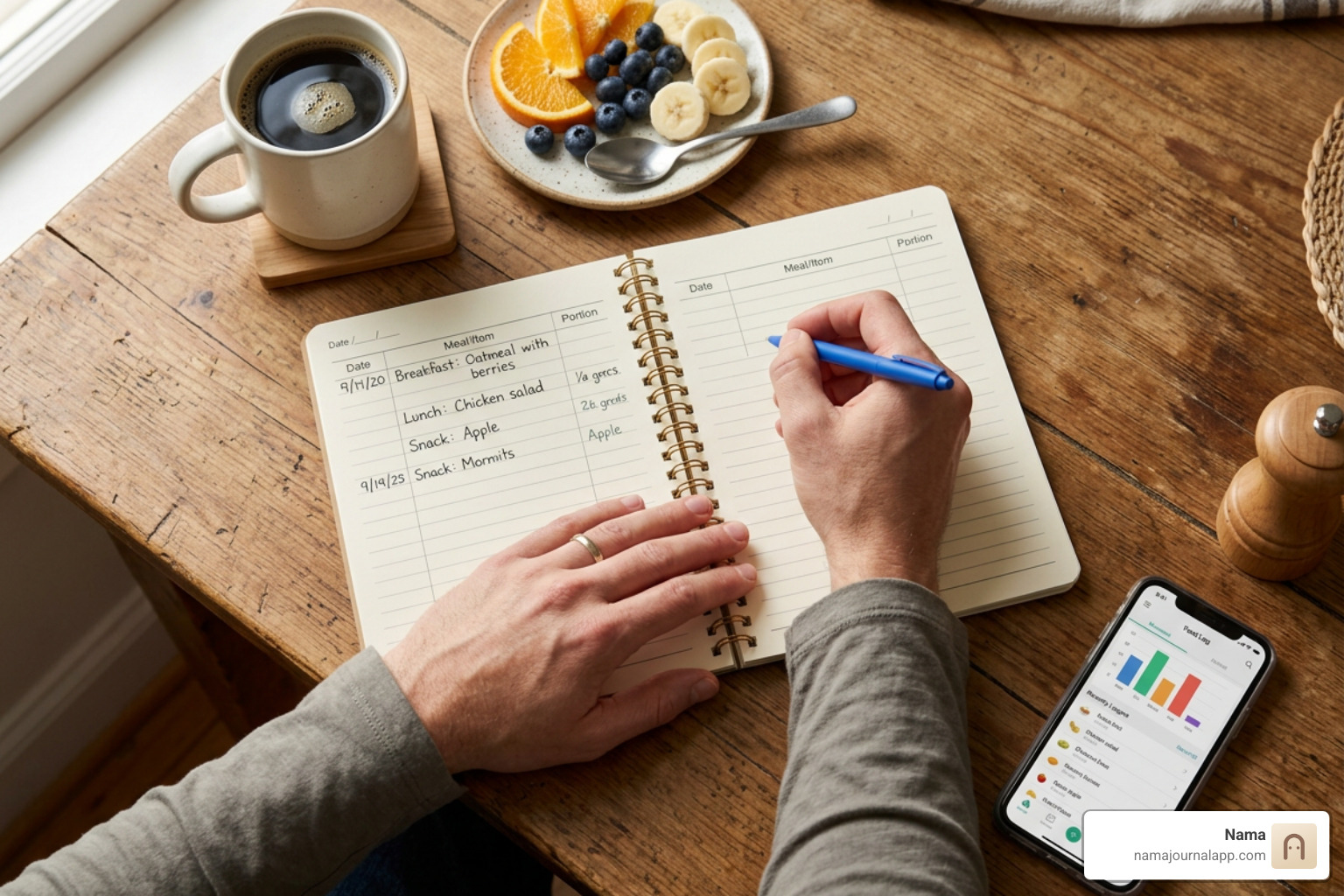
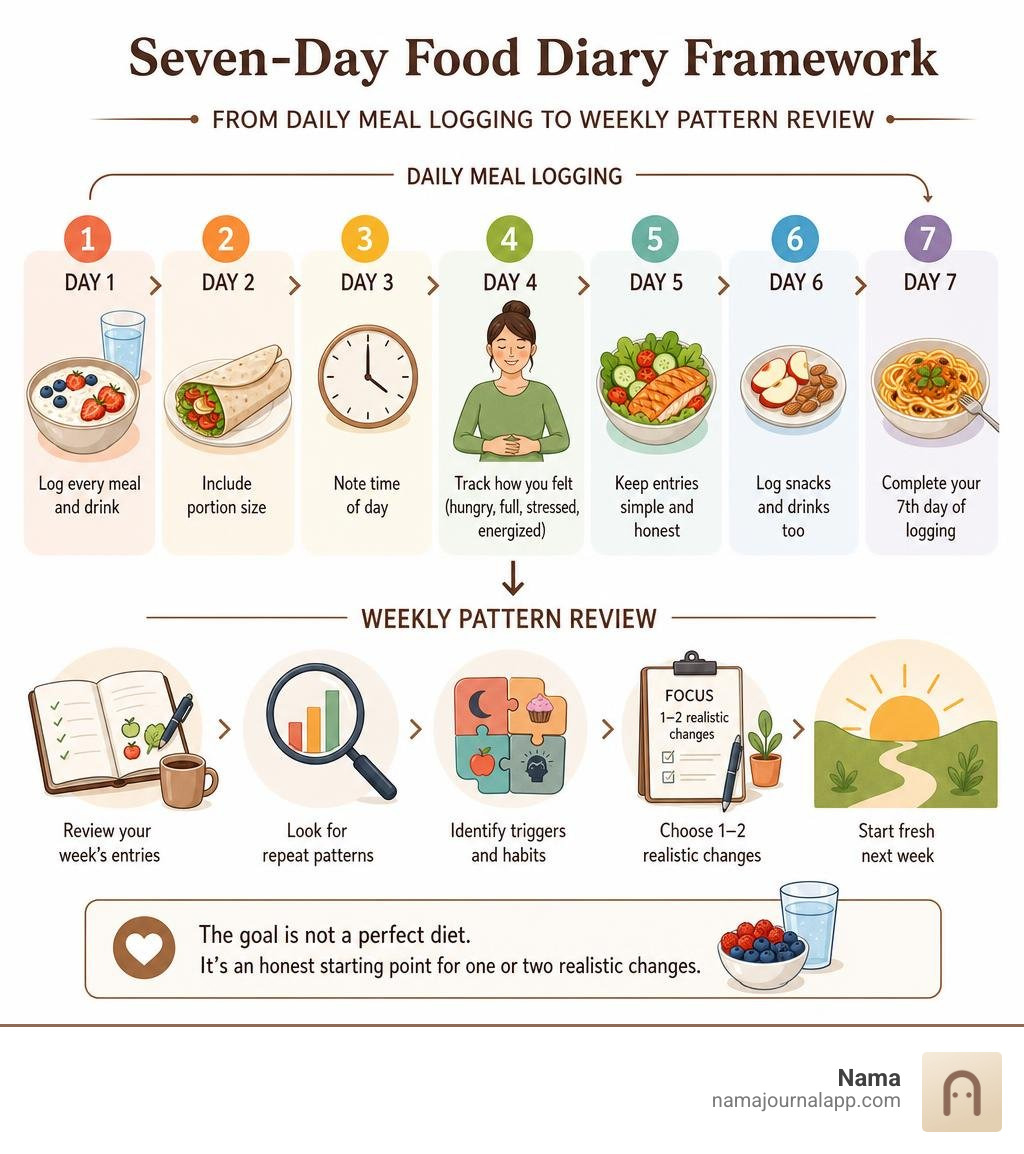
A food diary for a week is a simple record of everything you eat and drink for seven consecutive days. To make it useful, log each meal and snack as soon as possible, including:
- What you ate and drank
- Rough portion size
- Time of day
- How hungry, full, stressed, or energized you felt
At the end of the week, review your entries for repeat patterns. You may notice missed lunches, late-night snacking, low fruit and vegetable intake, or times when stress and screens lead to mindless eating. The goal is not a perfect diet. It is an honest starting point for one or two realistic changes.
A private, offline journal can make this easier for people who want to track meals, mood, and activity without ads, social feeds, or cloud-based data. Keep the process simple and treat each entry as useful information, not a grade.
Food diary for a week glossary:
Why Tracking a Food Diary for a Week Unlocks Dietary Clarity
Most of us believe we know exactly what we eat, until we actually write it down. Human memory is notoriously optimistic. We vividly remember the grilled salmon salad we had for dinner, but conveniently forget the handful of chocolate almonds from the office breakroom, the extra splash of heavy cream in our second coffee, or the fries we pinched from our partner's plate.
This mental disconnect is known as recall bias. When you delay logging until the end of the day, your brain filters out incidental snacking and underestimates portion sizes. By maintaining an intentional log over seven consecutive days, you eliminate guesswork and build a clear, objective snapshot of your baseline nutrition.
A single week is the sweet spot for dietary tracking. One or two days only show isolated snapshots, while a full month can feel overwhelming for beginners. A seven-day period captures your natural weekly rhythms: structured weekday work routines, mid-week energy dips, frantic mornings, and relaxed weekend social outings.
Tracking for seven days exposes blind spots without demanding permanent lifestyle disruption. It reveals whether you are meeting basic health targets—such as consuming five portions of fruits and vegetables daily—or relying heavily on processed convenience foods during stressful afternoons.
The Science of Seven-Day Food Logging
Food journaling is among the most clinically supported behavioral interventions for sustainable health improvement and weight management. In a landmark study of nearly 1,700 participants, researchers found that individuals who kept daily food records lost twice as much weight as those who tracked nothing. The simple act of logging creates an intentional pause between the impulse to eat and the physical action of eating.
Clinical research emphasizes that dietary success relies on understanding personal metabolic baselines. Tracking allows you to see how your daily caloric intake aligns with your Basal Metabolic Rate (BMR)—the baseline energy your body burns at rest. Chronically undereating below your BMR can lead to micronutrient deficiencies and lean muscle loss, while unnoticed caloric surpluses halt fat loss.
Observing patterns without self-criticism is key. As explored in What I Learned from Keeping a Food Diary, treating your meal log as neutral data collection rather than a moral test lets you make practical, guilt-free adjustments that stick.
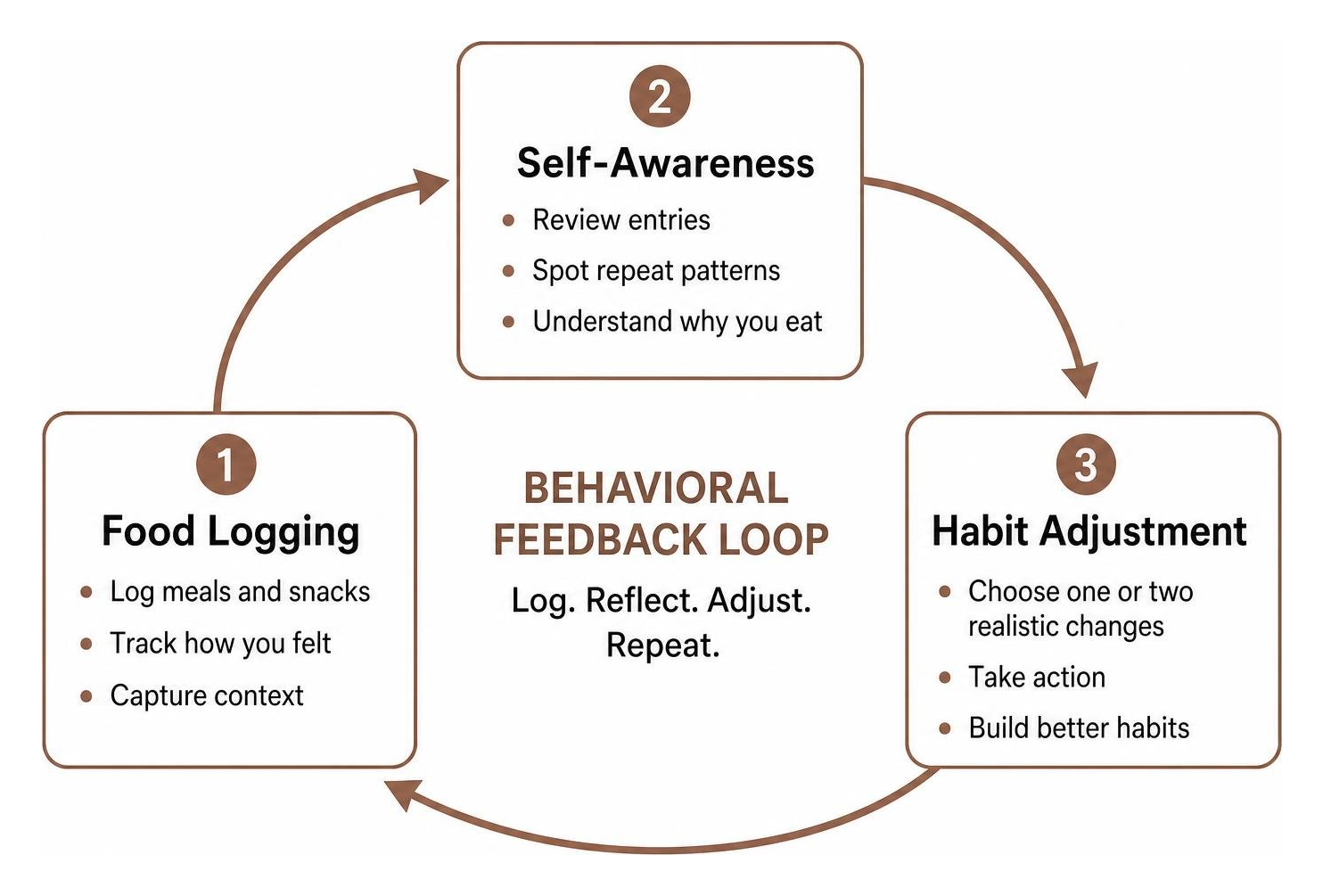
Identifying Behavioral and Emotional Triggers
Nutrition is deeply intertwined with human emotion, environment, and stress. A comprehensive diary captures not just what is on the plate, but why it got there.
Many people find themselves wandering to the kitchen or office vending machine at 3:00 PM every workday. Is this physical hunger, or an emotional response to an afternoon energy crash, boredom, or workplace stress? When you log your emotional state alongside your snacks, these behavioral triggers become visible.
Tracking helps you distinguish between true physiological hunger and emotional cravings. Evaluating food over a broader cycle aligns closely with What I Eat In A Week As A Nutritionist To Feel & Look Good, which emphasizes looking at weekly nutritional balance, satiety, and mindful enjoyment rather than judging individual days in isolation.
Essential Elements to Record in Your Daily Meal Log
To get actionable insights from a seven-day audit, you need balanced data. Recording too little information leaves you with useless notes, while recording too much creates logging fatigue.
Focus your daily entries on these core components:
- Timestamps: The exact time you consume any meal, snack, or beverage.
- Foods and Liquids: Specific items, including preparation methods (e.g., grilled, fried, steamed, raw).
- Portion Sizes: Measured amounts in grams, ounces, cups, tablespoons, or standard visual hand estimates.
- Hidden Additions: Cooking oils, salad dressings, sauces, spreads, and beverage sweeteners.
- Contextual Factors: Where you ate, who you were with, and whether you were distracted by screens.
- Somatic & Emotional States: Hunger levels before eating (1–10 scale), energy levels afterward, and mood.
Core Nutritional Metrics: Portions, Macros, and Timing
Estimating portions by eye is where most dietary logs lose accuracy. A "tablespoon" of peanut butter scooped casually with a dinner spoon can easily equal three actual tablespoons, adding 200 uncounted calories.
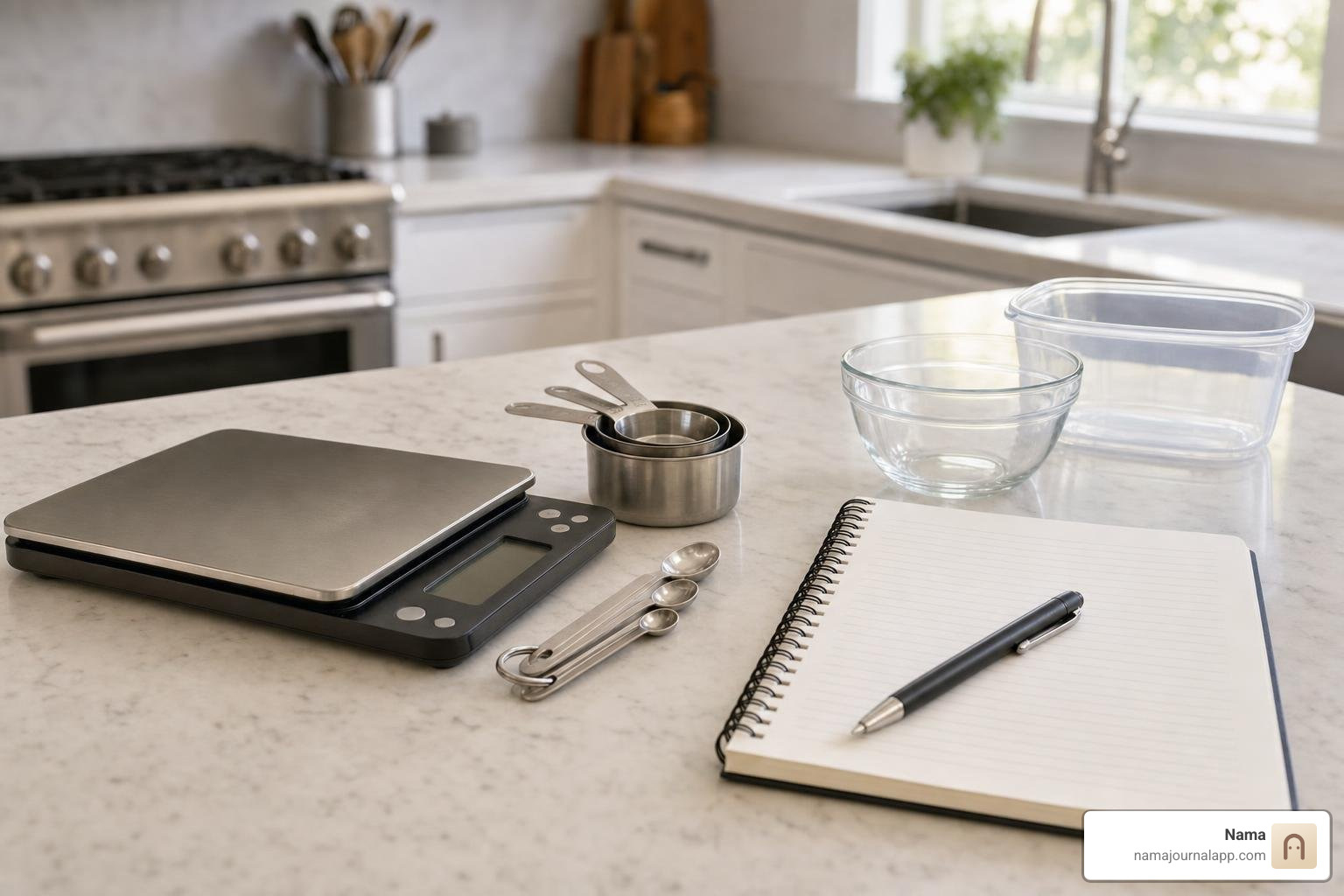
Whenever possible at home, use simple kitchen measurement tools like a digital food scale or standard measuring spoons. When dining out, use standard hand estimations:
- A palm-sized portion represents roughly 20–30 grams of protein (chicken breast, fish, tofu).
- A clenched fist corresponds to roughly one cup of vegetables, fruit, or grains.
- A cupped hand indicates approximately one ounce of nuts or dry snacks.
- A thumb represents roughly one tablespoon of fats, oils, or nut butters.
Pay attention to macronutrient distribution. Protein intake is vital for preserving lean tissue and promoting satiety; many people discover during a seven-day log that their daily protein falls well short of recommended targets. Track dietary fiber and total hydration as well. Monitoring water intake helps ensure that thirst is not being misinterpreted by your brain as hunger.
Contextual Factors: Mood, Environment, and Social Settings
Eating in front of a laptop while answering emails blunts your brain's natural fullness signals. When you log the setting of your meals, you can directly correlate environment with overeating or digestive discomfort.
Record whether you were seated at a dining table, driving in traffic, or relaxing on the sofa watching television. Note your dining companions—meals with friends often extend eating duration, whereas solitary meals on busy workdays may lead to rushed, unchewed food.
Exploring creative food journal ideas can help you log emotional states without turning your notebook into a chore.
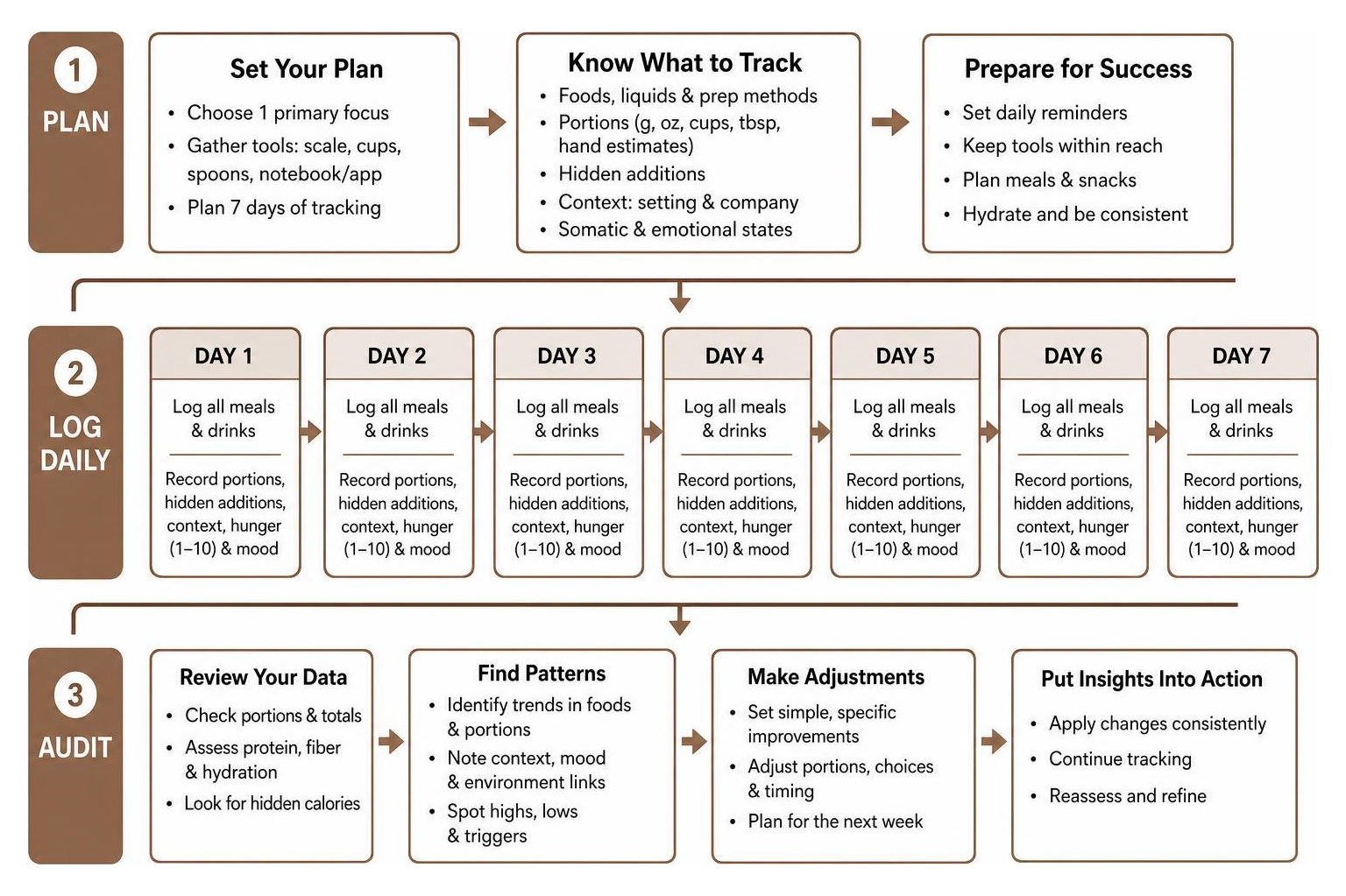
Step-by-Step System: How to Run Your Food Diary for a Week
Running a successful seven-day food diary requires an organized system that reduces friction.
Preparing Your Food Diary for a Week with Daily Micro-Habits
Preparation prevents tracking burnout. Before Day 1 begins, establish simple micro-habits to support your routine:
- Set a Single Primary Focus: If tracking every calorie feels intimidating, pick one primary metric to monitor alongside your meals, such as hitting a specific daily protein target or ensuring five daily servings of fruits and vegetables.
- Stage Visible Reminders: Place a small sticky note near your coffee maker, on your computer monitor, or by the refrigerator to prompt immediate logging.
- Stock Convenient Whole Foods: Keep pre-portioned, high-protein snacks (like hard-boiled eggs, raw nuts, or Greek yogurt) accessible at work so convenience cravings do not derail your baseline.
- Pre-Portion Meals During Prep: When cooking dinner, portion out the next day's lunch immediately into storage containers to make logging effortless.
Navigating Days 1 to 7: Real-Time Logging Strategies
The golden rule of food tracking is immediate entry. Logging a meal within five minutes of eating takes less than sixty seconds. Waiting until 9:00 PM to reconstruct your day requires heavy mental effort and introduces significant errors.
Use visual plate tracking when numbers are unavailable. Photographing your meal on a flat plate—where all ingredients are visible rather than hidden in a deep bowl—gives you an instant, timestamped record you can reference later.
Adopt an attitude of non-judgmental curiosity. If you eat three slices of pizza or have an unexpected dessert, log it immediately with the same neutral objectivity you would use for a bowl of steamed broccoli. A food log is a scientific tool, not a moral judgment.
Conducting a 7-Day Weekly Dietary Audit
Once Day 7 is complete, dedicate 15–20 minutes to audit your collected data.

Review your week using these guiding audit questions:
- Meal Timing & Spacing: Did you skip meals only to overeat later in the evening?
- Nutritional Balance: How many days did you hit your target for fruit, vegetable, and fiber intake?
- Beverage Calories: Did liquid calories from specialty coffees, sodas, or alcohol contribute significantly to total intake?
- Emotional Triggers: Which emotions (stress, boredom, fatigue) preceded unplanned snacking?
- Energy Levels: Which meals left you feeling energized for hours, and which triggered sluggishness or brain fog?
Translate these insights into one or two SMART goals (Specific, Measurable, Achievable, Relevant, Time-bound). For example: "I will replace my 3:00 PM vending machine snack with an apple and a handful of almonds on Monday, Wednesday, and Friday." For deeper long-term strategies, consult our comprehensive food diary guide.
Paper Notebooks vs. Digital Trackers: Choosing Your Medium
Choosing the right tool determines whether you stick to tracking for all seven days or abandon it by Tuesday afternoon. Both physical paper journals and digital apps offer distinct advantages.
| Feature / Criteria | Physical Paper Journals | Private Offline Digital Apps | Cloud-Based Diet Trackers |
|---|---|---|---|
| Portability | Requires carrying a notebook & pen | Always accessible on your smartphone | Always accessible on your smartphone |
| Data Privacy | 100% private (physical security) | 100% private (stored locally on device) | Data stored on remote cloud servers |
| Setup Friction | Zero setup; undated blank pages | Instant; no mandatory account creation | Requires account, profile, & email setup |
| Visual Logging | Text and sketches only | Instant photo integration with timestamps | Photo logging often paywalled |
| Focus & Distraction | Tactile, screen-free experience | Focused, distraction-free interface | Ad-supported, notifications, social feeds |
| Analytical Ease | Manual review and calculation | Automated metrics and custom tagging | Automated calorie/macro calculations |
Evaluating Journal Layouts, Form Factors, and Privacy
If you choose a physical notebook, look for an undated daily spread small enough to fit comfortably in a bag or jacket pocket. Undated pages prevent wasted paper if you pause between tracking cycles, while structured daily prompts keep entries legible.
If you prefer digital logging, consider data privacy. Many mainstream diet apps require account registration, collect user behavioral data, and push continuous ads or social feeds that create unnecessary noise.
Choosing a private, local-first tracker ensures your sensitive health metrics, meal photos, and personal reflections remain exclusively on your device.
Overcoming Burnout and Tracking Inconsistencies
Tracking friction is the primary reason people drop out mid-week. When life gets busy, perfectionism becomes the enemy of consistency.
If weighing every gram of dinner feels overwhelming after a long day, switch to simplified qualitative logging: write down the food items and snap a quick photo. If you under-eat or over-eat relative to your goals on Day 3, simply acknowledge it and continue tracking Day 4 normally. Consistency in data collection is far more valuable than temporary dietary perfection.
Frequently Asked Questions About Food Tracking
How do I maintain an accurate food diary for a week while dining out?
When eating at restaurants, log the meal immediately by breaking it down into its core components: protein source, primary carbohydrate, vegetables, and visible sauces or dressings.
Restaurant dishes almost always contain significantly more cooking oil, butter, and sodium than home-cooked equivalents. A helpful rule of thumb is to add one tablespoon of cooking fat to your meal estimate to account for pan preparation. Request sauces and salad dressings on the side so you can easily estimate the actual amount consumed.
What should I do if I forget to log a meal?
If you forget to record a meal, do not stress or abandon the remainder of your seven-day log. Use contextual clues to reconstruct the entry as closely as possible: check your smartphone photo library, review payment timestamps from restaurant or grocery receipts, or check text messages sent to friends.
Log your best estimate with a quick note indicating it was reconstructed from memory, and resume real-time tracking at the next meal.
How long should I track my food before visiting a doctor?
If you are tracking your diet to investigate digestive issues, food intolerances, lethargy, or cardiovascular markers with a physician or registered dietitian, a complete record of at least 3 to 4 consecutive days—ideally including at least one weekend day—is the clinical baseline recommended for medical review.
Completing a full seven-day food diary provides your healthcare provider with a comprehensive dataset, making it easier to pinpoint specific nutritional triggers or deficiencies.
Conclusion
A seven-day food diary is not a restrictive diet, a test of willpower, or a source of guilt. It is an empowering, objective mirror that reflects your daily habits, emotional triggers, and nutritional rhythms. By committing to just one week of honest, real-time logging, you replace vague assumptions with clear data, giving you the exact insights needed to build sustainable health habits.
At Nama, we believe personal health tracking should be intuitive, empowering, and completely confidential. Our offline, privacy-first wellness journal gives you the tools to track meals, photos, workouts, and subjective wellness metrics locally on your iPhone—without accounts, third-party servers, or invasive ads.
Start discovering your true baseline today with our dedicated Food Diary system and build habits that last a lifetime.