Unlock Test Results and Direct Doctor Messaging with Your Patient Portal Login
How to Access Your Patient Portal
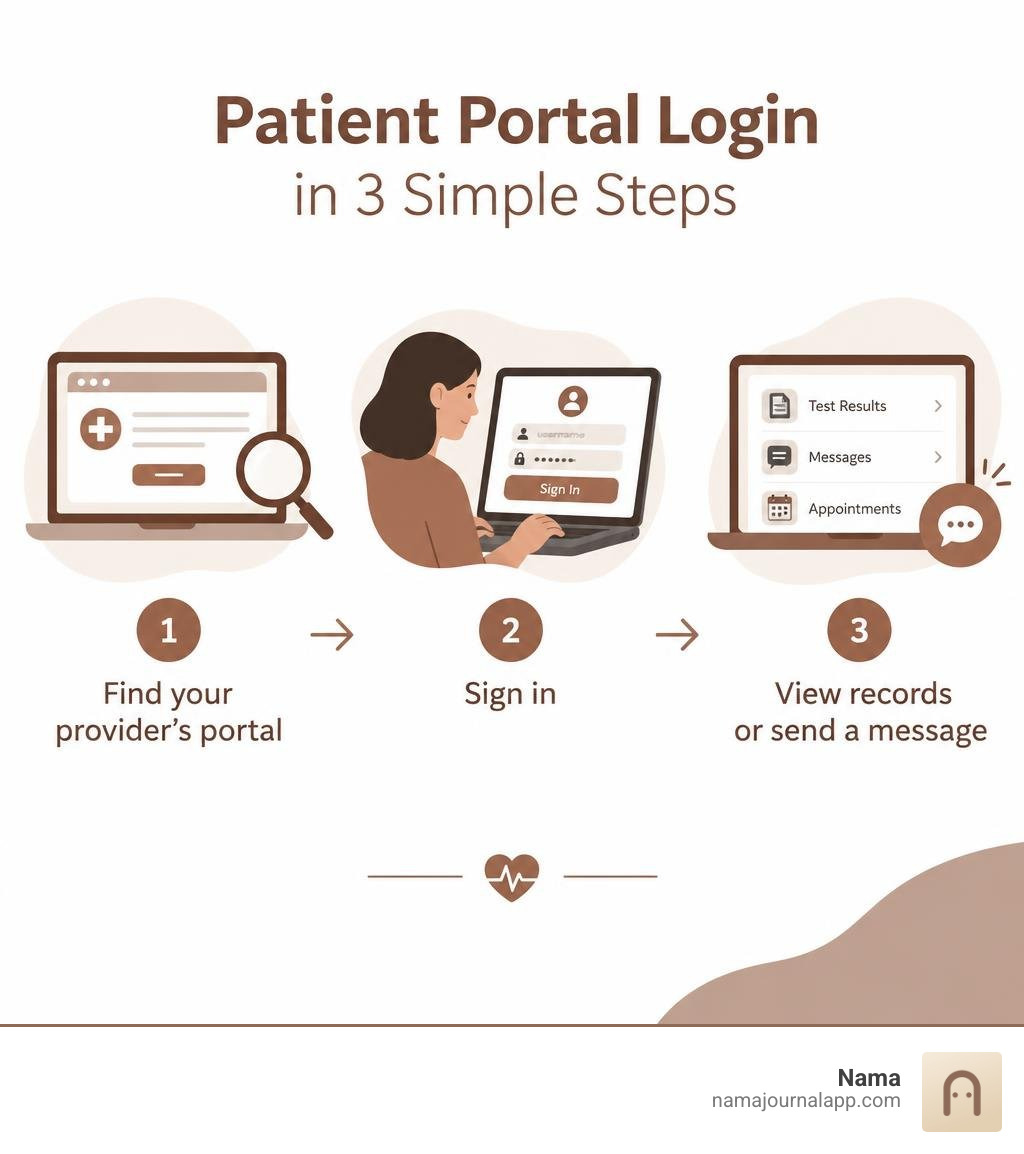
To complete your patient portal login, open the portal link on your healthcare provider’s official website. Enter your username and password, then follow any extra security prompt. Once signed in, look for sections such as Test Results, Messages, and Appointments. If you do not have an account, choose the sign-up option or ask your provider how to register.
A patient portal gives you online access to parts of your medical record and, when offered, a way to message your care team. Features vary by provider. Use portal messages for non-urgent questions, not emergencies.
Similar topics to patient portal login:
How to Complete Your Patient Portal Login Step by Step
Accessing your digital medical records should feel empowering, not confusing. While different clinics, imaging centers, and hospital networks run on various electronic health record (EHR) frameworks, the underlying authentication path is broadly uniform. Whether you access a regional clinic via MagView Patients Portal – Login, use an international provider through Patient Portal - Login, or check specialized health centers like Patient Portal - Northwest Wellness Center, the core sign-in workflow requires verifying who you are before exposing sensitive clinical information.
| Stage | Initial Account Registration | Returning Patient Sign-In |
|---|---|---|
| Primary Requirement | Activation code, MRN, or invite link | Saved username, email, or passkey |
| Verification Method | SSN match, birth date, and email token | Password plus Multi-Factor Authentication (MFA) |
| Setup Tasks | Set security questions, create password | Confirm recent device or enter one-time code |
| Typical Duration | 3 to 5 minutes | 15 to 30 seconds |
| Direct Access Route | Provider invitation email or clinic desk | Provider website gateway or mobile app |
First-Time Registration and Account Setup
Before your first login, your account needs to be provisioned. Healthcare organizations typically provide three main avenues for enrollment:
- Email or SMS Invitations: Following an appointment or hospital discharge, clinics often send a direct sign-up link containing a unique activation token.
- Self-Enrollment Online: Many network portals let adult patients create an account independently. You provide your legal name, date of birth, postal code, and Medical Record Number (MRN) or Social Security Number to locate your file.
- In-Clinic Setup: Hospital registration desks and primary care offices can generate an instant activation code directly during check-in or discharge.
When completing your initial registration on platforms such as EHR patient portal access, you will choose a strong password, set up identity challenge questions, and verify your primary phone number and email address.
Navigating the Standard Patient Portal Login Screen
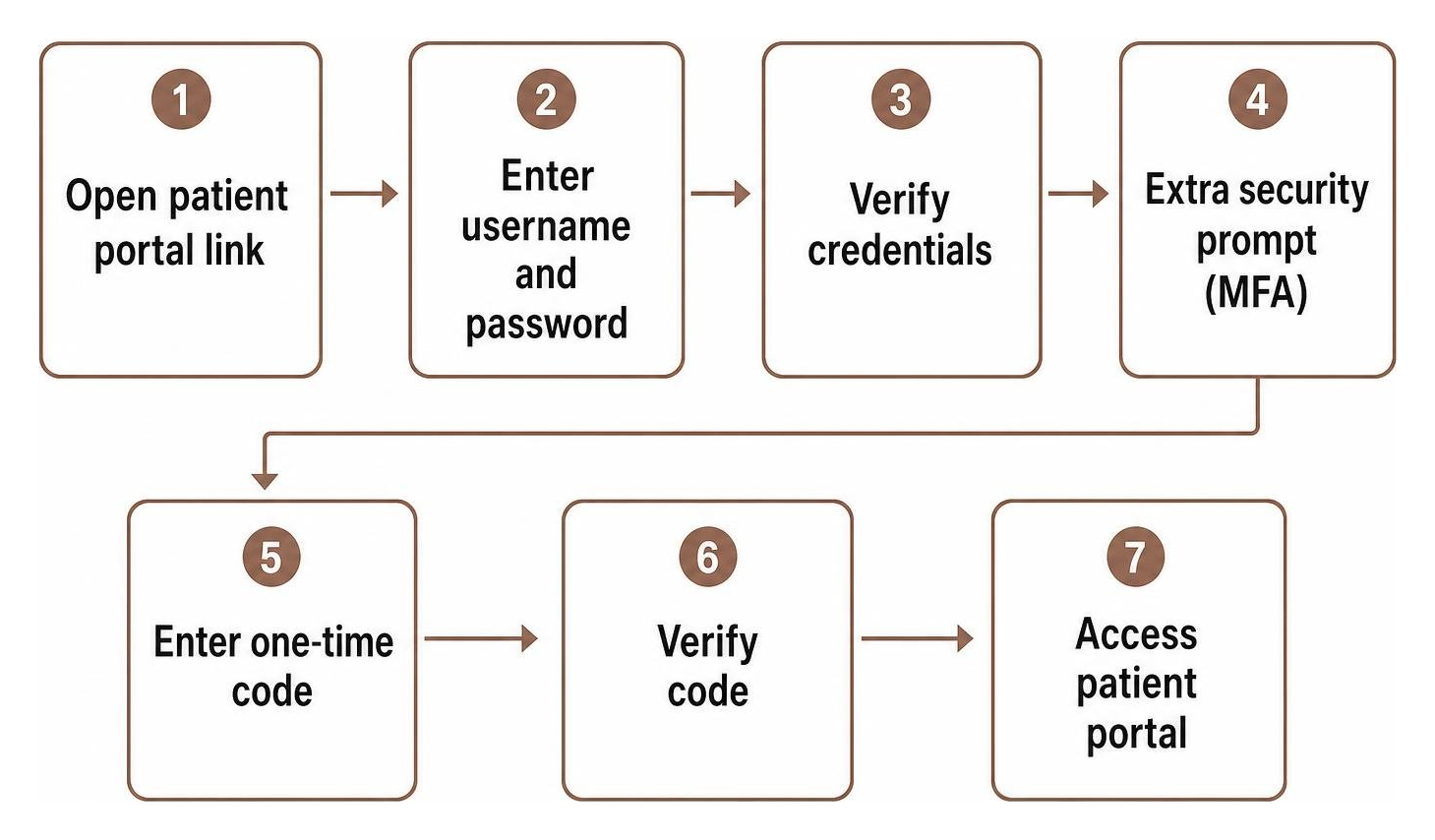
Once registered, returning to your health hub takes only seconds. Most sign-in screens feature straightforward fields for your username (or registered email) and password. Modern health portals also support passkeys and biometrics on compatible devices.
When accessing your system—whether completing a standard session or navigating a specialized portal like the my health connection login—you may be prompted for two-factor authentication (2FA). A short numeric one-time password (OTP) will arrive via text or authenticator app. Enter this code to verify your identity and open your main account dashboard.
Key Health Records and Features Accessible Online
Your patient portal acts as a central hub for personal healthcare data. Instead of waiting for paper statements or calling receptionists for routine records, you can review updated electronic charts 24 hours a day.
Lab Results, Medication Refills, and Direct Doctor Messaging
One of the greatest benefits of digital healthcare is rapid access to diagnostic information. Comprehensive platforms like hospital system patient portals let you inspect blood panels, metabolic screenings, and pathology results as soon as the laboratory certifies them. You can also view radiology notes from scans, track trends in your vital signs across multiple visits, and download official discharge instructions.
Prescription management is similarly streamlined. Rather than calling a pharmacy, you can view active medications, check remaining refills, and submit renewal requests directly to your prescribing clinician with a single click.
When you send a message through your portal, it travels through an encrypted channel directly to your clinical team's triage queue. These communications become part of your permanent health record. Always reserve portal messaging for non-urgent topics, such as mild medication side effects or follow-up questions about recent visit notes.
Online Bill Pay and Statement Management
Modern medical portals simplify administrative tasks alongside clinical charts. Rather than dealing with paper invoices and manual checks, you can view itemized statements, track insurance adjustments, and pay balances directly online.
Many health networks offer flexible payment pathways:
- Logged-In Account Payments: Settle balances, manage stored payment methods, view historical receipts, and set up recurring payment plans from your dashboard.
- Quick Guest Pay: If you prefer not to sign in, portals often provide a quick-pay option where you enter the account number and statement code found on your paper bill to submit a secure payment.
- Cost Estimates and Co-pays: Calculate out-of-pocket costs for upcoming procedures and pay co-pays during pre-visit digital check-in.
Troubleshooting Common Login Issues and Account Recovery
Encountering an authentication error when trying to check test results can be frustrating. Fortunately, most patient portal login errors stem from simple browser settings or easily fixable credential mix-ups.
Resetting Credentials During a Failed Patient Portal Login
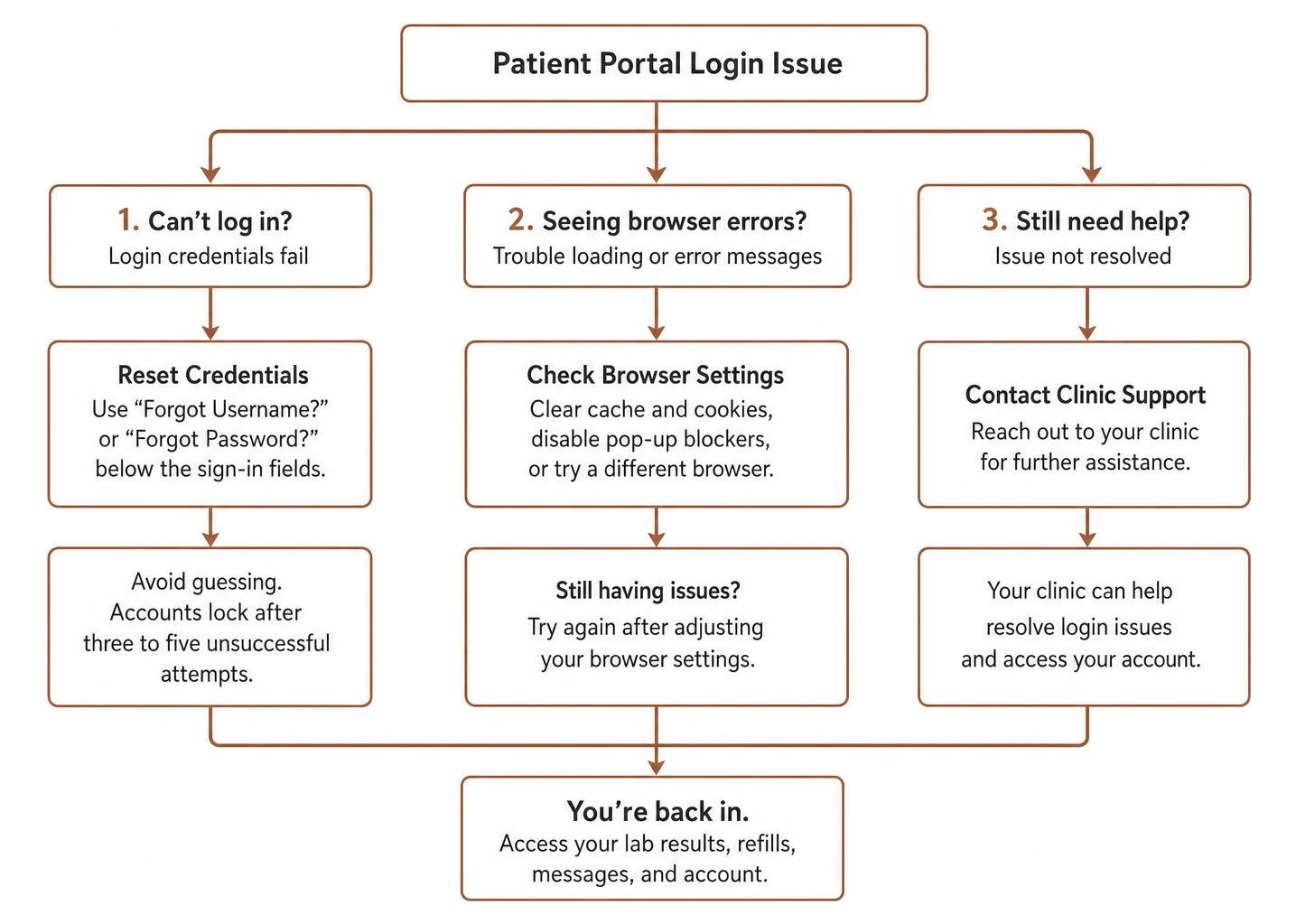
If your login credentials fail, avoid guessing repeatedly, as most healthcare databases lock accounts after three to five unsuccessful attempts to prevent unauthorized access. Instead, use the automated recovery tools:
- Select the Forgot Username? or Forgot Password? link directly below the sign-in fields.
- Enter your registered email address or mobile number along with your date of birth.
- Check your inbox or phone for an OTP or recovery link. (Be sure to check your spam folder if the email does not appear within two minutes.)
- Follow the prompt to establish a new password that meets standard security criteria—typically at least eight characters, combining uppercase and lowercase letters, numbers, and symbols.
If you are locked out or no longer have access to your recovery email, contact your health system's technical support desk or patient portal helpline. Support staff can verify your identity over the phone and issue a fresh activation link.
Browser Cookies, JavaScript, and Technical Errors
Web-based health portals rely on strict browser standards to keep personal health data secure. If your login screen reloads continuously, throws a blank page, or displays a session timeout error, your browser configuration is often the cause:
- Cookies Must Be Enabled: Patient portals use encrypted session cookies to keep you safely logged in while you navigate between charts and messages. If your browser blocks first-party cookies, the login will fail.
- JavaScript Requirements: Portal interfaces require JavaScript to render interactive charts and run authentication scripts. Ensure JavaScript is enabled in your browser settings.
- Outdated Browser Software: Legacy browsers lack the modern cryptographic protocols required for secure health records. Update your browser to the latest version of Chrome, Edge, Safari, or Firefox.
- Corrupted Cache: Cached site data can cause redirect loops. Clear your browser cache and cookies, or try opening the portal in a private browsing window.
Managing Family Care and Mobile App Access
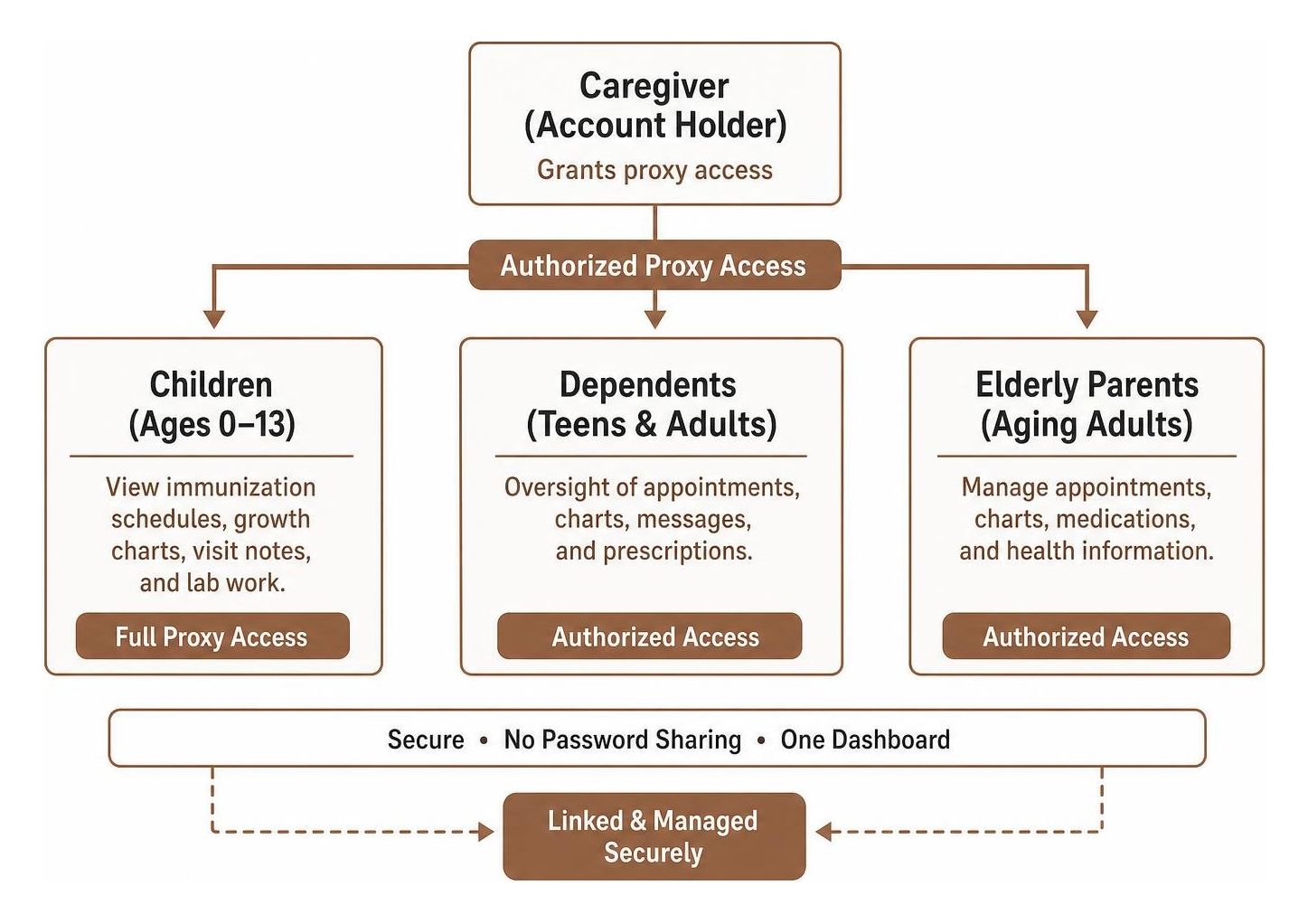
Managing healthcare logistics often extends beyond individual needs. Modern portals allow authorized individuals to oversee appointments, charts, and prescriptions for children, aging parents, or dependents through a single dashboard.
Setting Up Proxy Access for Children and Dependents
Proxy access lets an authorized caregiver link a dependent's medical chart to their own account, eliminating the need to share passwords or manage separate logins.
- Pediatric Access (Ages 0–13): Parents and legal guardians can typically request full proxy access online or at the pediatric office to view immunization schedules, growth charts, visit notes, and lab work.
- Adolescent Access (Ages 14–17): Due to state and federal privacy regulations regarding minor healthcare, adolescent portal rules vary. In many regions, teenagers can maintain an individual account, while parental proxy access may be restricted or require written consent from both parent and minor.
- Adult and Elder Proxy (Ages 18+): Competent adults can designate a family member or caregiver as a proxy through an electronic authorization form. In cases involving legal guardianship or medical power of attorney, submitting legal documentation to the clinic's medical records department will grant appropriate access.
Accessing Medical Records on Mobile Devices
You do not need a desktop computer to stay connected with your care team. Most major health systems offer dedicated mobile apps for iOS and Android, allowing you to check records, receive push notifications when new test results are ready, and attend secure video visits on the go.
While hospital portals provide comprehensive diagnostic reports and clinical documentation, you might also want to track everyday wellness habits privately. Logging routine metrics locally can help you spot trends between clinic checkups. If you are exploring broader digital tracking tools, review our guide to the best health tracker app for android to see how different platforms handle daily habit monitoring.
Frequently Asked Questions About Patient Portals
Is My Medical Information Secure in an Online Health Portal?
Yes. Patient portals are governed by strict healthcare privacy laws, including the Health Insurance Portability and Accountability Act (HIPAA) and the Health Information Technology for Economic and Clinical Health (HITECH) Act. These platforms protect your protected health information (PHI) using advanced administrative and technical safeguards:
- End-to-End Encryption: Data is encrypted both in transit (while moving between your device and the server) and at rest (while stored in the database).
- Session Timeouts: Portals automatically log you out after several minutes of inactivity to prevent unauthorized viewing on unattended screens.
- Access Audit Logs: Every login, record view, and message transmission is permanently logged in a secure audit trail.
- Credential Privacy: System staff and healthcare providers cannot view your password.
How Quickly Are Lab Results and Doctor Notes Posted?
Under modern federal health data interoperability rules, most diagnostic test results, pathology reports, imaging interpretations, and clinical visit notes must be released to your online account without delay.
As a result, you will often see routine blood work, metabolic panels, and diagnostic findings within hours of laboratory processing—frequently before your doctor has had time to review them. Complex tests, such as specialized biopsies or genetic analyses, may take several days to finalize. If you review a result before your physician contacts you, avoid jumping to conclusions; your care team will review the data and reach out to discuss the clinical context.
Can I Use Patient Portal Messaging for Medical Emergencies?
No. Secure portal messaging is designed exclusively for non-urgent communication. Portal messages are routed to a shared clinical inbox where nurses and administrative staff review them during standard clinic operating hours. Response times typically range from one to three business days.
If you or a family member experience symptoms such as severe chest pain, sudden numbness, difficulty breathing, deep lacerations, or any life-threatening condition, call 911 or go to the nearest emergency room immediately.
Keeping Track of Your Everyday Health
Your patient portal is an essential gateway for viewing clinical diagnoses, scheduling visits, and keeping in touch with your doctors. However, clinical charts only show part of your overall health journey—the snapshots taken during clinic visits.
Keeping a private daily record of your physical activity, meals, energy levels, and personal health metrics can help you notice meaningful patterns in your routine. If you want to log these personal details privately on your own terms, you can track and log personal wellness metrics using a local, offline journal designed to keep your personal data under your control. By combining your formal electronic health records with mindful daily logging, you can take an informed, confident role in managing your health.