Top CBT Mood Tracker Apps Recommended by Therapists
Choosing a CBT Mood Tracker App That Fits Your Life
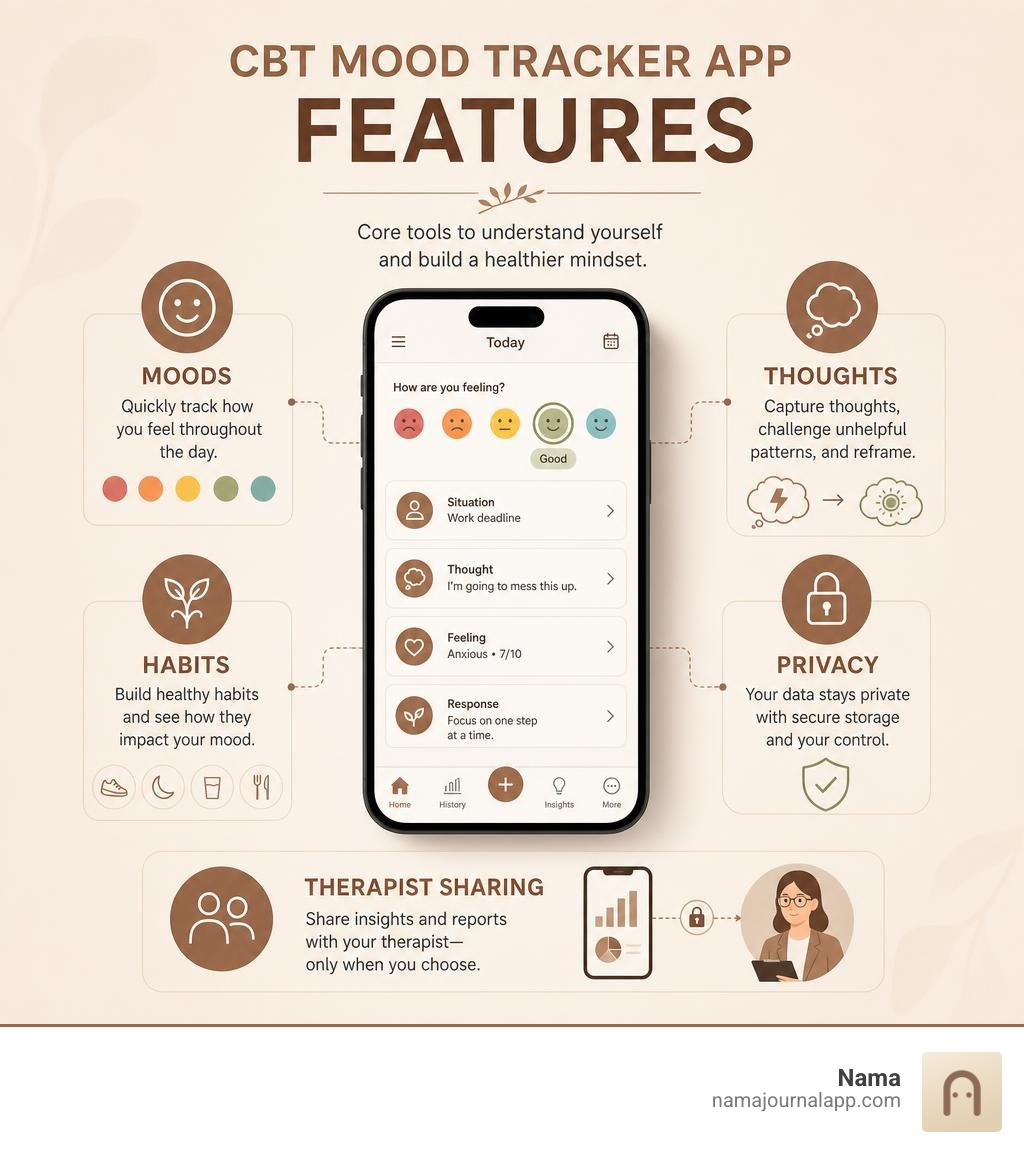
A cbt mood tracker app helps you log emotions while also noticing the thoughts, situations, and habits connected to them. Unlike a basic mood calendar, it uses Cognitive Behavioral Therapy ideas to help you spot unhelpful thinking patterns and test more balanced perspectives.
For a quick starting point, choose an app that offers:
- Fast mood and habit check-ins you can keep up with daily.
- Space to record a situation, automatic thought, feeling, and response.
- Private storage and clear controls over whether anything is shared.
- Optional reports or exports if you plan to review patterns with a therapist.
The right tool should feel simple enough to use when you are stressed, not like another task to manage. It can help turn vague feelings such as "I had a bad week" into useful details about sleep, work pressure, meals, exercise, relationships, and recurring worries.
For privacy-focused users, the biggest question is not only what an app tracks. It is where those sensitive notes live, who can access them, and whether you can journal without ads, social feeds, or unwanted cloud sharing.
This guide compares therapist-recommended CBT-focused trackers and the features that matter most for private, practical emotional awareness.
What Makes a CBT Mood Tracker App Different from Standard Apps?
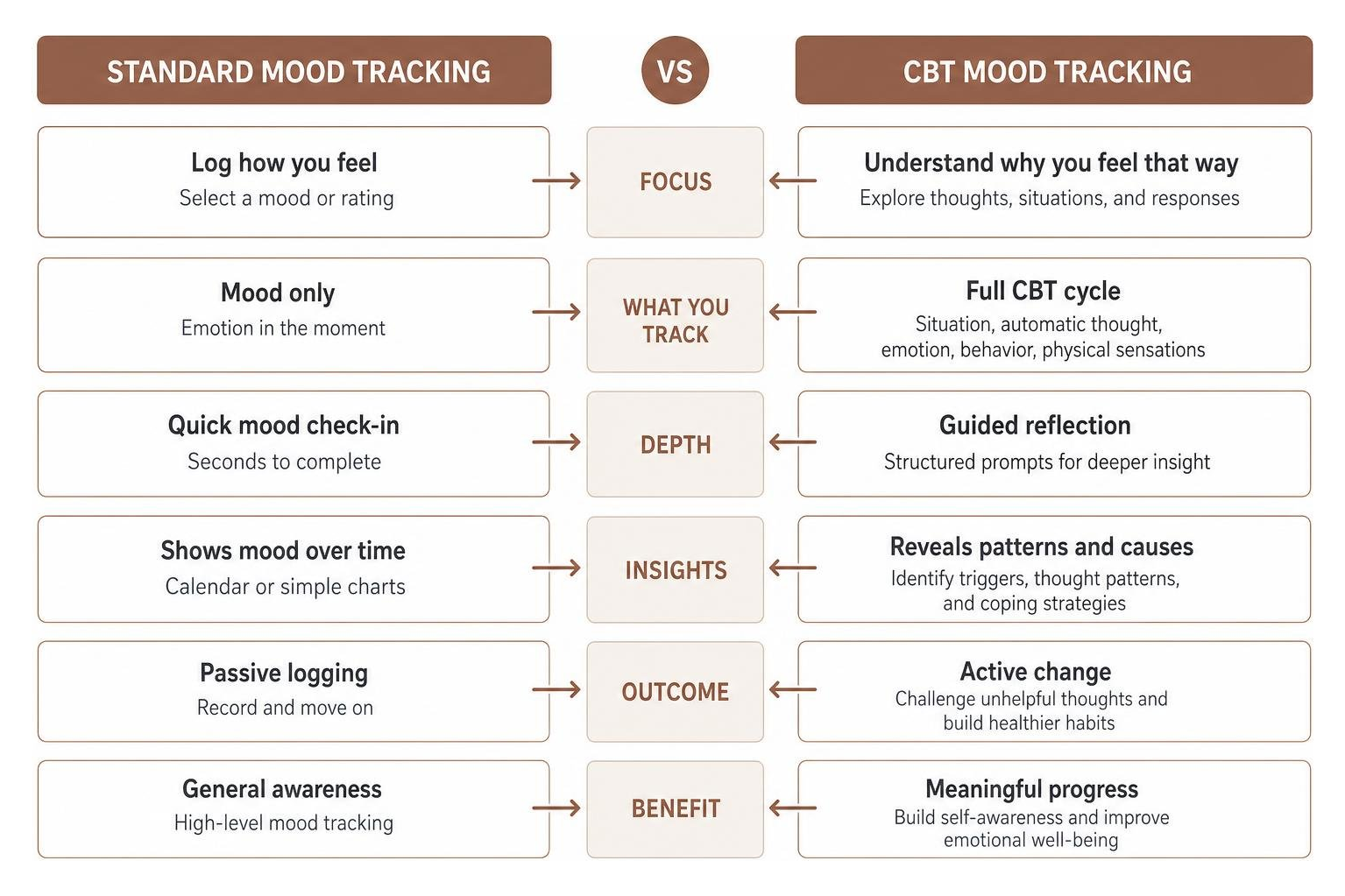
Standard mood apps usually stop at asking, "How do you feel right now?" You tap a face emoji—happy, sad, neutral, or anxious—and move on with your day. While that builds basic emotional awareness, it leaves out the why behind your emotional shifts.
A dedicated cbt mood tracker app goes several steps further by anchoring daily check-ins in the principles of Cognitive Behavioral Therapy (CBT). Cognitive Behavioral Therapy rests on a foundational idea: our thoughts, emotions, behaviors, and physical sensations are all interconnected. A situation doesn't directly cause your emotional state; rather, it is your interpretation of that situation—your automatic thought—that triggers the emotional and physical response.
By capturing the situation, automatic thought, cognitive distortion, and resulting emotion all in one place, a CBT app helps transform passive logging into active self-reflection. To explore versatile tracking tools designed for your daily routine, check out our Features page.
Understanding Cognitive Behavioral Therapy in Digital Tools
In clinical therapy, cognitive behavioral tools help individuals recognize negative thought patterns and challenge them using evidence-based methods. When translated into digital apps, CBT frameworks provide structured prompts that guide you through moments of distress or anxiety in real time.
Instead of letting a distressing thought spiral in your head, a CBT app prompts you to break down the experience:
- The Triggering Event: What happened? (e.g., "My supervisor sent a sudden meeting invitation.")
- The Automatic Thought: What did your brain instantly assume? (e.g., "I'm about to get fired.")
- The Emotion & Intensity: How did you feel, and how strong was it? (e.g., "Anxious, 85/100.")
- The Cognitive Distortion: Is your brain jumping to conclusions, catastrophizing, or using all-or-nothing thinking?
- Cognitive Reframing: What is a more grounded, balanced perspective? (e.g., "It could be a routine sync or project update.")
This digital cognitive loop empowers you to pause, catch negative thoughts as they occur, and test alternative explanations before your anxiety takes over.
Key Features to Look For in a CBT Mood Tracker App
When evaluating tools in 2026, therapists consistently highlight key features that make an app clinically effective:
- Structured Thought Diaries: Guided prompts that walk you through cognitive restructuring without overwhelming you with text fields.
- Cognitive Distortion Identification: Built-in cheat sheets or tags for common mental traps like catastrophizing, emotional reasoning, or "should" statements.
- Clinical Screening Tools: Optional access to standard self-assessments, such as the Patient Health Questionnaire (PHQ-9) for depression or Generalized Anxiety Disorder scale (GAD-7), to monitor trends over time.
- Habit and Lifestyle Correlations: Capabilities to log variables like sleep hours, exercise routines, stress levels, and meal timing alongside mood logs.
- Flexible Journaling: Dedicated spaces for free-form reflection, gratitude journaling, or guided notes. You can learn more about structured daily writing in our guide to Journal and Notes.
Essential Features of the Best CBT Mood Tracker App Solutions for 2026
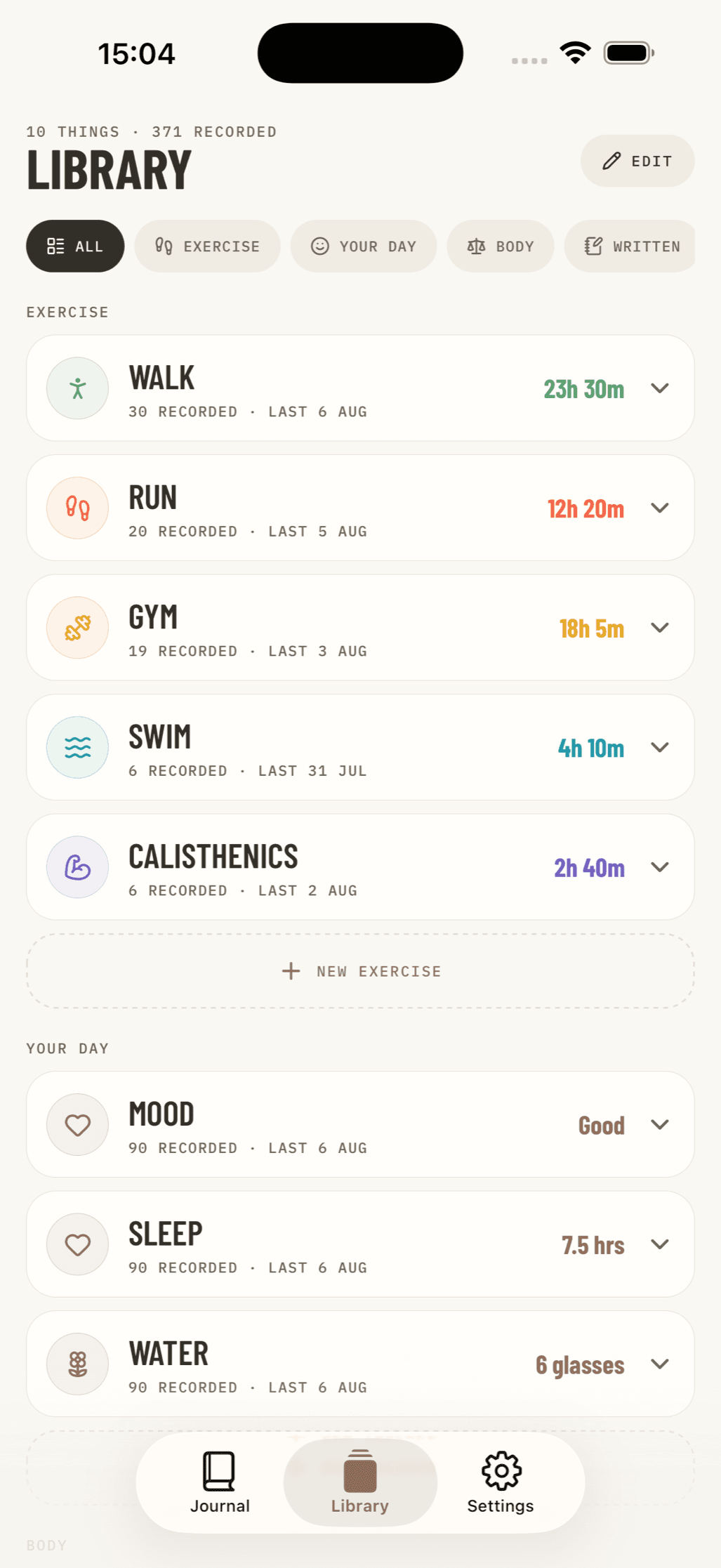
As digital wellness software evolves, the best CBT trackers balance clinical depth with extreme ease of use. If an app takes ten minutes of tedious tapping every time you feel stressed, you won't stick with it when you need it most. Below, we examine the essential feature pillars that set top-tier CBT mood apps apart in 2026.
| Feature Category | Standard Mood Tracker | CBT-Focused Tracker |
|---|---|---|
| Primary Focus | Daily mood ratings and basic habit logs | Identifying and restructuring negative thought patterns |
| Data Captured | Emoji rating, brief category tags | Trigger event, automatic thoughts, distortions, reframed thoughts |
| Core Skill Built | Basic emotional check-in | Cognitive reframing, distress tolerance, evidence evaluation |
| Therapy Utility | Shows high-level mood trends over time | Reveals specific cognitive triggers and behavioral patterns |
| Customization | Standard mood scales | Custom tracking for habits, physical symptoms, notes, and metrics |
To tailor your daily logging to your specific mental health goals, explore how you can Track Anything privately on your iPhone.
Thought Diaries and Cognitive Restructuring Tools
Thought records are the cornerstone of CBT. A quality cbt mood tracker app provides a step-by-step workflow for thought diaries, helping you catch, check, and change unhelpful patterns:
- Catching the Thought: Noticing when your mood drops or anxiety spikes and logging the exact phrase running through your head.
- Checking the Thought: Examining the evidence for and against your automatic assumption. Did the bad outcome actually happen, or was it a "what-if" worry?
- Changing the Thought: Formulating an alternative, objective perspective that acknowledges the facts without catastrophic assumptions.
Over time, revisiting your completed thought records helps you spot recurring patterns. For example, you might discover that your anxious predictions rarely materialize in real life, weakening the grip of future panic.
Habit Correlation and Trigger Identification
Our emotional states do not exist in a vacuum. Sleep quality, physical activity, nutrition, and daily stress levels heavily dictate our mental resilience.

Therapists frequently recommend apps that allow you to track lifestyle factors alongside mood entries. When you log daily sleep, meals, and exercise, you can spot direct correlations, such as:
- Sudden spikes in catastrophizing on days with less than six hours of sleep.
- Improved mood stability on days containing at least 20 minutes of physical movement.
- Increased emotional reactivity during long stretches without regular meals.
By linking lifestyle habits directly to mood logs, you gain actionable insights into how small daily choices buffer against stress.
Clinical Screenings and Real-Time Symptom Logs
Many integrated mental health apps incorporate standardized clinical screening tools, such as the PHQ-9 for depression symptoms or the GAD-7 for anxiety. Taking these brief screenings bi-weekly or monthly gives you a clear visual metric of symptom progression.
Real-time logging bridges the gap between memory and reality. When you track panic spikes or low-energy slumps right as they happen, you capture honest, unvarnished data instead of relying on distorted recollections later in the week.
How to Use a CBT Mood Tracker App with Your Therapist
A cbt mood tracker app works best when integrated into your wider mental healthcare routine. Therapists love digital logs because they make therapy sessions significantly more focused and actionable.
Bridging the Memory Gap Between Therapy Sessions
Have you ever sat down on your therapist's couch, been asked "How was your week?", and suddenly felt your mind go completely blank? You end up saying "Fine, I think," even though you had two major anxious meltdowns on Tuesday and Thursday.
This phenomenon is known as recall bias. Human beings naturally judge their past week based on how they feel in the present moment or remember only the most extreme events.
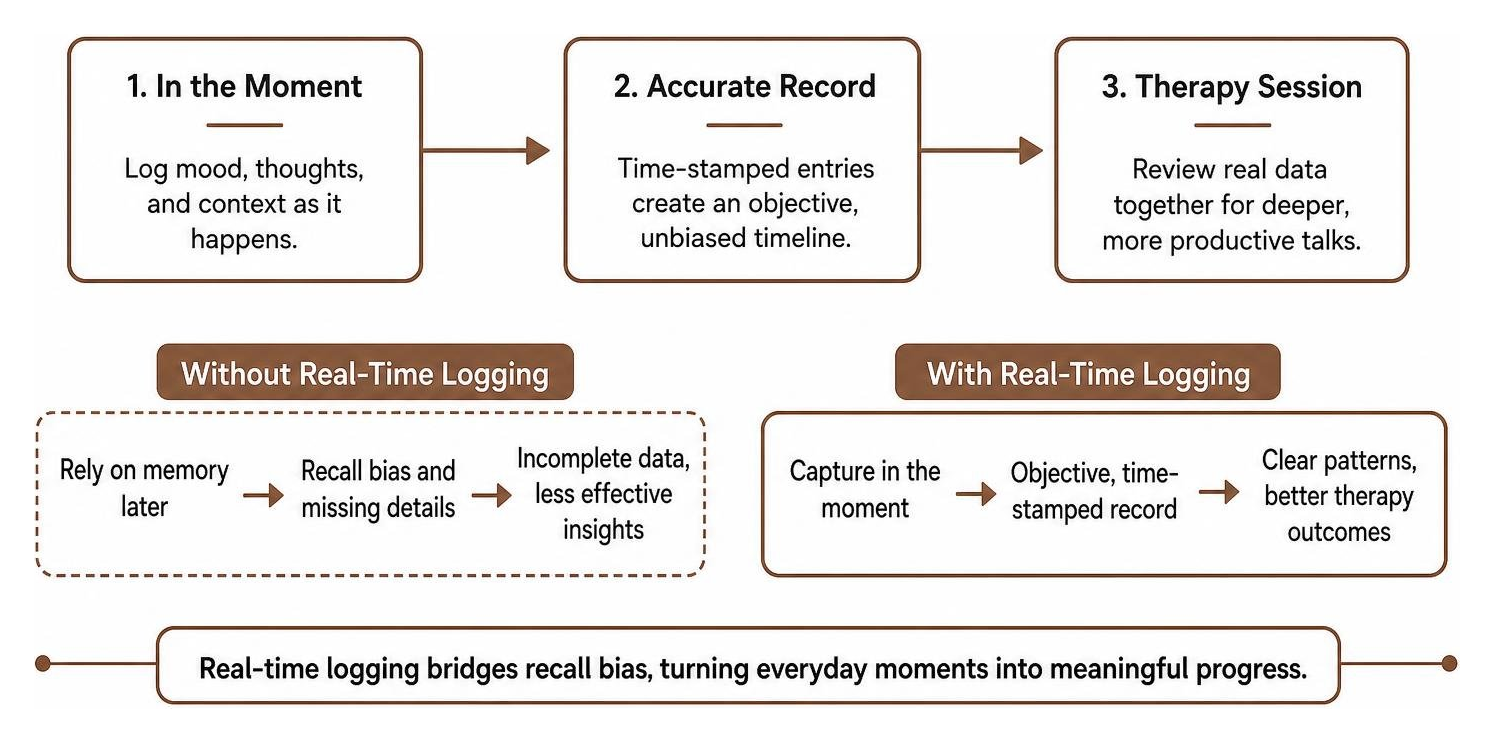
Using a CBT mood tracker bridges this memory gap by capturing real-time data:
- Objective Pattern Recognition: Instead of guessing when your mood dipped, you have timestamped logs showing exact triggers.
- Tracking Skill Progress: You can show your clinician how frequently you practiced cognitive reframing techniques when feeling overwhelmed.
- Contextual Detail: You can review specific thought records together, evaluating real examples of cognitive distortions that occurred between appointments.
Selecting a CBT Mood Tracker App for Your Treatment Plan
When picking an app to support your therapy sessions, consider these practical criteria:
- Export Functionality: Can you export clean, printable PDF reports or text summaries to hand to your clinician?
- Frictionless Entry: Does the app allow quick 15-second entries when you are busy, as well as longer journaling when you have time?
- Personalized Tracking: Can you customize parameters to reflect your specific treatment plan (e.g., tracking panic severity, exposure tasks, or sleep duration)?
Testing an app for two to three weeks gives you enough real-world data to review during a session and decide whether it supports your personal therapeutic goals.
Best Practices for Privacy and Daily Usage
When logging your most intimate thoughts, fears, and emotional vulnerabilities, privacy isn't just a bonus feature—it is an absolute necessity.
Data Security and Sharing Mental Health Logs
Many mainstream wellness apps quietly monetize user data, store sensitive mental health notes on unencrypted external cloud servers, or require social accounts to log in. In contrast, sensitive psychological data requires strict privacy protections.
When evaluating app security, look for these non-negotiable features:
- Local On-Device Storage: Keeping your logs stored exclusively on your local iPhone memory rather than third-party servers prevents remote data breaches.
- No Account Required: Operating without mandatory logins, email registrations, or user profiles ensures your personal thoughts remain completely anonymous.
- Full Data Ownership: Look for tools that let you easily export your entries into standard formats (like text or PDF) for your therapist, while maintaining total control over deleting your data whenever you wish.
To see how local storage and privacy-first design protect your mental health records, explore our principles at Private by Design.
Building Healthier Emotional Habits and Daily Consistency
To build long-term emotional awareness, consistency matters far more than writing novel-length entries. Here are therapist-approved best practices for establishing a sustainable tracking routine:
- Pair Tracking with Existing Habits: Anchor your check-ins to daily events you already do automatically—such as during morning coffee, right after lunch, or before turning off your lights at night.
- Keep Micro-Logs During High-Stress Moments: Use simple symptom scale tags or brief notes during moments of stress, then return to complete full cognitive reframing when you have a quiet moment.
- Log Physical Health Markers: Track habits that directly influence mood, such as workouts and daily nutrition. Learn more about simple, private tracking strategies in our guides to the Exercise Log and Food Diary.
Frequently Asked Questions About CBT Mood Tracking
Can a CBT mood tracker app replace professional therapy?
No. A cbt mood tracker app is an educational and self-awareness tool, not a replacement for professional clinical treatment. While standard apps are exceptional for building self-reflection skills, managing mild everyday stress, and tracking health routines, they cannot provide clinical diagnosis, personalized crisis care, or therapeutic rapport. If you are experiencing severe anxiety, major depression, or acute trauma symptoms, digital tools are best used as a supplement alongside a licensed mental health professional.
How long should I test an app before evaluating it with my therapist?
We recommend testing a CBT mood tracking app for two to three weeks before doing a formal review with your therapist. This timeframe gives you enough space to move past the initial setup phase, test the interface during various emotional states (both calm and stressful days), and collect a meaningful set of mood trends and thought logs to analyze together.
What is the best way to handle privacy when tracking sensitive thoughts?
The safest approach is choosing a privacy-first app that stores data locally on your device rather than uploading sensitive journal entries to external cloud databases. Ensure your iPhone has passcode or Biometric (FaceID/TouchID) protection enabled. When sharing logs with your therapist, use direct export files (such as local PDFs) rather than uploading your personal logs to shared, non-encrypted online platforms.
Conclusion
Building self-awareness and emotional resilience is an ongoing journey. A well-designed cbt mood tracker app gives you a front-row seat to your own mental patterns, helping you uncover how daily habits, unhelpful automatic thoughts, and physical routines shape your overall mood.
Whether you are working alongside a therapist to conquer anxiety or simply seeking a clearer, healthier perspective on daily stress, tracking your mind shouldn't mean sacrificing your digital privacy.
With our offline, privacy-first software, you can log custom metrics, track physical habits, keep detailed thought notes, and review your personal wellness journey without accounts, ads, or cloud tracking. Take full control of your emotional well-being today with the Nama Private Journal App.