A Comprehensive Guide to Finding the Best Meal Planner App
Find the Best Meal Planner App for Your Routine

A meal planner app helps you choose meals, organize recipes, build a grocery list, and keep dinner from becoming a daily decision. The best choice depends on what matters most to you: simple planning, dietary filters, nutrition goals, family sharing, or a private offline-first experience.
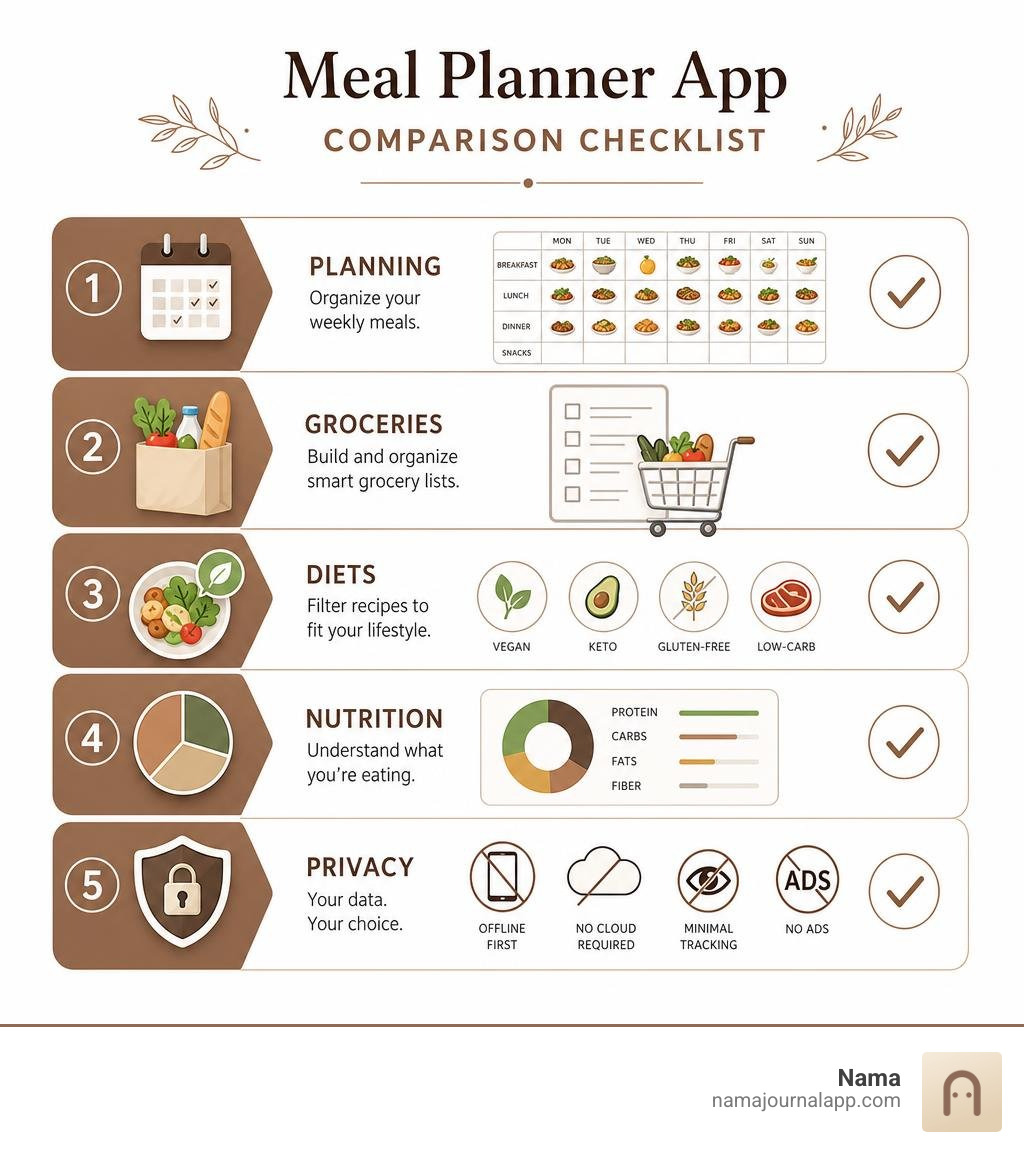
For a quick answer, look for an app that offers:
- Weekly meal scheduling for breakfast, lunch, dinner, and leftovers.
- Automatic grocery lists that combine ingredients and sort them by store section.
- Recipe saving or importing so your own favorites are not trapped in browser tabs.
- Serving-size adjustments to avoid buying or cooking more than you need.
- Diet and allergy filters for needs such as vegan, keto, gluten-free, or low-carb eating.
- Clear privacy controls, especially if you prefer local storage, minimal tracking, no ads, and no required social features.
A good planner can turn a scattered week of recipes, pantry items, and grocery notes into one workable plan. That means fewer last-minute takeout orders, fewer duplicate purchases, and a better chance of using ingredients before they spoil.
The trade-off is that meal planning apps vary widely. Some focus on polished recipe libraries and grocery delivery. Others offer macro tracking, AI-generated plans, or shared household calendars. For privacy-minded wellness users, it is also important to check whether meal, health, and shopping data stays on your device or is stored in the cloud.
This guide compares the features, costs, diet support, automation, and privacy questions that matter before you commit to one.
Key Features to Look for in a Meal Planner App
When exploring options for a meal planner app, it is easy to feel overwhelmed by the sheer variety of features on offer. Whether you are searching app stores or exploring dedicated software options, identifying core functionality helps narrow down what actually makes your weekly routine smoother.
At its core, effective meal planning software should bridge the gap between menu curation and market execution. Key features include:
- Recipe Importing and Custom Collections: The ability to save web links via web scraping or manually store family heritage recipes.
- Dynamic Serving Scaling: Automatically multiplying or dividing ingredient measurements based on how many people you are cooking for.
- Aisle-Grouped Grocery Lists: Consolidating duplicate items across multiple meals and sorting them into produce, dairy, spice, and pantry categories.
- Nutritional Transparency: Quick visibility into caloric density and macronutrient distributions for health-conscious users.
How a Meal Planner App Saves Time and Reduces Food Waste
One of the biggest reasons home cooks turn to digital tools is to eliminate weeknight decision fatigue and lower household grocery bills. On average, preparing meals from quick 15- to 30-minute recipes can save busy parents and working professionals 2 to 3 hours per week compared to unplanned daily trips to the market.
Food waste occurs when we buy ingredients without a clear calendar purpose. A dedicated meal planner app prevents this through several direct mechanisms:
- Ingredient Consolidation: If Monday's dinner calls for half a head of cabbage and Thursday's lunch uses the rest, smart planning ensures zero unused produce goes into the trash.
- Pantry Inventory Tracking: Digital pantry features let you log items you already own so they are excluded from newly generated shopping lists.
- Portion Control Math: Scaling a 4-serving recipe down to 1 or 2 servings prevents excessive cooked leftovers from sitting in the back of the refrigerator.
By keeping track of what you buy and when you plan to cook it, consolidating your weekly food purchases into a single, organized run reduces impulse buys and cuts kitchen waste significantly.
Grocery List Generation and Smart Shopping Integration
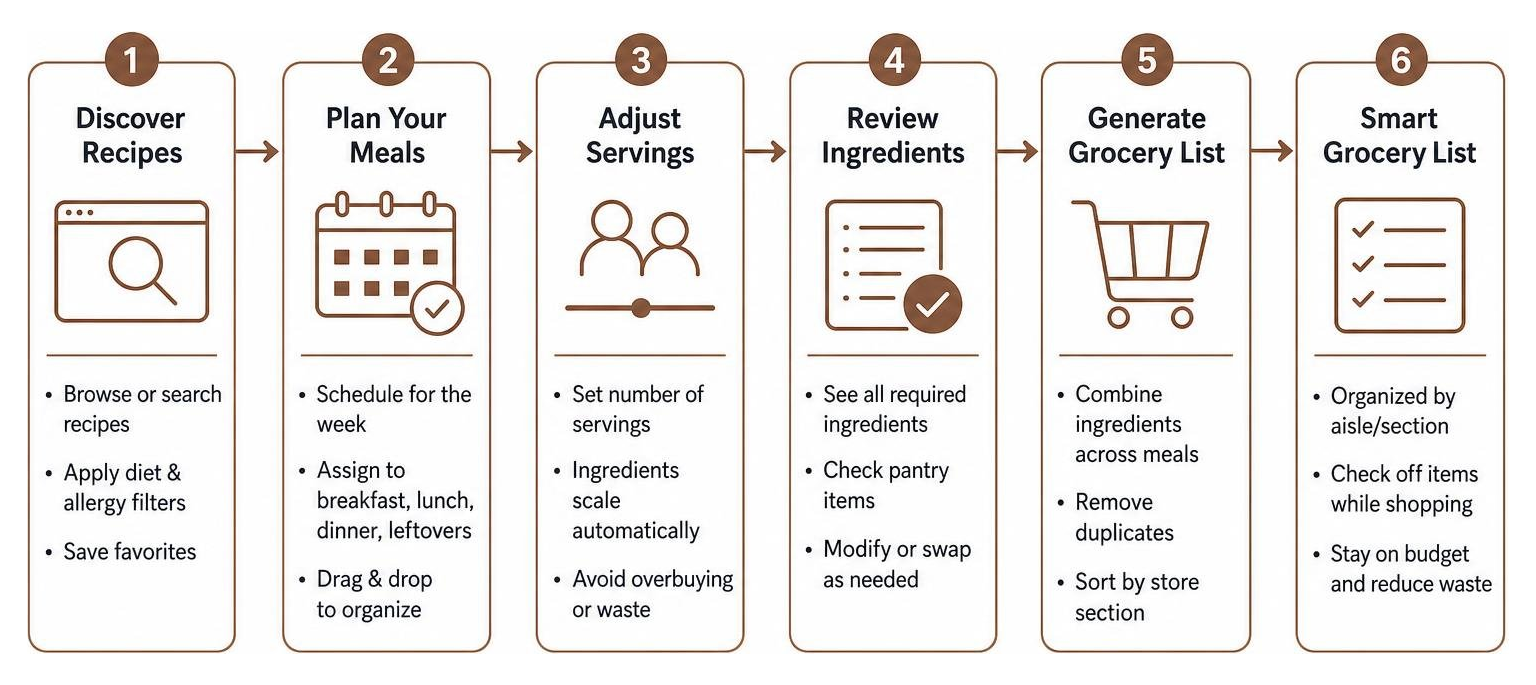
Automated list creation is where digital tools shine over pen-and-paper methods. When you schedule meals for the upcoming seven days, modern applications automatically scrape the ingredient requirements, combine matching items (such as adding 2 tablespoons of olive oil from one recipe to 3 tablespoons from another), and generate a consolidated checklist.
Many platforms extend this capability by integrating directly with retail grocery delivery APIs (such as Walmart, Amazon, Kroger, or Instacart) or smart-home ecosystems. For instance, some platforms offer Home Assistant compatibility, letting you project shopping lists and step-by-step cooking timers onto smart dashboards around your house.
Nutrition Tracking and Health Integration
For many users, meal planning is intrinsically linked to fitness and dietary goals. Knowing exact macronutrient targets—such as consuming 1.6 to 2.2 grams of protein per kilogram of body weight for muscle synthesis—helps structure daily menus around physical activity.
Apps handle nutrition tracking in two main ways: built-in recipe calculations or synchronization with independent health logs. If your target is strict caloric balance or detailed nutrient logging, utilizing a dedicated daily Food Diary allows you to log what you eat alongside daily energy expenditure. To understand how software handles caloric calculations, read our analysis on the Best App for Measuring Calories.
Comparing Free and Paid Meal Planning Software
As you evaluate software, you will notice a distinct divide between completely free tools, freemium models, and premium subscription-based platforms.
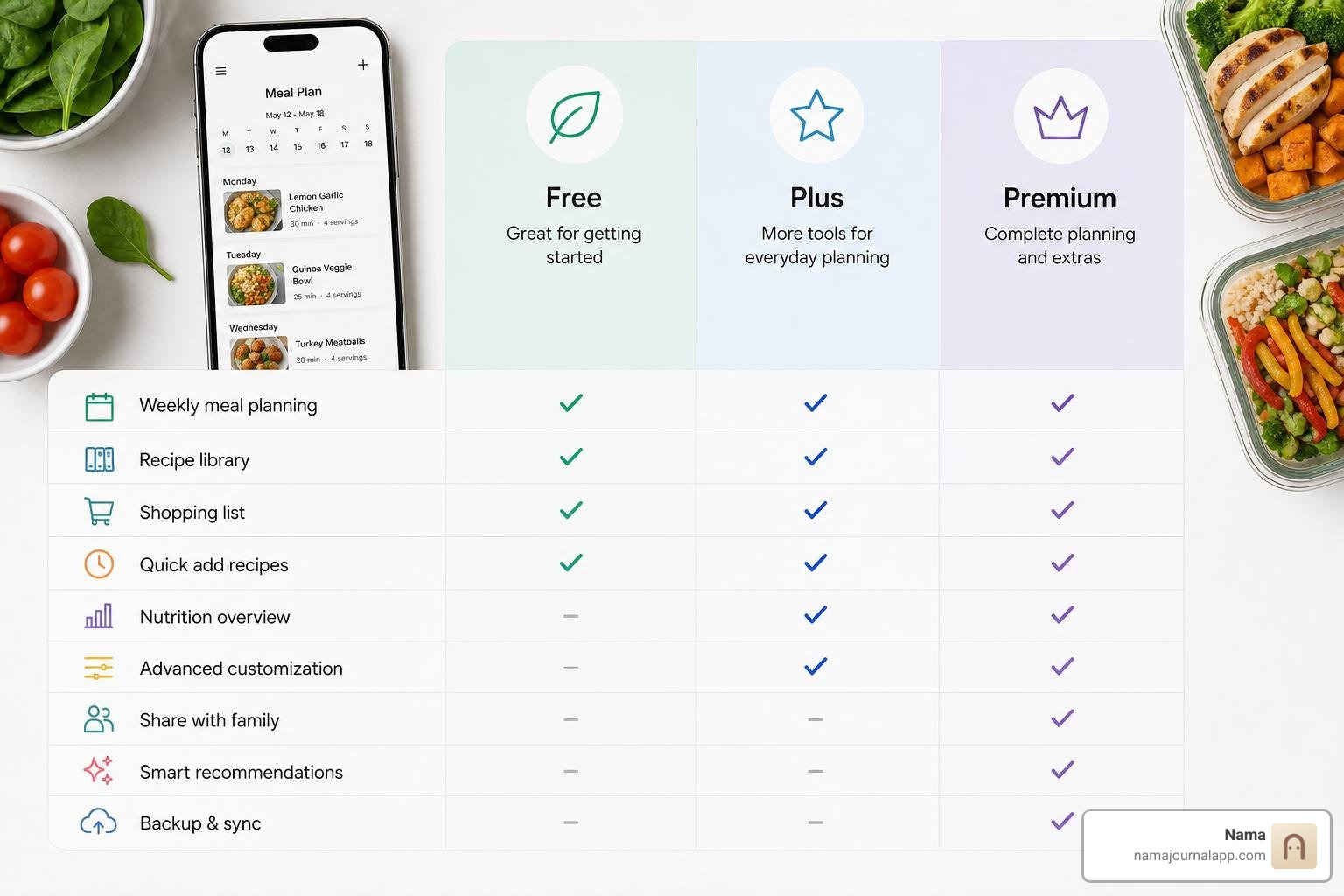
Pricing across the market varies considerably:
- Free Tiers: Offer standard meal calendars, basic recipe saving, and manual grocery list creation (often supported by banner advertising).
- Monthly Subscriptions: Typically range from $2.99 to $9.99 per month, unlocking ad-free usage, automated URL importers, and macro tracking.
- Annual Subscriptions: Ranging from $29.99 to $59.99 per year, these often include family sharing and direct retail checkout integrations.
Free Tier Limitations and Advertising
While free meal planners are an attractive starting point, they frequently come with trade-offs. Free tiers often enforce limits on how many recipes you can save, contain annoying banner ads that disrupt cooking views, or require tedious manual typing for every recipe step.
Typical features available across free vs. premium tiers include:
- Standard Free Tier:
- Manual recipe entry
- Basic weekly calendar scheduling
- Static grocery list generation
- Ad-supported interface
- Premium Upgrades:
- One-click web recipe import
- Multi-device family synchronization
- Integrated macro and calorie targets
- Offline local data storage and export capabilities
Additionally, free apps that rely on cloud servers may introduce parsing glitches—such as accidentally splitting multi-word ingredients like "baby carrots" into separate "baby" and "carrots" list entries—or fail to function without an active internet connection.
Value of Paid Subscriptions and Family Sharing
For busy households, a paid subscription can quickly pay for itself by reducing takeout spending. Features like shared multi-user login allow partners to view the same menu and add items to a synced grocery list in real-time.
Furthermore, premium tiers frequently support dynamic portion adjustments for families with fluctuating schedules. Being able to scale a recipe from a family of 4 up to 6 when hosting guests ensures accurate ingredient quantities every time.
Accommodating Diets, Allergies, and Family Needs
Managing a household with mixed dietary preferences requires software with flexible filtering capabilities. Whether you are preparing keto meals for one partner, gluten-free dishes for a child, or high-protein prep for athletic recovery, modern planning tools help keep meal time manageable.
| Software Feature Category | Basic Recipe Repositories | Smart Diet Planners | Offline Personal Journals |
|---|---|---|---|
| Allergen Filtering | Basic keyword search | Automated profile exclusions | Custom text tags & notes |
| Macro Tracking | General estimates | USDA database integration | Offline manual entry |
| Serving Scaling | Manual calculation | Dynamic automated math | Custom portion logging |
| Data Privacy | Cloud profile required | Account registration | 100% Offline & Private |
Managing Diverse Household Preferences
One of the greatest challenges in family meal planning is balancing individual dislikes and allergies. Leading options stand out by offering over 200 personalization filters. These allow users to exclude specific allergens (like shellfish, peanut, or dairy) while filtering out disliked ingredients (such as olives, cilantro, or tofu) without sacrificing recipe variety.
Advanced tools also accommodate "hybrid" meal planning. In a hybrid framework, the core dish elements remain identical for the entire family (e.g., grilled chicken and roast vegetables), while specific carbohydrates or sauces are served on the side to meet individual low-carb or plant-based requirements.
Specialized Nutritional Plans and Health Goals
When managing specific health conditions—such as Type 2 diabetes, hypertension, irritable bowel syndrome (IBS), or polycystic ovary syndrome (PCOS)—nutritional precision becomes essential. For instance, low-sodium meal strategies are widely recognized as an effective dietary lever for lowering blood pressure, while avoiding fructans in wheat can ease symptoms for those with IBS.
To monitor how customized diets influence your daily energy, mood, and health goals over time, pairing your menu setup with flexible custom metric tracking through Track Anything gives you complete insight into your personal wellness progress without exposing sensitive health data to third-party cloud servers.
AI-Powered Tools vs. Traditional Recipe Repositories
The landscape of meal planning software in 2026 is divided between traditional recipe repositories and emerging AI-driven diet generators.
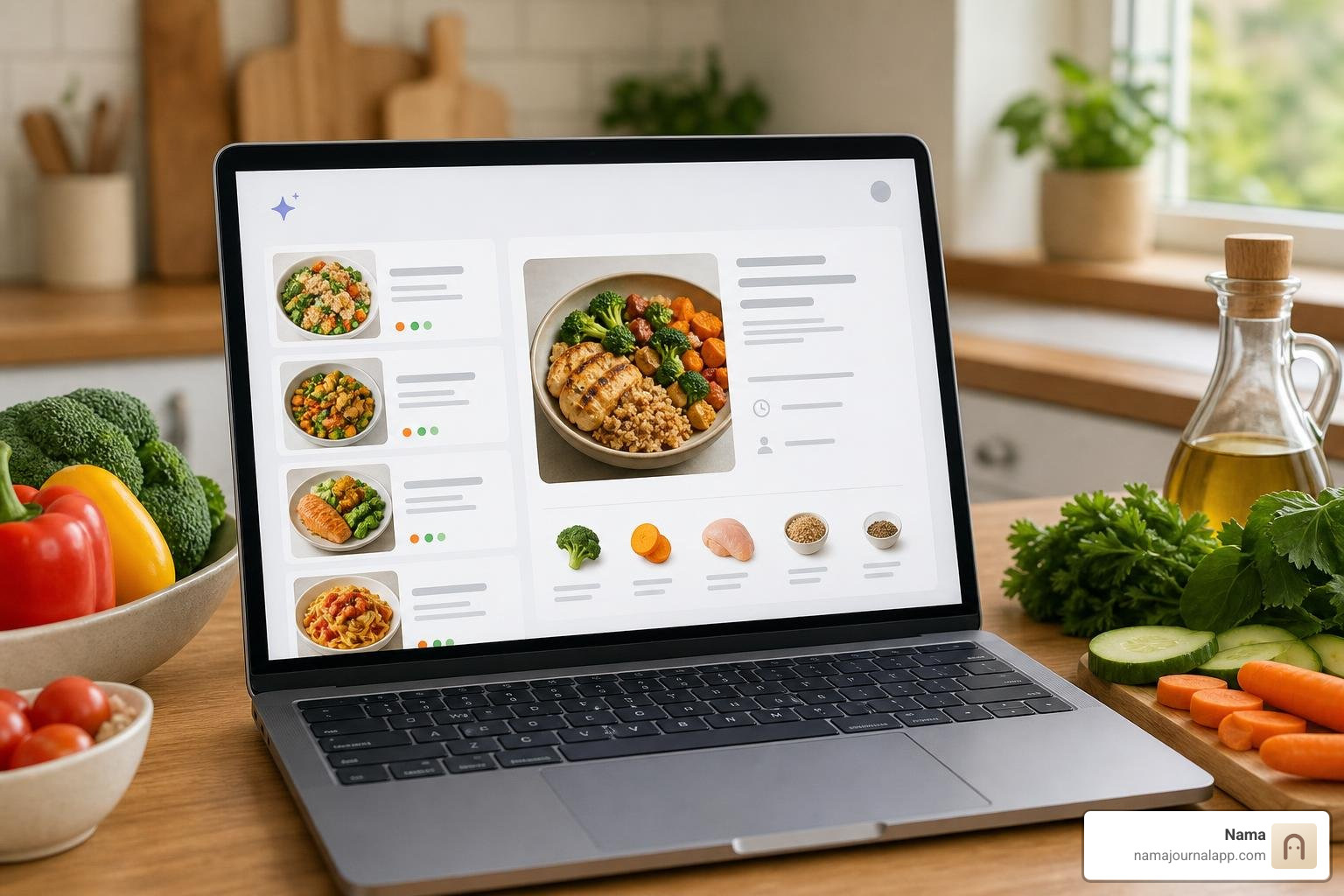
Traditional apps rely on curated, static recipe databases written by food editors or submitted by users. In contrast, AI-driven solutions generate custom multi-day plans on demand based on specific user prompts.
Choosing the Right Meal Planner App for Privacy and Security
While AI generators offer tailored menus, users should understand how their data is calculated and stored. Modern platforms address accuracy by grounding their AI output against verified government databases—such as the USDA FoodData Central index covering over 91,000 foods—rather than relying on arbitrary AI text generation.
However, cloud-based AI tools require you to submit personal information—such as age, weight, health conditions, and dietary habits—to online servers. For privacy-conscious individuals, transmitting sensitive health profiles to cloud databases carries inherent data privacy risks.
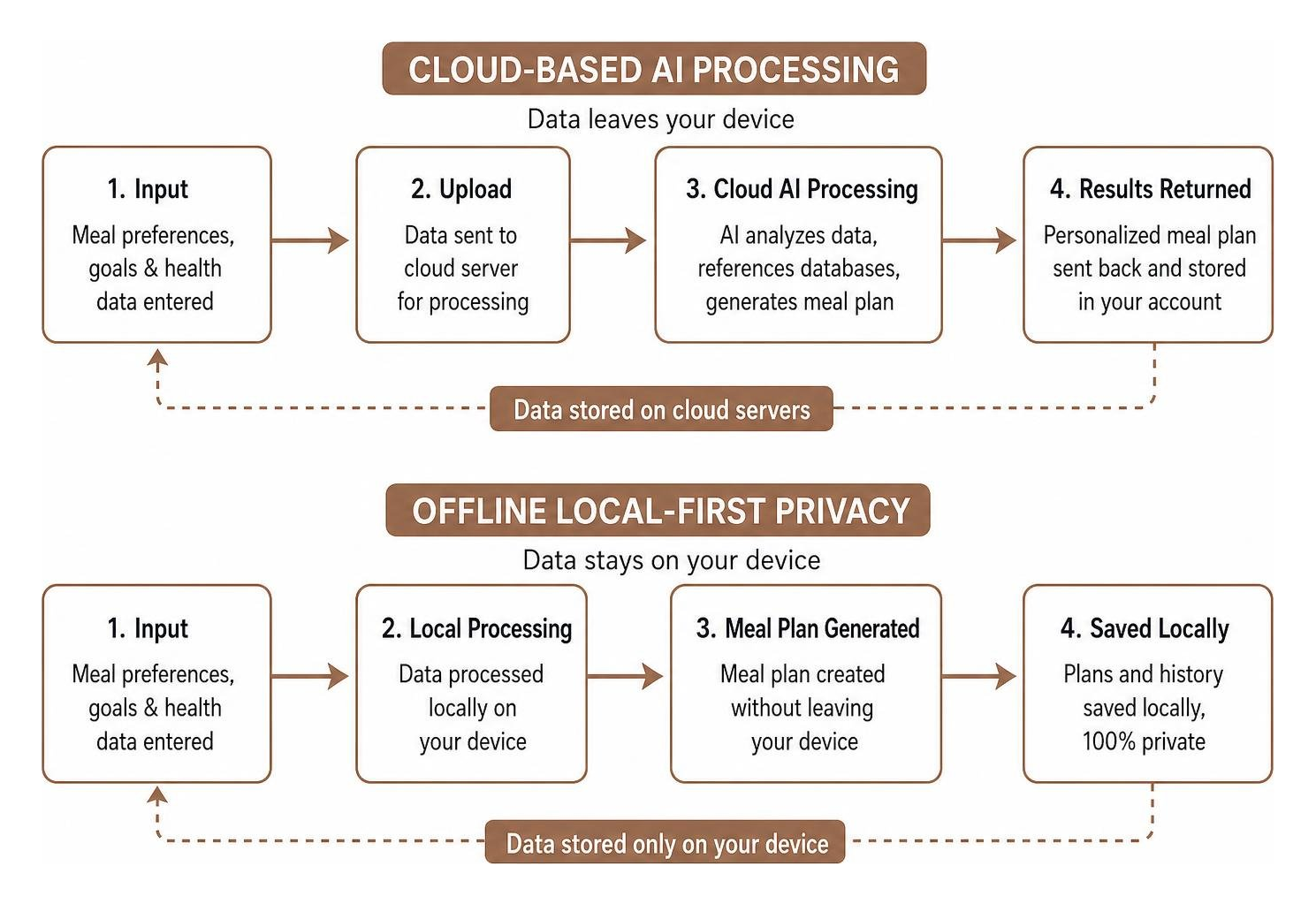
If keeping your wellness history strictly confidential is a top priority, utilizing local-first tools that store data locally on your device without account creation, tracking scripts, or cloud servers provides total peace of mind.
Recipe Web Scraping and Smart Home Automation
Beyond AI generation, modern meal planning tools heavily emphasize convenience through automated web scraping and smart home integration. Web scrapers parse online recipe URLs, stripping away lengthy blog intro text and ad popups to extract clean ingredient lists and step-by-step instructions.
For hands-free cooking in messy kitchens, motion-sensor controls or smart speaker voice integrations allow you to advance recipe steps or run timers without touching your smartphone screen with flour or sauce-covered hands. Maintaining an active physical routine alongside structured meal management can also be logged directly using an integrated Exercise Log.
Frequently Asked Questions About Meal Planning
Can meal planning apps handle complex dietary restrictions and allergies?
Yes, most modern meal planning applications include robust allergy filters and dietary switches. You can set global account preferences to automatically exclude common allergens such as gluten, tree nuts, dairy, egg, soy, or shellfish. Many applications also feature dislike filters to eliminate specific ingredients you prefer not to eat.
How do automated grocery shopping integrations work?
Automated shopping integrations convert your planned weekly menu into an itemized digital list. The app organizes items by supermarket category (such as produce, dry goods, and frozen foods) and uses direct API partnerships with major delivery networks or local retailers to transfer ingredients directly into an online delivery cart for pickup or delivery.
Do meal planning apps require an internet connection?
It depends on the application architecture. Many mainstream meal planning apps rely heavily on active cloud connectivity to sync recipes, pull AI generated plans, or update shared family accounts. However, local-first applications cache data directly onto your device, allowing you to access recipes, meal logs, and daily notes entirely offline without an internet connection or account login.
Conclusion
Finding the best meal planner app comes down to identifying what reduces friction in your daily routine. If your primary goal is discovering quick 30-minute weeknight recipes and streamlining online grocery shopping, feature-rich recipe planners provide immediate convenience. If you require hyper-specific macronutrient target calculations or dietary adjustments for medical conditions, database-validated AI planners offer powerful customization.
However, as personal health metrics, diet logs, and daily lifestyle habits become increasingly digitized, taking ownership of your personal data is equally important. Choosing tools that prioritize simplicity, clarity, and user privacy guarantees that your journey toward stress-free cooking and healthy living remains entirely in your control.
For privacy-conscious individuals seeking a secure, offline approach to tracking meals, daily exercises, and personal wellness goals without account requirements or cloud data sharing, explore Nama, check out its complete range of Features, or learn more about building your own offline Private Wellness Journal.