Ditch the Pricey Subscriptions: The Best Free Exercise Journals Reviewed
Find a Free Exercise Log That You Will Actually Use
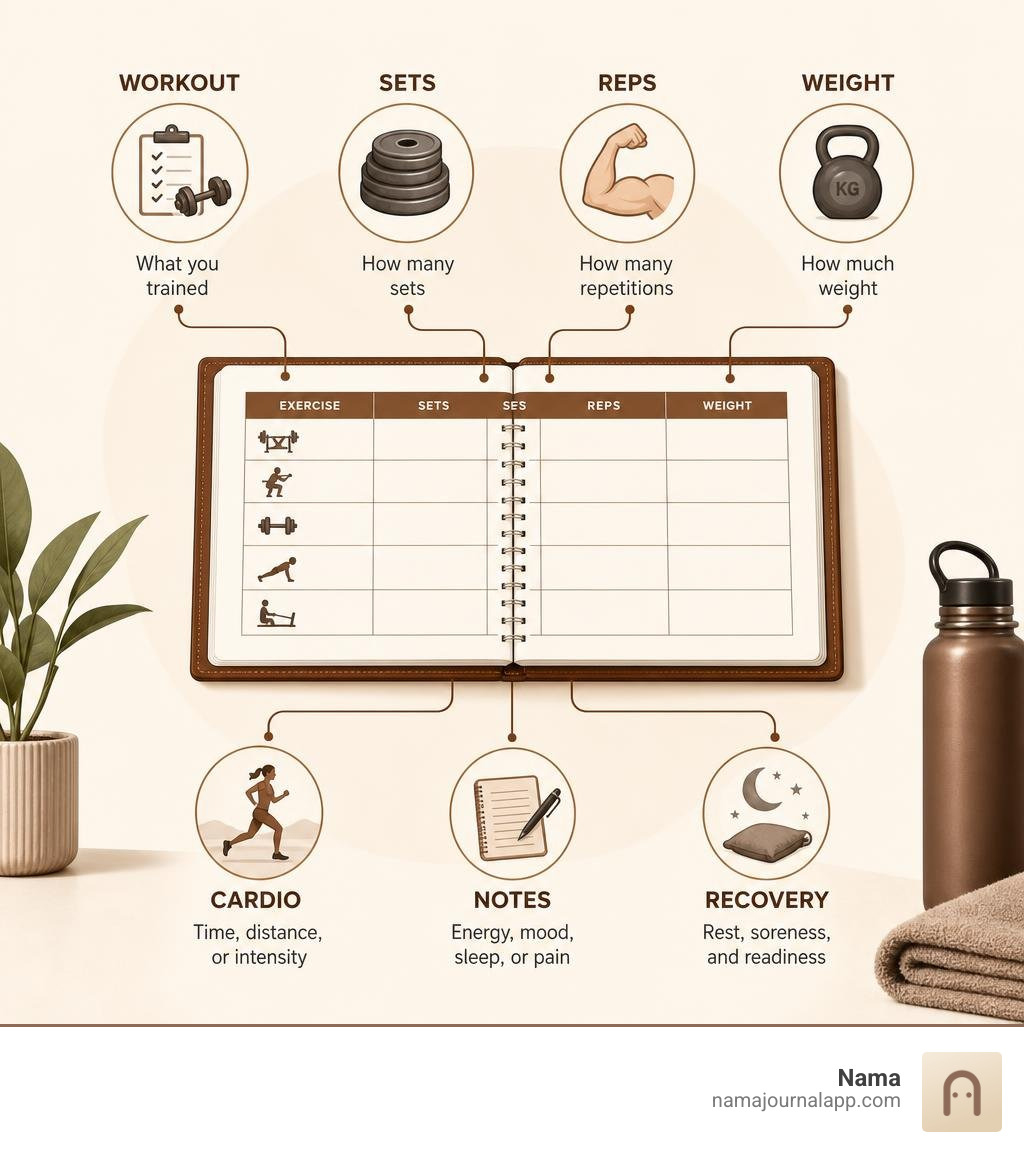
The best free exercise log is the one that makes recording workouts quick, clear, and private. Choose a printable sheet if you want no screens or cloud storage. Choose an offline-friendly app if you want faster entries, progress charts, and searchable history.
At minimum, track:
- Date and workout type
- Exercises, sets, reps, and weight
- Time, distance, or intensity for cardio
- A short note on energy, mood, sleep, or pain
You do not need a paid subscription to spot progress. A simple log creates accountability, shows whether weights or volume are rising, and makes plateaus easier to catch before they become months of stalled training.
For privacy-focused exercisers, paper logs and local-storage tools also avoid the ads, feeds, and social comparison built into many fitness platforms. Some free templates go beyond lifting and cardio, adding space for meals, water, sleep, body weight, and health notes.
This roundup compares free printable journals, spreadsheets, and workout apps so you can find a tracking method that fits your routine - without handing over your attention or your data.
Important free exercise log terms:
Top Free Fitness Tracking Methods and Formats Compared
Keeping track of your workouts is one of the most effective ways to build strength, improve endurance, and maintain consistency. When you write down what you lift or how far you run, you create an objective baseline for your training. Behavioral psychology shows that self-monitoring alone reliably improves exercise adherence long before advanced programming even enters the conversation.
The challenge today is choosing a format that supports your habits without adding friction. The modern fitness landscape is filled with expensive subscriptions that lock basic workout history behind paywalls, clutter your screen with social media feeds, or sell your health data to third-party brokers.
Whether you want zero screen time in the gym or an offline digital tool, there is a reliable, free path forward. Many lifters build a structured exercise journal that suits their exact training style, bypassing paid tiers altogether.
| Tracking Method | Primary Strengths | Limitations | Best For |
|---|---|---|---|
| Printable PDF Logs | Zero screen distraction, complete privacy, tactile feedback | Manual calculations, physical storage requirements | Minimalists, home gym lifters, paper lovers |
| Custom Spreadsheets | Automated volume math, highly customizable layouts | Clunky mobile interface, setup time required | Data enthusiasts, program designers |
| Interactive Web Logs | Instant browser access, basic routine planning | Requires internet connection, limited offline tools | Desktop planners, quick session loggers |
| Offline Mobile Journals | Portable, fast entry, automated charts, 100% private | Requires a smartphone, platform-dependent | Daily gym-goers wanting privacy and speed |
Printable Fitness Templates and Physical Notebooks
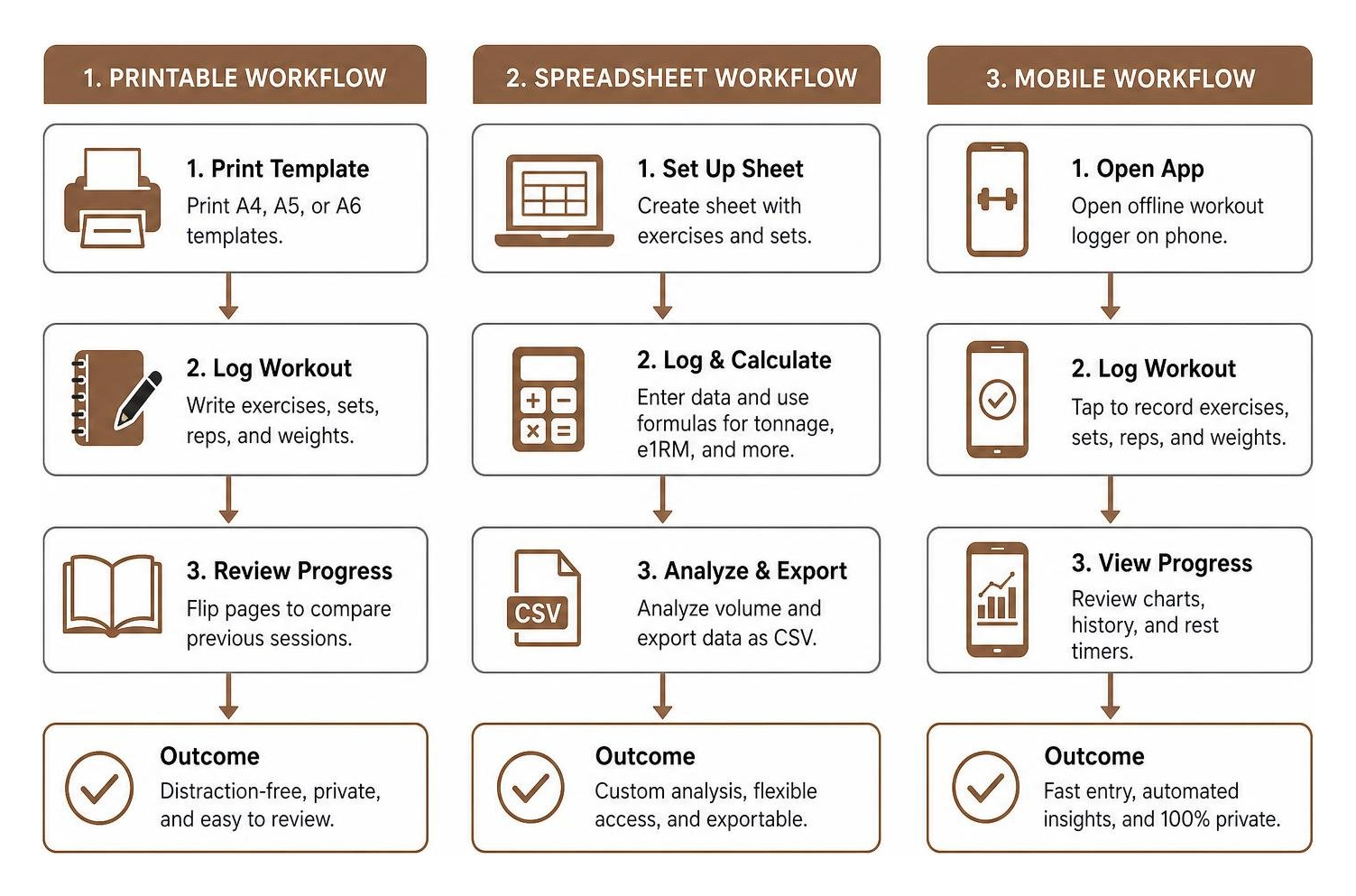
For those who want to leave their phone in their locker, printable templates offer a distraction-free alternative. Analog logging gives you direct tactile feedback, allowing you to jot down numbers while the chalk is still on your hands.
Well-crafted printable templates in standard A4, A5, and A6 formats often feature:
- Dedicated goal-setting sheets and index pages to map multi-week programs.
- Clear column layouts for tracking exercises, sets, target reps, and weights lifted.
- Flexible margins that fit into standard three-ring binders or discbound notebooks.
- Dark and light printing themes to save printer ink.
Physical paper logs make reviewing previous training sessions straightforward. You simply flip back a page to see what you lifted last week, eliminating pop-up notifications, battery drain, and app permission prompts.
Digital Spreadsheets and Interactive Web Trackers
If you enjoy analyzing training volume and calculating estimated one-rep maximums automatically, digital spreadsheets and web tools are a natural fit. Spreadsheets created in Excel or Google Sheets allow you to design custom formulas that calculate tonnage (sets × reps × weight) across individual muscle groups.
Lifters who want flexible digital access can also explore a free online workout tracker to plan training blocks ahead of time and record completed volume directly from a desktop or tablet.
Spreadsheets make it simple to export your data into CSV format, ensuring that your long-term training archives remain accessible and independent of any single software ecosystem.
Mobile Workout Apps and Offline Loggers
Mobile logging combines the speed of quick-tap set entry with automatic rest timers, exercise databases, and historical performance charts across modalities like weightlifting, HIIT, and calisthenics.
For lifters who value privacy above all else, the ideal digital logger stores information locally on the device without requiring cloud accounts, remote servers, or intrusive analytics trackers. If you prefer tapping through sets on your phone, reviewing a mobile workout tracker app guide can help you identify tools that offer local backups, rest alerts, and zero-subscription access.
Key Features to Look for in a Free Exercise Log

Not all tracking tools are built with the same training goals in mind. A runner logging weekly mileage needs different fields than a powerlifter monitoring barbell velocity and rate of perceived exertion (RPE). When evaluating a free workout tracking template or app, look for these foundational features:
- Clear Set and Rep Columns: Adequate space to record multiple working sets, warm-ups, drop sets, and bodyweight variations.
- Load and Metric Indicators: Flexible entry for pounds, kilograms, miles, kilometers, or duration in minutes.
- Rest Interval Indicators: Timers or visual cues to ensure your rest between sets remains consistent across training blocks.
- Subjective Effort Tracking: Space to record RPE or RIR (reps in reserve) to evaluate how heavy a load felt on a given day.
- Session Notes Field: A dedicated area to write brief observations regarding sleep quality, energy levels, joint comfort, or equipment adjustments.
Applying practical weekly exercise log tips will keep your record-keeping fast and consistent, preventing logging from turning into a chore.
Choosing the Right Free Exercise Log Format
Your weekly workout split dictates the layout of your log:
- Daily Logs (1 Day per Page): Best for high-volume bodybuilding workouts or powerlifting sessions that require extensive set-by-set detail, warm-up breakdowns, and qualitative form notes.
- Weekly Overview Sheets (3 to 5 Days per Page): Ideal for full-body routines or upper/lower splits. They allow you to view the entire week's volume at a glance, making it easy to confirm that you hit your target muscle frequency.
- Monthly Habit Trackers: Useful for general fitness and cardio adherence, highlighting completed sessions and rest days across a 30-day block.
Beginners benefit from simple 3-day weekly templates that emphasize core compound lifts. Advanced lifters often require multi-day split layouts that accommodate periodized percentages, accessory volume, and specialized set markers.
Tracking Holistic Health: Nutrition, Water, and Sleep Metrics
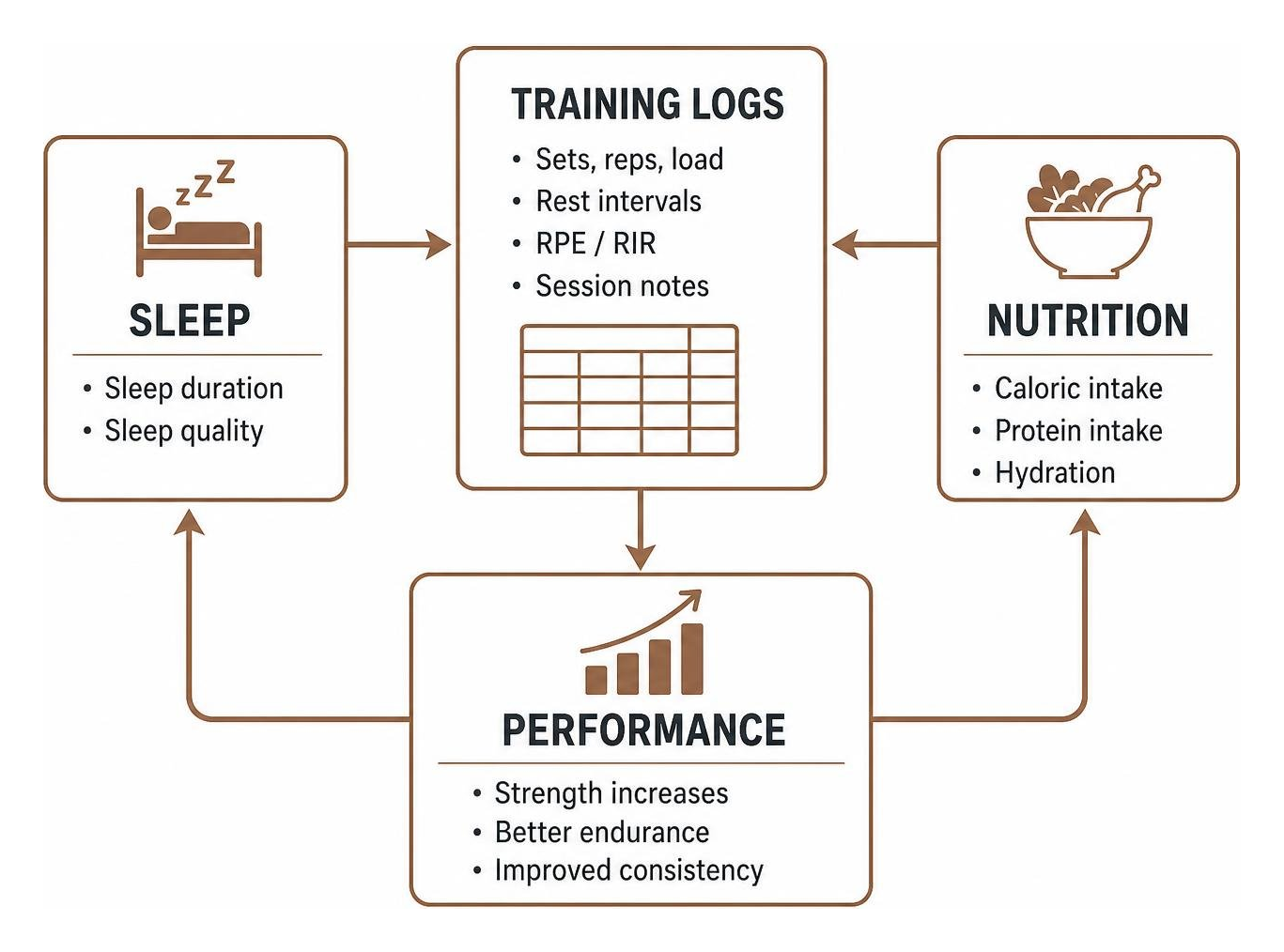
Strength and cardiovascular progress do not happen in a vacuum. Your recovery between gym sessions determines how quickly you adapt to training stress. Comprehensive logs often combine workout data with basic lifestyle markers.
You can use resources like the Vertex42 food log template to monitor daily nutrition alongside physical activity. By tracking simple metrics such as:
- Hydration Levels: Visual check-boxes or fluid ounce tallies to maintain optimal muscular hydration.
- Sleep Duration and Quality: Total hours slept to correlate poor recovery with stalled lifting numbers.
- Daily Caloric Intake: Protein and energy intake to ensure adequate fuel for muscle protein synthesis and recovery.
- Health Vitals: Blood pressure or fasting morning body weight to track systemic health over time.
How to Maximize Training Gains Without Paid Subscriptions

A workout log is only as useful as the actions it inspires. Simply recording numbers without reviewing them is like collecting receipts without balancing your budget. To turn your journal into a practical coaching tool, implement a structured logging method.
One proven framework is the Three-Line Entry Method:
- Line 1 (The Focus): The primary muscle group, movement pattern, or target goal for the day (e.g., Lower Body Strength - Squat Focus).
- Line 2 (The Work): The primary lifts, weights, sets, and reps completed (e.g., Squat: 225 lbs × 3 sets × 5 reps; RDL: 185 lbs × 3 sets × 8 reps).
- Line 3 (The Feedback): One honest, concise sentence about how the session felt (e.g., Felt explosive out of the hole, but left knee felt tight on warm-up sets).
Writing concise notes takes less than a minute per session and prevents your journal from becoming bloated.
How to Track Progressive Overload with a Free Exercise Log
Progressive overload is the foundation of muscular hypertrophy and strength development. To make continuous adaptations, you must gradually increase the training stimulus over time.
You can track progressive overload using several key metrics within your log:
- Weight Progression: Adding 2.5 to 5 pounds to the bar while keeping sets and reps identical.
- Repetition Progression: Performing more clean repetitions with a given weight before increasing the load.
- Set Volume Load: Increasing the total number of difficult working sets performed per muscle group per week.
- Density and Rest: Completing the same total volume in less time by shortening rest intervals while maintaining strict technique.
- Technical Mastery: Executing the same weight and reps with greater range of motion, better tempo control, and reduced joint strain.
By reviewing your entries from the previous week before touching a barbell, you establish an exact performance target for every session.
Structuring a Sustainable Long-Term Workout Routine
Long-term consistency outperforms short bursts of extreme effort. To keep your fitness routine sustainable across months and years:
- Organize Training in 4 to 8 Week Blocks: Focus on a specific training goal (such as strength building, hypertrophy, or conditioning) before rotating movements or adjusting rep ranges.
- Schedule Deload Weeks: Plan a week of reduced volume (typically 50% of your standard working sets) every 6 to 8 weeks to dissipate accumulated central and muscular fatigue.
- Identify Stagnation Early: If your weight and rep numbers fail to progress for three consecutive sessions on a core lift, use your log to check your sleep notes, nutrition, and recovery before overhauling your entire routine.
Frequently Asked Questions About Free Exercise Logs
What information should be recorded in a basic workout entry?
At minimum, a basic workout entry should include the date, the specific exercise performed, the weight or resistance used, the number of sets completed, and the repetitions achieved on each set. For cardio, log the total duration, distance, and subjective intensity level. Adding a short note regarding energy or joint comfort provides helpful context when reviewing your progress later.
Are printable exercise logs better than digital workout trackers?
Printable exercise logs are ideal for lifters who want to avoid screen distractions, value complete data privacy, and prefer the tactile experience of physical writing. Digital workout trackers offer distinct advantages in speed, automatic rest countdowns, searchable history, and automated volume calculations. The best option is the one you can maintain consistently for every workout.
How can a free workout log help prevent training plateaus?
A free workout log highlights performance trends over time, allowing you to see when progression has stalled. By reviewing your historical volume, weights, and session notes, you can pinpoint whether a plateau is caused by insufficient stimulus, accumulated fatigue, lack of sleep, or poor exercise selection, making it easy to apply targeted adjustments.
Conclusion
You do not need an expensive monthly subscription to take control of your fitness journey. Whether you prefer the tactile simplicity of a printable PDF binder, the analytical power of a customized spreadsheet, or the fast utility of an offline mobile app, free tracking methods give you the tools to build strength and maintain workout consistency.
At Nama, we believe your personal health data should remain entirely your own. We built our private iOS wellness-journal app to let you log workouts, meals, and custom health metrics locally on your iPhone. With a completely offline, no-account design, you get all the benefits of clean digital tracking without ads, accounts, or cloud storage. Explore our customizable app features and start tracking with a private free exercise log to take control of your training on your own terms.