The Ultimate Guide to the Best Sleep Tracker Apps
How a Sleep Tracker App Analyzes Your Nightly Rest
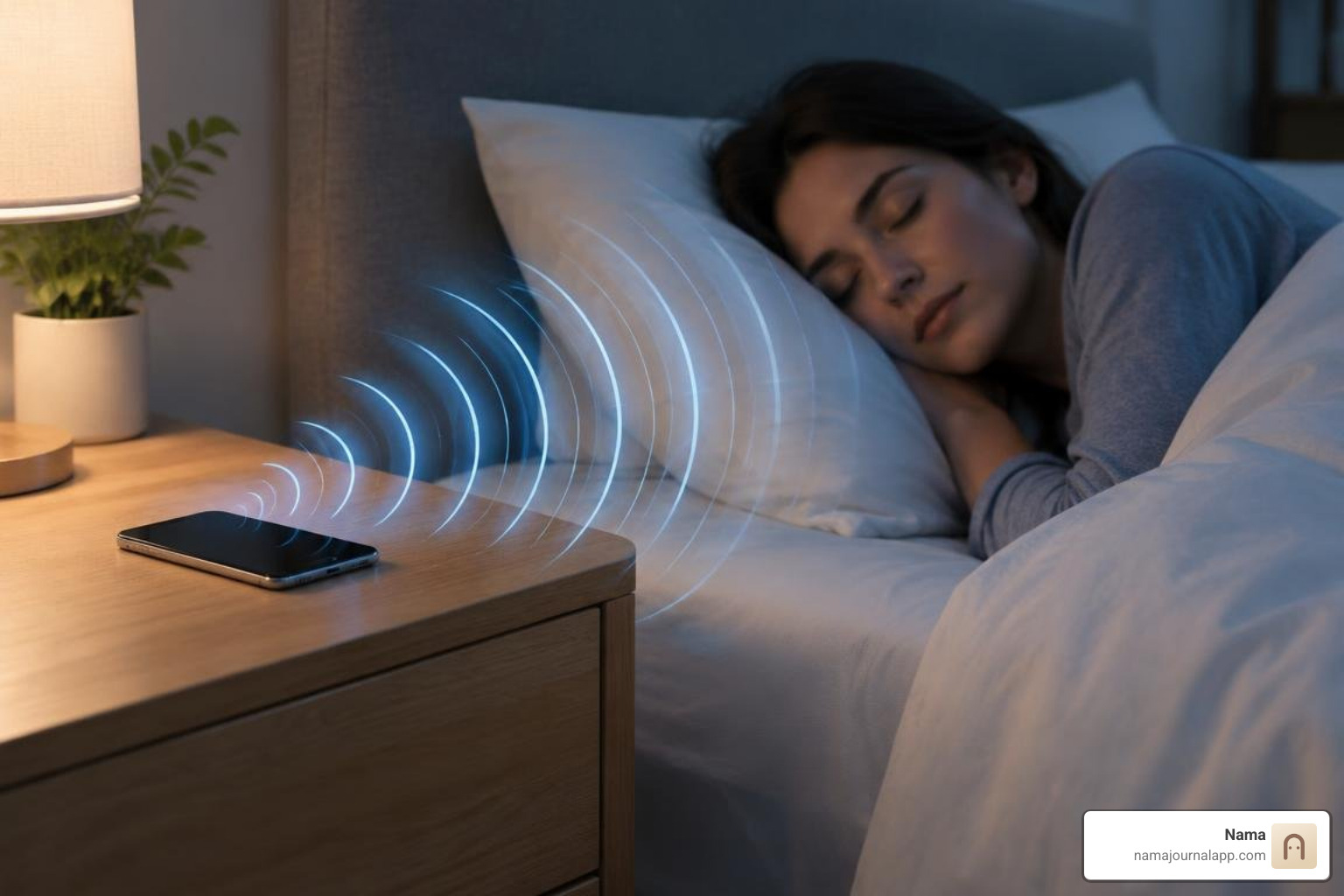
Modern smartphone apps use a combination of acoustic monitoring, motion sensors, and advanced signal processing to estimate when you fall asleep, how restlessly you move, and when you wake up. When placed on a nightstand or near your mattress, your phone acts as a contactless sleep monitor.
Smartphones measure changes in physical movement through internal accelerometer sensors. When placed directly on the mattress, these sensors detect vibrations caused by tossing, turning, and breathing rhythms. Meanwhile, audio-based tracking uses the built-in microphone to listen for breathing patterns, restlessness, snoring, and bedroom disruptions.
These physical and acoustic cues allow apps to estimate your transitions through sleep stages—classifying your rest into light sleep, deep sleep, and REM (rapid eye movement) sleep. During deep sleep, physical movement drops significantly and breathing slows to a steady cadence. In contrast, REM sleep often features irregular breathing, while light sleep is characterized by subtle shifts in posture.
While consumer algorithms continue to improve, mobile tracking has clear physiological limitations. Accelerometer and sound algorithms do not measure brainwaves (EEG), eye movements (EOG), or muscle tone (EMG)—the gold standards used in clinical polysomnography (PSG). Scientific evaluations of commercial sleep apps show that while they effectively raise awareness of sleep habits and encourage better hygiene, their clinical validity remains moderate compared to medical diagnostic tools.
Acoustic and Motion Detection Methods
Acoustic tracking analyzes nighttime audio to classify sounds while filtering out background hums like air conditioners or traffic. Built-in algorithms process nighttime noises into distinct categories:
- Snore Detection: Isolates rhythmic, low-frequency throat vibrations to calculate snoring duration and intensity.
- Sleep Talking: Captures episodic vocalizations, allowing users to review audio snippets in the morning.
- Cough and Disruption Tracking: Records coughing fits, heavy sighing, or sudden shifts in bed sheets.
- Ambient Noise Interference: Tracks how outside noise (such as sirens, pets, or noisy neighbors) impacts sleep continuity.
A common pitfall occurs when users run ambient noise machines or white-noise tracks directly from the same phone doing the recording. Continuous background audio can monopolize the microphone or mask subtle breathing variations, leading to flattened or distorted sleep graphs.
Contactless Sonar and Wearable Integrations
Beyond passive microphone analysis, some applications use contactless sonar tracking. By emitting inaudible, high-frequency sound waves from the phone's speaker, the app measures the echo reflections returning to the microphone. As your chest rises and falls, the frequency shift reveals your respiration rate and physical movement without requiring a device in bed or against your body.
When paired with wearables, sleep tracking expands beyond basic motion. Wearables integrate continuous biometric channels:
- Heart Rate Variability (HRV): Measures autonomic nervous system recovery and physiological stress during rest.
- Pulse Oximetry (SpO2): Monitors blood oxygen saturation levels to highlight potential breathing interruptions.
- Resting Heart Rate (RHR): Assesses cardiovascular wind-down and nocturnal recovery.
- Skin Temperature Trends: Tracks subtle shifts that signal illness onset, hormonal cycles, or circadian phases.
Key Features: Free Tiers vs Premium Subscriptions
Navigating the market for sleep apps reveals a wide range of pricing models. Many apps offer free downloads, but the core features are often separated by paywalls, subscriptions, or intrusive advertisements.
| Feature Category | Standard Free Tier | Premium Subscription ($3.99–$9.99/mo) |
|---|---|---|
| Duration Tracking | Basic time-in-bed and estimated sleep duration | Detailed breakdown of total sleep time vs. restless wake intervals |
| Audio Recording | Snore detection totals; audio playback usually locked or limited to 1–2 clips | Full audio playback for snoring, sleep talking, and coughing episodes |
| Smart Alarm | Standard single-time alarm or narrow wake window | Dynamic 10–90 minute wake window with custom chimes and wake tasks |
| Sleep Architecture | High-level sleep percentage or basic sleep score | Full stage breakdown (Light, Deep, REM) with hypnogram graphs |
| Data History & Trends | 7-day rolling history | Lifetime historical trends, seasonal analysis, and correlation reports |
| Data Privacy | Cloud-synced; often monetized through targeted ads | Local processing options or ad-free experiences |
| Coaching & Content | Limited sample soundscapes | Expansive libraries of guided meditations, bedtime stories, and AI coaching |
What to Look for in a Free Sleep Tracker App
A reliable free tier should offer accurate sleep duration tracking, a basic smart alarm, and transparent privacy practices without forcing a subscription after a brief trial.
However, many free options rely on monetization tactics such as full-screen banner ads or third-party data aggregation. If you choose a free app, ensure it provides permanent functionality rather than a expiring trial, and verify whether nighttime audio files are analyzed locally on your device or uploaded to external servers.
Advanced Metrics in Premium Upgrades
Upgrading to a paid subscription unlocks deeper analytical tools:
- AI-Driven Sleep Coaching: Algorithmic suggestions that correlate your sleep quality with daytime habits and energy levels.
- Long-Term Trend Modeling: Monthly and yearly analytics illustrating how changes in lifestyle, work schedules, or seasons affect sleep continuity.
- Custom Soundscape Libraries: Curated collections of white noise, pink noise, brown noise, ASMR, and bedtime stories to accelerate sleep onset.
- Clinical Reporting Exports: Exportable PDF summaries detailing snoring frequency, sleep debt, and schedule variance to share with medical professionals.
The Science of Sleep Debt, Smart Alarms, and Consistency
Understanding your sleep requires more than just tracking hours in bed. Sleep science centers on three foundational concepts: circadian rhythm regulation, sleep debt accumulation, and sleep inertia management.
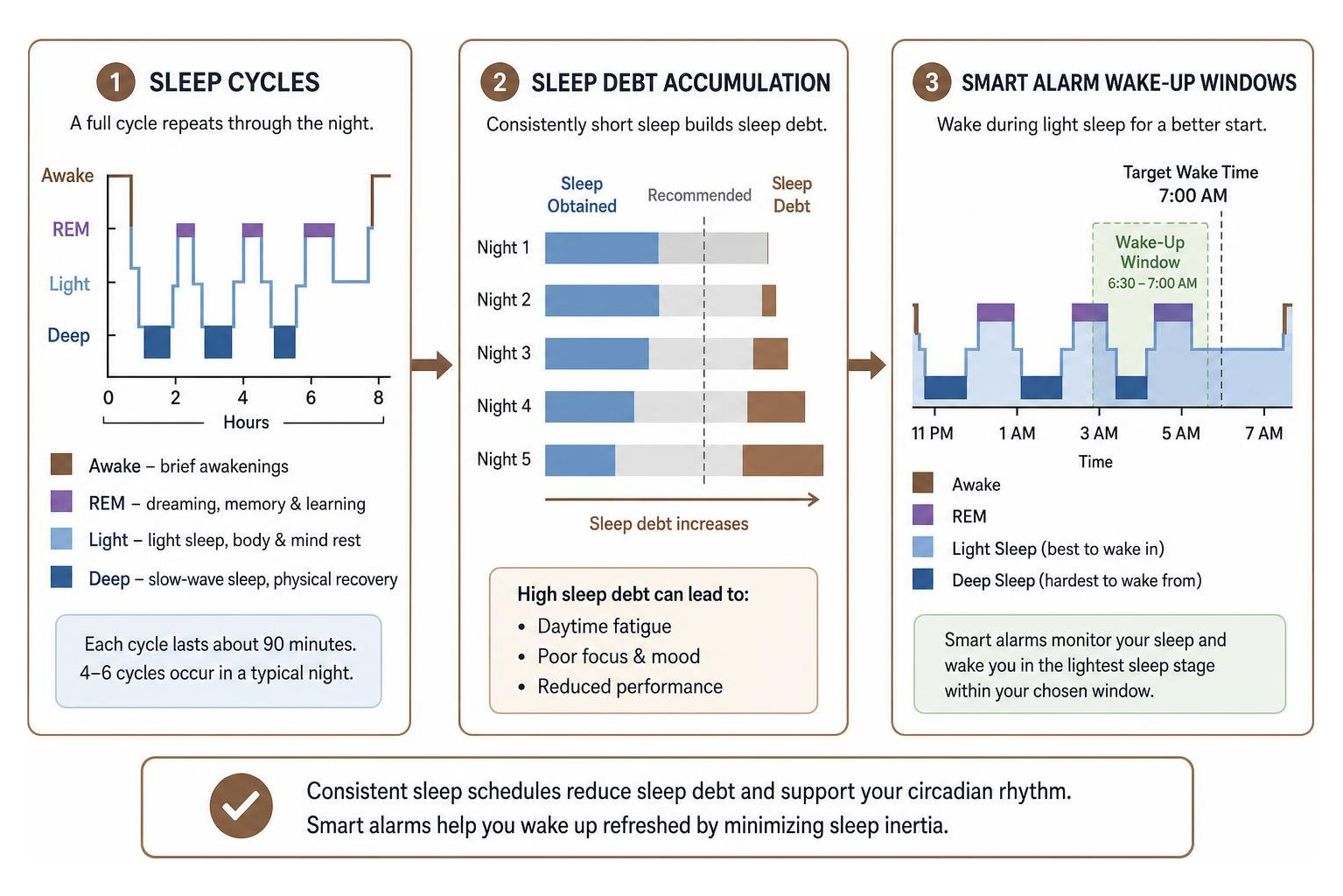
When you maintain consistent sleep and wake schedules, your internal circadian clock coordinates hormone production—releasing melatonin in the evening to promote rest and cortisol in the morning to encourage wakefulness. Tracking these patterns with a daily weekly monthly habit tracker app helps you visualize your bedtime consistency and reinforce a stable circadian rhythm over time.
Optimizing Wake-Up Windows with Smart Alarms
Waking up during deep slow-wave sleep causes sleep inertia—the groggy, disoriented sensation that can linger for hours after getting out of bed. Smart alarms address this by defining a customizable wake-up window (typically 15 to 30 minutes before your target wake time).
By reading subtle movements and respiration changes, the algorithm triggers gentle alarms during light sleep. This minimizes sleep inertia, promotes natural alertness, and makes morning wake-ups feel smoother.
Managing Sleep Debt and Routine Regularity
Sleep debt is the cumulative difference between the biological sleep your body requires (typically 7 to 9 hours nightly for adults) and the actual rest you receive. If your body requires 8 hours of sleep but you only log 6 hours nightly from Monday through Friday, you accumulate a 10-hour sleep deficit heading into the weekend.
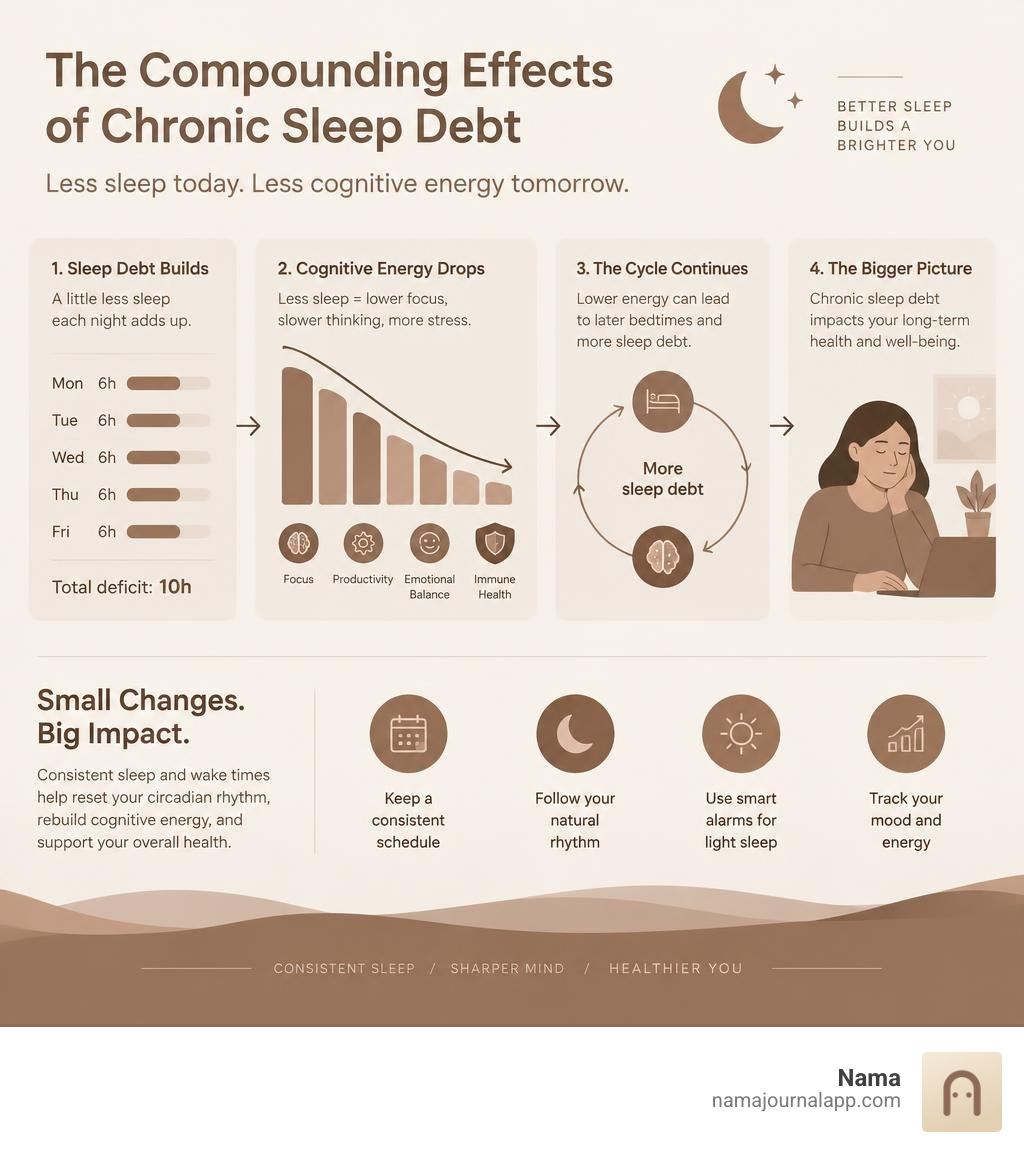
Chronic sleep debt impairs cognitive performance, emotional regulation, and immune resilience. While sleeping in on weekends can help pay down a small portion of this debt, it often disrupts your circadian rhythm—a phenomenon known as "social jetlag."
Tracking your emotional outlook with a dedicated mood tracker app can reveal how changes in sleep debt correlate with daily energy, focus, and stress resilience. Research shows that maintaining a consistent sleep schedule provides greater long-term health and recovery benefits than fluctuating between sleep deprivation and erratic catch-up sleep.
Maximizing Sleep Quality with Habit Logging and Privacy
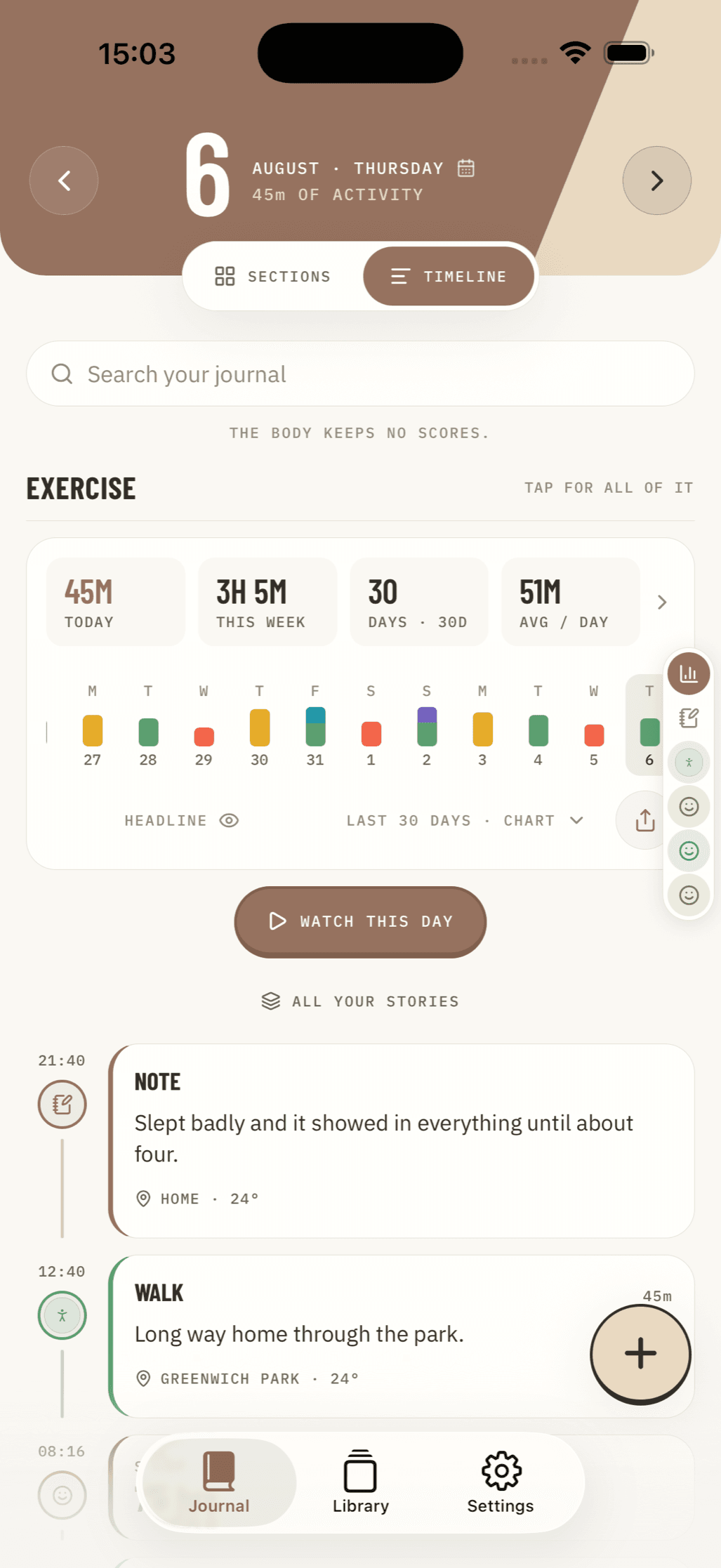
A sleep tracker app is most effective when paired with lifestyle tracking. Sensor data tells you how you slept, but habit logging reveals why you slept well or poorly.
Connecting Lifestyle Factors to Restorative Sleep
Logging daytime habits creates a clear picture of how your daily routines influence your nighttime recovery:
- Caffeine Cutoff Times: Track whether consuming stimulants past 2:00 PM delays sleep onset or shortens deep sleep phases.
- Evening Meal Timing: Note how heavy dinners or late-night snacks within two hours of bedtime affect snoring intensity and resting heart rate.
- Alcohol Consumption: Monitor how alcohol intake fragments REM sleep and elevates overnight heart rate.
- Physical Activity: Correlate workout intensity and timing with your deep sleep duration.
- Screen Time and Wind-Down Routines: Record the effects of blue-light exposure versus reading or breathwork before bed.
Using a holistic self care journal lets you track these variables alongside your subjective rest ratings. With flexible tools to track anything, you can create custom fields for evening hydration, bedroom temperature, or meditation habits to pinpoint the exact levers that optimize your sleep.
Protecting Personal Health Data in Your Sleep Tracker App
Sleep metrics, audio recordings, and daily lifestyle notes represent sensitive health data. When evaluating sleep apps, consider these key privacy factors:
- Local Storage vs. Cloud Uploads: Apps that store and process audio clips entirely on-device keep your nocturnal recordings off remote servers.
- Account Requirements: Services that operate without mandatory accounts or profile creation reduce the risk of personal data leaks.
- Third-Party Data Brokerage: Many free apps monetize by sharing anonymized health patterns, device identifiers, and location metrics with advertisers.
- Data Portability: Ensure you can easily export your data in universal formats (such as CSV or JSON) to maintain complete ownership of your health records.
At Nama, we believe personal wellness data should belong solely to the user. Our iOS wellness journal operates entirely offline with a privacy-first, zero-knowledge architecture. No account registration is required, and all lifestyle logs, health notes, and exported entries remain stored locally on your iPhone.
Frequently Asked Questions About Nighttime Sleep Tracking
How accurate is a sleep tracker app without a wearable device?
Phone-based trackers provide reliable estimates for total time in bed, sleep onset latency, and general nocturnal awakenings by analyzing movement vibrations and breathing acoustics. However, they cannot differentiate sleep stages (such as deep vs. REM sleep) as accurately as wearable sensors measuring heart rate variability and blood oxygen saturation (SpO2) or medical EEG monitors. They serve best as wellness tools for identifying behavioral trends rather than diagnostic instruments.
Can a sleep tracker app diagnose sleep apnea or insomnia?
No. Commercial smartphone apps are not medical devices and cannot diagnose sleep apnea, chronic insomnia, or upper airway resistance syndromes. While an app can highlight patterns like frequent snoring, irregular breathing sounds, or prolonged wakefulness, these metrics should serve as talking points for a qualified physician or sleep specialist rather than a definitive diagnosis.
How do sleep apps calculate sleep debt?
Apps calculate sleep debt by comparing your historical biological sleep need (either user-defined or calculated from baseline trends) against your actual nightly sleep over a rolling 14-day window. If your baseline need is 8 hours and you sleep 6.5 hours, the app logs a 1.5-hour deficit. This calculation updates daily to project daytime energy levels and recommend earlier bedtimes to pay down the accumulated debt.
Conclusion
Finding the right sleep tracker app comes down to understanding your personal goals. If you want simple insights into your sleep duration and sleep schedule consistency, phone-based tracking and habit logs provide a practical, non-invasive starting point. For those managing complex recovery needs, pairing sleep tracking with biometric wearables offers deeper cardiovascular and respiratory context.
Sensor data is most useful when connected to daily lifestyle choices. By monitoring habits like caffeine timing, evening routines, and stress levels alongside your sleep patterns, you can make informed adjustments to your everyday routine.
For a completely private, offline approach to tracking your rest and daily habits, consider using Nama to build a sustainable, distraction-free wellness routine centered on your health and data privacy. Check out our guide to the best health tracker app for android to learn more about choosing tools that keep your personal health data secure.
References
Karasneh RA, Al-Azzam SI, Alzoubi KH, Hawamdeh S, Jarab AS, Nusair MB. "Smartphone applications for sleep tracking: rating and perceptions about behavioral change among users.." Sleep science (Sao Paulo, Brazil), 2022. PMCID PMC8889952.