Calculate Your Cycling Burn Accurately on Every Ride
Estimate Your Cycling Calories With Better Inputs
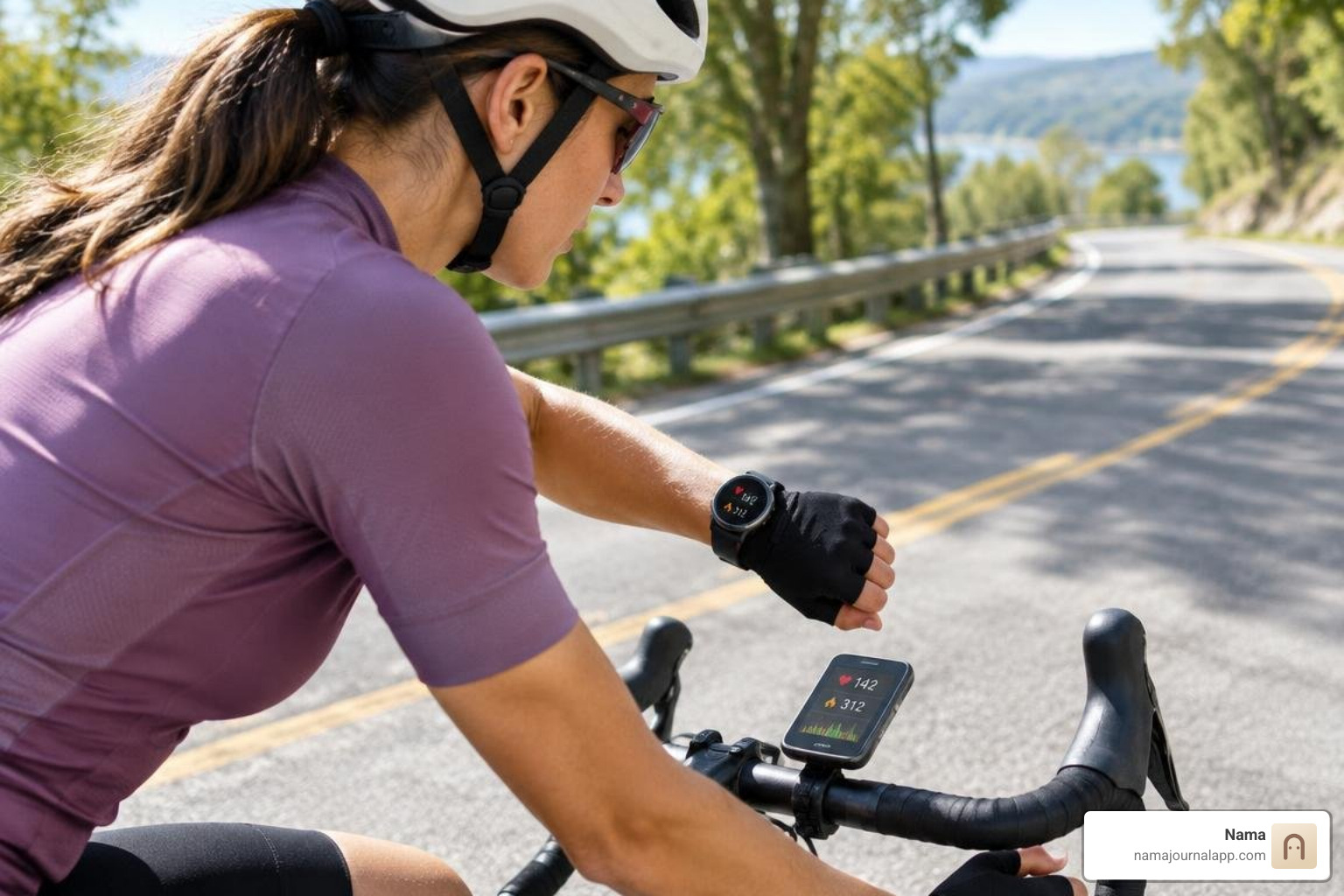
Use a biking calorie counter by entering your current weight, ride duration, and your average effort - ideally average power or heart rate, if you have it. Then account for what changed the ride: speed, hills, wind, surface, bike type, and e-bike assist.
For a quick estimate, a 155-pound (70 kg) rider may burn roughly 290 to 590 calories in an hour of steady road cycling. The same rider may burn about 150 to 370 calories in 30 minutes, depending on intensity.
A useful counter should help you answer more than "How many calories did I burn?" It should show a reasonable range, make the assumptions clear, and give you a private record you can use to plan meals, recovery, and future rides.
The simplest way to get a more useful estimate:
- Log your body weight and total moving time.
- Use average speed only for fairly steady rides.
- Add elevation, terrain, wind, and assist level when they materially changed your effort.
- Prefer average watts from a reliable power meter when available.
- Treat the result as an estimate, not a precise measure of fat loss.
Calories burned are total energy used from both carbohydrate and fat. They are not the same thing as body fat lost. What matters for weight change is your energy balance over days and weeks, not one ride's number.
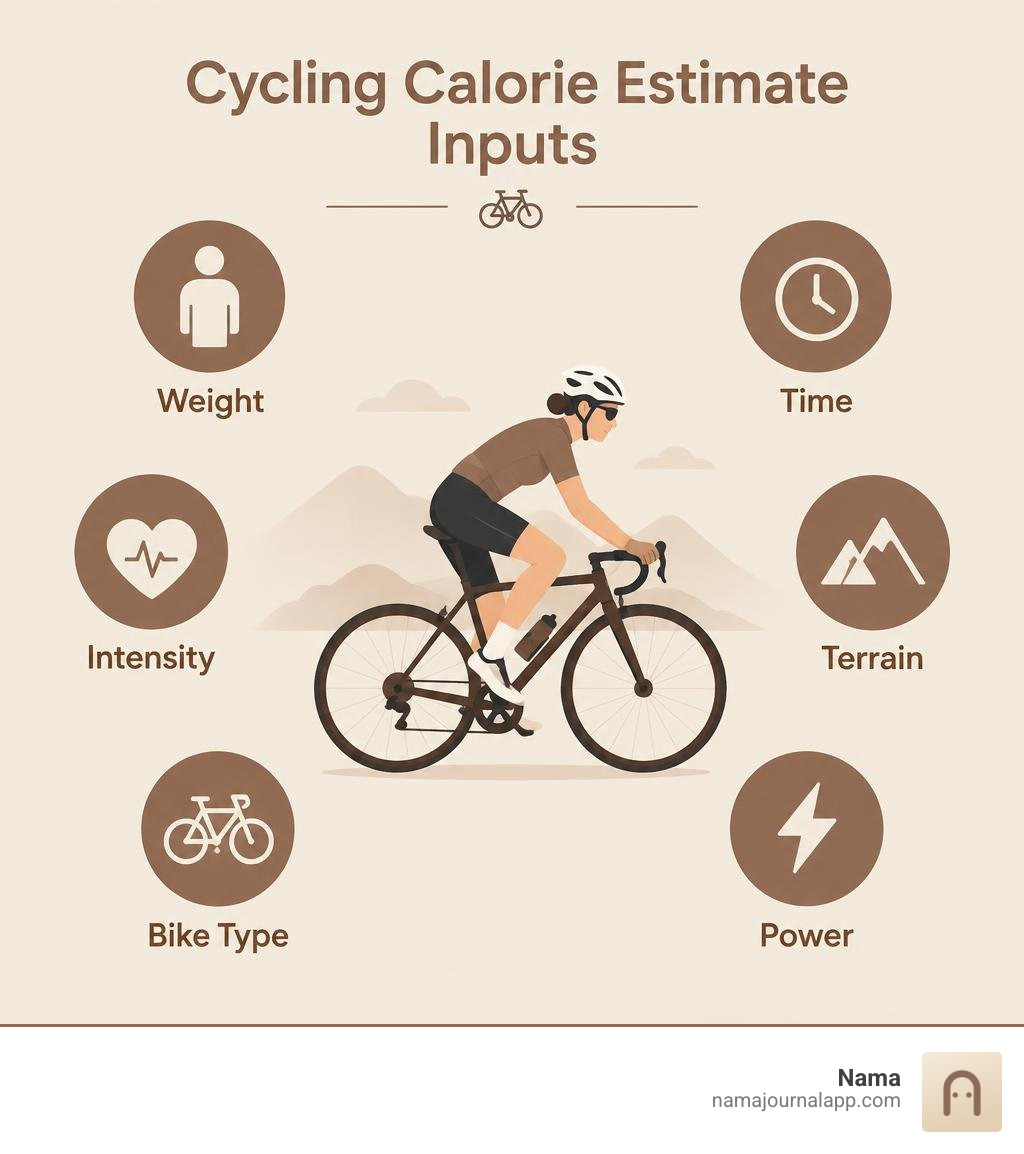
Key terms for biking calorie counter:
How a Biking Calorie Counter Works: The Science of METs and Power
When we set out to calculate how many calories we burn on two wheels, we are really measuring energy physics. The human body is essentially an engine converting chemical energy from food into kinetic energy to turn the pedals. To measure this metabolic expenditure, exercise scientists rely on two primary models: Metabolic Equivalent of Task (MET) values and direct mechanical work measured in watts.
Using an accurate calorie counter helps demystify how these formulas interpret your physical exertion. By evaluating metabolic energy expenditure in cycling, we can translate our sweat and pedal strokes into clear, actionable data.
The MET Formula Explained
The Metabolic Equivalent of Task, or MET, expresses the energy cost of physical activities as a multiple of your resting metabolic rate. One MET represents the oxygen consumption of a person sitting quietly at rest, standardized across exercise physiology as approximately 3.5 milliliters of oxygen per kilogram of body mass per minute (3.5 mL/kg/min).
When you ride a bike, your metabolic rate increases significantly above resting baseline. The Compendium of Physical Activities categorizes cycling into standardized MET bands:
- Leisure Cycling (<10 mph): 4.0 METs
- Moderate Effort (12–13.9 mph): 8.0 METs
- Vigorous Effort (14–15.9 mph): 10.0 METs
- Racing / Fast Pace (16–19 mph): 12.0 METs
- Very Fast Pace (>20 mph): Up to 16.0 METs
The standard scientific formula used by calculators to compute energy expenditure from METs is:
Calories Burned = Duration (minutes) × [(MET × 3.5 × Weight in kg) / 200]
Alternatively, over whole hours:
Calories Burned = MET × Weight (kg) × Duration (hours)
For example, a 70-kilogram (154 lb) rider maintaining a moderate pace of 12 to 14 mph (8.0 METs) for 1 hour expends:
8.0 × 70 × 1 = 560 kcal
Because body mass is a direct multiplier in this equation, heavier riders naturally expend more oxygen—and thus burn more total calories—to sustain the same speed on flat ground.
Mechanical Power and Energy Efficiency
While METs offer a solid estimation for general activity, mechanical power measured via on-bike power meters represents the gold standard in cycling science.
A power meter measures the exact mechanical work you deliver to the pedals in watts (joules per second). To convert your total mechanical work into calories burned, we must factor in human gross metabolic efficiency. The human body is not 100% efficient; roughly 76% to 80% of the energy we produce is lost as excess heat, leaving an average human cycling efficiency of approximately 20% to 24%.
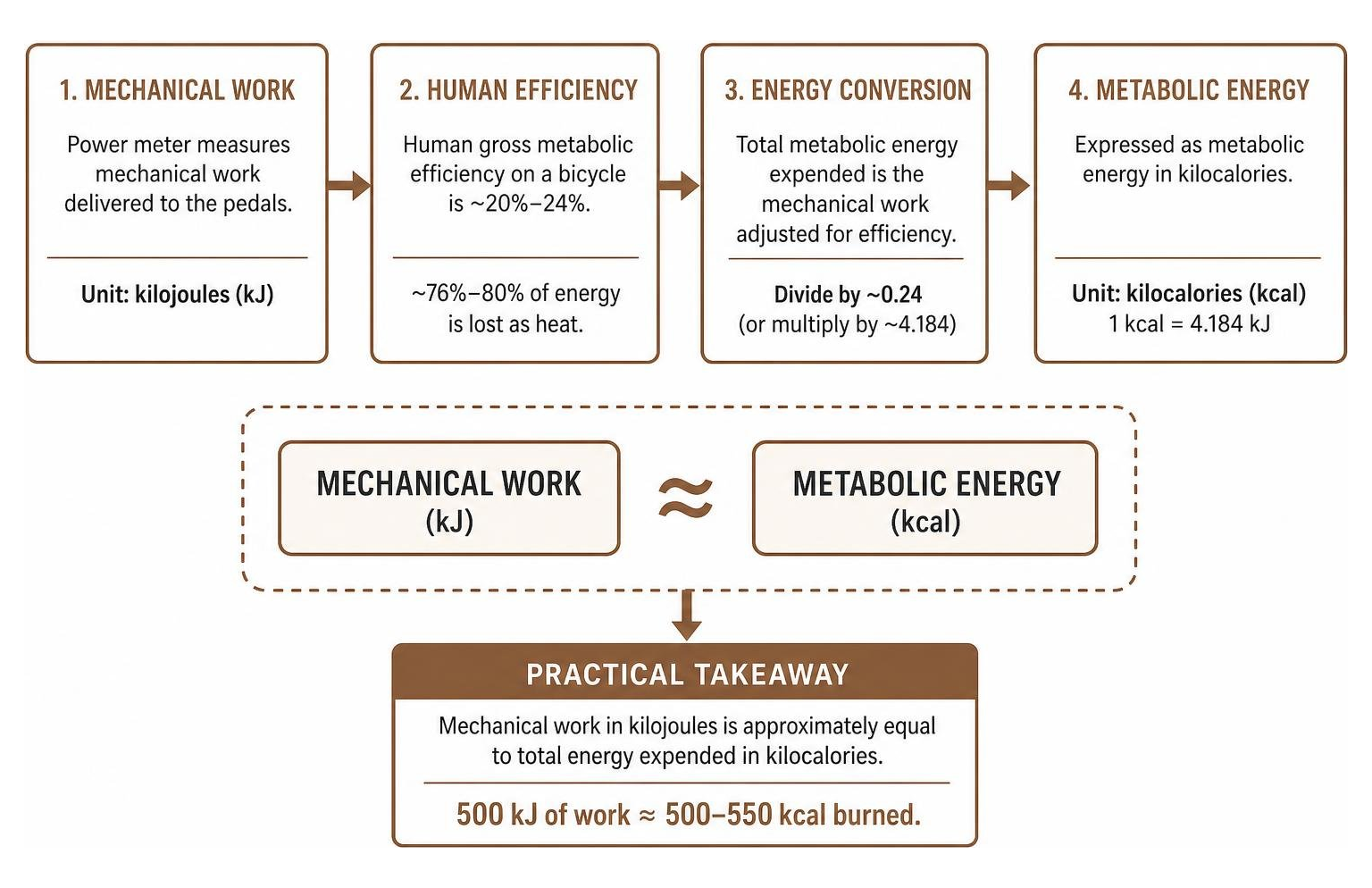
Because 1 kilocalorie equals 4.184 kilojoules, and human muscular efficiency on a bicycle hovers around 24% (1 / 4.184 ≈ 0.239), a convenient 1:1 mathematical relationship emerges:
Mechanical Work (kJ) ≈ Total Energy Expended (kcal)
If your power meter records 500 kilojoules (kJ) of work over a ride, your body burned approximately 500 to 550 metabolic kilocalories. This direct measurement bypasses the guesswork of wind, drafting, and rolling resistance entirely.
Key Factors That Determine Your Cycling Calorie Expenditure
A single formula cannot capture the reality of every outdoor pedal stroke unless we account for environmental and physical variables. Consulting standardized physical activity data alongside our workout tracker app guide highlights several critical factors that alter energy output.
Speed, Intensity, and Air Resistance
The relationship between riding speed and calorie expenditure is distinctly non-linear. As your speed increases, aerodynamic drag becomes the dominant resistive force you must overcome.
At speeds below 10 mph, rolling resistance and mechanical friction account for most of your effort. Once you exceed roughly 14 mph, aerodynamic drag increases with the square of your velocity, and the power required to overcome that drag increases with the cube of your velocity. Pedaling at 14 mph requires roughly 12 calories per minute, whereas riding at a leisurely 8 mph expends only about 6.5 calories per minute.
Riding into a moderate or strong headwind can increase your energetic demand by 15% to 30%, whereas drafting closely in a paceline behind another rider can reduce your aerodynamic drag and total energy burn by 18% to 30% at the same road speed.
Rider Weight and Gravitational Work on Hills
Body mass influences cycling calorie burn in two major ways: rolling resistance on flat ground and gravitational resistance on inclines.
When climbing hills, your body mass becomes the primary obstacle. Overcoming gravity requires sustained mechanical work. Research shows that climbing uses 40% to 60% more energy than riding at the same speed on flat terrain.
- Uphill-Only Routes: Sustained climbing keeps your heart rate and MET demand pegged in vigorous or threshold zones throughout the duration of the ascent. A 180-pound cyclist tackling a steep 2-mile climb with 500 feet of elevation in 10 minutes can burn roughly 244 kcal.
- Mixed Terrain: Rolling hills produce variable calorie spikes. While you burn significantly more energy powering up a rise, descending allows you to coast, lowering your immediate calorie burn. However, repeatedly surging up hills creates high-intensity intervals that elevate overall average metabolic cost across the entire workout.
Bike Types and Terrain Multipliers

The equipment you choose and the surface you ride on directly alter rolling resistance and system efficiency:
- Road Bikes (Multiplier: 1.0x): Sleek geometry, narrow high-pressure tires, and smooth tarmac provide the benchmark for baseline efficiency.
- Gravel & Commuter Bikes (Multiplier: 1.1x–1.15x): Slightly wider tires and varied surfaces add rolling friction, moderately increasing energy output.
- Mountain Bikes (Multiplier: 1.25x): Knobby tires, heavier frames, suspension bob, and loose dirt trails require substantial physical effort. A 155-pound rider burns roughly 625 calories per hour on technical singletrack compared to ~450 calories on smooth flat roads at moderate speeds.
- Indoor Stationary & Spin Bikes (Multiplier: 0.9x–1.1x): Eliminates wind resistance, road vibration, and coasting. While lack of environmental drag lowers passive demand, continuous pedaling against a flywheel without freewheeling often produces high sustained calorie burns.
- E-Bikes / Pedal Assist (Multiplier: 0.65x–0.80x): Electric motors absorb a substantial portion of the mechanical workload. Riding an e-bike with light pedal assist burns about 370 calories per hour for a 155-pound adult—lower than an acoustic bike, but still roughly double the expenditure of sitting at rest.
Calories Burned Across Distances, Durations, and Cycling Disciplines
To plan your training, logging your rides in a structured daily exercise log provides clarity on how different durations, paces, and rider weights translate into total energy expenditure.
| Cycling Discipline & Effort | Speed / Cadence | 130 lb (59 kg) Rider | 155 lb (70 kg) Rider | 190 lb (86 kg) Rider | 220 lb (100 kg) Rider |
|---|---|---|---|---|---|
| Leisure Road Riding (1 hr) | <10 mph (4.0 MET) | 240 kcal | 290 kcal | 355 kcal | 410 kcal |
| Moderate Road Cycling (1 hr) | 12–14 mph (8.0 MET) | 480 kcal | 590 kcal | 710 kcal | 820 kcal |
| Vigorous Road Cycling (1 hr) | 14–16 mph (10.0 MET) | 600 kcal | 735 kcal | 890 kcal | 1,025 kcal |
| Race Pace / Hard Intervals (1 hr) | >16 mph (12.0 MET) | 720 kcal | 880 kcal | 1,070 kcal | 1,230 kcal |
| Mountain Biking (1 hr) | Variable (8.5 MET) | 510 kcal | 625 kcal | 760 kcal | 870 kcal |
| Indoor Spin Class (45 min) | High Intensity (9.0 MET) | 400 kcal | 498 kcal | 600 kcal | 695 kcal |
| Stationary Bike (30 min) | Moderate (100W resistance) | 210 kcal | 250 kcal | 310 kcal | 360 kcal |
| E-Bike Commute (1 hr) | Light Assist (5.0 MET) | 300 kcal | 370 kcal | 445 kcal | 515 kcal |
Calorie Burn per Mile, 30 Minutes, and 1 Hour
When evaluating your ride metrics, you can look at expenditure through several distinct lenses:
- Per Mile: A moderate pace (12–14 mph) burns roughly 40 to 55 calories per mile for a 155-pound rider. A heavier 200-pound rider pedaling at 14 mph burns approximately 64 calories per mile. Because going faster shortens the time spent covering each mile, calories burned per mile remain relatively steady across moderate speeds until high aerodynamic drag spikes the energy cost above 18–20 mph.
- Per 30 Minutes: A 30-minute ride is ideal for quick fitness sessions. A 155-pound rider burns roughly 150 calories at a relaxed pace (<10 mph), 290 calories at a moderate pace (12–14 mph), and 370 calories at a vigorous effort (14–16 mph). A 175-pound cyclist pushing hard across a flat 10-mile course in 30 minutes burns approximately 667 calories.
- Per 1 Hour: An hour of steady road riding burns between 290 and 590 calories for an average 155-pound adult, scaling past 800 to 1,000+ calories for sustained high-intensity efforts or competitive road racing.
Comparing Road, Mountain, Stationary, Spin, and E-Bikes
Different cycling disciplines engage the body in unique ways:
- Road Cycling: Maximizes aerodynamic efficiency and sustained cadences, allowing for long-duration steady-state cardiovascular work.
- Mountain Biking: Involves constant upper-body engagement, core stabilization, and explosive power surges over obstacles, resulting in a higher average MET value (8.5–14.0 METs) despite lower average forward speeds.
- Stationary & Spin Classes: Spin classes utilize structured high-intensity interval training (HIIT), incorporating standing climbs and sprints that elevate post-exercise oxygen consumption.
- Recumbent Bikes: Feature an ergonomic seated position that isolates the lower body. Because recumbent riding minimizes core and upper-body muscle recruitment, it yields a slightly lower calorie burn than an upright bike at identical cadences.
- E-Bikes: Provide an active recovery tool. While pedal assist reduces muscular strain, active pedaling still delivers meaningful aerobic exercise that burns significantly more calories than motorized commuting or sedentary rest.
Calories Burned vs. True Fat Loss
A common point of confusion is equating total calories burned with immediate fat loss. When cycling, your body utilizes a blend of two main fuel sources: carbohydrates (stored muscle and liver glycogen, plus circulating blood glucose) and fats (stored adipose tissue and intramuscular triglycerides).
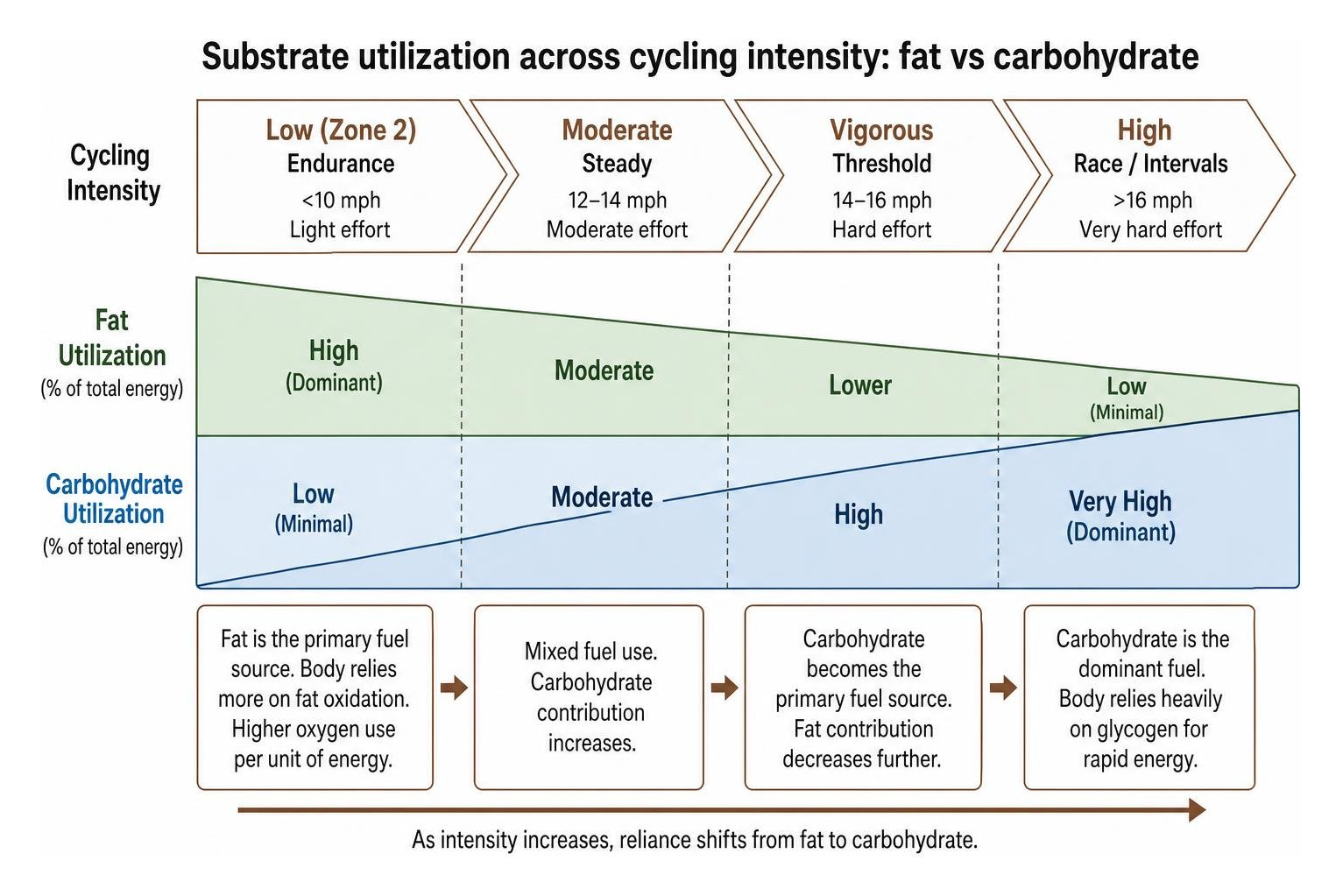
At low-to-moderate intensities (Zone 2 endurance), your body derives a higher percentage of its energy from fat oxidation. As intensity climbs toward threshold and sprint zones, your respiratory exchange ratio shifts rapidly toward carbohydrate oxidation because glycogen can be metabolized much faster without requiring as much oxygen.
Furthermore, fat loss requires a cumulative, sustained net caloric deficit over time. In nutritional science, approximately 3,500 kilocalories equal 1 pound of stored body fat (or roughly 7,700 kcal per kilogram of fat mass). Burning 600 calories on a hard ride does not mean you lost 0.17 pounds of body fat on the spot; rather, your body depleted glycogen and water weight, which will be replenished when you eat. True fat reduction occurs when that ride contributes to a steady, manageable energy deficit over successive days and weeks.
How to Apply Cycling Burn Data to Your Daily Routine
Understanding your cycling energy output allows you to fuel your workouts properly, prevent fatigue, and maintain steady progress. By pairing your ride logs with a dedicated food diary, you can balance your daily intake against your physical work. Our flexibility to track anything privately ensures your fitness data stays entirely in your hands.
Using a Biking Calorie Counter for Weight Loss and Refueling
To use cycling expenditure effectively for body composition goals, follow these structured guidelines:
- For Sustainable Weight Loss: Aim for a modest, manageable daily caloric deficit of 300 to 500 calories. If a 1-hour ride burns 500 calories, you do not need to starve yourself afterward; fueling with 200 to 300 calories of wholesome food preserves your recovery while maintaining a healthy 200–300 calorie deficit. Large deficits impair immune function, reduce power output, and cause muscle wasting.
- Pre-Ride Nutrition: For rides lasting under 60 minutes at moderate effort, plain water is sufficient. For rides exceeding 75 to 90 minutes, consume 30 to 60 grams of easily digestible carbohydrates (such as a banana or oatmeal) 1 to 2 hours before departure to top off liver glycogen.
- During-Ride Fueling: On long endurance rides (>90 minutes), consume 30 to 60 grams of carbohydrates per hour to maintain blood glucose and spare muscle tissue.
- Post-Ride Recovery: Within 45 minutes of finishing a strenuous session, aim for a balanced recovery meal featuring a 3:1 or 4:1 ratio of carbohydrates to high-quality protein (e.g., 60g carbs and 20g protein). This restocks depleted glycogen reserves and kickstarts muscular repair.
Accuracy and Limitations of a Biking Calorie Counter
While a biking calorie counter provides valuable directional guidance, it is essential to recognize its inherent limitations:
- Generic MET Assumptions: Standard MET tables assume a reference 40-year-old individual with baseline fitness. Highly trained cyclists have superior muscular efficiency, meaning they may burn slightly fewer calories at a given submaximal power output than a beginner whose body works harder to stabilize the bike.
- Wearable and Smartwatch Discrepancies: Wrist-based fitness trackers combine optical heart rate readings, GPS pacing, and proprietary algorithms. Studies show that consumer wearables can overestimate or underestimate cycling energy expenditure by 15% to 40% because heart rate can be elevated by dehydration, caffeine, heat, or stress without a corresponding increase in mechanical work.
- Environmental Factors: Calculators rarely account for precise ambient temperatures, rolling resistance on coarse asphalt, or fluctuating wind vectors.
Treat online calculators and wearable estimates as useful planning benchmarks rather than exact scientific measurements.
Frequently Asked Questions About Cycling Calorie Tracking
How many calories does a 30-minute bike ride burn?
A 30-minute bike ride typically burns between 150 and 370 calories for a 155-pound (70 kg) rider. A relaxed, leisurely commute under 10 mph burns around 150 kcal, a moderate effort (12–14 mph) burns roughly 290 kcal, and a vigorous ride (14–16 mph) burns approximately 370 kcal. Heavier riders and those tackling steep hills will burn more.
Does cycling burn more calories than walking or running?
Cycling burns at least two times more calories per hour than walking at a standard pace. Compared to running, cycling generally burns slightly fewer calories per minute at equivalent perceived efforts because the bicycle frame supports your body weight. However, because cycling is low-impact and gentle on joints, most people can sustain cycling workouts for significantly longer durations than running, often leading to a higher total calorie burn over a week.
Why do smartwatches and bike computers show different calorie numbers?
Smartwatches and bike computers rely on different data inputs. Smartwatches typically estimate burn using heart rate, wrist motion, and broad demographic formulas, which can be skewed by cardiac drift or heat. Dedicated bike computers equipped with direct-force power meters calculate exact mechanical work (kilojoules) at the crank or pedal, offering a far more accurate measurement of physical energy output.
Conclusion
Calculating your cycling calorie burn is one of the best ways to understand your body's energy demands, dial in your pre- and post-ride nutrition, and achieve sustainable fitness results. Whether you are cruising on a commute, climbing singletrack trails, or spinning in your living room, accounting for weight, duration, terrain, and power ensures your estimates reflect the true physical work you put into the pedals.
Tracking your workouts and wellness metrics should be clear, motivating, and entirely private. With Nama, our private iOS wellness-journal app, you can log your daily rides, exercise notes, meals, and health trends locally on your iPhone without creating accounts, dealing with third-party tracking, or relying on cloud servers. Take control of your fitness journey and explore private wellness tracking to monitor your cycling progress on your own terms.