Build Muscle Smarter with the Top Rated Bodybuilding Workout Tracker
Find the Right Bodybuilding Workout Tracker

The best bodybuilding workout tracker is the one you will log after every session. Look for fast set and rep entry, weight history, progressive-overload comparisons, rest timers, custom exercises, and data you can keep or export. If privacy matters, prioritize offline logging and minimal social pressure.
In this roundup, we compare leading options for different lifting styles:
- Program-first lifters: Apps with large libraries and built-in progression can remove planning guesswork.
- Advanced bodybuilders: Detailed volume, RIR/RPE, PR, fatigue, and muscle-group analytics matter most.
- Simple private journaling: Offline access, custom metrics, and export options help you own your training record.
A good log does more than record a heavy set. It helps you see whether you added a rep, increased load, improved form, or simply trained consistently enough to make progress. That record is the foundation of smart hypertrophy training.
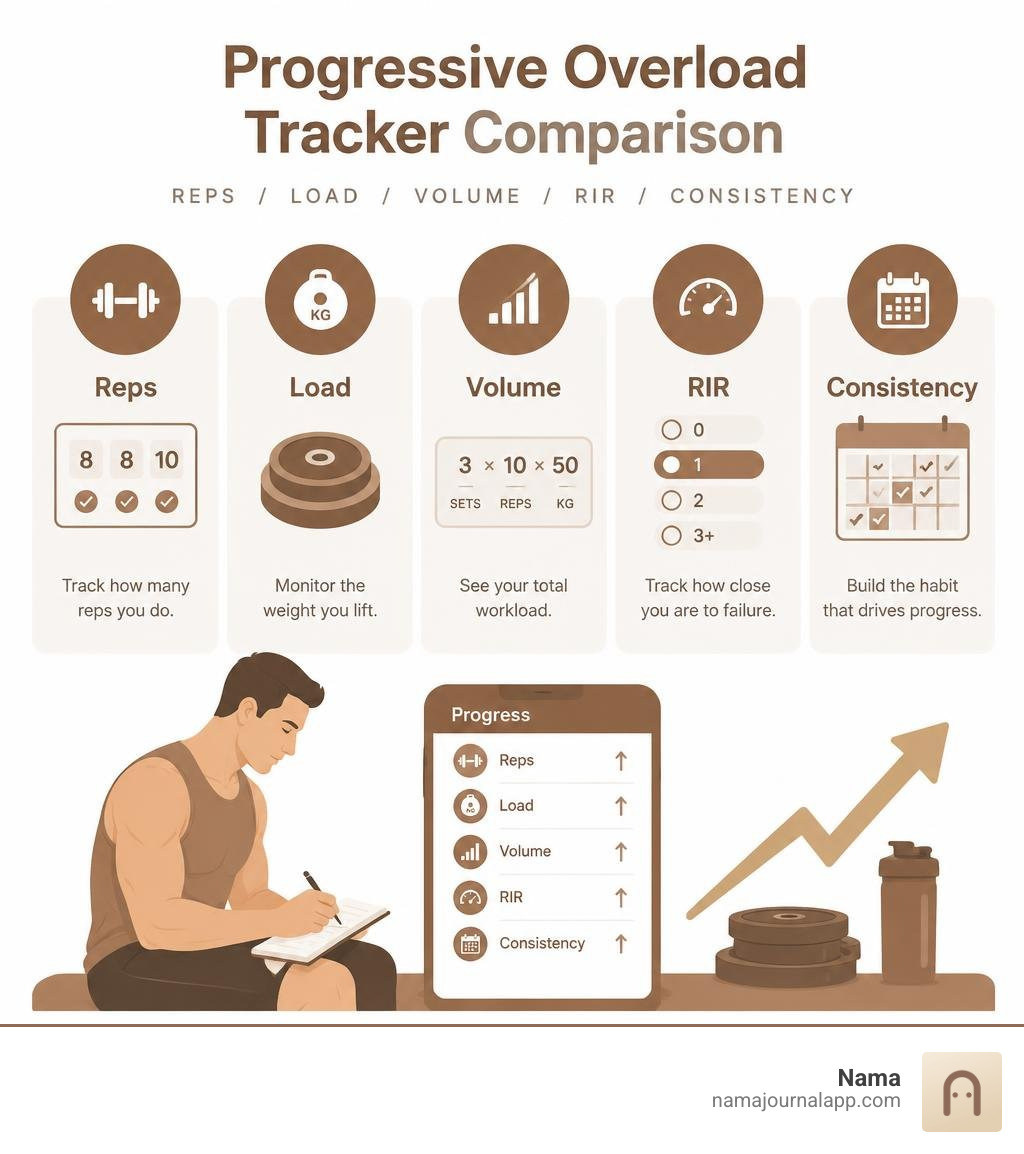
Bodybuilding workout tracker definitions:
Essential Features of an Effective Bodybuilding Workout Journal
When building muscle is your primary goal, traditional strength logs do not always provide the full picture. Pure powerlifters care almost exclusively about their one-rep max (1RM) on the squat, bench, and deadlift. For hypertrophy, we need to monitor the specific mechanical tension, total quality volume, and targeted stimulus delivered to individual muscle bellies.
An effective workout log turns chaotic gym sessions into actionable data. Without clear logging, it is remarkably easy to fall into the trap of guessing your weights, cutting rest periods short, or repeating the exact same volume week after week. If you want to dive deeper into the core mechanics of training logs, explore our workout tracker app ultimate guide 2026.
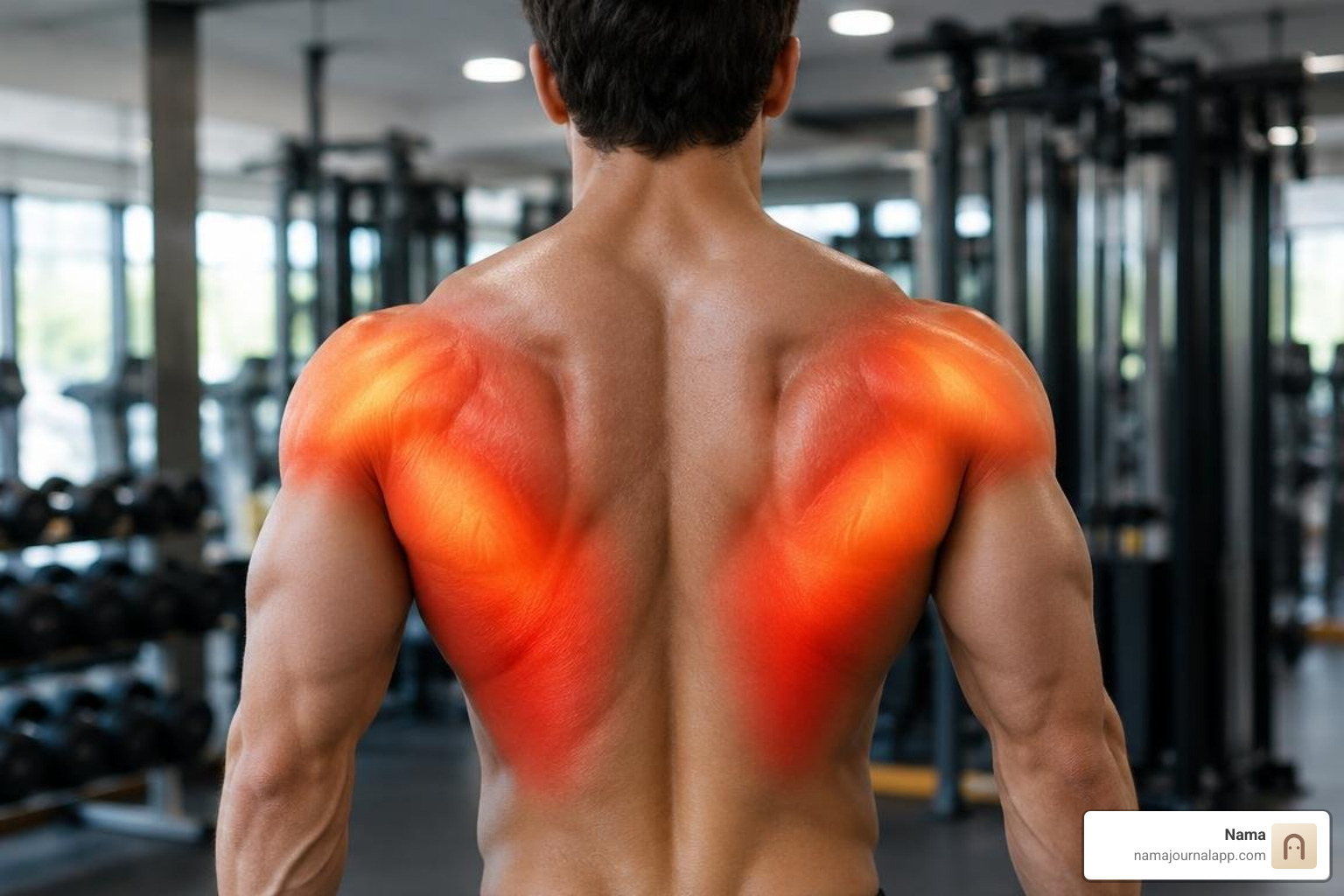
The most useful bodybuilding journals share several technical capabilities:
- Set Classification: Hypertrophy programming requires clear differentiation between warm-up sets, working sets, back-off sets, drop sets, and sets taken to absolute failure.
- Automated Rest Timers: Consistent rest intervals ensure your performance comparisons remain valid over time.
- Plate Load Math: Built-in plate calculators save mental energy when you are fatigued during heavy working sets.
- Visual Muscle Fatigue: Tracking which muscle groups have experienced high volume helps prevent localized overtraining.
- Historical Performance Overlays: Viewing previous workout figures while logging your current sets removes the guesswork.
Progressive Overload and RIR Logging
Muscular hypertrophy relies on progressive overload—the gradual increase of stress placed upon the musculoskeletal system. To trigger adaptation, your muscles must experience sufficient mechanical tension close to muscular failure.
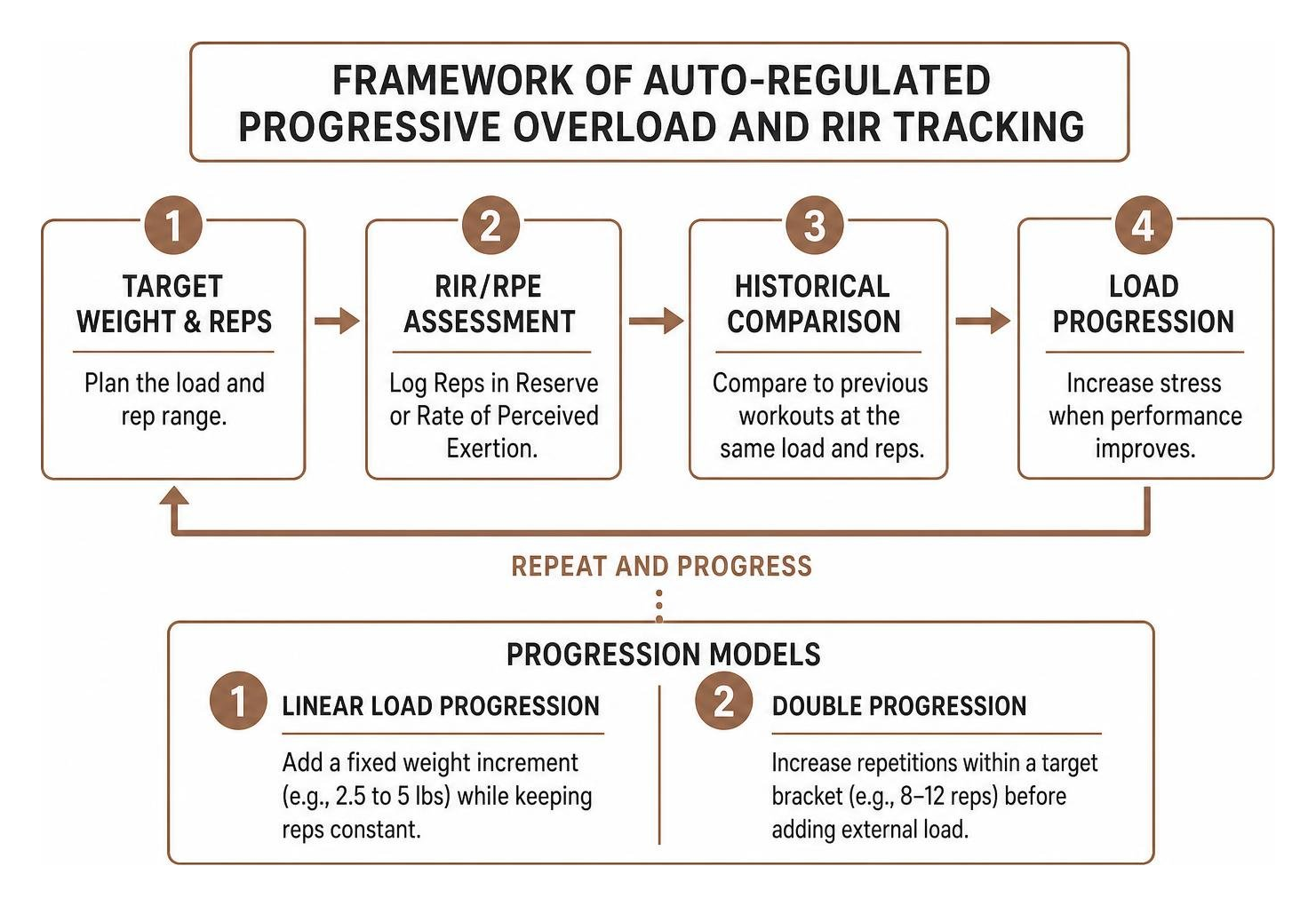
Logging Reps in Reserve (RIR) or Rate of Perceived Exertion (RPE) ensures that progressive overload is real rather than an illusion caused by sloppy execution. If you log 225 lbs for 8 reps at 3 RIR in Week 1, and hit 225 lbs for 10 reps at 0 RIR in Week 2, your log reflects true adaptation rather than uncontrolled form breakdown.
Modern lifters use several progression models:
- Linear Load Progression: Adding a fixed weight increment (e.g., 2.5 to 5 lbs) while keeping reps constant.
- Double Progression: Increasing repetitions within a target bracket (e.g., 8–12 reps) before adding external load.
- Triple Progression: Progressing reps, then sets, and finally increasing resistance.
Choosing a Bodybuilding Workout Journal for Hypertrophy vs Strength
Powerbuilding and pure hypertrophy routines require distinct tracking approaches compared to standard strength routines. In pure strength training, total volume is low, rest periods are long, and load is the primary variable. Hypertrophy requires managing effective reps, controlling eccentric tempo, and minimizing "junk volume"—sets that generate systemic fatigue without providing sufficient mechanical tension.
When selecting between tools, consider how routines are customized. Some lifters prefer algorithmic progression and structured exercise variations, while dedicated lifters who prefer tailored, custom routines often use a flexible free online workout tracker or a private journal to match their individual mechanics without algorithmic restrictions.
Structuring Training Splits and Managing Volume Fatigue
A well-structured split ensures adequate frequency for each muscle group while distributing systemic fatigue across the training week. Whether you run a classic Push-Pull-Legs (PPL), an Upper-Lower split, or an antagonistic Arnold split, your log should clearly illustrate weekly volume distribution.
To organize your training balance across seven days, implement these weekly exercise log tips 2026 to manage fatigue and volume distribution.
| Training Split | Frequency per Muscle Group | Ideal For | Fatigue Profile |
|---|---|---|---|
| Push-Pull-Legs (PPL) | 2x every 6–8 days | Intermediate to Advanced | Moderate systemic; high local recovery |
| Upper / Lower | 2x every 7 days | All experience levels | Balanced systemic and local fatigue |
| Full Body | 3x every 7 days | Beginners & Time-constrained | High systemic; low per-session local fatigue |
| Bro Split (Body Part) | 1x every 7 days | Advanced bodybuilding | Low systemic; extreme single-session local fatigue |
Optimizing Sets Across Warm-Up, Working, and Failure Sets
Not every set logged contributes equally to muscle growth. Logging warm-up sets alongside hard working sets without clear labels inflates your volume tonnage and skews your data.
- Ramping/Warm-Up Sets: Prepare the nervous system, lubricate joints, and rehearse motor patterns with zero metabolic fatigue.
- Working Sets: Performed between 1 to 3 RIR, providing the primary mechanical tension needed for hypertrophy.
- Failure and Drop Sets: Taken to complete concentric failure (0 RIR) or extended beyond failure to maximize motor unit recruitment.
Accurate journals allow you to tag each set type cleanly so that only your true working volume counts toward weekly hypertrophy targets.
Muscle Recovery Tracking and Deload Periodization
Accumulated fatigue eventually masks your fitness gains. When systemic fatigue outpaces recovery, performance declines and injury risk increases. Effective trackers help you spot these drop-offs early.
By tracking weekly volume thresholds, resting trends, and subjective recovery, you can plan structured deloads—reducing volume by 30–50% for a week—to restore systemic recovery. For practical methods on structuring low-stress training weeks, review our free exercise log tips 2026.
Selecting the Right Journal for Your Lifting Level
Your training age dictates the tracking features you need on a daily basis.
| Feature / Need | Beginner Lifter | Intermediate Lifter | Advanced Bodybuilder |
|---|---|---|---|
| Primary Focus | Motor learning & habit | Progressive overload | Stimulus-to-fatigue optimization |
| Progression Model | Linear progression | Double progression | Periodized autoregulation (RIR/RPE) |
| Exercise Library | Pre-built programs & video cues | Standard splits & custom notes | Custom movements & specialized handles |
| Analytics Needs | Basic set/rep history | Volume load & PR tracking | Fatigue metrics & muscle group trends |
| Preferred Setup | Structured guided logs | Flexible customizable tools | Privacy-first, exportable logs |
Beginner to Advanced Bodybuilding Workout Journal Selection Criteria
Beginners benefit from pre-built routines, exercise demonstration videos, and clear progression paths. Intermediate lifters need autonomy, detailed set tagging, and comprehensive volume tracking across specific movement planes. Advanced bodybuilders require tools that allow for custom exercise names, non-standard attachments, tempo notes, and precise data analysis.
Some athletes prefer apps with broad exercise libraries and video tutorials. Others require a distraction-free, privacy-first interface that logs custom movements instantly without subscription hurdles or social feeds.
Offline Logging and Convenient Workout Access
Gym environments are notorious for poor cellular reception. Basements, concrete warehouse gyms, and crowded commercial facilities often disrupt cloud-dependent tracking apps, causing dropped inputs, slow loading screens, or lost workout data.
Using a dedicated exercise journal that operates fully offline ensures your training flow is never interrupted. Offline-first apps save battery life, eliminate loading spinners between sets, and allow you to log your entire session without connecting to an external server.
Data Portability, Custom Metrics, and Long-Term Body Composition
Hypertrophy is not measured solely by weight on the barbell. True bodybuilding progress involves managing body composition, muscular circumferences, recovery habits, and nutritional consistency alongside your gym lifts.
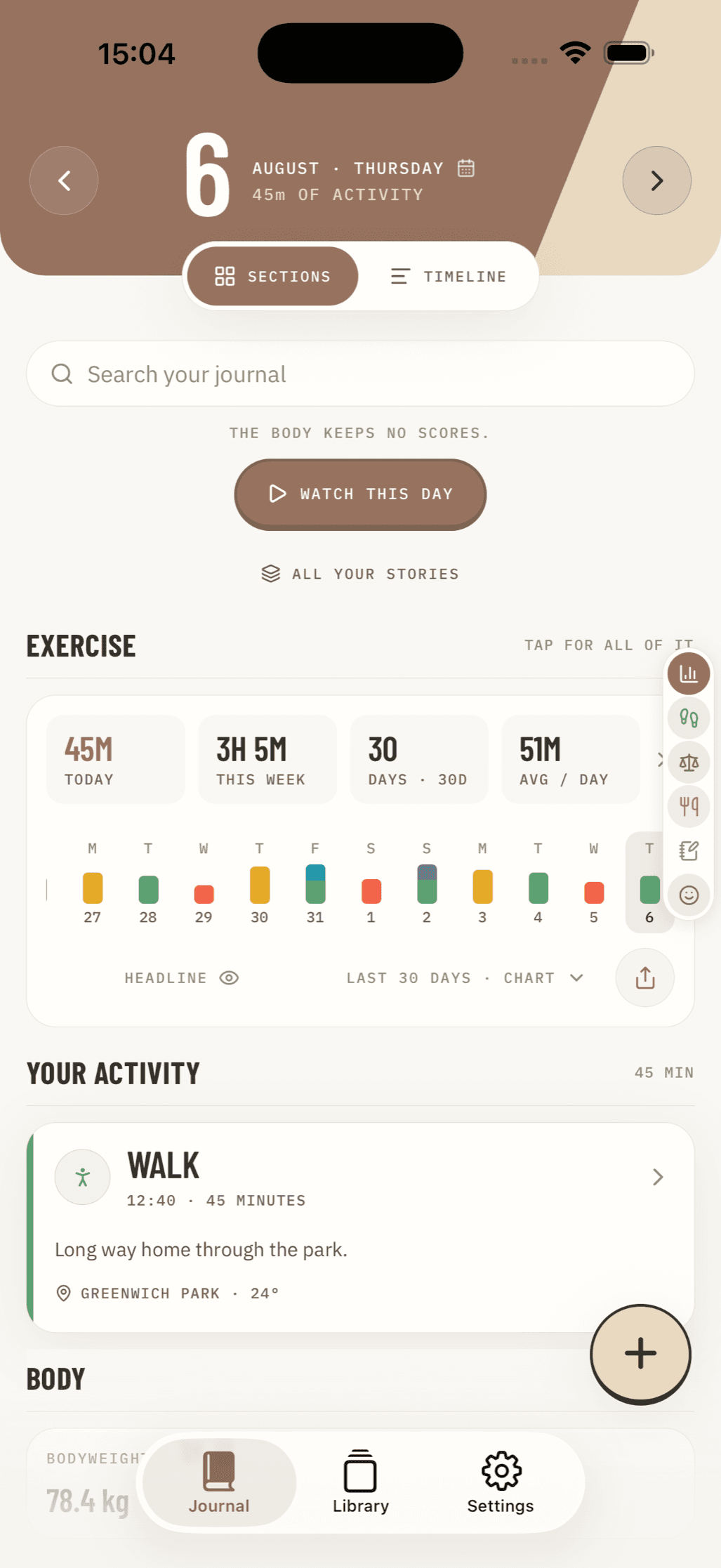
Tracking Hypertrophy Beyond the Barbell with Custom Health Data
When the goal is building a balanced physique, your logs should account for changes in structural measurements over months and years.
Essential metrics to track alongside gym volume include:
- Body Circumferences: Biceps, chest, waist, thighs, and calves tracked under standardized conditions.
- Morning Fasted Weight: Smoothing out daily water fluctuations with 7-day rolling averages.
- Recovery and Sleep Markers: Logging subjective energy levels and sleep duration to identify recovery deficits.
With a flexible track anything architecture, you can log physical measurements, customized health variables, and notes in one unified private space.
Spreadsheets vs Modern Journals: Data Export and Privacy
For decades, dedicated lifters relied on spreadsheets because they offered complete control, custom calculations, and absolute privacy. However, entering data into a spreadsheet on a phone mid-workout is clumsy and slow.
Modern offline journals bridge this gap by combining the clean interface of mobile logging with the data sovereignty of a spreadsheet. By offering complete CSV and JSON data export capabilities, modern private logs ensure your training history remains yours forever, free from proprietary lock-in or subscription barriers.
Frequently Asked Questions About Bodybuilding Tracking
How can a workout journal help track progressive overload?
A dedicated journal preserves your exact performance history—reps, load, rest times, and RIR—for every exercise. During your next session, your log shows you the benchmark to beat, allowing you to add a rep or increase load methodically rather than guessing your target weights.
Should a hypertrophy log track RPE, RIR, or total tonnage?
For hypertrophy, Reps in Reserve (RIR) and Rate of Perceived Exertion (RPE) are generally more informative than raw volume tonnage. Total tonnage can be artificially inflated by performing low-intensity, high-rep sets far from failure (junk volume). Tracking RIR ensures that every working set is performed close enough to concentric failure to stimulate muscle growth.
Can workout data be exported without subscription lock-in?
Yes. Privacy-focused logging apps prioritize data portability, allowing you to export your entire workout history, body measurements, and notes into standard formats like CSV or plain text whenever you want.
Conclusion
Building muscle effectively requires consistency, progressive overload, and objective recovery tracking over long horizons. A top-tier training journal keeps you accountable, illuminates subtle performance trends, and ensures that every gym session builds toward your physique goals.
At Nama, we believe your personal health and lifting data belongs exclusively to you. Our wellness journal is built from the ground up to be completely offline, private, and account-free on iOS. Log your lifts, track custom body metrics, and monitor your long-term progress with our dedicated exercise log system.