A Beginner's Guide to Daily Meal Logging Without the Stress
Start a Health Food Journal Without Counting Every Bite

To start a health food journal, write down each meal and snack soon after you eat. Note what you had, roughly how much, and when. If it helps, add one word about your hunger, mood, or energy. A paper notebook works well if you want to keep your notes offline. For more on the benefits of keeping a food record, see this overview of food diaries.
You do not need perfect portions or a calorie total. Start with one meal a day, then look back each week for patterns you can use.
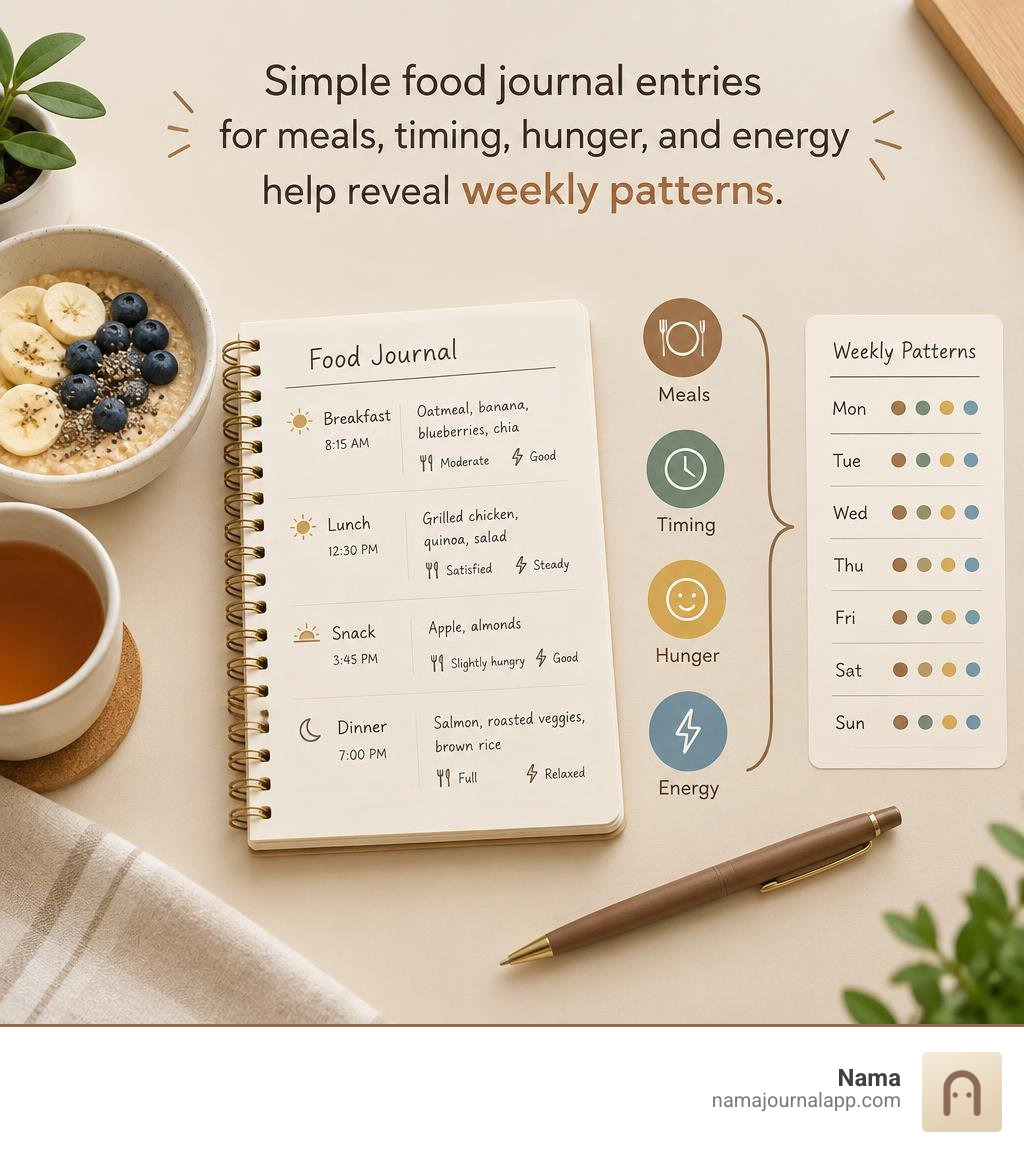
Health food journal terms to remember:
Why Starting a Health Food Journal Transforms Your Eating Habits
When most of us decide to improve our nutrition, our first instinct is often restrictive: cut out carbs, eliminate sugar, or weigh every gram of food on a digital scale. Within a week, exhaustion sets in, and we abandon the entire plan.
Keeping a daily log changes your habits not through restriction, but through clear observation. The Centers for Disease Control and Prevention (CDC) and the American Heart Association both highlight consistent food records as one of the most effective strategies for long-term health success. When you write down what you eat, you shine a light on subconscious habit loops—like grabbing a handful of candy every time you walk past the breakroom or eating straight from the bag while watching television.
Tracking builds realistic portion awareness without requiring you to obsess over single-digit gram weights. You start to see how balanced meals keep you full, while refined snacks leave you hungry twenty minutes later. Integrating a food and feelings diary helps you recognize genuine physical hunger cues instead of mistaking boredom or fatigue for an appetite.
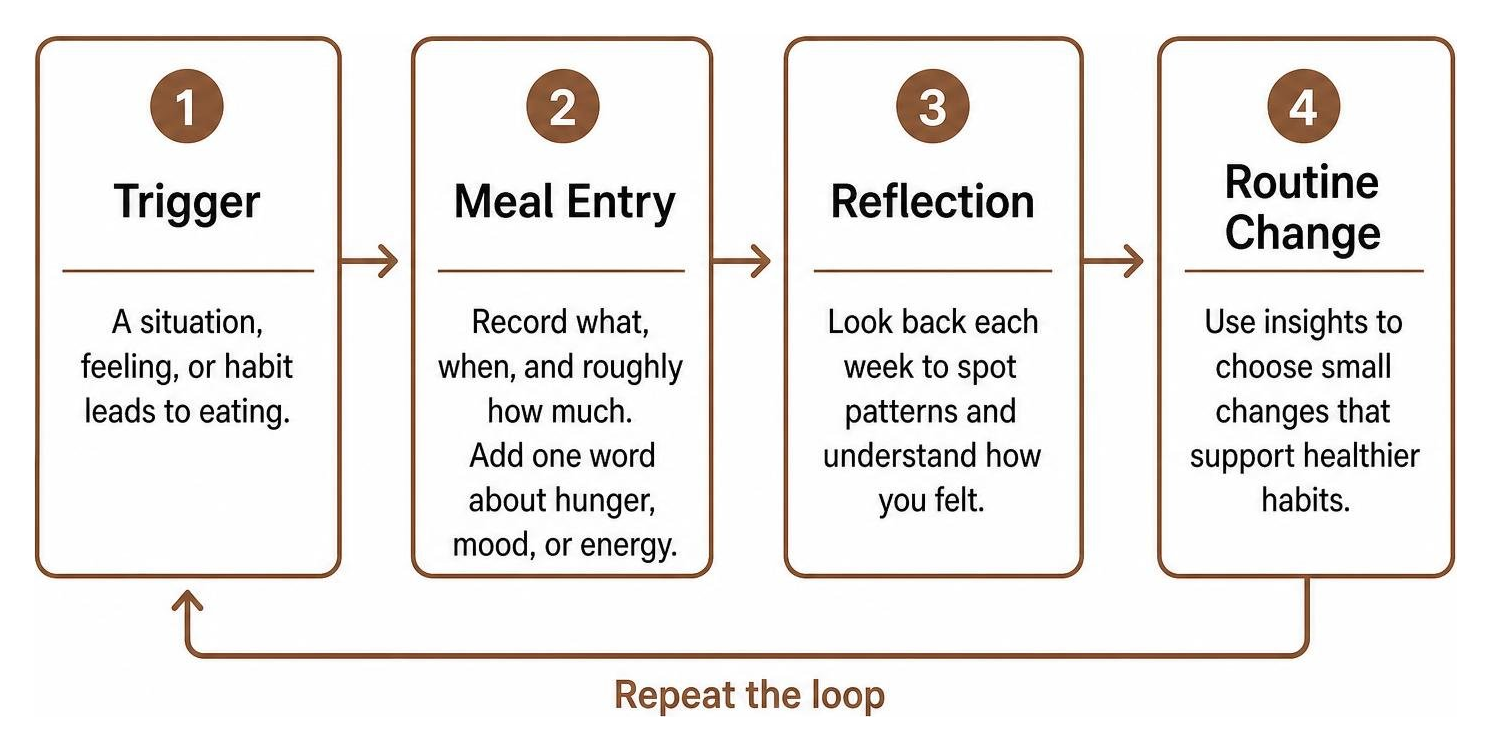
Understanding the Mind-Body Eating Connection
We rarely eat purely for physical fuel. Food is tied to our emotions, celebrations, stress levels, and comfort routines. If you only track numbers, you miss the root cause of why you reached for a second pastry or skipped lunch entirely.
Contextual logging helps bridge this gap. By noting the setting, your stress level, and your feelings before and after eating, a self-awareness journal reveals your personal triggers. You might notice that difficult afternoon meetings consistently lead to vending machine trips. Pair this with a dedicated mood tracker feature to spot emotional eating trends before they turn into guilt. Recognizing satiety signals allows you to put down the fork when you feel comfortably nourished, rather than uncomfortably stuffed.
Physical Health and Trigger Identification
Beyond emotional awareness, daily logging is an invaluable diagnostic tool for your physical body. If you struggle with unpredictable afternoon brain fog, sluggish digestion, or sudden energy crashes, your meals often hold the answers.
Logging meals alongside physical symptoms makes it easier to spot patterns related to:
- Digestive wellness: Pinpoint ingredients that trigger bloating, acid reflux, or discomfort.
- Food intolerances: Correlate specific dairy, gluten, or FODMAP items with digestive flare-ups over a multi-week span.
- Blood sugar stability: Notice how pairing carbohydrates with protein or healthy fats prevents the mid-afternoon slump.
- Energy patterns: Identify which breakfasts provide sustained stamina for your workday.
Essential Elements to Track Beyond Simple Calories
Calorie counting has its place, but numbers alone tell an incomplete story. A 300-calorie pastry affects your body chemistry, blood sugar, and satiety completely differently than a 300-calorie bowl of Greek yogurt topped with berries and chia seeds.
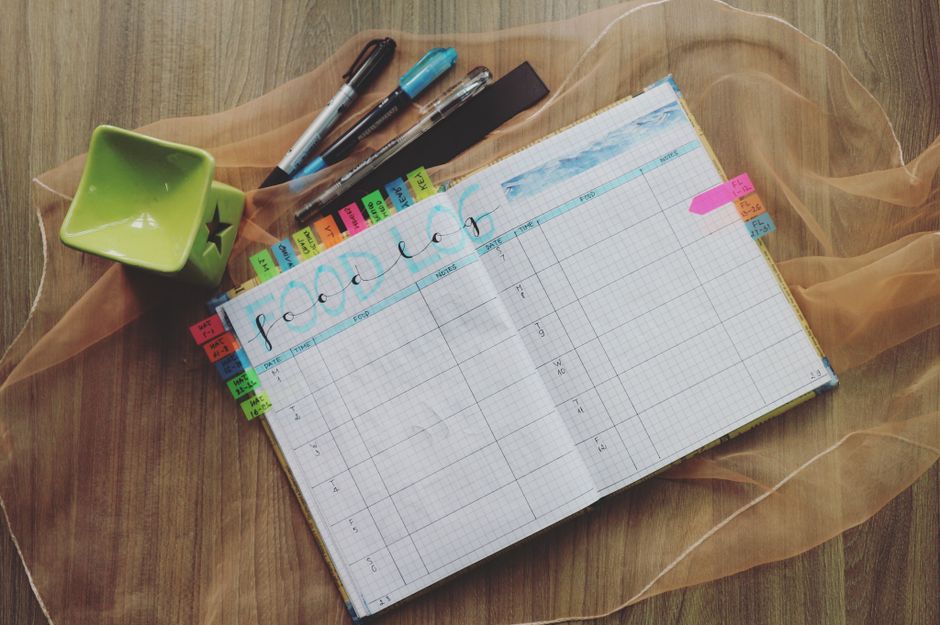
Focusing on holistic markers gives you actionable data without creating mental fatigue. We recommend tracking these foundational elements:
- Meal Timing: Note the approximate hour you eat to see if long gaps between meals trigger evening binge-eating.
- Hydration Levels: Thirst often masks itself as hunger. Tracking water intake helps keep energy high and digestion smooth.
- Macronutrient Balance: Using a simple macronutrients tracker mindset—ensuring each plate has protein, complex carbs, and healthy fats—improves daily fullness.
- Dietary Fiber: Fiber stabilizes glucose absorption and supports gut health.
- Portion Sizes: Use intuitive hand estimates (palm for protein, fist for veggies, cupped hand for carbs, thumb for fats) instead of kitchen scales.
Choosing the Right Health Food Journal Format
The ideal logging tool is the one you will actually use every day without friction. Some people prefer the tactile feel of pen and paper, while others need a secure digital setup that lives in their pocket.
When evaluating digital options, privacy matters. Health data is deeply personal, and you shouldn't have to upload your private meal logs or medical symptoms to remote cloud servers or third-party ad networks.
| Format | Setup Speed | Portability | Privacy Level | Data Searchability |
|---|---|---|---|---|
| Paper Notebook | Instant | Low (bulky) | High (physical only) | Low (manual flip) |
| Cloud-Based Apps | Slow (requires account) | High | Low (ad trackers & cloud storage) | High |
| Private Local App (Nama) | Instant (no account) | High | Maximum (100% on-device iOS storage) | High |
| Digital Spreadsheet | Moderate | Moderate | Moderate | Moderate |
Explore different food journal ideas to discover whether structured prompts or open blank pages fit your daily lifestyle best.
Qualitative Metrics vs. Strict Numbers
If counting numbers stresses you out, shift your focus entirely to qualitative metrics. Qualitative tracking captures how food interacts with your biology and mind without reducing your dinner to math equations.
Try scoring these three metrics on a simple 1-to-5 scale:
- Hunger Level Before Eating: Were you ravenous (1) or just gently ready for a meal (3)?
- Post-Meal Energy: Did you feel energized (5) or ready for a nap (1) sixty minutes later?
- Digestive Comfort: Did your stomach feel settled and calm, or bloated and tight?
This mindful reflection builds lasting body intuition that outlasts any temporary diet fad.
Step-by-Step Guide to Stress-Free Daily Logging
Starting a new routine shouldn't feel like a chore. The goal is to build an incremental habit that blends into your daily routine.

Setting Up a Simple 5-Minute Logging Routine
The biggest mistake beginners make is waiting until the end of the day to recall everything they ate. By 9:00 PM, you will likely forget the morning latte, the afternoon biscuit, or the dressing on your salad.
Follow this quick framework to keep tracking effortless:
- Log in the moment: Spend 30 seconds immediately after eating to record your meal. Take a quick photo if you are in a rush and log the details later.
- Include snacks honestly: Snack time is meant to nourish you, not cause guilt. Log snacks with the same neutral curiosity as a main meal.
- Keep your journal accessible: Keep your paper notebook on the kitchen counter or use a local iPhone app with quick-entry widgets.
- Start with a short horizon: Commit to tracking your food diary for a week before deciding on any major dietary changes.
Maintaining Your Health Food Journal Long-Term
Consistency beats perfection every time. If you miss an afternoon snack or an entire weekend of logging, simply resume at your next meal without self-criticism.
Set aside ten minutes every Sunday for a relaxed weekly review:
- Look for recurring energy slumps and check what you ate beforehand.
- Identify any trigger foods that caused digestive distress.
- Celebrate balanced meals that kept you focused and satisfied.
- Adjust your grocery list for the upcoming week based on what worked best.
Frequently Asked Questions About Meal Logging
How can I start keeping a food log without feeling overwhelmed?
Start by logging just one single meal per day—such as breakfast—for your first week. Once that feels effortless and automatic, add lunch, followed by dinner and snacks. Keeping entries brief (e.g., "Grilled chicken bowl, avocado, iced green tea") eliminates friction while giving you all the data you need.
What should I record if I do not want to count calories?
Focus entirely on qualitative descriptors: meal components, your hunger rating prior to the meal (on a scale of 1 to 5), your post-meal energy level, and any notable digestive symptoms. This provides rich context for your health without requiring any numeric calculations.
How often should I review my logged entries?
A weekly check-in is ideal. Looking back over seven days provides enough data to spot meaningful trends—such as skipped breakfasts leading to late-night snacking—without getting bogged down in day-to-day fluctuations.
Conclusion
Building a healthier relationship with food does not require rigid restrictions or complicated math. By keeping a simple, mindful health food journal, you gain the self-awareness needed to nourish your body, stabilize your daily energy, and feel your best.
At Nama, we believe your personal health reflections should remain completely private. Our offline iOS wellness journal lets you log meals, notes, and custom health metrics entirely on your iPhone—with no accounts, no tracking, and total peace of mind. Start your stress-free journey today with our private food diary.