Track Every Meal Smarter with Top-Rated Calorie Tracking Apps
Essential Features of Top Apps That Help Track Calories
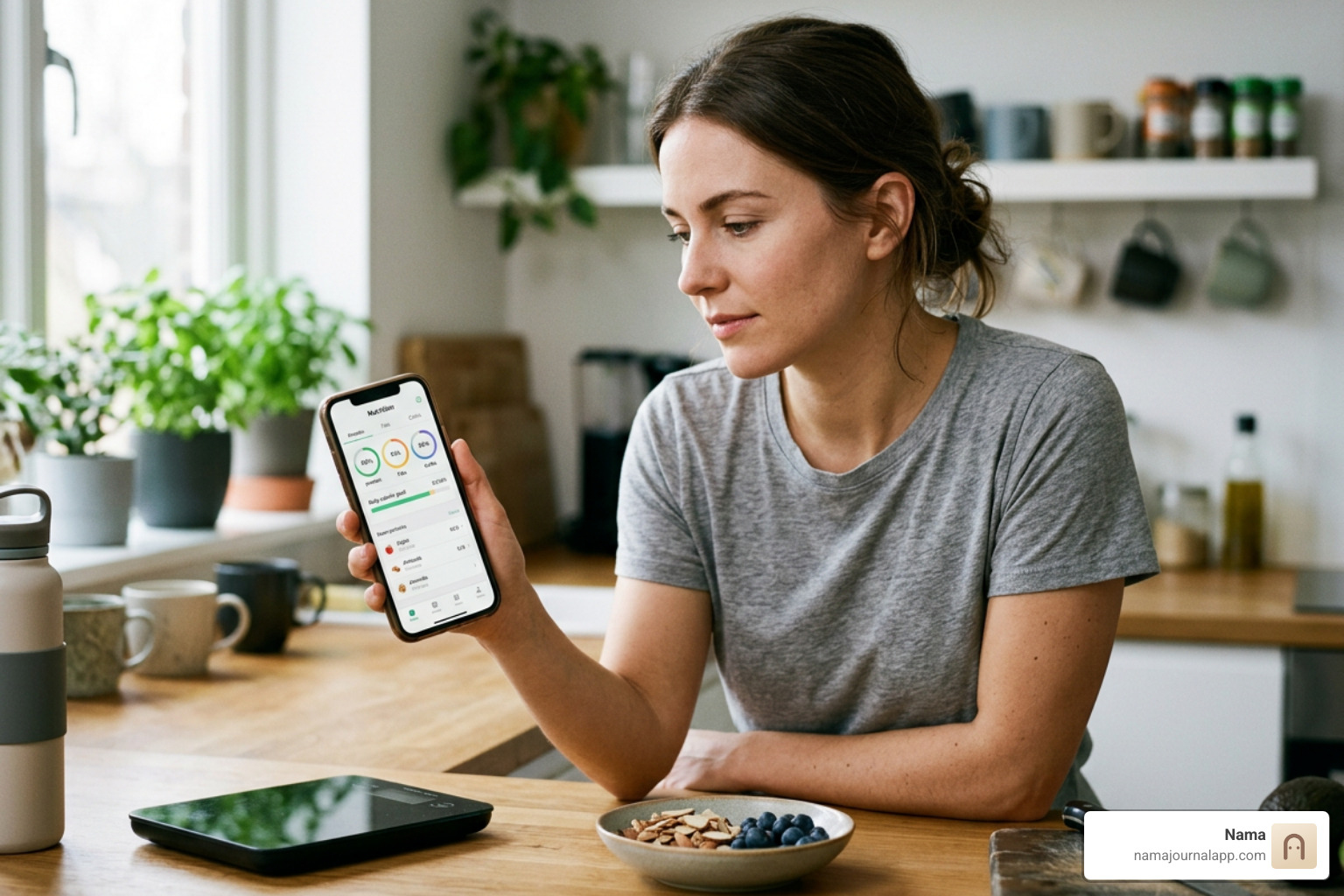
When we evaluate software designed to monitor daily intake, the core user experience comes down to speed, database precision, and simplicity. A high-quality calorie tracker app removes friction from the daily routine so that logging three meals and a snack does not feel like entering data into a corporate spreadsheet.
Modern food databases range from hundreds of thousands of entries to vast collections containing millions of branded items and restaurant dishes. However, bigger is not always better. While massive libraries make it easier to find an obscure snack brand, they often suffer from crowdsourced duplicates containing missing macronutrients or wildly incorrect calorie counts. The top tools prioritize verified entries—cross-referenced with national nutritional standards—so you do not have to guess whether a medium banana has 105 calories or 1,050.
Beyond raw numbers, the user interface dictates whether you stick with the habit for three months or abandon it after three days. Fast search indexing, clear portion adjustments, and intuitive home dashboards ensure your daily nutritional snapshot is available at a glance.
How Modern Apps That Help Track Calories Simplify Meal Logging
Nobody wants to spend ten minutes after dinner weighing ingredients and typing out individual entries. To solve this, developers have engineered several smart entry workflows:
- Barcode Scanning: Point your phone camera at a product label to automatically pull up verified calories, macros, and serving sizes in seconds.
- Recipe Calculators: Combine raw ingredients into a batch meal (like a family stew or casserole), set the total yield, and let the software calculate exact per-serving values.
- Saved Meals & Templates: Group frequently consumed items—like your go-to morning oatmeal and protein shake—into a single tap for instant logging.
- Quick Add Shortcuts: When eating out or enjoying home cooking where exact ingredients are unknown, quick calorie and macro inputs let you log estimates without building an entire recipe.
If you are looking for the best app for measuring calories, prioritizing smooth barcode detection and flexible meal grouping is the quickest way to turn a tedious chore into an effortless five-second habit.
Nutritional Depth and Database Reliability
Tracking intake goes far beyond counting total energy. For body composition changes, managing energy dips, or improving athletic recovery, understanding your macronutrient distribution (protein, carbohydrates, and fats) is essential.
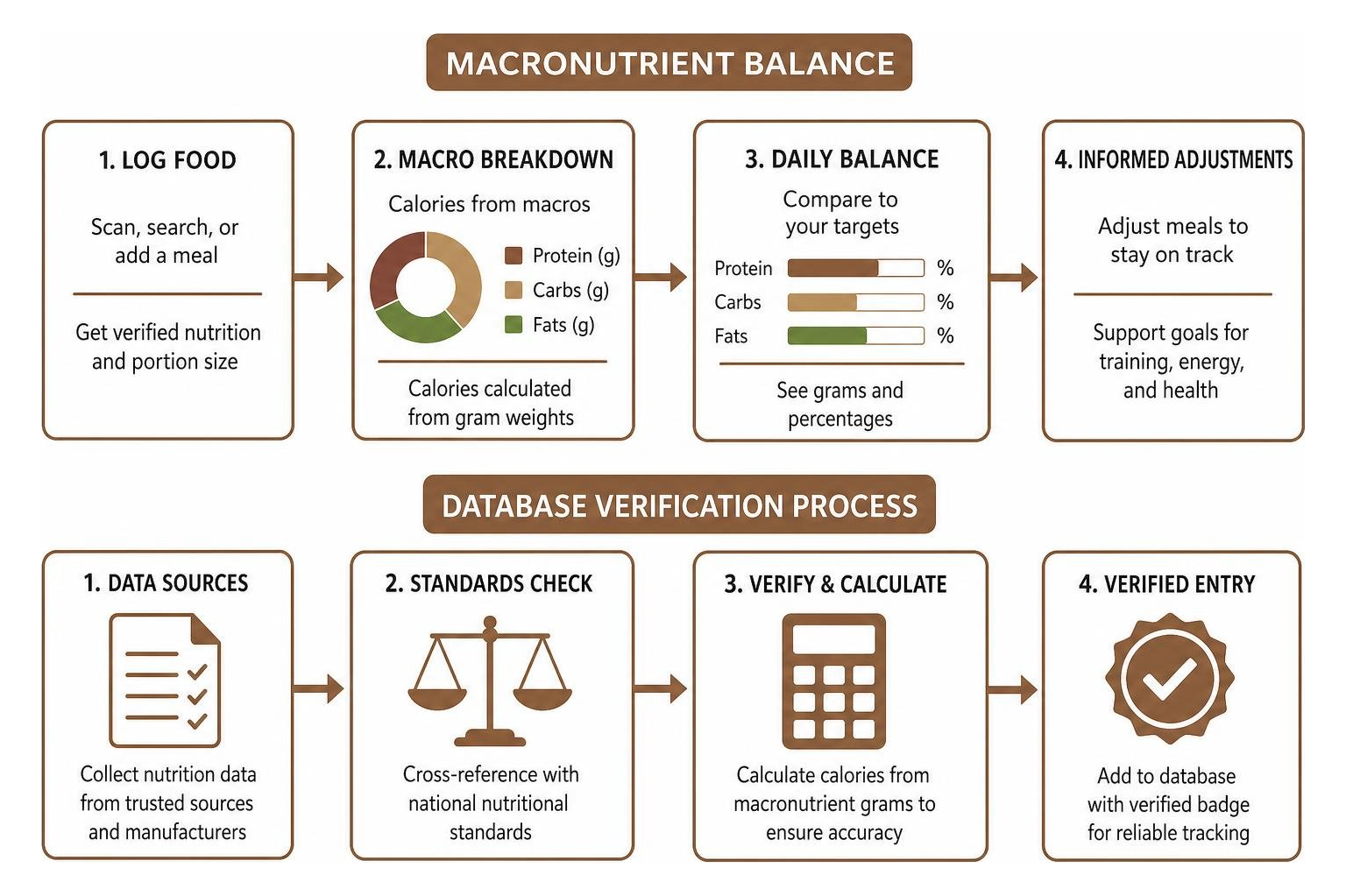
A reliable accurate calorie counter breaks down your daily intake into customizable macro targets, showing you percentages alongside absolute gram amounts. Using a dedicated macronutrients tracker app ensures your protein intake aligns with your resistance training while keeping dietary fats and carbohydrates balanced for optimal hormonal and metabolic health.
Database hygiene is equally vital. When an entry lists zero grams of fat, zero protein, and zero carbs but claims to contain 300 calories, the math simply does not work. Leading platforms flag verified foods with badges and automatically calculate total calories from macronutrient gram weights to keep your daily totals mathematically sound.
Dietary Customization and Health Condition Support
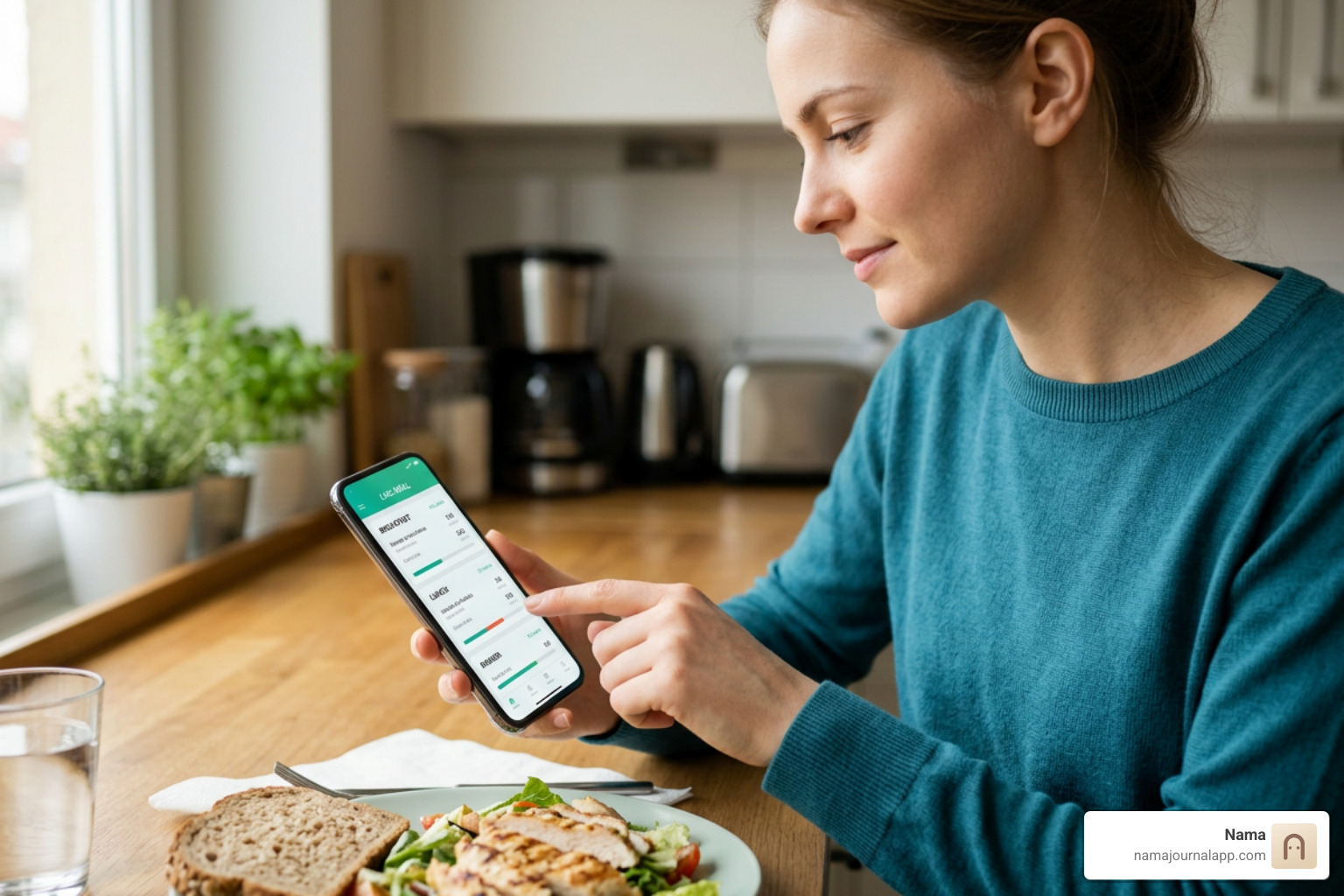
Nutrition is never one-size-fits-all. A marathon runner needs a completely different fueling strategy than someone managing insulin resistance or adhering to a ketogenic protocol. Maintaining a comprehensive food diary allows you to tailor your nutritional boundaries to your exact physiological needs.
Low-Carb, Keto, and Diabetes Management Tools
For individuals managing diabetes or following a strict low-carbohydrate lifestyle, standard calorie totals tell only half the story. Tracking net carbohydrates—total carbohydrates minus dietary fiber and specific sugar alcohols—is critical for managing glycemic control and maintaining nutritional ketosis.
Digital logging tools tailored for metabolic health offer specialized capabilities:
- Net Carb Automation: Built-in calculators that subtract fiber and erythritol automatically to display active carbohydrate loads.
- Biomarker Logging: Dedicated modules to record blood glucose readings, ketone levels (blood or breath), A1c test results, and insulin dosages directly alongside meal records.
- Meal Impact Correlation: Side-by-side timelines comparing carbohydrate intake against postprandial glucose spikes to help identify trigger foods.
By pairing nutritional logs with metabolic metrics, individuals can make informed dietary choices that stabilize blood sugar rather than focusing exclusively on scale weight.
Micronutrient and Biomarker Monitoring
While macros drive body composition, micronutrients drive long-term vitality. Tracking vitamins, minerals, and electrolyte balance is vital for individuals dealing with hypertension (monitoring sodium), anemia (tracking iron), or bone density concerns (monitoring calcium and magnesium).
Exploring the best food tracking app micronutrients reveals options that detail everything from potassium and zinc to fat-soluble vitamins. Integrating these logs with wearable devices allows you to view daily steps, sleep stages, and active energy burn in one unified health context. For those looking to craft a deeper, more reflective routine, gathering creative food journal ideas can bridge the gap between tracking raw numbers and building intuitive, mindful eating habits.
Comparing Free vs. Premium Digital Food Loggers
Most mainstream nutrition platforms operate on a freemium model. Understanding what sits behind the paywall helps you decide whether an annual subscription is truly necessary for your personal health journey.
| Feature Category | Standard Free Tier | Premium Subscription |
|---|---|---|
| Food Logging | Manual text search, basic database entry | Advanced search, voice logging, AI meal scanning |
| Barcode Scanner | Sometimes restricted or ad-supported | Full access with instant label parsing |
| Macro Tracking | Basic fixed gram/percentage splits | Granular gram targets by meal, carb cycling |
| Health Analytics | 7-day calorie totals and basic trends | Deep micronutrient charts, exportable PDF/CSV reports |
| Meal Planning | Manual logging only | Curated recipe databases, auto-generated grocery lists |
| Device Integration | Basic Apple Health / Google Fit steps | Deep bidirectional syncing with wearables & glucose monitors |
Free Tier Functionality vs. Paid Subscriptions
Free editions of popular calorie loggers typically provide the fundamental tools needed to get started: a searchable food library, basic calorie calculations, and a history log. However, many commercial platforms have progressively moved core utilities—such as barcode scanning, custom macro targets by day of the week, and comprehensive micronutrient reports—behind monthly subscriptions.
If your primary objective is building nutritional awareness, standard free tools are often sufficient. But if you need exported spreadsheets for your dietitian, specialized carb-cycling timers, or an uncluttered interface without banner advertisements, upgrading to premium unlocks those deeper analytical features.
Choosing Private and Offline Apps That Help Track Calories
An often-overlooked factor in digital nutrition tracking is data privacy. Many major fitness apps store your health records, eating habits, body weight fluctuations, and location data on remote cloud servers. This data is frequently aggregated, analyzed, or leveraged to deliver targeted advertisements and commercial product recommendations.
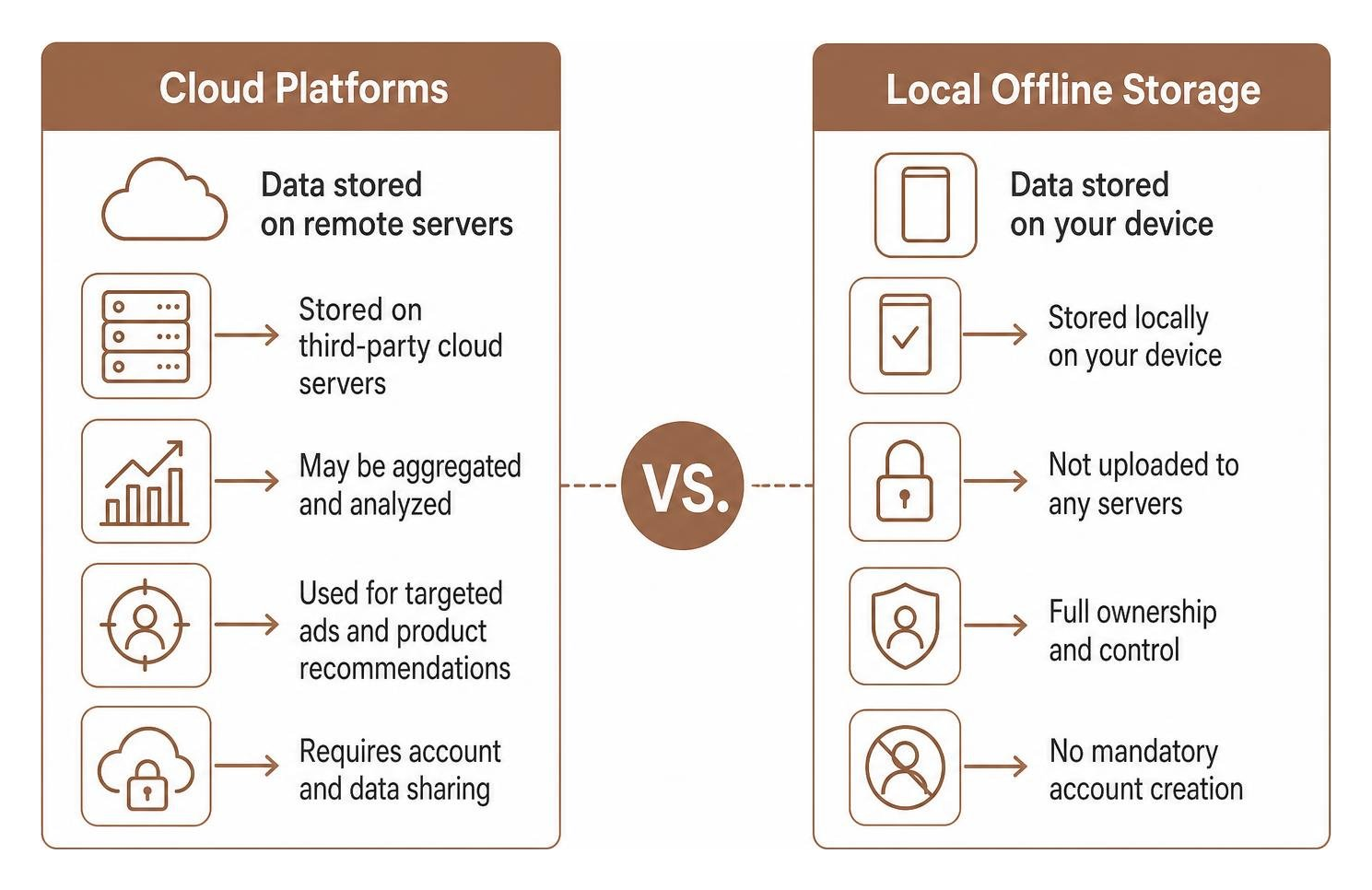
For users who want full ownership over their intimate health data, selecting a privacy-first, offline logging tool is an excellent alternative. Here is what to look for when choosing a secure logging platform:
- Local Data Storage: All meal entries, photos, and personal metrics stay strictly on your device rather than uploading to third-party cloud servers.
- No Mandatory Account Creation: You can start logging immediately without handing over an email address, phone number, or social media profile.
- Customizable Metrics: The flexibility to track anything—from custom symptoms and energy levels to complex meal notes—without being locked into rigid corporate calorie targets.
- Full Data Exportability: Simple, unencrypted export options (such as CSV spreadsheets or photo archives) that let you back up your journal or share it directly with a medical professional on your own terms.
Frequently Asked Questions About Nutrition Logging
How accurate are calorie counting app databases in 2026?
Food database accuracy varies based on verification protocols. Entries derived directly from verified national nutrition databases or validated manufacturer labels are generally within a 5% to 10% margin of error. However, unverified user-generated submissions can contain substantial errors in portion sizes or micronutrient totals. For the highest accuracy, stick to verified database badges, scan official package barcodes, and use a digital kitchen scale rather than estimating volume by eye.
Can mobile meal trackers monitor diabetes biomarkers alongside food?
Yes. Several modern nutrition platforms include dedicated health modules designed specifically for metabolic and glycemic management. These tools allow users to log blood glucose readings (mg/dL or mmol/L), daily or basal insulin doses, and long-term A1c laboratory results alongside their meal logs. This side-by-side presentation helps individuals and healthcare providers analyze how specific carbohydrate loads directly influence post-meal blood sugar levels.
Do calorie counters support offline logging and data privacy?
While most commercial platforms require an active internet connection to query their cloud databases, dedicated offline wellness journals operate entirely locally. These privacy-focused tools store your meals, daily notes, weight changes, and health symptoms directly on your device storage. This architecture ensures complete operational functionality without cellular reception, zero tracking algorithms, and absolute privacy for your personal health records.
Conclusion
Choosing the right digital meal logger comes down to matching your personal health goals with the right balance of speed, depth, and privacy. Whether you need a simple counter to monitor daily energy balance, an advanced net-carb tracker for metabolic control, or a comprehensive log for micronutrient optimization, the right tool should fit seamlessly into your lifestyle without feeling like a burdensome chore.
If you value complete personal privacy, an ad-free experience, and the freedom to record your meals and wellness metrics without third-party cloud tracking, consider using Nama. By keeping your data securely on your device, you can build mindful, lasting nutritional habits with total peace of mind.