Master Your Nutrition Using a Simple Daily Meal Log
Example Food Log: What to Write Down
An example food log can be simple. Record what you ate and drank, roughly how much, when you had it, and how you felt:
- 8:00 a.m., breakfast: Oatmeal with a banana and coffee with milk. Hungry before eating; comfortably full after.
- 12:30 p.m., lunch: Turkey sandwich, apple, and water. Ate at my desk while working.
- 3:30 p.m., snack: Three cookies. Not hungry; felt bored.
A few days of entries like these can help you spot habits you might otherwise miss. You don't need to count calories to get started.
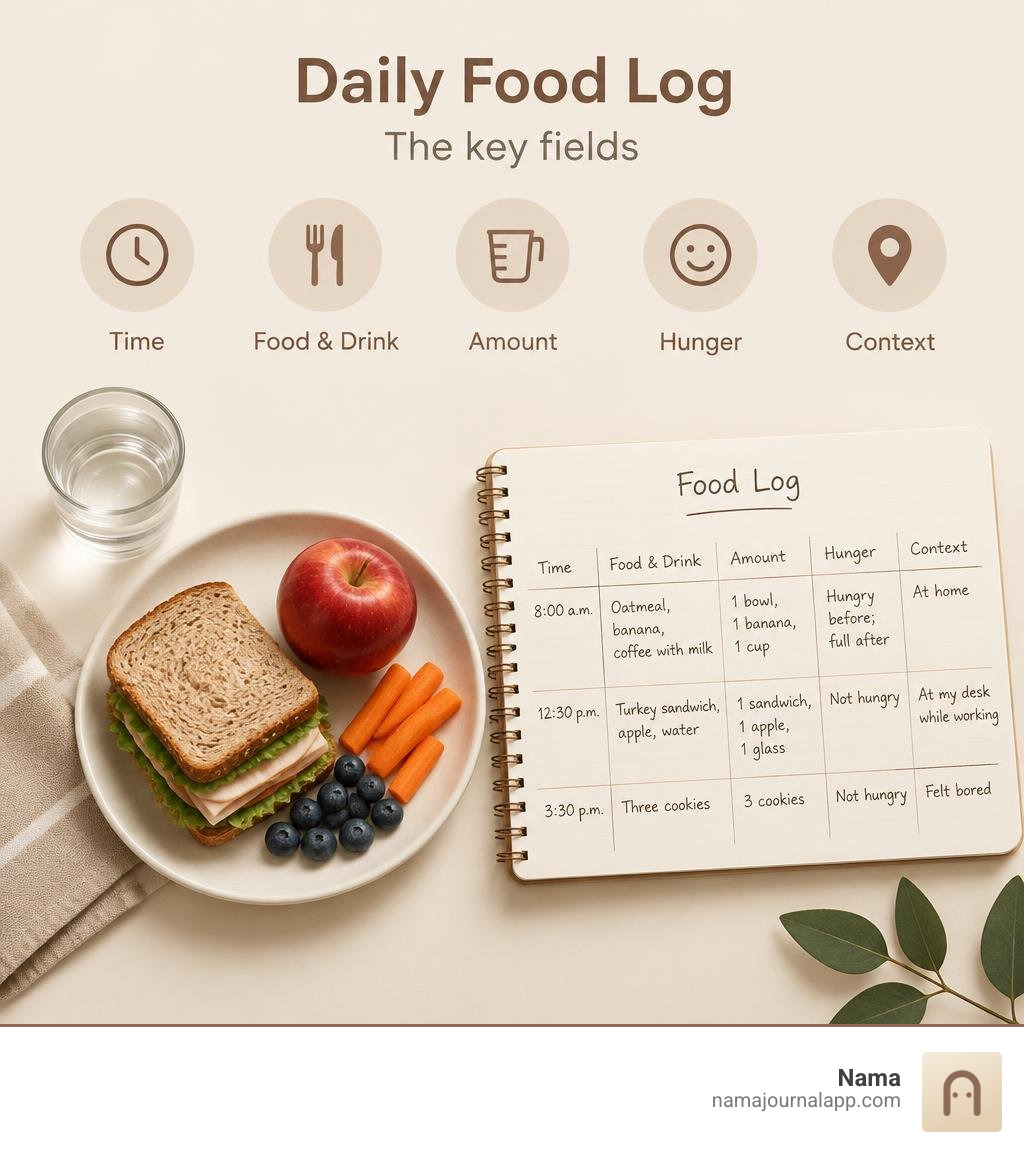
Simple example food log word guide:
Essential Details to Include in a Daily Food Record
When we start writing down our meals, the goal is not to judge ourselves or strive for absolute perfection. Instead, it is about capturing an honest, accurate baseline of our daily habits. Studies have shown that when we record our daily food intake, we tend not to eat as much simply because writing things down creates instant self-awareness.

To get the most out of your record, clinical resources such as the Johns Hopkins Medicine Food Log recommend including specific key elements:
- Time and Meal Type: Note exact times for breakfast, lunch, dinner, and intermittent snacks. This clarifies your eating rhythm and highlights long gaps that might trigger overeating later.
- Food and Beverage Descriptions: List every item, including preparation methods (e.g., poached vs. fried eggs, grilled vs. breaded chicken) and specific ingredients.
- Portion Sizes: Specify approximate amounts using ounces, cups, tablespoons, or visual reference points.
- Hidden Extras: Remember to record cooking oils, salad dressings, sauces, butter, spreads, and creamer or sweeteners added to tea and coffee.
- Somatic Cues and Hunger Ratings: Rate physical hunger before eating and fullness afterward to separate true biological needs from habitual eating. Maintaining a dedicated food and feelings diary can help connect these somatic cues to daily choices.
- Environmental Context: Jot down your physical location (at the kitchen table, in the car, or at your office desk) and who you were with.
- Fluid Intake: Track water in fluid ounces or standard 8-ounce glasses, alongside sodas, juices, and alcohol.
5 Practical Example Food Log Layouts for Different Health Goals
There is no single "correct" way to structure a food diary. Your logging format should directly reflect what you want to learn or achieve. Whether you are balancing your daily meals with the CDC Food and Beverage Diary framework or tracking specific bodily responses, matching your layout to your goal makes logging sustainable.
1. Mindful Example Food Log with Hunger Scale and Context
A mindful food log focuses on emotional triggers, eating speed, and physical appetite cues rather than numbers or calories. It uses a 1-to-10 hunger scale where 1 represents starving, 5 is neutral, 7 is politely full, and 10 is painfully full.
| Time & Meal | Food & Portions | Hunger (Pre / Post) | Location & Activity | Thoughts & Emotional State |
|---|---|---|---|---|
| 8:15 AM - Breakfast | 1 cup bran flakes, 1/2 cup low-fat milk, 1 cup black coffee | 3 / 7 | Kitchen table, no screens | Calm, planning the workday |
| 12:45 PM - Lunch | Whole wheat turkey wrap, 1 medium apple, 12 oz water | 2 / 7 | Office desk, answering emails | Rushed, slight work stress |
| 3:45 PM - Snack | 2 chocolate chip cookies, herbal tea | 5 / 6 | Office breakroom | Bored, looking for an afternoon break |
| 7:00 PM - Dinner | 4 oz grilled salmon, 1 cup roasted sweet potatoes, 1 cup steamed broccoli | 3 / 7 | Dining table with family | Relaxed, enjoyed the conversation |
This layout shines a spotlight on mindless snacking. In the table above, the afternoon snack occurred at a hunger level of 5 (completely neutral), showing that boredom—rather than biological hunger—prompted the visit to the breakroom.
2. Detailed Example Food Log for Calorie and Macronutrient Awareness
When your goal is athletic performance, body composition changes, or managing balanced energy intake, tracking numbers can be beneficial. A structured food log can help monitor protein, carbohydrate, and fat targets alongside total energy.
| Meal & Time | Item & Preparation | Portion / Weight | Calories | Protein (g) | Carbs (g) | Fat (g) |
|---|---|---|---|---|---|---|
| Breakfast (7:30 AM) | Rolled oats cooked in water Whey protein isolate Blueberries |
1/2 cup dry (40g) 1 scoop (30g) 1/2 cup (75g) |
150 120 40 |
5 24 1 |
27 2 10 |
3 1 0 |
| Lunch (1:00 PM) | Grilled chicken breast Jasmine rice Olive oil (cooking) Mixed greens |
4 oz (112g) 1 cup cooked (158g) 1 tsp (5ml) 2 cups |
185 205 40 15 |
35 4 0 1 |
0 45 0 3 |
4 0 5 0 |
| Snack (4:30 PM) | Low-fat Greek yogurt Almonds |
3/4 cup (170g) 1 oz (28g) |
100 160 |
15 6 |
6 6 |
0 14 |
| Dinner (7:30 PM) | Extra lean ground beef (93/7) Whole wheat pasta Marinara sauce |
4 oz (112g) 2 oz dry (56g) 1/2 cup (125g) |
170 200 65 |
24 7 2 |
0 42 10 |
8 1 2 |
| Daily Totals | — | — | 1,450 | 124g | 151g | 38g |
A structured food log can help you compare portion sizes and macro distributions with your specific metabolic needs.
3. Elimination Diet Log to Identify Food Intolerances
If you suspect certain foods cause digestive distress, skin breakouts, fatigue, or headaches, an elimination log tracks ingredients alongside physiological reactions. The typical protocol involves eliminating common culprits (such as dairy, gluten, soy, eggs, or nuts) for 2 to 3 weeks, reintroducing them one by one, and monitoring your body over a 2- to 3-day window.
Logging symptoms alongside ingredients provides objective notes you can review with your doctor or dietitian before making long-term dietary cuts.
4. Simple 3-Day Meal and Activity Log
Clinical nutrition assessments, such as the UCLA Health 3-Day Food Record, often use a 3-day baseline: two weekdays and one weekend day (e.g., Thursday, Friday, and Saturday). This captures your routine work habits alongside leisure-time choices. You can pair this approach with a broader food diary for a week to see how daily movement affects appetite.
| Day / Time | Meal & Ingredients | Portion Description | Water & Beverages | Physical Activity & Notes |
|---|---|---|---|---|
| Day 1 (Thu) 8:00 AM |
Whole wheat toast with peanut butter | 2 slices toast, 2 tbsp peanut butter | 1 cup black coffee, 8 oz water | 20-min brisk walk to transit station |
| 12:30 PM | Chicken vegetable stir-fry with rice | 1 cup rice, 1 cup mixed veg, 4 oz chicken | 16 oz water | Sedentary desk work; felt energetic |
| 7:00 PM | Beef chili with beans, small cornbread | 1.5 cups chili, 1 square piece | 12 oz sparkling water | 30-min evening bodyweight workout |
| Day 2 (Fri) 8:30 AM |
Oatmeal with sliced banana | 1 cup cooked oats, 1 medium banana | 1 cup green tea, 8 oz water | Stretched at home for 10 minutes |
| 1:15 PM | Turkey and swiss deli sub, potato chips | 6-inch sub, 1 small bag chips | 12 oz diet soda, 8 oz water | Quick lunch meeting |
| 8:00 PM | 2 slices thin crust pizza, side garden salad | 2 medium slices, 1.5 cups salad | 1 glass red wine (5 oz), 12 oz water | Dinner with friends; relaxed pace |
| Day 3 (Sat) 9:30 AM |
Scrambled eggs, bacon, sourdough toast | 2 eggs (1 tsp butter), 2 bacon strips, 1 slice | 2 cups coffee with splash of milk | 45-min morning neighborhood jog |
| 2:00 PM | Quinoa bowl with roasted chickpeas and tahini | 1.5 cups mixed bowl | 16 oz water | Ran errands; ate lunch late |
| 6:30 PM | Grilled steak, baked potato, green beans | 5 oz sirloin, 1 medium potato, 1 cup beans | 16 oz water | Home cooking; comfortably full |
Tracking both food and physical movement helps you understand your body's energy balance and daily fuel requirements.
5. Medical and Symptom Food Diary for Healthcare Consultations
When managing conditions like diabetes, hypertension, or gastrointestinal disorders, your food record becomes an essential diagnostic baseline. Linking meals directly to vitals and medication timing gives healthcare providers actionable context.
| Time & Meal | Food & Beverage Specifics | Portion / Details | Medication / Timing | Vital Signs & Blood Glucose |
|---|---|---|---|---|
| 7:30 AM - Breakfast | 2 poached eggs, 1 slice rye toast (1 tsp margarine), 1/2 cup berries | 1 cup green tea | Metformin (500mg) with meal | Fasting BG: 104 mg/dL BP: 122/78 mmHg |
| 12:15 PM - Lunch | Tuna salad (light mayo, celery), whole grain crackers, cucumber slices | 1 can tuna (5 oz), 6 crackers, 1 cup veg | — | 2-hr Post-Meal BG: 132 mg/dL |
| 6:00 PM - Dinner | Roasted chicken thigh, 1/2 cup quinoa, steamed zucchini | 4 oz chicken, 1/2 cup cooked grains | Lisinopril (10mg) | Evening BP: 118/76 mmHg |
How to Accurately Track Intake and Review Patterns
A food log is only as reliable as its entries. To ensure your journal reflects reality rather than wishful thinking, follow these practical tracking habits:
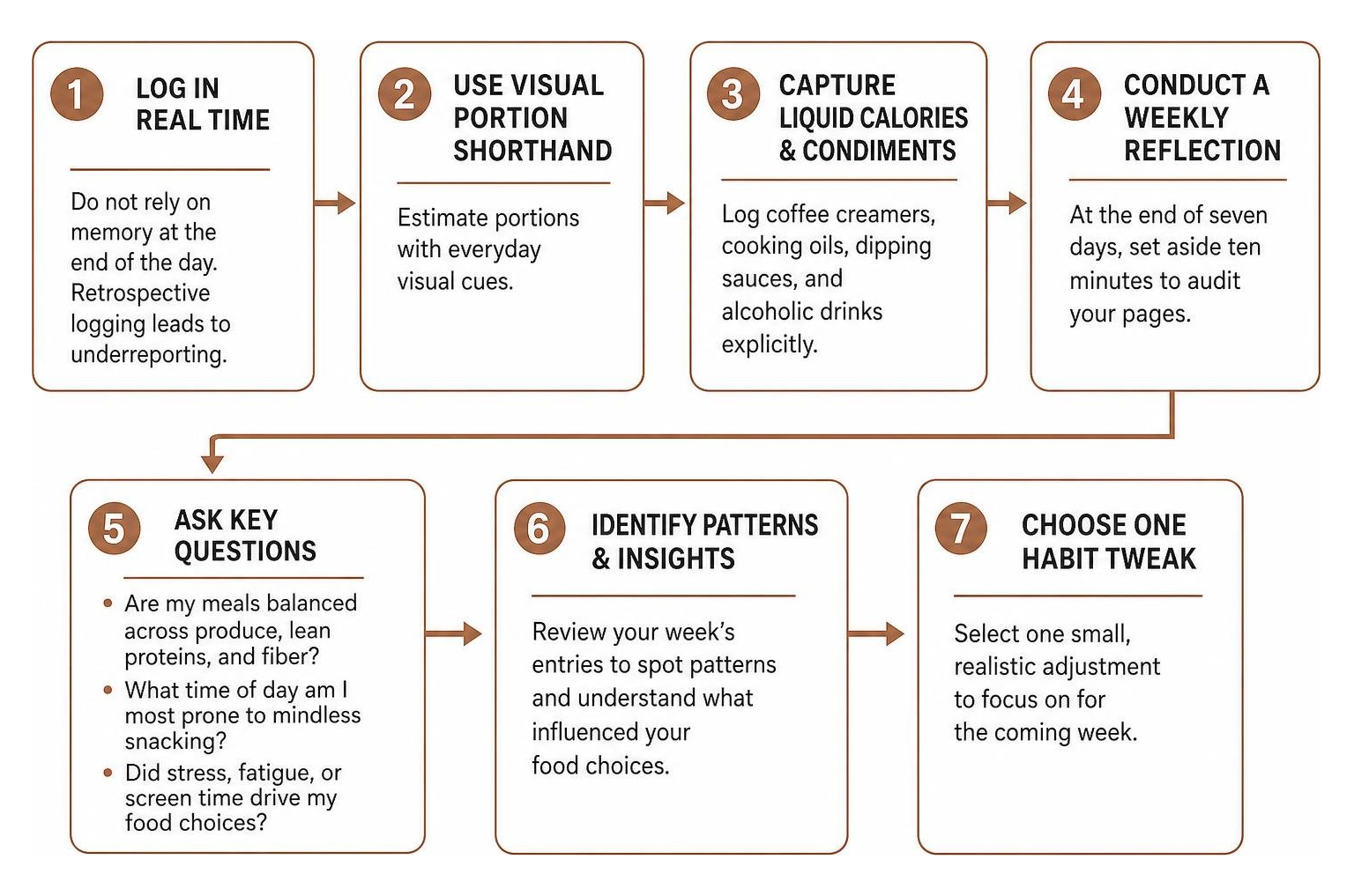
- Log in Real Time: Do not rely on memory at the end of the day. Studies and clinical observations consistently show that retrospective logging leads to underreporting portions and skipping snacks.
- Use Visual Portion Shorthand: If you are away from your kitchen scale or measuring spoons, estimate portions with everyday visual cues:
- 1 cup (vegetables, grains): Size of a clenched fist or a baseball.
- 3 ounces of meat/poultry: Size of a deck of cards or your palm.
- 1/2 cup (fruit, starches): Size of a hockey puck or computer mouse.
- 2 tablespoons (dressings, nut butters): Size of a golf ball.
- 1 teaspoon (oils, butter): Size of the tip of your thumb or a playing die.
- Capture Liquid Calories and Condiments: Coffee creamers, cooking oils, dipping sauces, and alcoholic drinks carry significant nutritional weight. Log them explicitly.
- Conduct a Weekly Reflection: At the end of seven days, set aside ten minutes to audit your pages. Ask yourself:
- Are my meals balanced across produce, lean proteins, and fiber?
- What time of day am I most prone to mindless snacking?
- Did stress, fatigue, or screen time drive my food choices?
- Which small, realistic adjustment can I focus on for the coming week?
Paper Notebooks vs. Digital Food Logs: Choosing Your Format
The best logging method is the one you will actually stick with. Some people enjoy the quiet, tactile experience of a paper notebook, while others prefer the convenience of a digital food log on a smartphone.
However, many cloud-based mobile apps require account registrations, collect personal health metrics for advertising, or lock basic logging features behind paywalls. If privacy is a priority, consider how your data is handled.
| Logging Method | Privacy & Data Ownership | Portability & Convenience | Analysis & Customization | Best Suited For |
|---|---|---|---|---|
| Paper Journal / Notebook | High (Completely offline, physical) | Moderate (Requires carrying notebook and pen) | Manual (Requires calculating or reviewing by hand) | Distraction-free mindful eating, intuitive journaling |
| Nama (iOS Wellness Journal) | Maximum (100% offline, no accounts, local storage on device) | High (Always on your iPhone, fast entry) | High (Custom metrics, photo attachments, full text export) | Private, all-in-one tracking of meals, notes, and health habits |
| Spreadsheets | Moderate to High (Depends on local vs. cloud storage) | Low on mobile (Best used on desktop computers) | High (Formula automation, custom charts and averages) | Data enthusiasts, detailed macro calculations |
If you want a mobile journal that protects your personal data, Nama is built specifically around an offline, no-account model. Your meal entries, exercise notes, and health metrics remain stored locally on your iPhone, giving you the speed of a digital log with complete privacy.
Frequently Asked Questions About Food Logging
How long should you keep a food log to see meaningful patterns?
For most general health and dietary reviews, keeping a log for 3 to 7 days (including at least one weekend day) is enough to reveal clear habits. A 3-day window highlights baseline meal choices and timing, while a full 7-day diary captures social dining and weekend variations. You can repeat this tracking week every couple of months to check in on your progress without needing to log indefinitely.
Do you need to count calories in a daily food diary?
No. Unless you are working toward specific caloric goals prescribed by a healthcare provider or coach, qualitative logging is often more sustainable and less stressful. Recording meal timing, food descriptions, hunger ratings, and your emotional context provides plenty of behavioral insight to improve your nutrition without counting a single calorie.
How can you estimate portion sizes without a food scale?
Visual comparisons using standard household objects make estimating portions quick and reliable:
- 1 cup: A baseball or your clenched fist.
- 1/2 cup: A hockey puck or half a fist.
- 3 oz of cooked meat: A deck of playing cards.
- 1.5 oz of hard cheese: Two standard white erasers.
- 2 tablespoons: A golf ball.
- 1 teaspoon: The tip of your thumb.
Conclusion
Keeping a meal log is ultimately an exercise in self-awareness, not self-judgment. By regularly writing down what you eat, when you eat, and how you feel, you turn vague assumptions about your diet into clear, objective insights. Whether your goal is pinpointing afternoon energy dips, managing a health condition, or building balanced meal habits, a simple record provides the foundation for lasting change.
If you are looking for a calm, distraction-free way to log your daily meals and wellness habits without worrying about third-party tracking, try the food diary feature in Nama. By keeping your data completely offline and stored directly on your iPhone, you can build mindful daily habits with total peace of mind.