The Definitive Guide to Finding the Best Weight Tracker App
Choose a Weight Tracker App That Shows the Trend, Not Just Today's Number
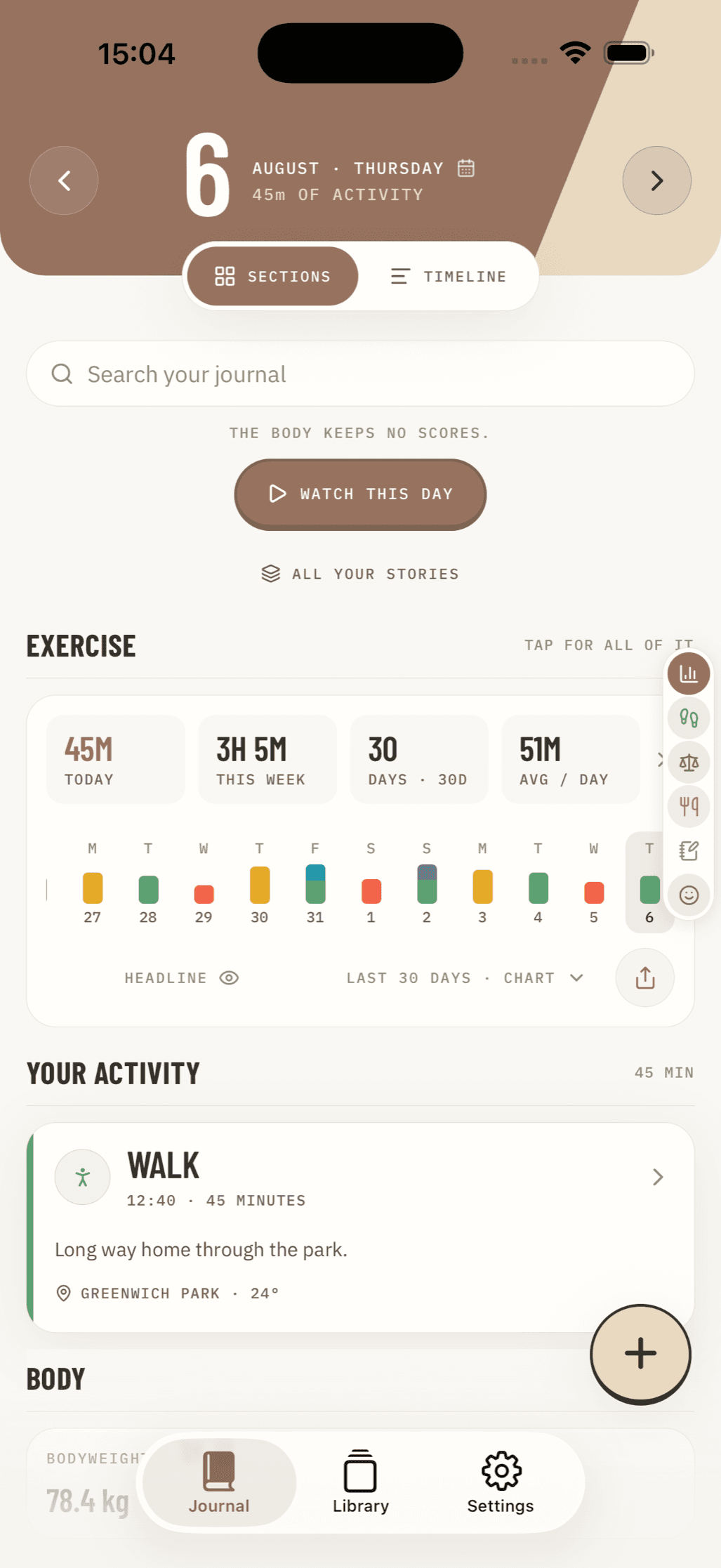
The best weight tracker app makes daily weigh-ins easier to understand. Look for one that lets you log weight quickly, shows a rolling trend or moving average, and tracks more than the scale number - such as waist measurements, meals, exercise, sleep, and notes.
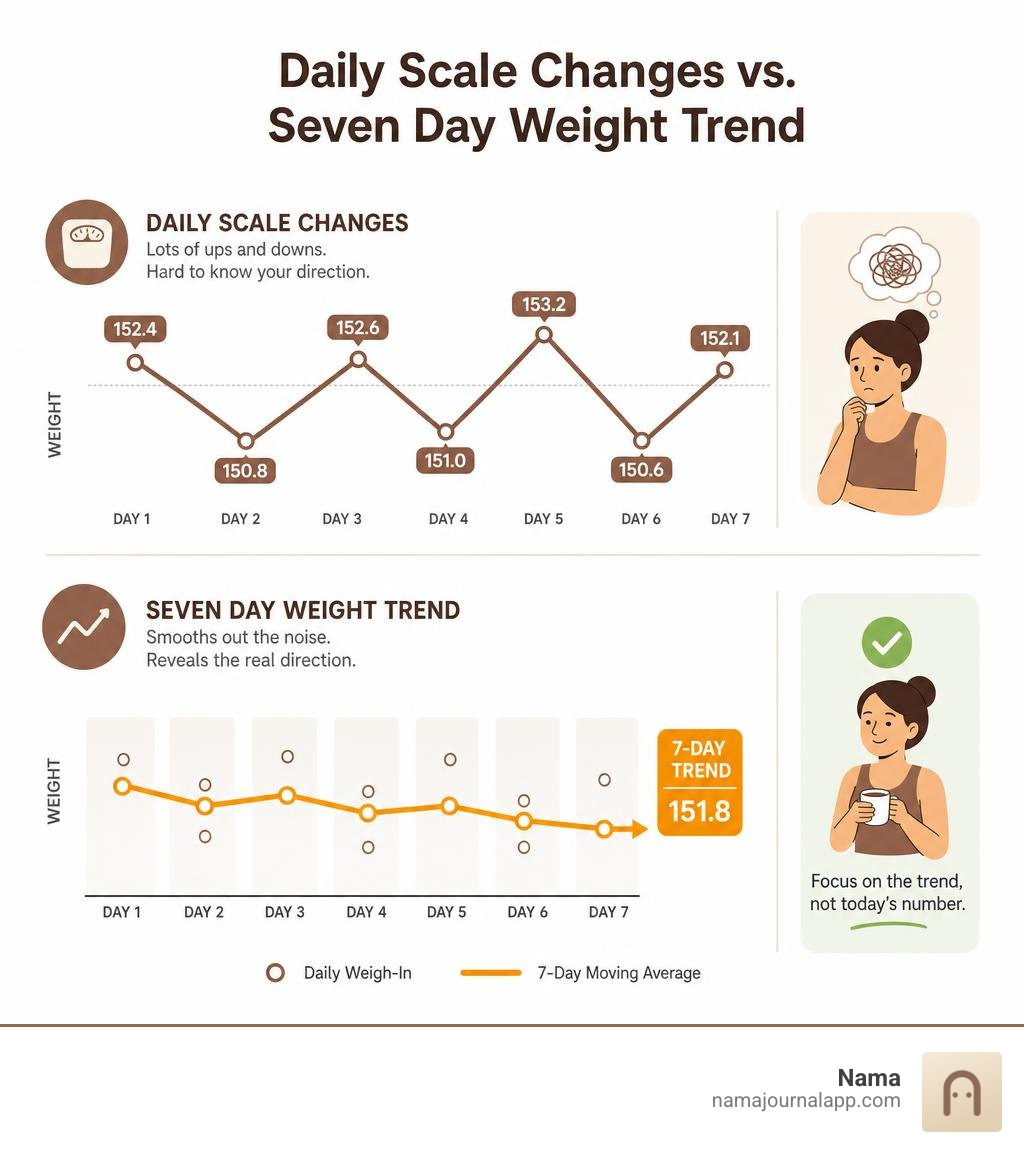
Daily weight can rise or fall because of water, sodium, digestion, glycogen, or hormonal changes. That does not mean body fat changed overnight. A 7-day average helps you see the direction of progress without overreacting to normal noise.
For a privacy-focused tracker, also check where your health data is stored, whether ads or social features are optional, and whether you can keep a simple personal record without relying on a public feed or cloud account.
This guide compares the types of weight tracking apps available, from focused trend tools to fuller wellness journals, so you can choose one that supports steady habits rather than scale anxiety.
Why Scale Fluctuations Mislead and How Moving Averages Solve It
Stepping on the scale can feel like an emotional gamble. You stick to your nutrition plan, complete your workouts, get adequate rest, and step on the bathroom scale only to see the number tick upward by two pounds. It is easy to feel frustrated, but biology explains why this happens.
Daily weight fluctuations are driven primarily by shifts in water retention, not instant changes in adipose tissue. A standard daily fat loss target is roughly 0.05 to 0.1 kilograms (about 0.1 to 0.2 pounds). In contrast, acute fluid retention can easily swing your scale weight by 0.5 to 2.0 kilograms (1 to 4.5 pounds) within twenty-four hours. That daily noise is up to thirty times larger than your actual rate of fat loss!
Several physiological factors cause these shifts:
- Glycogen storage: Every gram of carbohydrate stored as glycogen in your muscles and liver binds approximately three to four grams of water. A carbohydrate-dense meal replenishes glycogen reserves and holds extra fluid.
- Sodium balance: Higher sodium intake prompts your kidneys to temporarily retain water to maintain optimal electrolyte concentrations.
- Hormonal shifts: Cortisol spikes from intense training, life stress, or poor sleep elevate water retention. Menstrual cycle phases also drive significant fluid shifts.
- Digestion and gut transit: The physical mass of food traveling through your gastrointestinal tract contributes directly to total body mass until fully digested and excreted.
Mathematical trend smoothing eliminates this daily mental roller coaster. Instead of reacting to a single morning data point, mathematical models calculate a rolling 7-day moving average or an exponentially smoothed trend line. If your raw scale weight spikes after a salty dinner, the moving average barely nudges. It shows the genuine, underlying trajectory of your body mass.
Using rolling averages transforms plateaus from panic triggers into manageable data checkpoints. You can evaluate whether your trend line has genuinely stalled over two consecutive weeks before deciding to adjust caloric intake or training volume.
Core Features to Look for in a Weight Tracker App
A reliable tracking tool must reduce cognitive friction while providing meaningful insights. When evaluating apps, look beyond bare-bones digit entry to ensure the platform provides context for your health journey.
| Feature | Simple Scale Log | Advanced Progress Tracker |
|---|---|---|
| Data Logging | Numeric weight only | Weight, body circumferences, photos, qualitative notes |
| Data Presentation | Raw, jagged line charts | Rolling 7-day moving averages and trend smoothing |
| Goal Management | Single static goal weight | Milestone segmenting, rate-of-loss projections |
| Hardware Sync | Manual entry only | Apple Health and smart scale synchronization |
| Contextual Health | Isolated scale data | Correlation with nutrition, exercise, sleep, and mood |
| Privacy Model | Often cloud-hosted with ad trackers | Private by Design local storage |
Frictionless entry is critical. If recording your morning weigh-in takes more than two or three taps, logging compliance drops over time. Seamless integrations with Apple HealthKit or digital smart scales eliminate manual typing entirely by syncing your metrics directly.
Why a Standalone Weight Tracker App Beats a Simple Scale Log
A basic digital notebook or spreadsheet records digits, but it fails to protect you from psychological burnout. Staring at raw scale numbers without context causes many people to prematurely abandon their routines during natural weight spikes.
Dedicated tracking tools introduce predictive modeling and rate-of-loss calculations. By analyzing your moving average across multiple weeks, these tools display your realistic rate of progress (e.g., losing 0.5% to 1% of body weight per week). This helps you set realistic expectations for hitting your long-term goals.
Furthermore, segmenting a major goal into smaller milestones makes multi-year fitness journeys sustainable. Rather than fixating on a distant fifty-pound target, celebrating micro-milestones keeps motivation high. Building a daily logging habit is simpler when your software acts as a supportive Daily Weekly Monthly Habit Tracker App, helping you build consistency without feeling overwhelmed.
Essential Multi-Metric and Body Measurement Capabilities
The bathroom scale measures total body mass: bones, organs, water, glycogen, muscle, and body fat. When you combine resistance training with a modest caloric deficit, you may experience body recomposition—building lean muscle tissue while reducing adipose tissue. During this phase, the scale might stay completely flat while your physique changes dramatically.
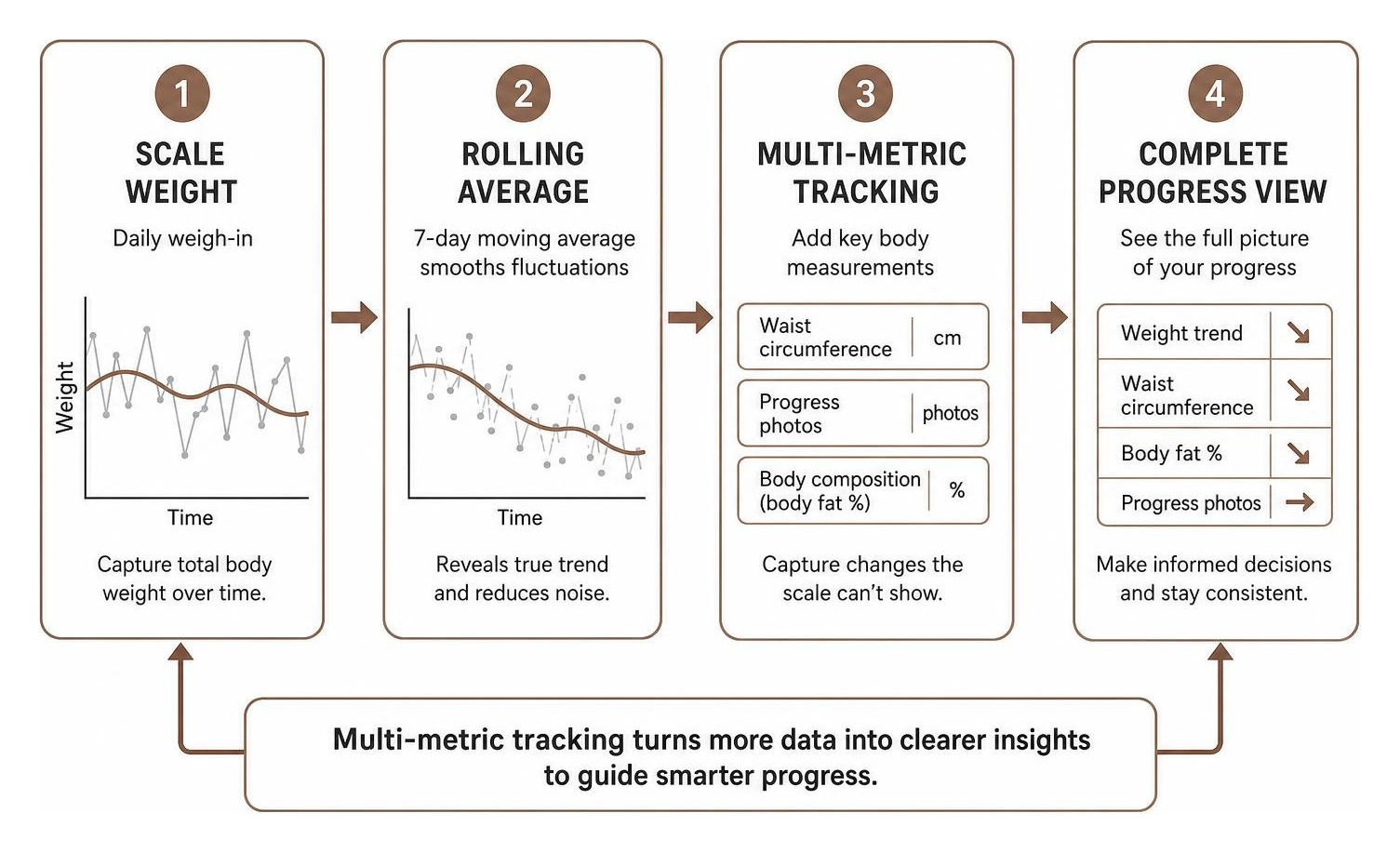
To capture true progress, track secondary physical metrics:
- Waist circumference: A shrinking waist measurement confirms visceral and subcutaneous abdominal fat loss, even if the scale is temporarily stagnant.
- Progress photos: Side-by-side visual comparisons taken under consistent lighting reveal muscle definition changes that numbers cannot show.
- Body composition metrics: Tracking estimated body fat percentage alongside strength metrics recorded in your Exercise Log verifies that you are preserving lean muscle mass during a fat-loss phase.
How to Build a Sustainable Weight Tracking Routine
Consistency in your measurement protocol ensures clean data. To eliminate unnecessary noise, follow a standardized morning weigh-in routine:
- Weigh yourself immediately after waking and using the restroom.
- Step on the scale before eating breakfast or drinking liquids.
- Wear minimal, consistent clothing (or weigh unclothed).
- Place your scale on a hard, flat, level surface rather than carpet.
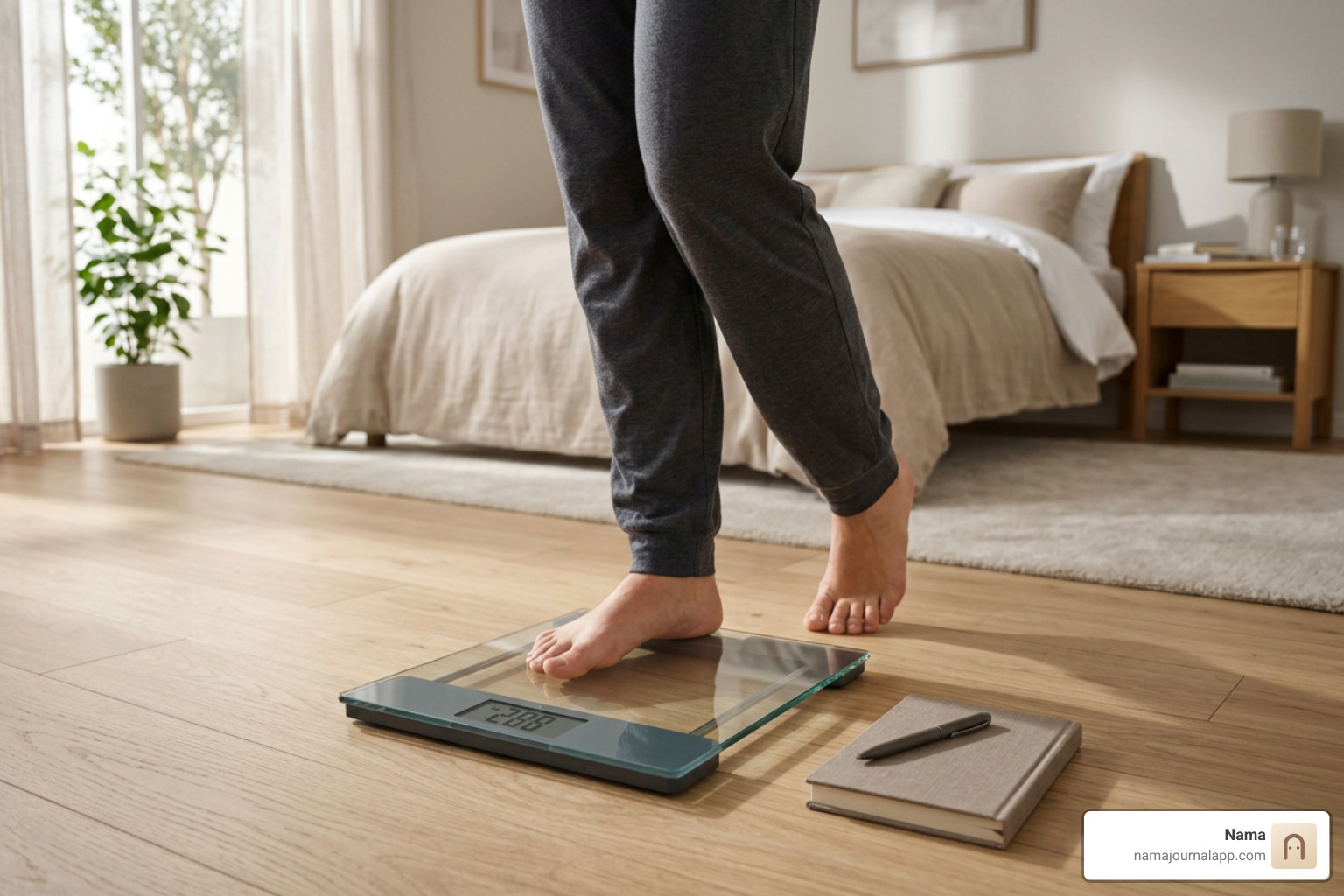
Log the number, close the app, and move on with your morning. Avoid weighing yourself multiple times per day; post-meal and evening weigh-ins simply reflect food and water intake. Evaluate your progress once per week by comparing your current 7-day average to the previous week's average.
Celebrate non-scale victories alongside numerical milestones. Better cardiovascular endurance, improved sleep quality, clothing fitting looser, and consistent workout performance are equally important indicators of improved health.
Combining Calorie Tracking, Nutrition, and Contextual Notes
Weight changes do not occur in a vacuum. Energy balance determines long-term body mass changes, while dietary composition dictates short-term fluid shifts. Maintaining a dedicated Food Diary or using an integrated Calorie Tracker App provides the context required to interpret scale trends accurately.
When your scale spikes after an evening out, contextual notes explain why. Did you consume a meal higher in sodium or carbohydrates? Did you experience poor digestion or travel across time zones? Logging qualitative notes in your personal Journal and Notes turns confusing outliers into understandable data points, preventing unnecessary dietary restrictions.
Privacy, Data Security, and Device Syncing
Personal health metrics are deeply sensitive. Many free commercial fitness applications monetize user records by sharing anonymized behavioral trends, location indicators, or tracking profiles with third-party advertising networks.
When choosing a tracking tool, verify its data governance architecture. Look for platforms that prioritize local-only on-device storage, biometric app locks (such as Face ID or PIN protection), and transparent data export options. Offline-first architectures ensure your personal health journey remains private, secure, and accessible even without an active internet connection.
Frequently Asked Questions About Weight Tracking
How often should you weigh yourself when trying to lose weight?
Weighing yourself daily under standardized morning conditions produces the cleanest data for rolling averages. Daily weigh-ins provide enough data points for algorithms to filter out water retention anomalies. However, if stepping on the scale daily triggers stress or unhealthy fixations, weighing yourself once per week—under identical conditions on the same day—is a sustainable alternative.
What is the best way to handle weight loss plateaus?
A true plateau occurs when your two-week moving average and your body circumference measurements remain unchanged for fourteen consecutive days. If your scale has stalled but your waist measurement is shrinking, you are experiencing body recomposition and do not need to adjust your diet.
If both metrics remain flat for more than two weeks, audit your recovery. Elevated chronic stress and insufficient sleep raise cortisol, masking fat loss through water retention. Utilizing a Self-Care Journal to track recovery parameters helps identify whether lifestyle stressors are interfering with your physical progress before you cut calories further.
How do you choose the right weight tracker app for holistic wellness?
Select an application that lets you monitor custom health parameters rather than locking you into a single rigid metric. Weight is only one component of physical well-being. Using a comprehensive Mood Tracker App alongside physical markers lets you observe how energy intake, movement, and body composition affect your mental health, focus, and overall vitality.
Conclusion
Managing your body mass effectively requires shifting your focus from daily scale noise to long-term trends. By understanding the biology of fluid retention, tracking 7-day moving averages, and pairing scale data with circumference measurements and progress photos, you can build a sustainable, stress-free health routine.
We built Nama to give you complete control over your health metrics without sacrificing your privacy. As an offline, privacy-first wellness journal for iOS, Nama stores your meals, workouts, photos, and weigh-ins locally on your iPhone—free from third-party ad trackers, forced cloud accounts, or public feeds. Use our flexible custom metric tracker to monitor your weight alongside the lifestyle factors that matter most to you, turning daily habits into lasting personal insights.