Track Every Bite Without the Stress Using Top Calorie Counting Apps
Find an App to Record Calories That Fits Your Life
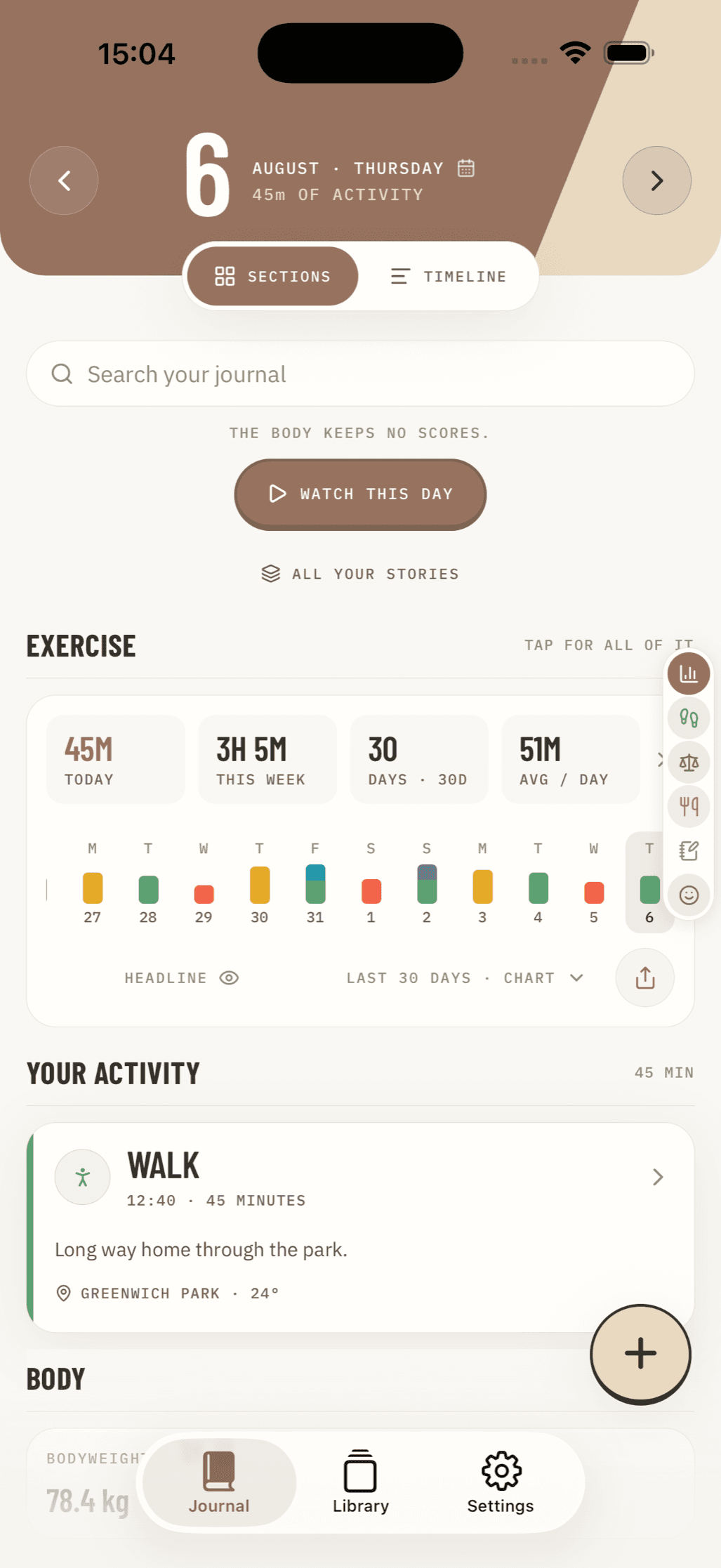
The best app to record calories is the one you will use consistently without feeling watched, judged, or overwhelmed. For most people, that means choosing a tool with quick food entry, clear calorie and macro totals, and an approach that matches their goal - whether that is weight loss, keto tracking, athletic fueling, or simply noticing eating patterns.
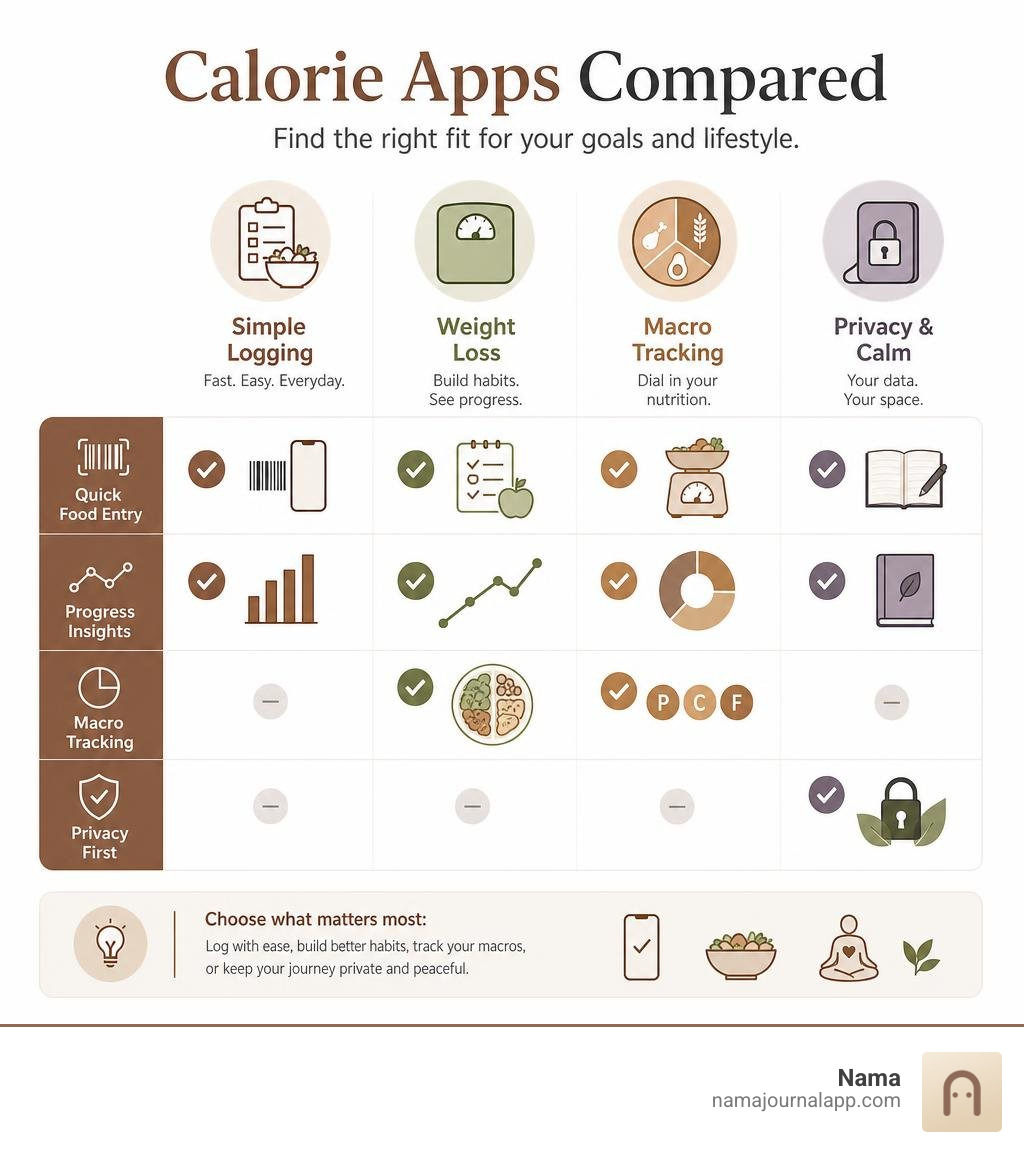
Popular options in 2026 include broad food trackers with large databases, macro-focused tools, behavior-change programs, and private food journals. Start by deciding what matters most:
- Simple daily logging: Look for barcode scanning, saved meals, and easy manual entry.
- Weight management: Choose an app with realistic goals, weekly trends, and supportive habit tools.
- Macros or keto: Prioritize protein, carb, fat, net-carb, and micronutrient tracking.
- Privacy and calm: Consider a minimalist journal that works offline and does not rely on ads, feeds, or social comparison.
No tracker is perfectly exact. Food labels may be off by as much as 20%, and exercise trackers can overstate calories burned. Still, consistent logging can make portions, routines, and patterns easier to see. The goal is useful awareness, not perfect numbers.
Learn more about app to record calories:
Key Features to Look for in an App to Record Calories
Choosing the right digital tool comes down to how well its interface matches your everyday routine. When a tracker feels clunky, logging turns into a chore you abandon by Thursday afternoon. The most reliable tools balance convenience with functional depth so you can capture what you eat in seconds without unnecessary friction or intrusive advertising.
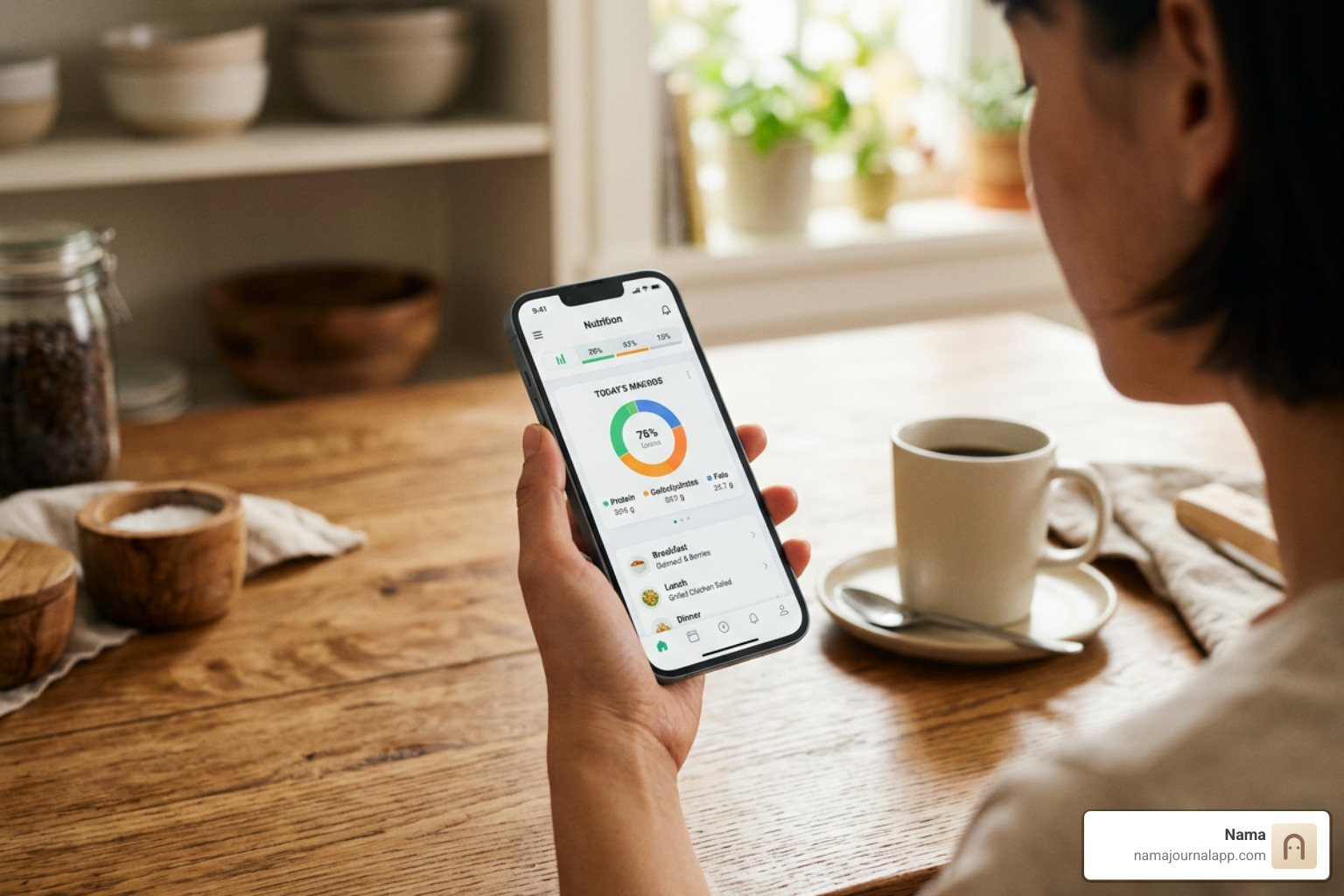
A comprehensive, verified food database is the foundation of smooth logging. Look for systems that index brand names alongside whole foods, home-cooked staples, and restaurant options. Barcode scanning speeds this up considerably by pulling exact nutrition labels directly into your daily log with a single scan. If you care about nutritional balance, pairing calorie counts with a dedicated macronutrients tracker app feature ensures you hit ideal targets for protein, carbohydrates, and dietary fats rather than just looking at isolated energy totals.
Beyond macros, several advanced features make daily tracking far smoother and more practical over the long term:
- Micronutrient tracking: Essential for checking vitamins, potassium, iron, calcium, and sodium intake to support overall vitality.
- Wearable integration: Pairing your nutrition diary with the best calorie and step tracker lets you view your daily energy expenditure and movement metrics alongside food intake.
- Custom meal creation: The ability to save multi-ingredient recipes makes home cooking easy to log repeatedly without re-entering individual ingredients.
- Offline accessibility: The freedom to log meals anywhere without requiring an active internet connection, remote server communication, or cloud sync.
- Data privacy: Keeping your personal metrics, eating logs, and photos stored securely on your device without sharing private health insights with third-party advertisers.
Top Categories of Calorie Tracking Tools in 2026
No single logging philosophy works for everyone. Some people thrive on rigid numeric targets, while others find long-term success through behavioral psychology or low-friction food journaling.

Choosing the Best App to Record Calories for Weight Loss and Habit Change
Weight loss is fundamentally about maintaining a sustainable energy balance, but human psychology drives what actually ends up on the plate. Modern habit-focused trackers use cognitive behavioral principles to help users build a healthier relationship with food. Rather than classifying meals as strictly "good" or "bad," these platforms often rely on color-coded categorisation (such as green, yellow, and orange food densities) to encourage volume eating and satiety without rigid restriction.
Educational mini-lessons and gentle nudges keep users engaged during natural motivation dips. Many people discover that keeping a simple food diary for a week reveals hidden snacking patterns and emotional eating triggers that standard calculators miss. When browsing apps that help track calories, prioritize tools that support flexible, gradual habit formation over rapid crash diets.
Selecting an App to Record Calories for Macro Tracking and Athletic Performance
Athletes, bodybuilders, and keto dieters require far more granular precision than general dieters. For these goals, total calories represent only half the equation; the specific distribution of macronutrients dictates muscle protein synthesis, glycogen replenishment, and metabolic state.
When following a ketogenic protocol, calculating net carbs (total carbohydrates minus dietary fiber and sugar alcohols) is essential to remain in ketosis. Endurance athletes and lifters often combine macro targets with the best food tracking app micronutrients settings to monitor electrolyte losses—such as sodium and magnesium—preventing fatigue and cramping during heavy training blocks.
Privacy-First and Minimalist Food Logging Tools
As mainstream health platforms increasingly introduce social feeds, mandatory accounts, and cloud analytics, many people prefer a private approach. A minimalist food diary allows you to document meals, portion estimates, and emotional context without external scrutiny or algorithm-driven notifications.
Exploring creative food journal ideas—such as combining quick meal descriptions with photos and physical wellness notes—often provides sustainable accountability without the burnout of counting every gram. Local, on-device logging ensures your dietary history remains strictly personal.
How AI and Smart Technology Are Transforming Food Logging
Artificial intelligence has made manual food entry significantly faster. Instead of typing every individual ingredient, users can now capture a plated meal with their camera or speak into their phone to generate instant nutritional estimates, reducing logging time down to mere seconds.

Computer vision models recognize distinct food items on a plate, segment the components, and estimate portion sizes based on visual depth and perspective. While a camera cannot detect hidden cooking oils or the precise sugar content of a sauce, these visual tools provide a solid starting estimate that you can quickly adjust before saving.
Natural language processing also allows for conversational voice logging. Saying "I had two scrambled eggs with a slice of sourdough toast and half an avocado" instantly translates into structured ingredient entries with corresponding calories and macros. Finding the best app for measuring calories with modern smart tools helps eliminate friction, making regular logging effortless and sustainable over months of continuous use.
Understanding Tracking Accuracy and Nutritional Pitfalls
Digital trackers provide helpful estimates, but treating every logged calorie as absolute fact leads to unnecessary frustration. Under standard FDA nutrition labeling regulations, packaged food labels are legally permitted up to a 20% margin of error. This means a packaged snack labeled at 200 calories might actually contain anywhere from 160 to 240 calories depending on batch variation and processing differences.
Furthermore, wearable fitness trackers often overestimate active calorie burn by 20% to 50% depending on the activity type, workout intensity, and heart-rate sensor placement. If you eat back every estimated calorie burned during a workout, you may unintentionally stall your progress.
| Tracking Method | Accuracy Level | User Effort Required | Best Suited For |
|---|---|---|---|
| Kitchen Scale & Gram Logging | Very High (±5%) | High | Bodybuilding, strict macro protocols, peak athletic prep |
| Barcode Scanning | High (±10%) | Low to Moderate | Packaged foods, meal prep, structured pantry diets |
| AI Photo & Voice Recognition | Moderate (±15-25%) | Very Low | Dining out, busy schedules, quick visual logging |
| Qualitative Food Journaling | Reflective / Mindful | Minimal | Habit formation, intuitive eating, private wellness tracking |
Using an accurate calorie counter alongside honest portion awareness helps you spot long-term nutritional trends. Use your daily calorie tracker app data as a supportive guide rather than an exact score.
Frequently Asked Questions About Calorie Tracking Apps
How accurate are calorie tracking apps when logging homemade meals?
Home-cooked meal accuracy depends on how you enter ingredients. Using built-in recipe builders to log raw ingredient weights before cooking yields the most precise numbers. Water evaporates during cooking, altering the final weight of foods like meat and grains, so logging raw weights prevents significant portion errors.
Can tracking daily calories lead to unhealthy eating habits?
Hyper-focusing on exact numbers can cause tracking fatigue or an anxious relationship with food for some individuals. Practicing flexible dieting, taking intentional logging breaks, and focusing on overall weekly trends rather than daily perfection helps maintain a balanced, healthy perspective.
Are free calorie counters effective for reaching fitness goals?
Yes. Many free food tracking tools provide full access to verified databases, basic macro breakdowns, and barcode scanning. Paid subscriptions typically add specialized coaching, advanced AI photo logging, or deeper micronutrient analytics, but consistency with standard manual entry is more than enough to reach your targets.
Conclusion
Building healthy nutritional habits does not require obsessive calculations or public social sharing. The right digital tool gives you clear insight into your daily fuel while fitting naturally into your routine.
If you prefer an uncluttered, distraction-free space to record your meals, exercises, and wellness notes, Nama offers a completely offline iOS food journal. With zero accounts required, complete privacy, and full data export capabilities, you can track your daily wellness and nutrition privately with Nama on your own terms.