A Practical Guide to the Best Health Tracking Apps
Find the Best App for Health Tracking Your Goals
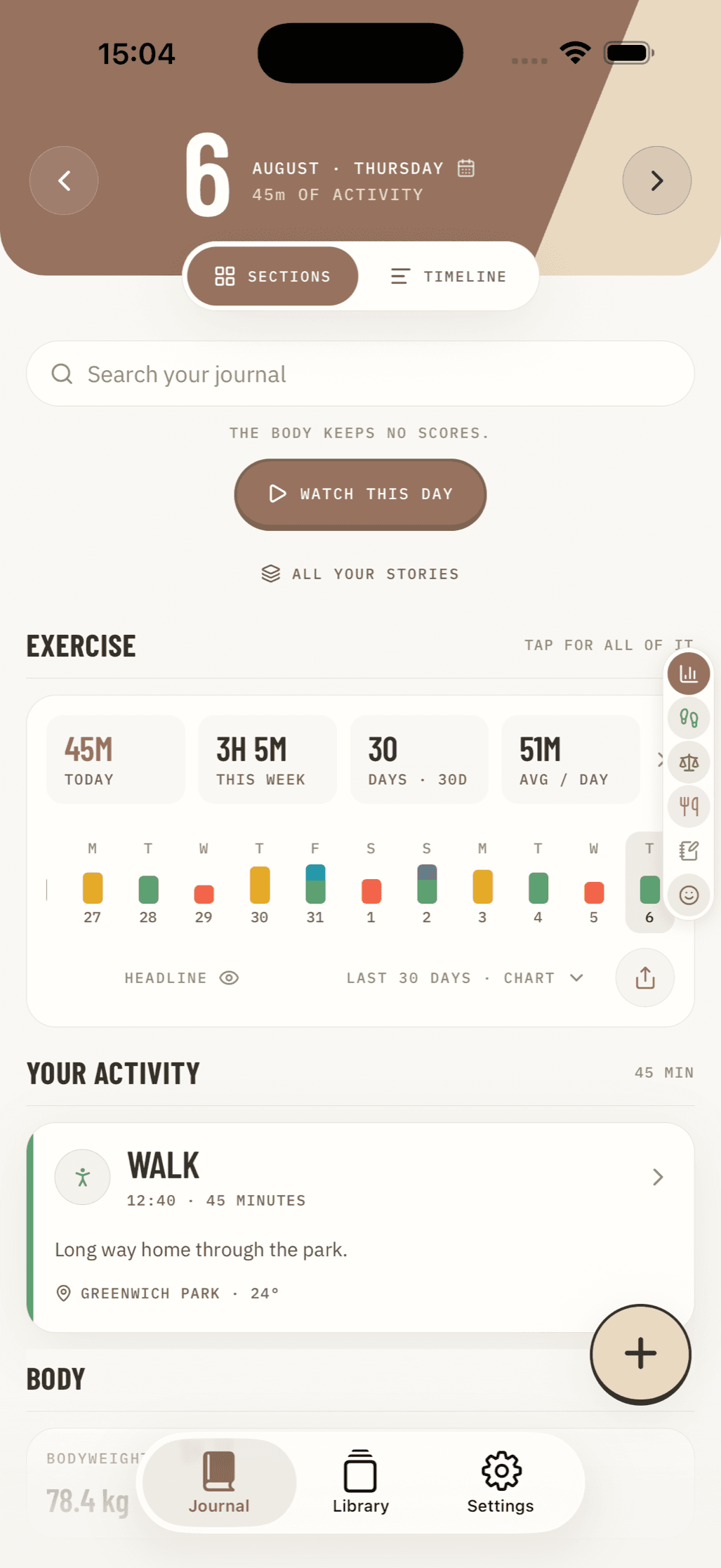
The best app for health tracking depends on what you want to measure. For a private record of meals, exercise, notes, and custom metrics, Nama is a strong fit: it works offline on iPhone, needs no account, and lets you export your text and photos. If you need automatic sleep data, heart rate, or detailed nutrition totals, look for a tool built for that task.
Start with one goal you will track often. Then check how much work logging takes, whether the app works with your devices, and who controls your data. A simple tool you keep using is more useful than a crowded dashboard you stop opening.
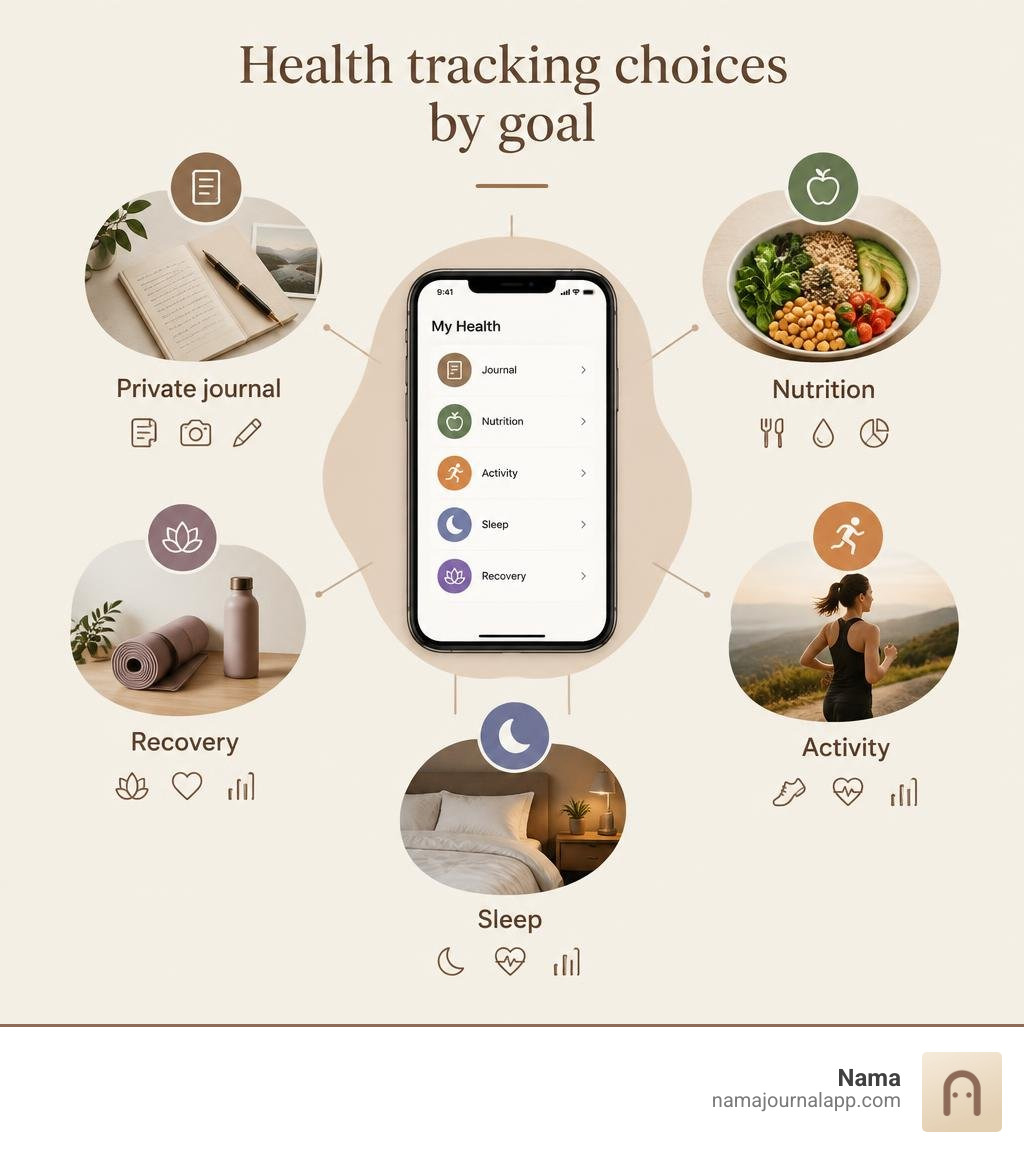
Core Categories and Features That Define the Best App for Health Tracking
Tracking your health used to mean jotting notes into a pocket notebook or guessing your daily calorie burn. In 2026, the digital wellness landscape spans specialized utilities that monitor everything from autonomic nervous system recovery to individual vitamin intake. The key to building a sustainable system is understanding which category serves your core objective.
When evaluating digital health software, we look at several fundamental categories:
| Health Tracking Category | Essential Metrics Tracked | Best For | Typical Data Source |
|---|---|---|---|
| Diet & Nutrition | Calories, macros, micronutrients, hydration | Weight management, body composition, metabolic health | Barcode scanner, photo AI, manual food database |
| Fitness & Workouts | Sets, reps, volume load, GPS routes, heart rate zones | Strength training, running, endurance sports | Manual set logging, smartwatch GPS, chest straps |
| Sleep & Recovery | Sleep stages, HRV, resting heart rate, sleep debt | Recovery planning, stress reduction, athletic readiness | Smartwatches, smart rings, under-mattress sensors |
| Mind & Mood | Mood scores, journal notes, anxiety triggers, mindfulness | Mental wellbeing, therapy support, stress relief | Daily prompts, guided audio sessions, CBT tools |
| Central Hubs & Private Journals | Aggregated biometrics, custom lifestyle habits, notes | Unified overview, holistic tracking, secure data storage | Cloud sync or local-only on-device storage |
Every category offers unique strengths. The right balance comes down to accuracy, logging speed, and data privacy. Understanding these distinct categories helps you visualize how different wellness tools specialize in individual health pillars.
What is the Best App for Health Tracking Calories and Nutrition?
Diet is the foundation of energy balance, body composition, and longevity. Nutrition tracking generally falls into two camps: fast calorie counters and deep micronutrient analyzers.
For individuals focused on energy balance and weight targets, measuring daily caloric intake through a detailed food log is essential. Logging workflows that support barcode scanning make packaged food entry fast and consistent.
If your focus extends beyond energy balance to metabolic health, accurate food and micronutrient tracking becomes critical. Deeper logging approaches can capture dozens of individual micronutrients, including vitamins, minerals, essential fatty acids, and amino acid profiles, giving you a fuller picture of macronutrient split and micronutrient density over time.
Evaluating food logging formats carefully ensures that your chosen workflow matches your day-to-day routine.
Selecting the Best App for Health Tracking Workouts and Recovery
Consistent exercise tracking ensures you apply progressive overload in the gym and maintain structured endurance progression on the road.
For resistance training, logging sets, weight, and rest periods allows you to track total volume over time. Using a dedicated comprehensive workout tracking approach or a structured weight training log keeps your strength sessions organized and your set-by-set entry straightforward.
For outdoor endurance, GPS accuracy and route planning take precedence, and heart rate variability trends can help you judge how well you are recovering between sessions. Daily background movement is just as valuable as structured exercise. Setting up reliable step tracking on Android helps monitor daily non-exercise physical activity, which, alongside consistent sleep architecture, rounds out a complete picture of your activity levels.
Specialized Tracking: Sleep, Mental Wellbeing, and Daily Habits
Physical fitness and nutrition tell only half the story. Sleep architecture, autonomic recovery, and mental wellness are equally vital to long-term health.

Sleep Quality and Recovery Analytics
Sleep tracking has moved beyond simple movement detection. Modern sleep tracking approaches analyze circadian rhythms, sleep debt, and resting biometrics to determine physiological readiness.
- Wearable and Sensor Tracking: Sensor-based sleep tracking can measure deep sleep, REM stages, and heart rate variability (HRV) against clinical polysomnography baselines.
- Continuous Recovery Metrics: Wearable hardware can translate overnight resting biometrics into readiness scores that reflect your autonomic recovery from day to day.
- Acoustic Sleep Staging: Microphone-based sleep staging can detect phase transitions and support smart alarms that wake you gently during light sleep.
Understanding these recovery metrics prevents overtraining and highlights how lifestyle factors like late meals or alcohol disrupt restorative deep sleep.
Mindfulness, Stress, and Mental Health Management
Managing stress and cognitive load is essential for sustainable health habits. Mental wellness support ranges from guided meditation practices to evidence-based therapeutic frameworks and structured symptom logging.
Guided meditation and sleep stories can support anxiety management as part of a broader wellness routine, and some structured approaches have shown, in published research, measurable reductions in anxiety and depression scores through consistent habit journaling and reflection.
If you prefer self-directed reflection, monitoring emotional trends with a mood tracker helps you identify daily lifestyle triggers. Combining mindfulness with subjective journaling builds long-term self-awareness and supports daily wellness routines.
Ecosystem Integration vs. Privacy-First Health Logging
Choosing health software often involves a fundamental trade-off: broad cloud connectivity versus personal data ownership.
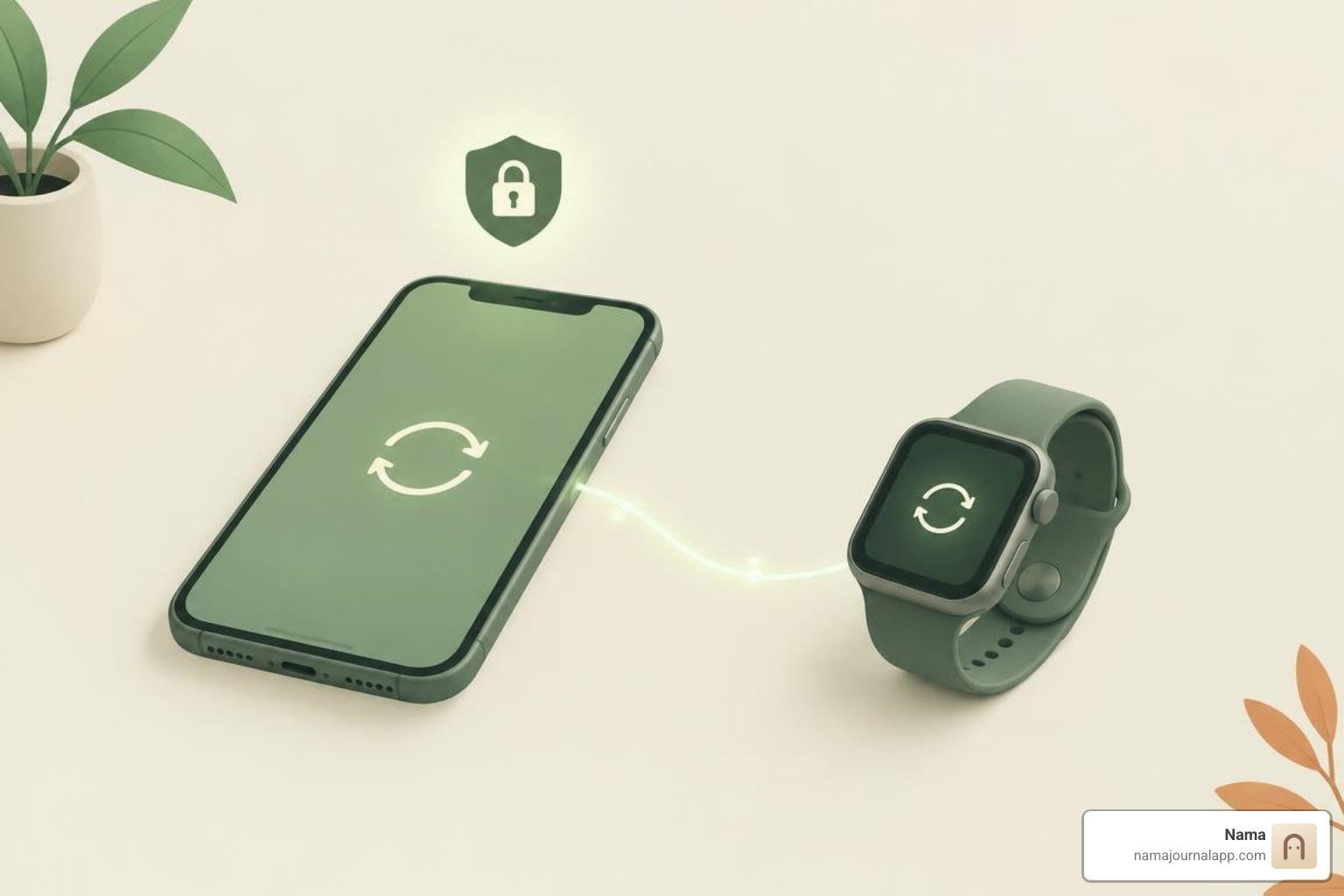
Wearable and Hub Synchronization
Central data hubs eliminate the problem of having your health metrics scattered across a dozen different databases:
- Device Health Data Hub: An on-device hub can aggregate approved workout, sleep, vital-sign, nutrition, and mindfulness data from compatible apps.
- Permission Controls: Review which categories each app can read or write so your records stay organized and you share only the data you intend to share.
Using a central hub allows you to maintain unified calorie and step tracking while keeping your hardware options flexible.
Data Ownership and Offline Security
While central cloud hubs provide convenience, they also introduce privacy trade-offs. Health data includes sensitive biometric and lifestyle details. When choosing an application, reviewing privacy policies and data governance practices is vital. Scientific studies such as Assessing the Privacy of mHealth Apps for Self-Tracking highlight the importance of understanding how digital health records are stored, encrypted, and shared.
This is where local-first wellness journals excel. Nama gives you full control over your personal data. Operating as an offline iOS journal, Nama requires no account creation, transmits no personal biometrics to remote servers, and stores all text, custom metrics, and photos locally on your device.
Through versatile features that allow you to track anything—from medication timing to daily energy levels—you can log your wellness journey privately and export your complete records to standard CSV files whenever you wish.
How to Choose the Right Health Tracking Stack for Your Goals
Rather than trying to find one app that does everything, the most sustainable approach is building a lean, focused health stack.
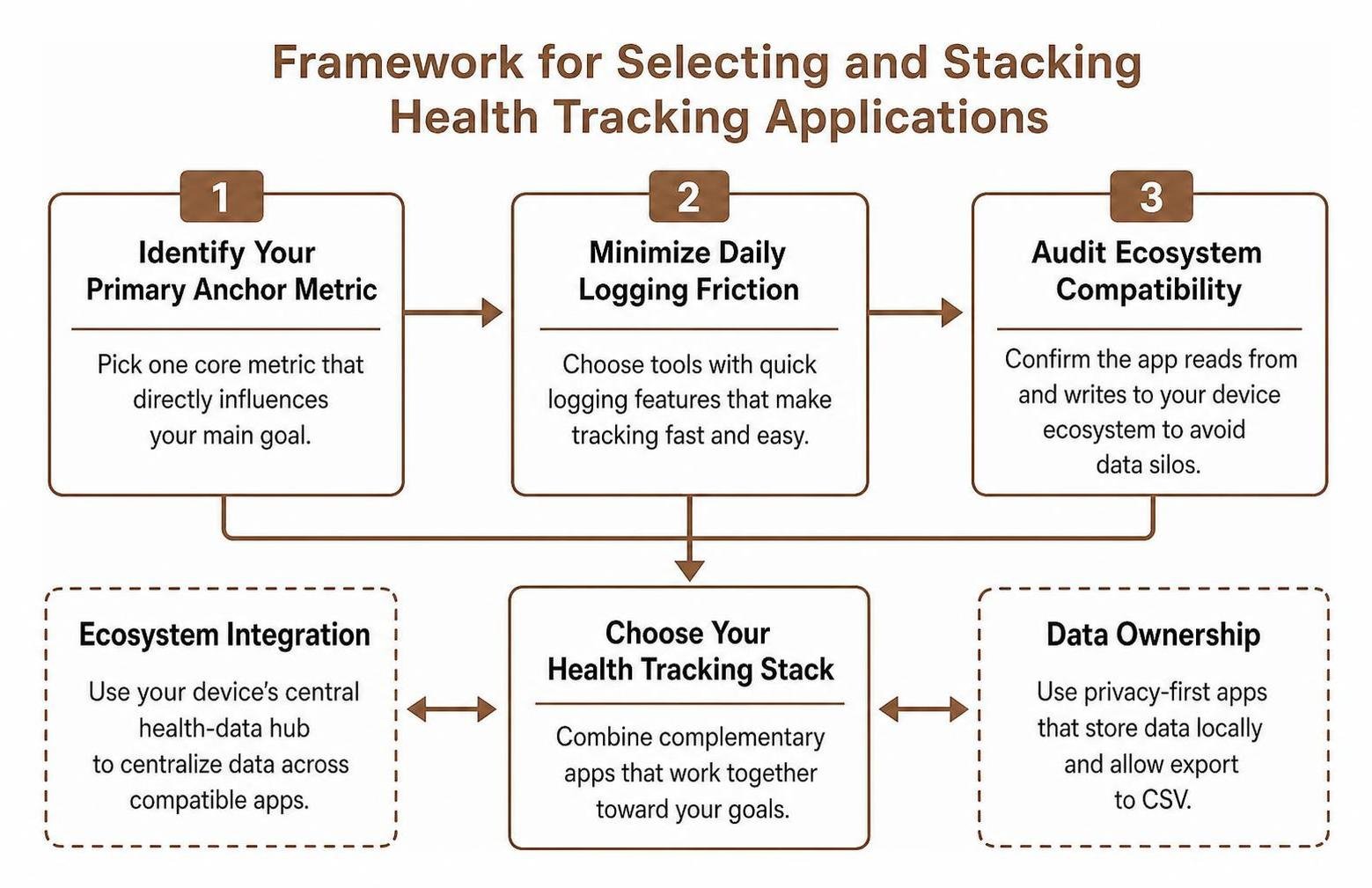
Follow these steps to choose tools that fit your routine:
- Identify Your Primary Anchor Metric: Pick one core metric that directly influences your main goal. If you are focused on body recomposition, prioritize tracking body weight and body composition alongside nutrition. If your focus is endurance, prioritize GPS run logging.
- Minimize Daily Logging Friction: An app with dozens of mandatory fields often leads to burnout. Look for features like barcode lookup, customizable templates, or quick-entry habit grids that make logging take seconds rather than minutes.
- Audit Ecosystem Compatibility: Confirm whether the app reads from and writes to your device ecosystem (such as your device's central health-data hub) to prevent isolated data silos.
- Evaluate Data Ownership and Export: Verify that you can easily export your historical data in standard formats (such as CSV or JSON) so your health history is never locked into a single proprietary subscription.
- Start with Free Tiers: Test an app's core tracking flow for two weeks before committing to an annual plan.
Frequently Asked Questions about Health Tracking Apps
Is a free health tracking app sufficient for reaching fitness goals?
Yes. For most people, free tools provide all the functionality required to build consistent habits. Core metrics like daily step counts, basic exercise sets, and simple calorie logging do not require premium subscriptions. For example, you can easily maintain thorough nutritional records using free micronutrient tracking tools, upgrading to paid analytics only when you need advanced personalized coaching or automated meal planning.
Do you need a dedicated wearable device to track health metrics?
No. Modern smartphones contain high-precision accelerometers and GPS chips that handle reliable step counter functionality and distance tracking straight from your pocket. While dedicated chest straps and smart rings provide higher precision for sleep staging and heart rate variability, manual logging and phone sensors are more than adequate for daily fitness tracking.
How do third-party apps integrate with central health hubs?
Third-party apps communicate with operating-system hubs via secure software development kits (SDKs) provided by your device’s operating system. When you grant permission, apps can read specific metrics (such as your resting heart rate) or write newly recorded data (such as a logged workout) into the shared database. You can learn more about managing these data permissions in our guide to health data permissions.
Conclusion
Health tracking is not about accumulating endless charts; it is about building sustainable habits that support your long-term vitality. Whether you rely on high-precision nutrition scanners, GPS route trackers, or an offline, privacy-first journal like Nama to record daily notes and custom habits, the best tool is always the one you enjoy using every day.
Take time to explore your options, match your software to your personal health priorities, and build a routine that supports your wellbeing. For more platform-specific recommendations, explore our guide to the best health tracker app for Android.