The Clutter-Free Guide to Choosing a Health Journal with No Ads
How to Choose a Health Journal with No Ads
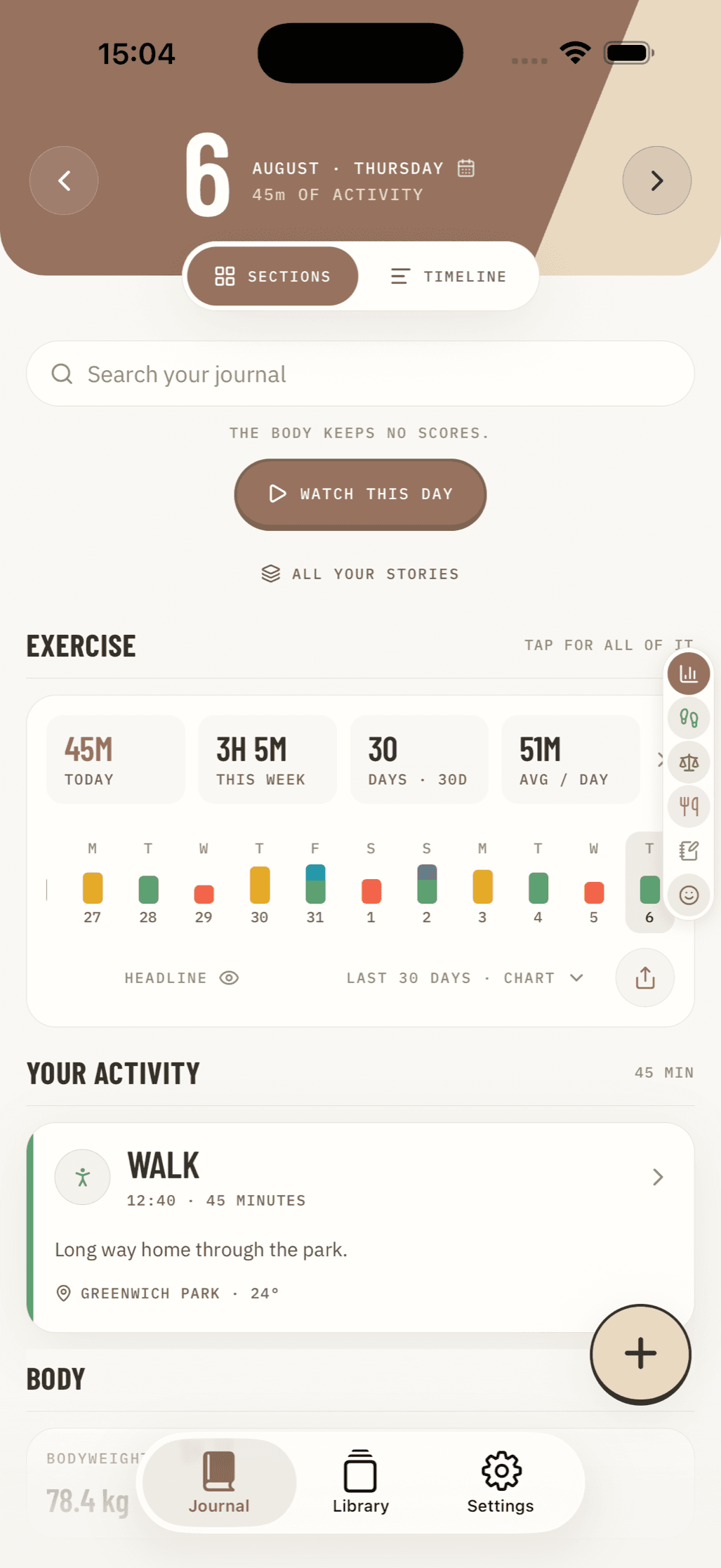
Looking for a health journal with no ads? Start with four checks: it should work offline, store entries on your phone, let you export your data, and clearly explain whether it tracks you. No ads does not automatically mean no tracking, so read the privacy policy before you start logging.
Nama is an iOS wellness journal for recording meals, exercise, notes, and custom health metrics offline. It requires no account, keeps entries on your iPhone, and lets you export text and photos. The comparison below will help you decide which features matter most for your daily routine.
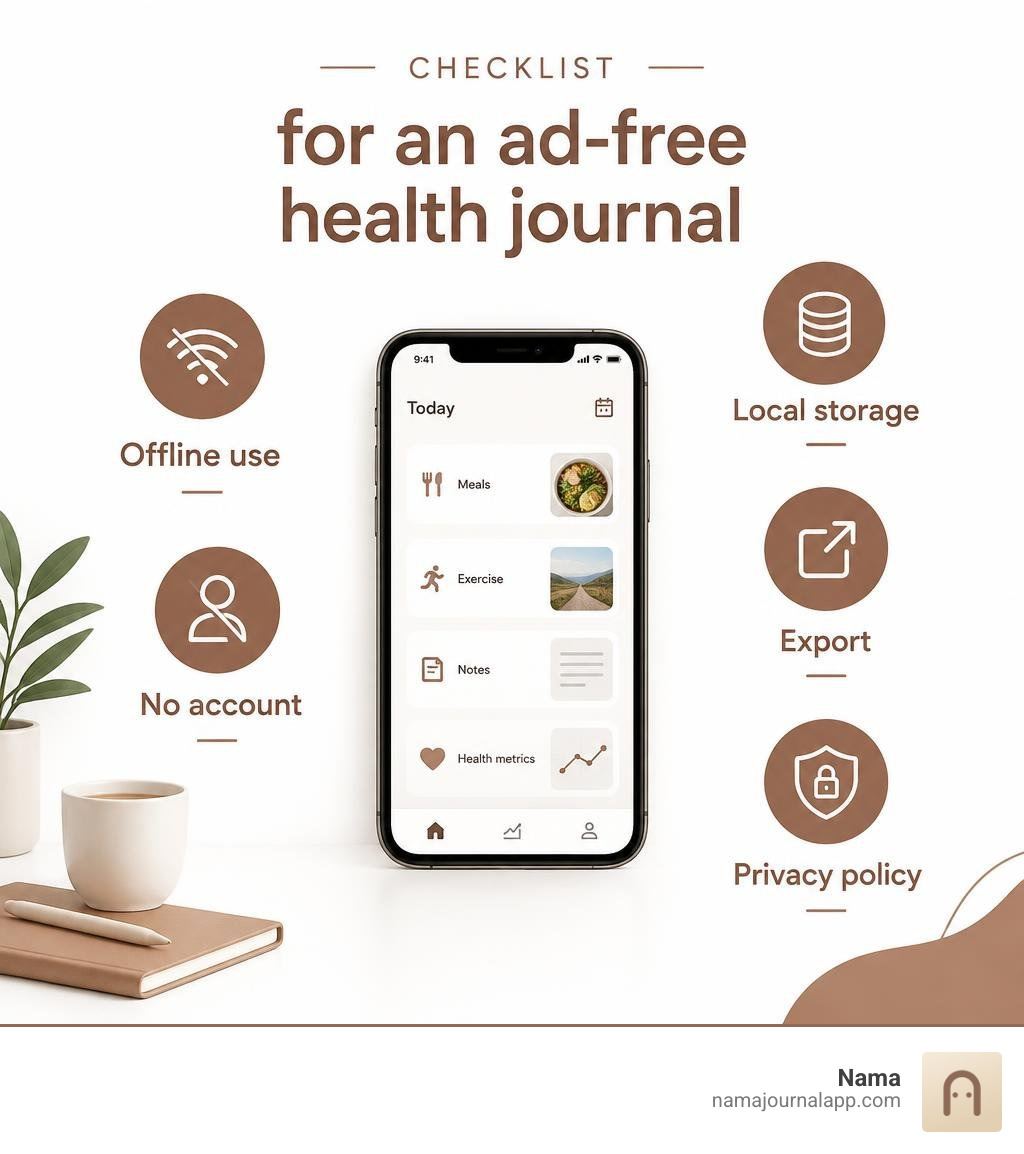
Simple guide to health journal no ads:
Why You Need a Health Journal with No Ads for Daily Tracking
When you open a wellness log to record an unexpected headache, a morning workout, or your breakfast, the last thing you want to see is an animated banner promoting weight-loss gummies or a full-screen video advertisement for insurance.
Ad fatigue in digital health spaces is not just a nuisance; it directly undermines your consistency. Every intrusive pop-up, flashing banner, and unskippable video creates friction. Over time, that micro-frustration turns a five-second log into a chore you eventually abandon.
Beyond annoyance, ad-driven wellness platforms often rely on commercial models that run contrary to user wellness. When an application's primary revenue stream comes from advertisers, its user interface is engineered to maximize screen time, clicks, and impressions. This design strategy encourages mindless browsing rather than fast, intentional logging.
Choosing a dedicated health journal no ads platform eliminates this digital noise. It transforms your daily logging ritual from a chaotic browsing session into a peaceful, focused habit that respects your attention.
Key Benefits of a Health Journal No Ads for Personal Privacy
When an app provides tracking tools for free while displaying commercial ads, you are rarely just a user—your behavior is often the product. Many ad-supported health platforms integrate third-party software development kits (SDKs) and tracking pixels. These background scripts can quietly monitor your habits, device identifiers, and lifestyle patterns, feeding that data directly into advertising networks and data broker ecosystems.
Logging personal details like migraine patterns, digestive symptoms, mood fluctuations, and daily nutrition requires complete trust. Health confidentiality should be non-negotiable.
Building a truly mindful wellness routine is much easier when you use a platform that is private by design. Operating without background telemetry or data brokers ensures that sensitive health markers stay entirely in your hands.
When you dive into a self-awareness journal ultimate guide 2026, one core truth becomes obvious: honest self-reflection requires a secure, private environment. If you fear that your emotional check-ins or symptom notes might trigger targeted commercial advertisements across your social feeds, you will inevitably censor your entries. A clutter-free, ad-free environment provides the psychological safety you need for radical self-honesty.
Why Healthcare Professionals Value Ad-Free Data Logging
When you bring your health logs to an appointment with your doctor, registered dietitian, or specialist, clinical accuracy and clarity are paramount. Doctors do not have the time to sift through noisy interfaces, gamified badges, or bloated metrics that have little to do with your physiological baseline.
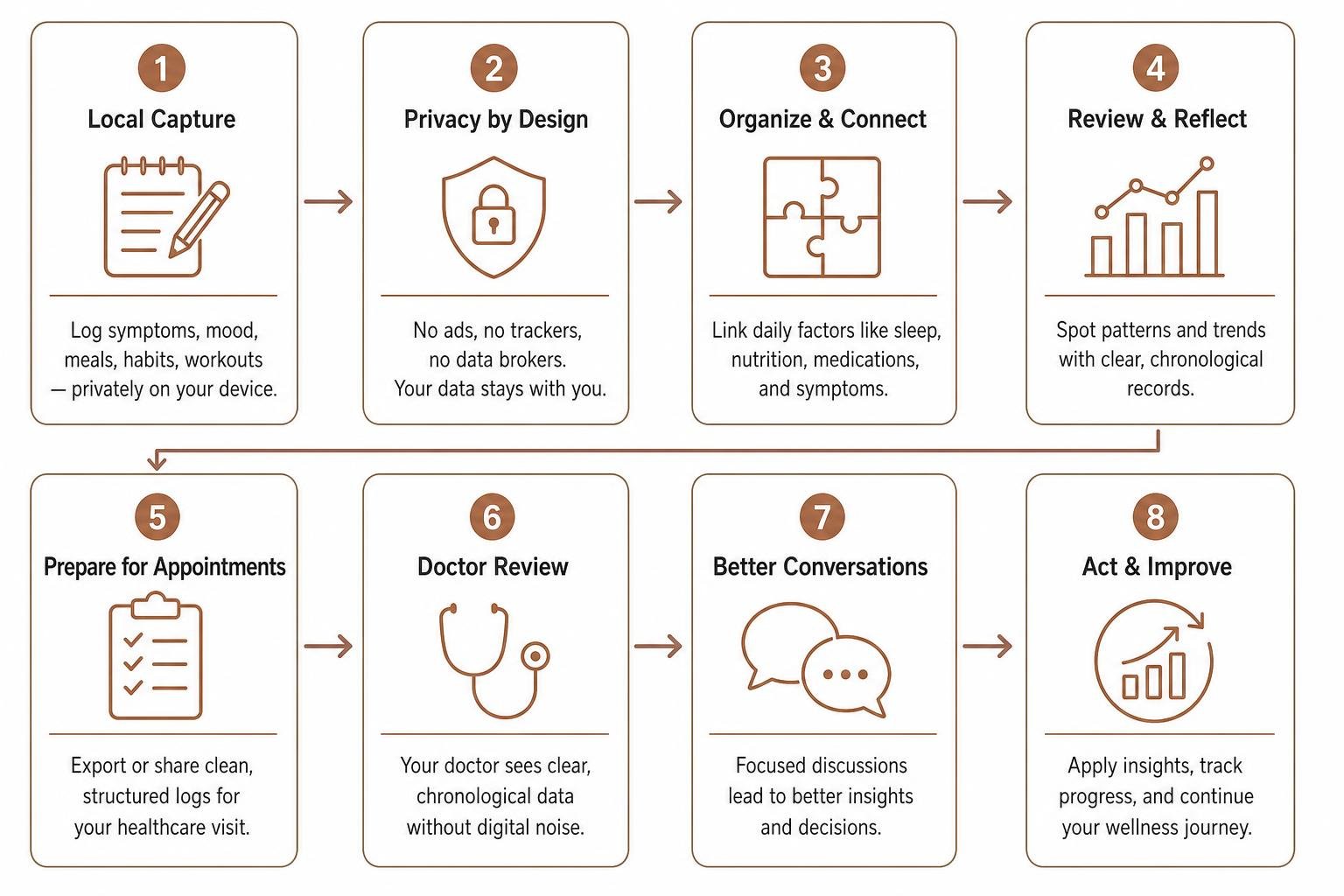
Ad-free, structured logging tools allow patients to present clean, chronological records of real symptoms and lifestyle factors. This direct visibility makes doctor-patient discussions far more productive.
The medical and health journalism communities have long recognized the perils of commercial bias. For example, professional organizations point to evidence-based reporting guidelines to help writers and clinicians cut through the hype and biased marketing that plague wellness claims.
When logging tools remain free from commercial sponsorships, user data remains objective, clear, and focused entirely on personal health trends.
Essential Features for Private and Comprehensive Wellness Logging
To maintain consistent health habits, your logging tool must be flexible enough to capture every dimension of your day without locking you into rigid, pre-defined templates. A truly adaptable platform allows you to track anything—from daily hydration and sleep quality to medication timings and chronic symptom flare-ups.
Holistic Daily Tracking: Meals, Habits, and Workouts
Your physical well-being is an interconnected ecosystem. What you eat impacts your afternoon energy, which influences your workout performance, which in turn determines your sleep quality. Logging these factors in separate, ad-heavy apps creates disjointed data silos.
A comprehensive, ad-free setup allows you to combine:
- Nutrition and Meal Patterns: Maintaining a simple food diary helps you identify ingredient sensitivities, energy crashes, and meal timing habits without judgment. If you are not sure where to start, gathering actionable food journal ideas can help you log meals efficiently.
- Physical Activity: Using a focused exercise log lets you record strength sessions, daily steps, and cardio routines without social-sharing pressure or leaderboards.
- Routines and Lifestyle Check-Ins: Employing a structured daily weekly monthly habit tracker app structure helps you build sustainable routines like morning walks, nightly stretching, and hydration goals.
Mental Wellness, Reflection, and Unstructured Notes
Physical metrics only tell half the story. Tracking your mindset, stress levels, and emotional triggers provides vital context for your physical symptoms.
Using a dedicated mood tracker app feature enables you to log emotional highs and lows alongside your daily routine. Pairing structured mood ratings with freeform journal and notes gives you the space to process daily stressors, record therapy breakthroughs, or maintain an intentional self-care journal.
You can also use this space to log a self-care affirmations journal entry to begin your morning with clarity. When there are no ads or pop-up banners competing for your attention, journaling becomes a calming, grounding pause in your day.
Comparing Ad-Free Tracking Systems vs. Ad-Supported Platforms
Understanding how different health tracking tools operate can help you make an informed decision about where your personal data lives.
| Evaluation Metric | Ad-Supported Wellness Apps | Ad-Free, Private Local Journals |
|---|---|---|
| Monetization Model | Targeted ads, data sharing, premium upselling | Direct membership or one-time utility purchase |
| Data Storage | Remote cloud databases (potential data broker exposure) | Local on-device storage (iPhone / local drive) |
| Account Requirements | Mandatory email, phone number, or social login | No account or registration needed |
| Offline Capability | Often limited; requires active connection for ad servers | 100% functional without internet connectivity |
| Distraction Level | High (pop-ups, banners, promotional notifications) | Zero (clean, minimalist, utility-first interface) |
| Battery & Data Usage | Higher (constant ad rendering and telemetry tracking) | Minimal (runs lightweight local operations only) |
| Data Export | Often restricted or locked behind subscriptions | Full export of raw text, notes, and photos |
Finding the Best Health Journal with No Ads for Your Goals
When selecting an ad-free journaling tool, look for a setup that seamlessly integrates with your daily workflow. Exploring educational resources on Finding the Right Journal can help you decide between physical notebooks, digital spreadsheets, and dedicated private mobile applications.
Here is a quick checklist of essential criteria to evaluate:
- True Offline Functionality: Does the tool load instantly and save entries when you are in airplane mode or away from Wi-Fi?
- Zero Telemetry and Analytics: Does the app function without tracking SDKs or background data pipelines?
- Flexible Export Options: Can you back up and export your raw entries, logs, and photos in accessible formats (like CSV, JSON, or PDF) whenever you want?
- No Artificial Gamification: Does the interface respect your mental bandwidth by skipping guilt-inducing streaks and noisy notifications?
- Fast Data Capture: Can you log an entry in under ten seconds without clicking through marketing screens?
Evaluating Private Mobile Apps for Wellness Logging
While paper journals offer complete privacy, they lack instant searchability, automated metric charting, and portable photo storage. Dedicated offline apps bridge this gap by offering digital convenience alongside paper-like privacy.
For instance, if you are completing a food diary for a week to investigate bloating, an offline app lets you quickly snap a meal photo, log your ingredients, and tag your symptoms locally.
Similarly, keeping an ongoing exercise journal on your phone lets you view personal strength progress over months without relying on an external server or risking data leaks.
Integrating Peer-Reviewed Evidence and Balanced Insights
A good health journaling habit does not exist in a vacuum. The notes and symptoms you record should help you evaluate broader medical insights and make sound lifestyle choices. However, finding unbiased health guidance online has become increasingly difficult due to sponsored wellness trends and ad-fueled headlines.

Cutting Through Commercial Hype with Evidence-Based Research
When researching symptoms or dietary changes, it is essential to rely on platforms that separate commercial incentives from scientific reporting.
Trusted resources maintain their integrity by adhering to strict Experience, Expertise, Authoritativeness, and Trustworthiness (E-E-A-T) standards. Reputable platforms that offer transparent health education clearly separate their editorial content from advertising and cite peer-reviewed studies from institutions like PubMed, the CDC, and the WHO.
Similarly, turning to specialized publications—such as newsletters delivering direct metabolic health insights—gives you plain-English, evidence-backed breakdowns of kidney and metabolic research without commercial noise.
When your educational resources and daily tracking tools are both free from ad bias, you can make healthcare decisions based on solid science rather than marketing hype.
Balancing Scientific Studies with Traditional Wellness Knowledge
Holistic well-being often requires combining rigorous modern science with practical, time-tested lifestyle habits.
Publications dedicated to balanced holistic research perspectives demonstrate how to look past sensationalized headlines. By weighing peer-reviewed data alongside centuries-old traditional knowledge and clinical observation, you can approach your wellness with nuance.
Your personal health journal is the ideal laboratory for this balanced approach. You can track modern metrics (like resting heart rate or blood glucose) alongside traditional practices (like herbal teas, mindfulness, and breathwork) to observe what truly supports your unique body over time.
Frequently Asked Questions About Ad-Free Health Tracking
Can an ad-free health journal work completely offline?
Yes. Dedicated offline health journals store their database directly on your device's local storage. Because they do not need to fetch third-party advertisements or sync data with remote marketing servers, all logging, searching, and custom tracking features work smoothly without an active internet connection.
How do private health journals protect sensitive medical metrics?
The most secure health journals use a "privacy-by-design" approach:
- No Account Creation: They do not ask for your email address, name, or phone number.
- Zero Third-Party SDKs: They avoid advertising and analytics trackers that monitor user behavior.
- On-Device Storage: Your notes, photos, and metrics live exclusively on your phone's hardware, meaning the app developers cannot access, read, or sell your health records.
How does personal health tracking differ from medical research?
Personal health tracking is an observational tool designed to help you identify individual patterns, symptom triggers, and lifestyle habits over time. It is subjective and tailored to your daily routine.
Medical research, by contrast, relies on standardized clinical trials, control groups, and peer-reviewed methodologies across large populations. Your personal health logs should never replace professional medical advice, but they serve as valuable, real-world data points to share with your physician during clinical consultations.
Conclusion
Taking charge of your well-being should not come at the expense of your digital privacy or mental peace. By stepping away from ad-heavy apps and choosing a streamlined, private logging tool, you create a calm space dedicated entirely to your long-term health.
If you are ready for a clean, distraction-free logging experience, explore the best health tracker app options to find the right fit for your routine. With Nama, you can track meals, workouts, custom metrics, and daily reflections completely offline on your iPhone—with zero accounts, zero ads, and total peace of mind.